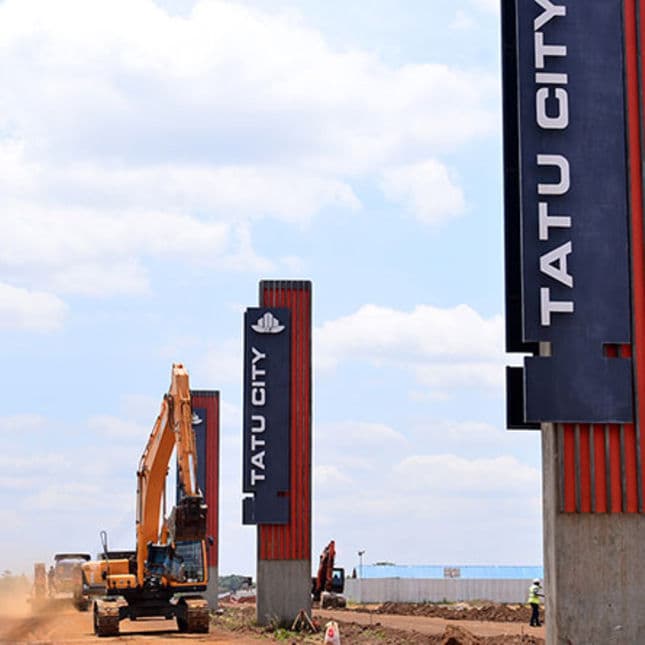
A LAWSUIT FILED IN THE NAME OF A COMPANY THAT NO LONGER EXISTS
On the same week that Saudi Arabia’s Mabani Aljazeera Holding Group stood alongside Rendeavour founder Stephen Jennings to sign away nearly half of Jabali Towers, a much quieter filing sat waiting in the registry of the Supreme Court of Mauritius.
It asks the court for something almost paradoxical: permission to let a dead company sue. Manhattan Coffee Investment Holdings Ltd, the Mauritian vehicle that once carried the Kenyan minority stake in Tatu City, was wound up in 2023 after failing to settle a 2018 London arbitration award. It exists today only as a shell in liquidation.
Yet it is precisely in MCIH’s name, and on its behalf, that BlackKnight Holdings Ltd, the investment vehicle for Kenyan businessman Steve Mwagiru and Belgian investor Etienne Delbar, is now asking Mauritius’ apex court for leave to drag Rendeavour’s SCF Holdings II back into arbitration at the London Court of International Arbitration.
The target of that arbitration, if leave is granted, is not the 2018 fraud finding that sank MCIH in the first place. It is a separate and, until now, largely overlooked set of transactions: share issuances in Cedar IV Ltd and Cedarsoc Ltd, the Mauritian holding companies that between them control 99.9 percent of Tatu City Limited and the neighbouring Kofinaf coffee lands, executed between 2014 and 2016.
BlackKnight’s papers describe these issuances in blunt terms: shares allotted under loan conversion arrangements well after the contractual conversion windows had lapsed, and priced at valuations the applicants say dramatically understated what the underlying land and project rights were actually worth.
WHAT THE PRIVY COUNCIL ACTUALLY DECIDED, AND WHAT IT DID NOT
Much of the coverage since May has treated the Privy Council’s ruling as the final word on Tatu City’s ownership war. It was not. The five-judge bench, sitting as Mauritius’ final court of appeal, held only that Mwagiru lacked standing under Section 174 of Mauritius’ Insolvency Act 2009 to pursue derivative litigation in MCIH’s name once the company had entered liquidation.
That is a procedural finding about who may speak for an insolvent company.
It says nothing about whether the underlying dilution actually happened, whether the 2014 to 2016 valuations were fair, or whether Delbar’s four percent stake, traced to a 2008 Subscription and Shareholders’ Agreement, was eroded lawfully.
BlackKnight’s new application is a direct response to that gap. Rather than trying again to act unilaterally, it is now asking the court to authorise the correct party, the liquidation estate acting through proper process, to bring the dilution claim itself. If the Mauritian court grants leave and the case proceeds to the LCIA, arbitrators would be asked to examine mechanics that have never been tested on their merits: whether shares were validly issued after the conversion deadlines, and whether the valuations used to justify those issuances would survive scrutiny against what Tatu City’s underlying assets were actually worth at the time.
The ruling settled who could not sue. It did not settle who was right.
WHY THE TIMING COULD NOT BE WORSE FOR THE NEWEST MONEY IN THE BUILDING
Here is the detail that ought to alarm anyone who has bought into Tatu City in the last four months. On July 3, 2026, barely a fortnight before the Mauritius hearing was expected to be scheduled, Rendeavour and Saudi Arabia’s Mabani Aljazeera Holding Group signed a joint venture in which Mabani’s local unit, Swan Properties, took a fifty percent minus one share stake in the Jabali Towers development company, the twin-tower, 88,000 square metre mixed-use anchor of Tatu City’s SEZ.
The first tower is already more than eighty percent sold.
Rendeavour, and by extension Jennings, remains the majority shareholder in that joint venture and in Cedar IV above it. Swan Properties is buying equity exposure to a project sitting on land whose upstream ownership chain is, at this very moment, the subject of a live application asking a court to reopen who owns what in that chain.
Nobody has suggested Mabani’s deal is anything other than good faith commercial confidence in Rendeavour’s twenty year track record.
But confidence is not the same as certainty of title, and a Gulf investor writing a cheque into a Kenyan special purpose vehicle four weeks before a Mauritius court decides whether to unfreeze a dilution claim is, whether anyone frames it this way publicly or not, taking on litigation risk it may not have priced at all.
THE LONDON RETAIL INVESTORS WHO NEVER SIGNED UP FOR A MAURITIUS INSOLVENCY FIGHT
The more exposed, and far less discussed, group sits several rungs further down the capital stack. Tapir Holdings Ltd, chaired by Lord Michael Ashcroft, listed on London’s AIM market in March 2026 with a single asset on its balance sheet: a 10.04 percent equity stake in Rendeavour Holding Limited, acquired for roughly 87.5 million US dollars and carried at an estimated book value in the region of 205 million dollars.
Tapir trades under the ticker TAPH to ordinary retail shareholders on the London Stock Exchange’s growth market, alongside a secondary listing on the Bermuda Stock Exchange.
On July 3, Tapir issued its own stock exchange announcement celebrating the Mabani deal as validation of its Rendeavour bet.
What Tapir’s admission document and subsequent announcements do not dwell on is that Rendeavour’s own balance sheet value, the very number Tapir’s shareholders are pricing their stock against, rests on the assumption that Cedar IV’s 99.9 percent ownership of Tatu City is unclouded.
A meaningful win for BlackKnight in Mauritius would not bankrupt Rendeavour. But it could force a renegotiation, a settlement payment, or a share reallocation at Cedar IV level that directly touches the asset Tapir’s AIM shareholders think they own a tenth of. Few of the retail investors who bought TAPH stock on the strength of a Saudi headline are likely to have read the November 2025 Mauritius filing sitting quietly in the Supreme Court registry in Port Louis.
A tenth of Rendeavour sounds precise, until you ask a tenth of what, and whether the numerator is still being argued over in a Mauritian courtroom.
WHAT A BLACKNIGHT WIN WOULD ACTUALLY DO TO THE CAP TABLE
Assume, for a moment, that leave is granted and BlackKnight eventually prevails at the LCIA on the dilution claim itself. The remedy sought is not merely symbolic. Unwinding or compensating for share issuances that occurred at what the applicants call an undervalue, using valuations from 2014 to 2016, but assessed and remedied against Tatu City’s asset base today, a project now put at somewhere between 3 billion and 3.5 billion US dollars, would produce a very different number than if the same dilution had been corrected a decade ago.
That is precisely why the timing of this application is not incidental.
Mauritius’ liquidators are simultaneously sitting on MCIH’s principal remaining asset, its Cedar shares, with SCF Holdings II well positioned to acquire them and offset the purchase price against the roughly 15 million dollar arbitration debt MCIH’s principals still owe from the 2018 fraud finding. A successful dilution claim would complicate, and potentially freeze, any such disposal while the LCIA works through the merits.
A FILE THAT KEEPS GROWING BEYOND MAURITIUS
Tatu City’s ownership dispute has never confined itself to one jurisdiction, and this is not the only unresolved thread hanging over Rendeavour’s Kenyan structure. Separate reporting in the Kenyan press over the past month has referenced an open Kofinaf tax appeal before the High Court and continuing scrutiny by Kenyan investigative agencies into aspects of the broader Tatu City money trail, alongside Nyagah’s own long standing allegation that the original land purchase values declared to the Ministry of Lands were understated.
DIANA NGILA | NAIROBI
None of these threads has produced a finding against Rendeavour, and the company has consistently and publicly rejected any suggestion of wrongdoing, framing the entire two-decade saga as an extortion campaign by minority partners who lost a fraud case in London and have since lost every subsequent appeal.
That framing is not baseless.
The 2018 LCIA tribunal did find that Shah, Nyagah and Mwagiru misrepresented a 20 million dollar deposit payment to induce Rendeavour’s investment, a finding neither appealed within the permitted window nor ever paid. But a fraud finding against the minority in 2018 does not retroactively validate every share issuance the majority executed in the years immediately before and after that dispute crystallised, which is exactly the narrower question BlackKnight is now trying to get in front of an arbitrator.
THE PROJECTS RIDING ON A TITLE NOBODY CAN YET CALL FULLY SETTLED
The commercial momentum built on top of this ownership structure is real and accelerating. Jabali Towers is under construction with China Road and Bridge Corporation as main contractor and now Saudi equity alongside Rendeavour’s own. Porini Point, the 570-unit apartment development priced from 7.5 million shillings, sold out its first phase on launch night.
The 60-hectare Tatu City Sanctuary, a biodiversity and eco-tourism project featuring a safari lodge, a pangolin rehabilitation centre and rewilded wildlife trails, is scheduled to open before the end of 2026, billed as the only urban wildlife sanctuary of its kind on the continent. Wellington College International Kenya is due to open its doors in 2028.
Every one of these timelines assumes uninterrupted financing, uninterrupted sales momentum, and, critically, a Cedar IV ownership structure that lenders and industrial tenants can underwrite without a legal disclaimer attached.
Title certainty is what allows a project like this to keep selling apartments off-plan and keep attracting sovereign-linked capital from Riyadh. Even short of an outright BlackKnight victory, the mere pendency of a live LCIA-track application, with a Mauritius hearing expected next month, gives banks, joint venture partners and prospective buyers a fresh and entirely legitimate question to ask before writing the next cheque: whose shares, precisely, are being pledged as security, and could a Mauritian arbitrator reshuffle that ownership before the ink on this quarter’s deal is dry.
TWO DECADES IN, AND STILL NO FINAL CHAPTER
Rendeavour’s version of events, articulated forcefully and repeatedly by Jennings in public forums, is that Mwagiru, Shah and Nyagah are serial litigants who have exhausted every jurisdiction available to them and lost at each one, from the 2018 fraud finding through to the Privy Council’s dismissal of Mwagiru’s standing this May.
BlackKnight’s version is that the very insolvency Rendeavour’s allies engineered through the 2018 award is now the last available vehicle to force a hearing on dilution mechanics that were never actually tested on the merits, and that the liquidators sitting on MCIH’s Cedar shares are on the clock before those shares are sold to the one party with every incentive to see the claim die with the company.
Both camps have real scars from real findings against them. What neither can honestly claim, four weeks before Mauritius reconvenes, is that Tatu City’s ownership question is closed.
In a dispute this old, the last chapter has a habit of not being the last chapter.


Comments