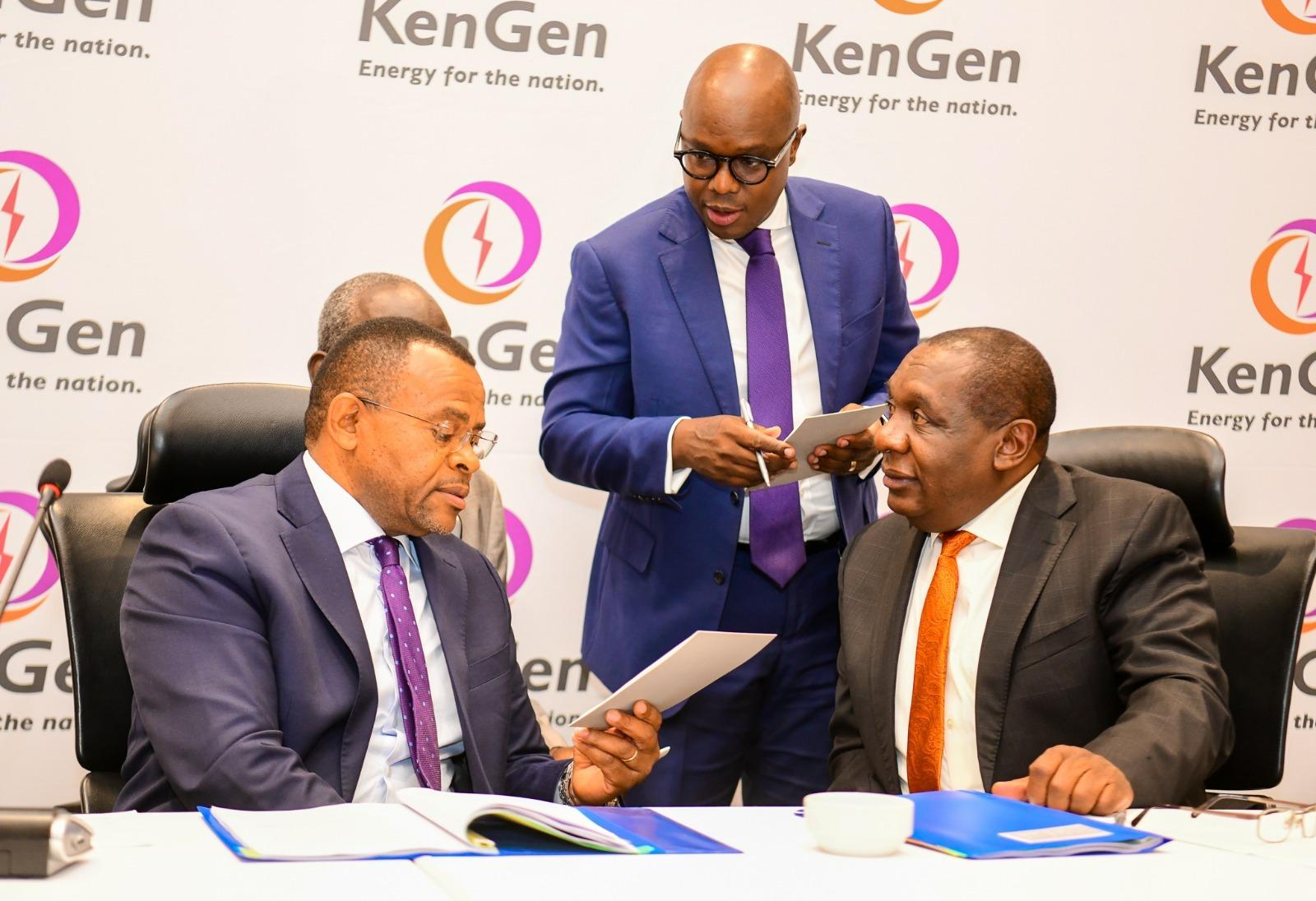
Nairobi — For three years, the Kenya Electricity Generating Company (KenGen) has tried, and repeatedly failed, to close a Sh2.5 billion sale of 6.38 million carbon credits without a court or a tribunal finding something rotten in the process. On July 10, 2026, the Court of Appeal delivered the latest blow: it set aside a High Court ruling from May 20 that had cleared the sale, and ordered the Public Procurement Administrative Review Board (PPARB) to hear the dispute afresh for the fourth time before a differently constituted panel.
The three-judge bench did not mince its words. It found that KenGen had done something procurement law does not permit: it changed the rules of the game after the whistle had blown, introducing fresh evaluation standards at the due diligence stage that were never disclosed in the original tender documents.
That, the court said, offends the constitutional guarantees of fairness, transparency and equal treatment that anchor Kenya’s Public Procurement and Asset Disposal Act.
A public asset, a private carousel
What is being fought over is not abstract. Tender No. KGN-SALE-005-2025 covers Certified Emission Reductions generated from six of KenGen’s flagship Clean Development Mechanism projects registered under the Kyoto Protocol: the Olkaria II geothermal expansion, Olkaria IV, Olkaria I Units 4&5, the redevelopment of Tana hydro, the optimisation of Kiambere hydro, and the 5.1-megawatt Ngong Wind project.
Each of the 6.38 million credits represents one verified tonne of carbon dioxide equivalent kept out of the atmosphere by infrastructure Kenyans financed through tariffs and taxes. KenGen wants to monetise these credits as part of a plan to push non-electricity revenue to 20 percent of turnover, on the back of Sh56.09 billion in revenue for the year to June 2025.
Three bidders reached the evaluation stage: Sintmond Group Limited, Kyoto Network Limited, and a joint venture between Nairobi-based Munja Trading Limited and a Norwegian-registered outfit called Marwil Energy Holding AS. Sintmond offered the taxpayer the better deal about $23.2 million (roughly Sh2.99 billion) against the Munja–Marwil consortium’s $19.6 million (about Sh2.53 billion). KenGen picked the lower bid anyway, disqualifying Sintmond at due diligence under a clause known as MR-16, which requires bidders to furnish independent client references proving prior experience in CER or Voluntary Emission Reduction transactions.
“The only reasonable inference to draw from this omission is that the Applicant did not possess credible proof of past performance…” — PPARB, October 2025
The experience KenGen itself gave them
Here is where the story curdles from a routine procurement dispute into something that should worry every Kenyan watching the country’s carbon-market ambitions.
Sintmond Group is not a stranger to CER sales it is the same firm, backed by the Zurich-based waste-technology group Hitachi Zosen Inova, that KenGen contracted in 2024 to buy 4.62 million tonnes of the utility’s carbon credits for roughly $32 million under contract KGN-SALE-001-2024.
That contract was later terminated over alleged non-performance.
KenGen has since used the fallout from that very relationship as a shadow over Sintmond’s credibility, even as its evaluators simultaneously found the firm lacked demonstrable experience in CER transactions of scale.
A bidder cannot plausibly be too inexperienced to handle a multi-million-tonne carbon deal and, in the same breath, be treated as a known quantity whose earlier multi-million-tonne carbon deal collapsed badly enough to taint it. KenGen has, at various points, argued both.
This is not a one-off technicality. Court records and PPARB rulings across the life of this tender show a pattern: the board has already nullified one round of this same procurement outright, citing ambiguous “and/or” language governing client references, an unfair two-stage evaluation, and a due diligence process that risked inadequate scrutiny of bidder competence.
It later found, in a ruling dated January 9, 2026, that KenGen had violated Sintmond’s “legitimate expectation to be heard” by ignoring a formal due-diligence letter for months.
The High Court found the same thing in December, ruling that Sintmond had been “shut out of the post-award due diligence phase and denied the right to be heard.” Then, in May 2026, in a decision the Court of Appeal has now overturned, the High Court reversed course and blessed the tender anyway. Four processes. Four different outcomes. One consistent loser.
Who, exactly, is Marwil Energy Holding AS?
If Sintmond’s disqualification looks procedurally shaky, the winning side raises a different kind of question: who is actually cashing in? Munja Trading Limited is a known quantity, a Nairobi commodity trader based in Karen. Its Norwegian partner is not. Despite fronting the higher-ranked bid in a state tender worth billions of shillings twice Marwil Energy Holding AS has left no meaningful public trail in Kenyan corporate records, East African carbon-market reporting, or international carbon registries reviewed for this investigation.
Norway is a serious player in global carbon markets, running its own multi-hundred-million-dollar credit-purchasing programmes through named, disclosed vehicles under the Paris Agreement’s Article 6 framework. Marwil is not among the entities that surface in that landscape.
For an outfit entrusted with monetising a strategic Kenyan state asset, that is not a footnote — it is the story.
Kenya’s own Climate Change (Amendment) Act now criminalises exactly the kind of opacity this deal courts: it places personal liability on directors and officers of any company or joint venture that manipulates carbon-market transactions, and it obliges procuring entities to satisfy themselves about beneficial ownership before handing over sovereign environmental assets.
Nothing in the public record suggests KenGen has published, or been compelled to publish, who ultimately stands behind Marwil Energy Holding AS.
Kenyans are being asked to trust that a state corporation did its homework on a foreign counterpart it cannot itself describe in any detail beyond a name and an “AS” suffix.
A scandal without a smoking gun — which is the point
No court filing, PPARB ruling, or credible report reviewed for this investigation alleges a bribe, a paper trail of kickbacks, or a named official pocketing anything. That absence has allowed KenGen to treat this as an ordinary commercial dispute between a sore loser and a satisfied board. It is not.
Kenyan commentators following the case have already begun using harder language one investigative outlet described it bluntly as evidence of a cartel operating inside KenGen’s procurement machinery and demanded that the Ethics and Anti-Corruption Commission, the Auditor-General and the Director of Public Prosecutions open formal inquiries.
Whether or not that characterisation holds up, the underlying facts are undisputed and are what should alarm Kenyans most: a state utility sitting on a verified, internationally tradable green asset has now failed, across four attempts and two courts, to run a single transparent, defensible tender for it.
The higher bidder was shown the exit on paperwork; the lower bidder, fronted by an entity nobody can describe, keeps winning.
What the ruling actually changes and what it doesn’t
The Court of Appeal’s July 10 judgment is narrow and, in its own way, damning: it does not name a winner, does not accuse anyone of corruption, and orders no compensation.
It simply tells PPARB, again, to redo its job properly this time respecting the legal limits on due diligence under Section 83 of the Public Procurement and Asset Disposal Act, and without inventing new bidder requirements after the tender has closed.
The judges ordered each side to bear its own legal costs, an implicit acknowledgment of just how long and costly this fight has already become for everyone except, perhaps, the eventual buyer of Kenya’s carbon credits.
Meanwhile, the credits sit unsold.
Global carbon markets move on price signals, buyer sentiment and regulatory momentum under the Paris Agreement all of which have shifted since KenGen first advertised this tender.
Kenya has, in the same period, stood up a National Carbon Registry and positioned itself internationally, through its Coalition to Grow Carbon Markets with Singapore and the United Kingdom, as a serious player chasing a slice of a global climate-finance market it says could be worth $250 billion by 2050.
It is difficult to sell that story to international buyers and diplomats while the country’s flagship state utility cannot, after three years, tell the public who its own joint-venture partner actually is.
The accountability gap
This is ultimately a governance failure, not a single villain’s conspiracy which is precisely why it has been so hard to stop.
Every actor in this saga can point to a technically defensible position: KenGen can say it followed its evaluators’ findings; PPARB can say it ruled on the record before it each time; the courts can say they were only reviewing procedure, not picking a winner.
Everyone is right, narrowly, and the result is that a Sh2.5 billion public asset has spent three years circling a drain of litigation while an unaccountable joint venture and a wounded former partner take turns claiming victory in front of a tribunal that keeps changing its mind.
Kenya’s carbon markets law already gives regulators the tools to force disclosure of who stands behind vehicles like Marwil Energy Holding AS, and to test whether KenGen’s shifting evaluation standards amount to more than bureaucratic sloppiness.
Whether the Ethics and Anti-Corruption Commission, the Auditor-General, or Parliament’s relevant committees choose to use them is now the only question that matters.
The newly constituted PPARB panel can only rule on the tender in front of it.
It cannot answer the larger question this case keeps raising, round after round: who, precisely, is being protected by three years of procedural fog over Kenya’s green gold and why.
KenGen was contacted for comment on the beneficial ownership of Marwil Energy Holding AS and the apparent contradiction in its treatment of Sintmond Group’s prior CER experience. This report will be updated with any response.








Comments