
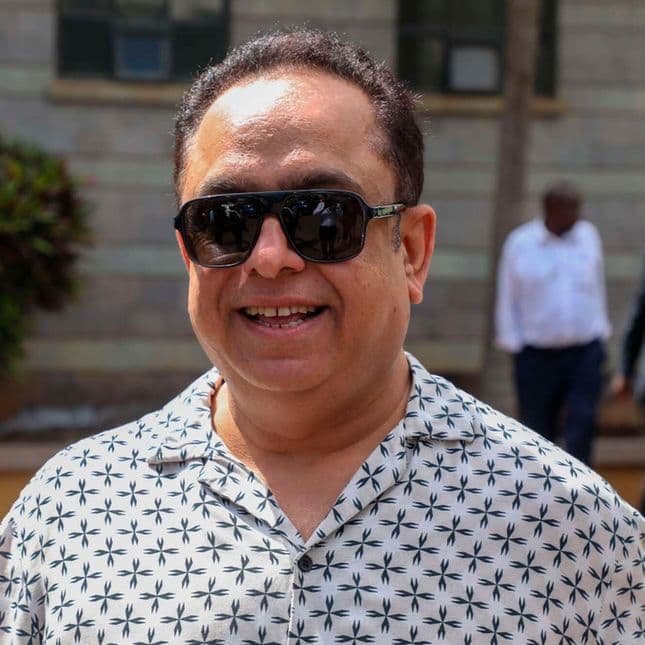
Three and a half years ago, this publication reported that a Mombasa clearing agent named Samuel Mburu Kamau husband to Nakuru Governor Susan Kihika was quietly lobbying to be installed as board chairman of the Kenya Ports Authority, and that he had allegedly been using that anticipated influence to funnel business to his firm, Landmark Freight Services Limited, at the port, warning traders who resisted.
He never got the chairmanship. He did not need it.
What has unfolded at Kipevu over the past five weeks suggests his firm got something arguably more valuable than a board seat: unchallenged, undocumented control of a slice of national port infrastructure and an exclusive lock on one of the most lucrative cargo corridors in East Africa.
On 9 June 2026, the Genesis for Human Rights Commission (GHRC) wrote to KPA Managing Director Captain William Ruto with a seven-day ultimatum. Produce, the letter demanded, the lease or allocation agreement handing Kipevu land to a private Container Freight Station operator; the public participation record; the beneficial ownership of the company involved; and every procurement document behind an exclusive, single-sourced tender awarding that same company 20 percent of all cargo bound for South Sudan.
That deadline lapsed in mid-June. It is now the middle of July. Captain Ruto has not produced a single document, has not responded to press inquiries, and by every account gathered for this investigation, including our own prior reporting on his silence has effectively gone to ground while heavy machinery keeps working at the disputed site.
THE COMPANY BEHIND THE CURTAIN
GHRC’s letter names the beneficiary only as a private entity linked to a senior political figure. Corporate registry records reviewed for this investigation identify it as Landmark Port Conveyors Ltd, a clearing and forwarding operation registered in 2008. The name is not incidental.
It is a close cousin in branding, sector and Mombasa base of Landmark Freight Services Limited, the firm this publication has previously and repeatedly tied to Sam Mburu, and which was itself the subject of a 2019 Directorate of Criminal Investigations probe into an alleged scheme to undervalue nine 20-foot containers of Hayat palm olein cooking oil imported from Dubai, in collusion with two Kenya Bureau of Standards inspectors, to dodge roughly Sh6 million in duty.
The same Landmark entity had 400,000 bags of sugar seized by the state on suspicion the consignment, imported under a tax exemption window, was unsafe for human consumption.
Separately, Mburu faced a 2018 arrest over an alleged Sh64–65 million tax evasion scheme, at a time political allies of his describe as a period when the Uhuru administration was targeting figures close to the then-Deputy President.
None of this history disqualifies a company from doing business with the state. But it is precisely the history that makes GHRC’s beneficial-ownership demand so pointed and precisely the history KPA has, for five weeks, declined to engage with at all.
This entire transaction reeks of high-level influence-peddling, state capture and a brazen land grab orchestrated purely due to the CFS owner’s proximity to power.
— Caleb Ng’wena, Programme Director, Genesis for Human Rights Commission
A FIFTH OF A NATION’S CARGO, NO TENDER IN SIGHT
The commercial stakes are not abstract. KPA’s own figures, cited in GHRC’s complaint, show South Sudan accounted for 12.7 percent of all transit cargo moving through Mombasa in 2025, a year in which the port’s total throughput hit a record 45.45 million tonnes.
A single-sourced grip on one-fifth of that corridor’s cargo handling is, by any commercial measure, worth hundreds of millions of shillings a year in guaranteed revenue awarded, on the available evidence, without a public tender, without a published evaluation, and without the written single-source justification that the Public Procurement and Asset Disposal Act requires before competitive bidding can be lawfully bypassed.
Parliament’s Transport and Infrastructure Committee is already sitting on documents relating to the transaction. Neither the Committee nor KPA has made them public.
Nor is there any sign, five weeks on, of the statutory scaffolding that should surround a project of this size: no environmental impact licence from NEMA, no National Construction Authority permit, no Mombasa County building approval, and no project information board at the site an omission that is itself a breach of the NCA Act. Construction has continued regardless.
THE ENCORE PATTERN
Kipevu is not the only asset to have surfaced in Mburu’s portfolio this year under circumstances that invited the same questions of proximity and privilege. In February, this publication and others reported that the multi-billion-shilling, 205-room Encore Hotel rising beside Nakuru’s State House belonged to Mburu and Governor Kihika jointly a fact Mburu himself confirmed after MPs raised alarm in Parliament about high-rise construction encroaching on land legally zoned for buildings no taller than two storeys, and about a protected presidential facility. Mburu and his project manager insisted every county and national approval had been secured.
The hotel opened in June with a guest list that itself told a story: Kapseret MP Oscar Sudi the very figure GHRC’s Kipevu letter alleges is entangled in the port land deal was present, alongside former Energy Cabinet Secretary Charles Keter and a clutch of sitting MPs.
Set beside each other, the two transactions form a pattern GHRC is not alone in noticing: a State House-adjacent hotel that could not plausibly have advanced this far without political cover, and a State port asset that could not plausibly have been carved out without the same.
In both cases, the same husband-and-wife household sits at the centre. In both cases, Oscar Sudi’s name surfaces in proximity to the money. And in both cases, the public is asked to accept, after the fact, that all approvals were obtained without being shown the paper that would prove it.
THE ACCOUNTING OFFICER’S SILENCE
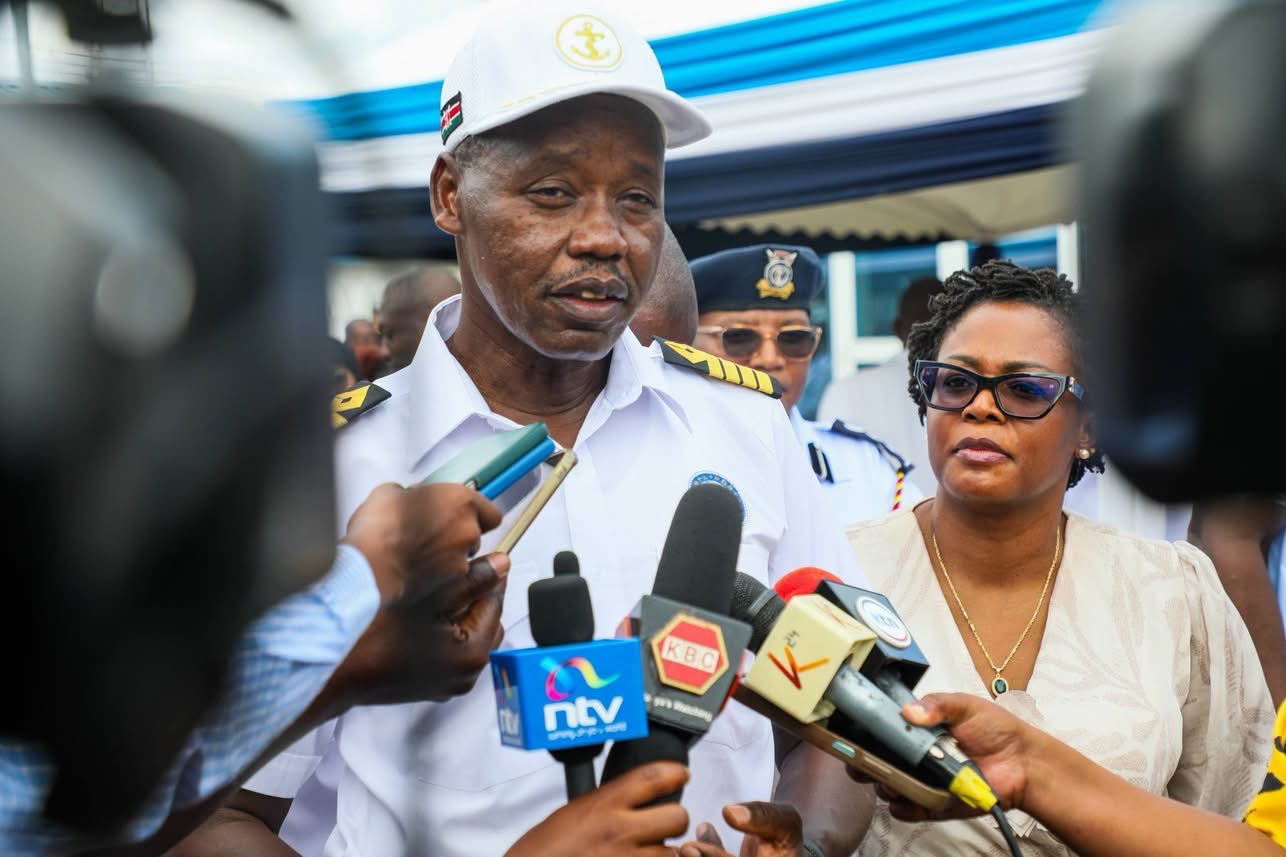
Captain William Ruto has led KPA as Managing Director since March 2023. As accounting officer, he carries personal statutory responsibility for how the Authority’s land and contracts are disposed of a liability GHRC has explicitly invoked, warning it will pursue him personally alongside KPA itself once it moves to court, in addition to seeking orders to halt construction and cancel the tender.
His office has offered no public accounting of the Kipevu allocation, no explanation for bypassing competitive tender on the South Sudan cargo contract, and no comment on the missing environmental and construction approvals.
He did, in earlier weeks, find time to publicly defend a separate, unrelated Kipevu project an Sh8.3 billion port access road whose per-kilometre cost has already drawn criticism for exceeding comparable national benchmarks. On the land and cargo deal that GHRC says implicates figures close to the presidency, he has said nothing at all.
That asymmetry is, on its own, a story: an accounting officer capable of defending one Kipevu expenditure in public while refusing for over a month to confirm or deny the most basic facts of another who owns the CFS, what the lease says, why the tender was never advertised happening a few hundred metres apart on the same stretch of port land.
WHAT COMES NEXT
GHRC has told KPA it intends to escalate to the High Court, seeking punitive costs against the Authority, personal liability against Captain Ruto, an order halting construction, and the cancellation of the South Sudan cargo tender. It has also called on the Ethics and Anti-Corruption Commission, the Director of Public Prosecutions and the Public Procurement Regulatory Authority to open independent inquiries, and on Parliament to compel release of the lease, the procurement file and the company’s full beneficial ownership disclosure including, this investigation would add, whatever corporate paper trail connects Landmark Port Conveyors Ltd to Landmark Freight Services Limited and, through it, to the man who once wanted to chair KPA’s board and now appears to control a piece of it outright.
Until those documents surface, the facts that are public tell their own story plainly enough: a politically connected clearing agent with a documented history of customs disputes: a state port authority that has gone silent rather than produce a lease; a cargo corridor worth hundreds of millions of shillings a year handed out with no tender anyone can find; and, a few hundred kilometres away, a luxury hotel built beside a State House under the same pattern of after-the-fact assurance. Kenyans are being asked, once again, to trust that the paperwork exists somewhere. They are not being shown it.







Comments