
Spring Valley has quietly become one of Nairobi’s most reliable generators of land-dispute headlines, and it has just produced another one this time with a mid-tier commercial bank’s balance sheet sitting in the blast radius.
At the centre of it is Land Reference No. 11390, a parcel in the exclusive Westlands-adjacent enclave, and a Sh350 million facility that Prime Bank Limited advanced against it.
The trouble is straightforward to state and, if it holds up, difficult for the bank to explain: the people named as beneficiaries on the facility are not the people the title says own the land.
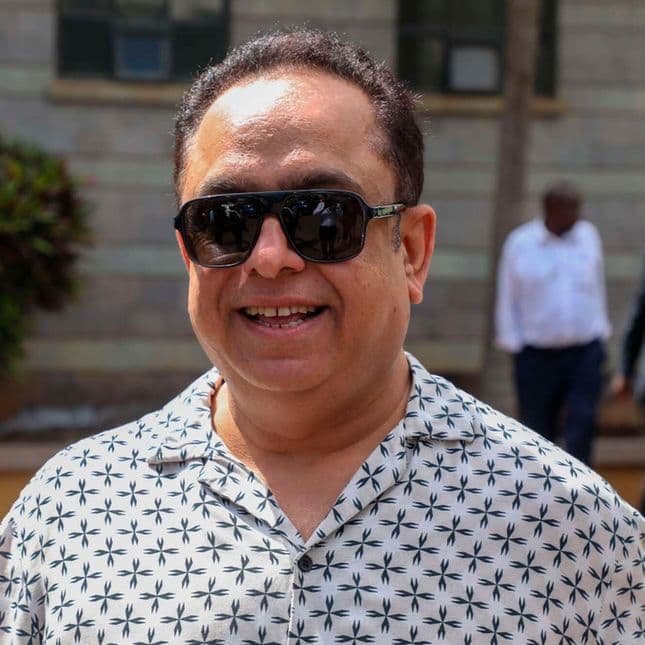
Documents reviewed for this story identify the beneficiaries as businessman Rajesh Maneklal Rughani, managing director of Simpsons Properties and a member of the family linked to the Text Book Centre and Sarit Centre business interests, together with two corporate vehicles, Crason Park Limited and Crason Holdings Limited.
None of the three appear as the registered proprietor on LR 11390. In Kenyan conveyancing, that gap between borrower and title-holder is not cosmetic. A charge is only as good as the chargor’s legal capacity to grant it, and if the capacity was never there, Prime Bank may be holding a stack of paperwork rather than enforceable security.
A Due Diligence Question Riverside Drive Won’t Answer
Kenyan banking practice, reinforced by Central Bank of Kenya prudential expectations, sets out a fairly unambiguous checklist before land is accepted as collateral: an official search at the Ministry of Lands and Physical Planning to confirm the registered proprietor and any encumbrances, an independent valuation, verification that the title itself is genuine, and legal sign-off that the party purporting to charge the property actually has the power to do so.
Any one of those steps, properly executed, should have flagged a mismatch between the names on the facility and the name on the title. That raises the uncomfortable question of whether the checklist was skipped, rushed, or satisfied on paper only.
This publication put those questions directly to Prime Bank Executive Director Amar Kantaria in writing over six weeks ago, asking what due diligence was performed on the facility and whether any internal review has been triggered involving the relationship managers, valuers, or credit committee members who approved it.
No response has been received. A bank’s silence in the face of a specific, document-backed question is not proof of wrongdoing, but it is not neutral either it typically means either that answers are still being assembled internally, or that the institution is hoping the matter fades before it has to give one.
“A charge is only as good as the chargor’s capacity to grant it. If that capacity was never there, the bank may be holding paperwork, not security.”
Two Companies That Barely Exist on Paper
The presence of Crason Park Limited and Crason Holdings Limited alongside a well-known property figure is itself worth lingering on.
Neither entity carries a visible trading history, an identifiable asset base, or any public corporate footprint of note in Kenya.
Special purpose vehicles are a normal feature of real estate finance, but when two such vehicles surface as co-beneficiaries on a nine-figure facility with no independent track record, standard credit and anti-money-laundering practice treats that as a prompt for closer scrutiny of beneficial ownership, not a reason to wave the deal through.
Whether Prime Bank’s own compliance function asked those questions, and what it was told, is precisely the kind of detail a serious internal review or a DCI file would need to establish.
Spring Valley’s history does the rest of the work in explaining why this matters beyond one loan. The postcode has repeatedly featured in disputes over double titling and competing claims that take years to resolve in court, and the Ministry of Lands has faced its own accusations of issuing conflicting titles on other high-value parcels in the area.
None of that proves anything about LR 11390 specifically, but it does mean that a title in Spring Valley cannot be treated by any lender as self-evidently clean. It has to be tested, not assumed.
Not Riverside Drive’s First Rodeo
Prime Bank’s leadership has been here before, in spirit if not in specifics. The bank and the Kantaria family that controls it have previously faced public allegations aired by this publication that executives took advantage of a family dispute involving the late tycoon Harrish Devani’s household to press claims against a Runda property valued above Sh200 million, part of a wider pattern lawyers say has left multiple borrowers exposed to relationship-driven lending inside the bank.
The Devani name itself carries weight in Kenyan financial scandal circles well beyond Prime Bank: it is the same family network entangled in the Yagnesh Devani Triton oil saga that has occupied Kenya’s High Court for years.
None of this means the Spring Valley facility is connected to those earlier disputes. It does mean that questions about how thoroughly Prime Bank vets the paperwork behind its largest secured facilities are not being asked for the first time.
The bank has, in fairness, been telling a different story about itself in public. Prime Bank closed 2025 reporting strong profitability, driven substantially by holdings of government securities rather than aggressive lending growth, and its chairman was feted with a lifetime achievement award at this year’s Think Business Banking Awards.
That caution on the lending side is what makes an apparent lapse of this scale, if confirmed, harder to wave away as routine human error. A bank that says it is being conservative with credit has less room to explain away a facility where the named borrowers do not match the registered owner of the collateral.
A Sector Already on Edge
The timing compounds the exposure. Kenya’s banking sector entered 2026 carrying a gross non-performing loan ratio of roughly 15.6 percent as of March, according to the Central Bank of Kenya’s own Monetary Policy Committee data down from a peak above 17 percent in mid-2025 but still well above the historical norm of around 11 percent that held for most of the past decade.
Regulators and rating agencies alike have pointed to weak collateral verification and insider-adjacent lending as recurring contributors to that stress. Kenyans who lived through the collapses of Chase Bank, Imperial Bank, and Dubai Bank know exactly what that combination can produce when it is left unaddressed: institutions that look solvent on their published statements until the moment a disputed asset forces the truth of the balance sheet into the open.
What Happens Next
No court has made any finding of wrongdoing against Prime Bank, Rughani, or the Crason companies, and the underlying land dispute may yet be resolved in a way that vindicates everyone involved. But the facts already sitting in the public domain are serious enough to warrant more than a written question that goes unanswered for six weeks.
The Directorate of Criminal Investigations and the Ministry of Lands and Physical Planning have a public-interest basis to establish whether an official search was ever conducted before the facility was disbursed, what valuation the bank relied on, whether any caveats or competing claims were on record for LR 11390 at the time, and how the transaction cleared Prime Bank’s internal credit and compliance gates.
There is a broader question too, and it is the one Prime Bank should least want asked: if a facility of this size could move through the bank’s systems with beneficiaries who do not match the title, is this an isolated failure or a visible symptom of how the bank’s land-backed book is put together more generally?
Until Riverside Drive answers that plainly, on the record, every depositor with money behind Prime Bank’s counters is entitled to wonder what else in the loan book is resting on paper that will not hold.
This story will be updated with any response received.








Comments