The private jet that carried Raila Amolo Odinga to India in October 2025 did not simply carry a sick old man seeking rest. It carried, according to sources who witnessed the internal battles that preceded the flight, the product of a contested decision in which a powerful healthcare billionaire played a central and still-unexplained role. It carried a man whose wife physically fought against the plan. It carried, six months later, a corpse.
Kenya’s most consequential opposition figure died on the morning of October 15, 2025, at Devamatha Hospital in Koothattukulam, Kerala, India, after suffering cardiac arrest while on a morning walk at the Sreedhareeyam Ayurvedic Hospital where he had been undergoing treatment. He was 80 years old. He was diabetic.
He had chronic kidney disease.
He had deep vein thrombosis in his right leg. He had a history of fainting. He had suffered a mild stroke in Kenya before the journey. And yet the decision was made to put him on a plane to southern India for Ayurveda wellness treatment rather than keep him under specialist cardiac and renal monitoring in Nairobi.
Who made that decision? Who smoothed its political path? Who benefited from it? And who fought against it? These are the questions that Siaya Governor James Orengo, Wiper Patriotic Front leader Kalonzo Musyoka, Saboti MP Caleb Amisi, Embakasi East MP Babu Owino, and Kisumu Woman Representative Ruth Odinga herself have all, in varying degrees of explicitness, refused to leave buried.
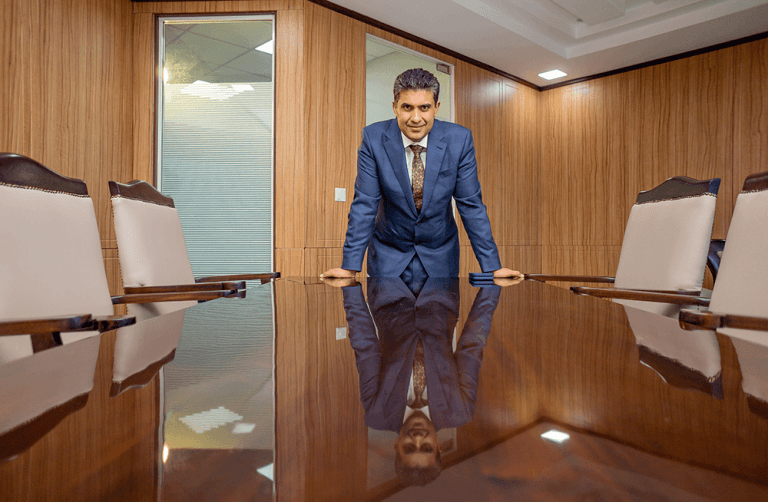
These are also the questions that lead, inescapably, to one man: Jayesh Umesh Saini, the billionaire son of Nairobi West Hospital’s founder, whose healthcare empire constitutes the most vertically integrated private health network in East Africa and whose connections to Indian medical institutions are as deep as his connections to the Kenyan State House were intimate.
“I think he was almost forced to go to India and to a particular institution with a company of certain individuals who I have a lot of questions to raise about them.” — Siaya Governor James Orengo, March 2026
THE VOICE THAT WOULD NOT BE SILENCED
Governor Orengo chose his words precisely. Speaking on Spice FM on March 5, 2026, almost five months after Raila’s death, he said he spoke ‘with a heavy heart,’ that he was being ‘sensitive to the feelings of the family,’ and that he would ‘not say as much as I think I should say.’ But what he did say was incendiary.
Raila ‘didn’t go to India willingly.’ He was ‘almost forced to go to India and to a particular institution with a company of certain individuals who I have a lot of questions to raise about them.’ The official cause of death ‘had nothing to do with the elements that he had.’
There ‘was some intervention.’ ‘I hope that one day we will determine the circumstances that Raila Odinga passed away. That must be an objective that we must achieve.’
Orengo, who served as legal counsel in the Ouko murder trial, who was in the Julie Ward inquest, who watched successive Kenyan governments bury the truth about political deaths, is not a man who speaks carelessly.
He drew the explicit parallel: ‘Sometimes even when professionals tell you that this is what happened, it requires verification.
Ouko, when he died, somebody suggested, and these were government people, that he killed and then burned himself.’ He said it again at a public rally in Kakamega: ‘Kifo ya Raila Odinga wameua Raila Odinga’ — they killed Raila Odinga.
Kalonzo Musyoka, speaking at a church service in Utawala on February 22, 2026, and subsequently at a rally in Kisii, backed the call for a public inquest. ‘Jim was very categorical,’ he said. ‘Alisema kuwa Raila aliuliwa’ — he said Raila was killed. ‘In order to deal with that lingering issue, I would want to suggest a thorough inquest so that Kenyans can know the truth.’ Babu Owino, more cautious but unmistakeable, told a local television station: ‘Where there is smoke, there is fire. James Orengo is an advocate of the High Court, as is Kalonzo Musyoka. Think about this issue of Baba and everything surrounding his death. I need a lot of time to address this because I know a lot.’
Ruth Odinga, Raila’s own sister, when asked on television in February 2026 whether her brother died of natural causes, did not answer.
She hesitated. She said she would speak ‘at the appropriate time.’ Former Kakamega Senator Cleophas Malala publicly questioned how Raila could die on a morning walk if his sister had reportedly switched off a machine at his bedside. The question has never been answered. No public post-mortem report exists. No formal inquest has been opened. India’s diplomatic note confirms the basic sequence of events; it does not and cannot answer what choices made those events inevitable.
“The nation is being put to slumber to accept the death of Raila as natural, but I’m saying that we need to look into it.” — Orengo
THE MAN BEHIND THE MACHINE: JAYESH SAINI’S EMPIRE
To understand how Jayesh Saini became central to the circumstances surrounding Raila’s final journey, one must first understand what he has built and what it has cost Kenya.
His father, Dr Umesh Saini, migrated from Rajasthan, India in the 1980s and established Nairobi West Hospital on Gandhi Avenue in the city’s South district — Kenya’s first significant private hospital, a 400-bed tertiary facility that would become a cornerstone of the country’s healthcare landscape. Jayesh grew up in those corridors and learned not just medicine but the economics of medical power. What he built on that foundation dwarfs his father’s creation.
Today, the Saini-linked Africare group commands Bliss Healthcare — Kenya’s largest private outpatient network with over 65 medical centres in 37 counties serving more than 100,000 patients monthly.
It commands LifeCare Hospitals, a multispecialty inpatient network across seven counties including Bungoma, Eldoret, Kikuyu, Meru, Migori, Mlolongo, and Makindu, with over 700 beds and a stated capacity for complex surgeries.
It commands Dinlas Pharma EPZ, a pharmaceutical manufacturing facility valued at over $30 million. It commands Medicross, a chain of diagnostic and outpatient centres with 11 locations. It commands Fertility Point Kenya.
It commands Medical Administrators Kenya Limited, or MAKL — the private authority that controls how insurance claims are settled for the Teachers Service Commission, the National Police Service, and prison officers, a combined scheme that over nine years has processed approximately Sh161 billion in public funds.
And it commands Nairobi West Hospital itself, the founding asset, now a fully referral-capable 400-bed centre where, in April 2025, Raila Odinga’s most trusted aide and bodyguard of 30 years, George Oduor, was hospitalised and died.

Oduor had served the Odinga family since the late 1980s, through Jaramogi Oginga Odinga and then through Raila across three decades of political upheaval, democratic struggle, detention, and triumphant return.
He was Raila’s shadow, his silent sentinel, a man Raila called a ‘friend’ and ‘big brother’ in his tribute. He died after a short illness at Nairobi West Hospital on April 2, 2025. Six months later, Raila himself was dead, after a journey that sources say Saini helped engineer.
The juxtaposition is not proof of wrongdoing. But in any meaningful investigation into Raila’s final chapter, it is a thread that must be pulled.
The inner circle’s most trusted protector died in a Saini institution. The patriarch himself then made a journey that sources say Saini advocated for, over the fierce objection of his wife. Whether the thread leads somewhere dark or nowhere at all, the investigative record demands that it be examined.
“One Asian is supplying all medical equipment at the expense of Kenyan businesses.” — Former Deputy President Rigathi Gachagua
THE INDIA LOBBY: HOW THE REFERRAL WAS ENGINEERED
Sources with direct knowledge of the deliberations in Raila’s inner circle in the weeks before his October 2025 departure describe Jayesh Saini as one of the key voices arguing for the India option.
The precise framing, according to these accounts, was that Ayurvedic treatment and wellness at Sreedhareeyam Hospital in Kerala — where Raila’s daughter Rosemary had previously been treated and reportedly regained her eyesight — offered a gentler, less traumatic recuperative path than continued acute management in Nairobi.
It was medically plausible. It was also, for a healthcare billionaire with the Saini family’s deep Indian-origin networks and cultural bonds with Indian medical institutions, professionally and economically natural territory.
What made the choice politically executable, sources say, was Saini’s capacity to make it comfortable for State House. Raila by then was formally in a cooperation agreement with President William Ruto. His evacuation — quiet, private, managed — was not something the Ruto administration would have wanted to appear disorderly or alarming.
A trusted private network facilitating a private medical evacuation, with the optics managed, was a cleaner solution than a public admission that the country’s most iconic opposition figure was critically unwell and being kept in Kenya. Saini, whose empire had operated for years in the grey space between government proximity and private enterprise, was positioned to smooth that transition.
Mama Ida Odinga, according to the same sources, was not merely concerned. She was opposed. Fiercely, physically.
A confrontation with Saini in the days before the departure is described by insiders as a raw and desperate clash between a wife who feared what India meant and a man whose networks were already aligned around the decision. Her resistance was overridden.
The jet departed. Raila was accompanied by his personal doctor, Dr David Livingstone Oluoch, his sister Ruth, and his daughter Winnie. He arrived at Sreedhareeyam Hospital on October 10. Five days later he was dead.
Kenya Insights was unable to reach Jayesh Saini for comment before publication. His representatives have not responded to queries. Right of reply is reserved and will be published in full if received.
THE MEDICAL TOURISM MACHINE AND ITS HUMAN COST
To understand the full dimensions of what Orengo is gesturing at, one must understand the industry into which Raila was fed. India-bound medical tourism from Kenya is not a casual phenomenon.
It is a structured, well-oiled commercial machine worth billions of dollars annually to Indian hospital groups, and it exacts a devastating human toll on the Kenyan patients who flow through it.
Between 2021 and 2022 alone, according to Kenya’s Ministry of Health data, 569 patients were referred abroad for specialised care. Of these, 462 — a staggering 81.2 percent — went to India. Open heart surgery was the most common treatment sought, followed by stem cell replacement and bone marrow transplants.
For patients like David Wachira, who spent Sh1.5 million on hip and spine surgery at Manipal Hospital and walked out, India represents genuine salvation. For hundreds of families who cannot tell that story because their patient came back shattered or not at all, India represents the cruelest form of medical predation.
The referral economy at the centre of this system is brazen in its corruption. The Kenya Network of Cancer Organisations documented doctors pocketing up to $1,000 — Sh102,000 — for every patient referred abroad, even for conditions treatable in Kenya.
The Kenya Orthopaedic Association and the Kenya Association of Urological Surgeons have accused foreign doctors of flying into Kenya under the guise of medical camps specifically to identify and harvest patients for overseas hospitals.
‘The foreigners coming through our airports in the name of medical camps to take patients abroad are not here to enjoy the Kenyan weather,’ the KOA Secretary General was quoted saying. ‘They are here for business.’ Eight hundred and eighty Kenyan doctors were at one point under investigation for fraudulent overseas referrals.
The economics work as follows: an Indian hospital pays a Kenyan doctor, broker, or facilitation network a commission of typically 10 to 15 percent of the total patient bill.
For a bone marrow transplant costing between Sh3.5 million and Sh5.5 million, the commission runs to between Sh350,000 and Sh825,000 per referral. The commission cannot be sent electronically without triggering money laundering scrutiny, so visiting doctors carry it back in cash.
Medical brokers operate openly in both Nairobi and Indian hospital corridors, inflating bills retroactively and claiming referral fees for patients they never actually identified. Families sell land. They liquidate pension savings. They go into debt. And then, sometimes, they watch their loved one die in a foreign hospital — or come back broken, infected, and financially destroyed, without any meaningful post-treatment follow-up in a Kenyan system unprepared for the complications.
The Medical Practitioners and Dentists Board’s own CEO acknowledged the issue was ‘to be investigated’ and that ‘patients approach doctors in confidentiality trusting that good advice shall be given in the interest of a patient but not the other way round
‘ That was in 2016. The system has not meaningfully changed. The professional regulatory environment has not imposed accountability. The financial incentives remain undisturbed. And the most powerful private healthcare network in Kenya is built on precisely the Indian-origin connections that make the referral pipeline function most smoothly.
“Every time a Kenyan doctor visits India, he or she is coming to pick up his or her cut, which cannot be sent to her otherwise hospitals could be charged in court for money laundering.”
CAPTURED: SAINI’S GRIP ON KENYA’S HEALTH FINANCING
The story of Jayesh Saini’s relationship with Kenyan public health money is, at its core, the story of systematic capture. It begins with Clinix Healthcare in 2012.
A parliamentary committee investigating the NHIF civil servants’ medical cover scheme found that Clinix received Sh91.3 million in reimbursements for clinics investigators found to be non-existent or non-operational.
The majority shareholder of the relevant entity was Pharma Investment Holdings, incorporated in the British Virgin Islands. Saini’s involvement was flagged at parliamentary level. The scheme resulted in a parliamentary report and public hearings. Saini continued.
Under NHIF, his MAKL company and Bliss Healthcare secured the TSC medical insurance scheme, which at its peak consumed Sh17.9 billion annually in public funds. Over nine years, the government paid approximately Sh161 billion through the scheme.
Bliss and MAKL, as capitator and administrator, controlled which hospitals were empanelled, what the capitation fees were, and which cases were pre-authorised. Their own facilities — Nairobi West, Bliss clinics, LifeCare — sat inside that network with preferential treatment. An internal whistleblower who worked at MAKL described, in documented testimony to activist Nelson Amenya, how they were ‘coerced not to approve any case of malaria or any tropical disease to be managed as inpatient but at their facilities.’ Cases were deliberately frustrated at other empanelled hospitals to drive patients to Saini-owned facilities where different capitation rules applied.
When SHA replaced NHIF in 2023, Saini’s network did not merely survive the transition — it thrived. His hospitals were among the first registered for SHA reimbursements.
In a landscape where most hospitals rejected SHA patients, sources document that Saini’s institutions — Bliss clinics, LifeCare, Nairobi West — were the primary destination for SHA-covered patients in many counties. Critics characterised this not as public service but as the capture of a captive patient population: SHA-covered Kenyans with no alternatives, directed to Saini facilities, generating SHA claims that were then fraudulently inflated. LifeCare Hospitals Bungoma was formally gazetted for suspension under Kenya Gazette No. 168 of August 7, 2025, for SHA fraud including fake admissions, doctored records, duplicate claims, and ghost patients.
The same audits found that at LifeCare Eldoret, management had been deducting SHA, NSSF, and HELB contributions from employee salaries without remitting them to the relevant authorities — meaning workers were left unable to access their own health cover and were forced to queue at public hospitals while their withheld contributions sat somewhere in the corporate machinery.
Terminal dues were withheld from nurses. Locum staff were coerced into excessive shifts. A culture of fear operated under certain directors. Sexual harassment allegations circulated within the HR structure. These are not isolated incidents. They trace a consistent pattern across the Africare-Saini empire from Bungoma to Meru to Eldoret.
The TSC-MAKL scheme alone, according to a lobby group petition to the EACC and ODPP, involved MAKL deliberately limiting market access for healthcare providers in specific regions — Bungoma, Migori, Kikuyu, Meru, Eldoret, Nairobi — to steer patients to Saini-linked facilities. The complaint asked what happened to the Sh176.1 billion probe into the TSC teachers and police insurance schemes. As of the time of this publication, that probe has not resulted in any criminal prosecution.
THE INDIAN DOCTOR QUESTION: HEALTHCARE COLONY IN PLAIN SIGHT
There is a dimension to Jayesh Saini’s empire that is rarely discussed in polite company but is documented in whistleblower testimonies, employment grievances, and the quiet fury of Kenyan medical professionals who watch it play out daily.
His hospitals — LifeCare, Nairobi West, MAKL — are disproportionately staffed by expatriate, primarily Indian-origin, specialists and managers. Saini’s own sister, Dr Mina, is a director at Nairobi West. MAKL’s operational leadership has included figures named Parmanand Mishra and a subsequent hire described by a whistleblower as ‘Ranmeet — very racist.’ Indian specialists are recruited directly from India for key clinical and administrative roles that Kenyan-trained professionals argue they are qualified to fill.
The public health logic deployed to justify this is familiar: Kenya lacks specialists, Indian doctors bring needed expertise, the country benefits from technology transfer.
The private economic logic is different and darker: Indian-origin specialists embedded in Saini hospitals are naturally connected to the Indian medical tourism referral pipeline. When a Saini-linked hospital or doctor refers a patient to India — to Sreedhareeyam, to Apollo, to Manipal, to BLK Specialty — the referral flows through networks of professional familiarity, shared language, shared training backgrounds, and shared financial incentive.
The Kenyan doctor sidesteps the referral because they lack the Indian hospital relationships. The Indian-origin specialist makes the referral because those relationships are second nature.
This is not conspiracy; it is structural bias embedded in the architecture of the empire. It is why Kenya’s largest private healthcare network can publicly claim to be ‘reducing medical tourism’ while its internal referral patterns systematically advantage Indian institutions with which its leadership has the deepest ties.
It is why Raila Odinga — a man whose daughter had already been treated at Sreedhareeyam, who had prior contact with the Saini network, whose final weeks were shaped by those network’s advocates — ended up in Kerala instead of remaining under specialist monitoring in Nairobi.
“Jayesh Saini has never been convicted of a crime in Kenya. Every investigation into his activities has either stalled at the parliamentary report stage or settled in civil proceedings.” — Kenya Insights research
THE POLITICAL FRACTURE: SAINI AND RUTO
The Saini-Ruto relationship was, for years, one of Kenya’s most potent political-commercial alliances. Saini’s hospitals treated senior Ruto administration officials.
His MAKL empire locked in government insurance schemes.
His networks were part of the ecosystem that sustained the ruling establishment’s control of key social infrastructure. He was connected to Eric Ng’eno, President Ruto’s speechwriter, in a disputed spyware procurement case in which a woman named Ms Wachuka alleged that Saini was introduced as the project financier for a Sh292 million surveillance software intended to monitor opposition figures and manage the President’s communications. Saini denied involvement.
The case remains in court.
But by 2024 and into 2025, visible fractures had opened. Former Deputy President Rigathi Gachagua, before his impeachment in October 2024, had explicitly accused ‘one Asian’ of monopolising medical equipment supply at the expense of Kenyan businesses — a remark widely understood to target Saini.
The LifeCare Bungoma SHA suspension in August 2025 suggested that whatever protective proximity Saini had enjoyed at Afya House was fraying. The Adani-JKIA controversy, in which activist Nelson Amenya accused Saini of being embedded in a shadowy deal supporting the Indian conglomerate’s planned 30-year JKIA takeover, brought US-linked financial scrutiny that reportedly froze offshore accounts connected to Saini associates.

It is within this context of a once-intimate alliance turning strained that the claim made by sources — that Saini helped make Raila’s India evacuation ‘comfortable for State House’ — acquires its most complex political valence. Was it an act of genuine medical counsel? A final exercise of the Saini network’s proximity to power? A transaction that benefited multiple parties whose interests happened to align around removing Kenya’s most prominent opposition figure from domestic soil, quietly, permanently? These are the questions Orengo says should be answered under oath, in an interstate inquest, with Indian hospital records and Kenyan medical decision-making papers placed before an independent tribunal.
THE PIPELINE CONTINUES
While the politicians debate and the sources speak in shadows, the India pipeline that sent Raila to Kerala in his last days continues to claim its passengers. Ordinary Kenyans — cancer patients, renal failure patients, families with children needing cardiac surgery — continue to be referred outward through the same networks, by the same incentivised intermediaries, to the same Indian hospital groups whose marketing budgets sustain the cartel. Some return saved. Many return ruined. Some, as the grim shorthand in medical circles goes, ‘went to India and never came back the same.’
The Kenya Orthopaedic Association has documented cases where patients were referred to Indian hospitals for procedures available in Nairobi at comparable or lower cost. The Board’s own regulators have acknowledged the referral corruption problem since at least 2016 and done nothing structural to address it. The financial incentives remain as powerful as they ever were. The professional accountability infrastructure remains as weak. And the most powerful private healthcare network in Kenya — the one whose empire controls the patient journey from Bliss outpatient clinic to LifeCare inpatient to Nairobi West tertiary care to MAKL insurance pre-authorisation to Dinlas Pharma medication — continues to sit at the junction where patient need meets referral profit.
What is new, and what James Orengo has forced into the open, is that the highest-profile victim of this system was not an anonymous family from Meru who sold their land and lost their father to a cardiac event in a Delhi hotel room. It was Raila Odinga. The man who spent 30 years fighting for Kenyan sovereignty. The man whose own political life was a sustained argument against the kind of external capture that defines both the Indian medical tourism industry and the Saini empire’s relationship to Kenyan public money.
Mama Ida fought. She fought physically, if the sources are to be believed. She lost. The jet went. Raila died on a morning walk in Kerala, attended by a cardiologist who found him without pulse or blood pressure upon arrival, who administered CPR and emergency intubation and thrombolysis and could not save him. India’s diplomatic note was dispatched to the Kenya High Commission in New Delhi with the ‘assurances of the highest consideration.’ President Ruto declared seven days of national mourning and a state funeral. The questions began.
“Those who bear the responsibility are out there and are silent about it.” — Orengo, speaking in the presence of President Ruto
WHAT THE INQUEST MUST DEMAND
Orengo’s demand for an interstate inquest — involving both Kenyan and Indian authorities, with hospital records, transport records, and the testimonies of all those present in the weeks before and during the India journey — is not merely the grief of a political ally. It is a legally grounded demand rooted in Kenya’s Inquests Act and in the documented inconsistencies between Raila’s known medical conditions and the stated cause of death, the absence of a public post-mortem report, the family’s internal resistance to the India plan, and the commercial and political networks that made the plan executable.
Any serious inquest must establish: who specifically recommended the India trip and on what medical grounds; who facilitated the private jet evacuation and who paid for it; what role, if any, Jayesh Saini or his networks played in the recommendation, the logistics, or the selection of Sreedhareeyam Hospital specifically; why Sreedhareeyam, an Ayurvedic wellness facility, was the chosen destination for a patient with documented cardiac risk, chronic kidney disease, and DVT; what conversations occurred between Raila’s medical team and State House in the weeks preceding the departure; and why no public post-mortem has been made available despite the public interest that Orengo, Kalonzo, Babu Owino, and Ruth Odinga herself have all acknowledged.
These questions will not be answered by Saini, who has not responded to media queries. They will not be answered by State House, which has offered condolences and silence. They will not be answered by the Indian hospitals, which are bound by confidentiality. They will only be answered by an inquest with subpoena power, bilateral judicial cooperation, and the political will to follow the threads back to the boardrooms, the referral networks, and the tycoons whose empires thrive in the space between care and commerce.
Kenya has a history with this. Robert Ouko’s death was first attributed to suicide and self-immolation by government officials. Julie Ward’s murder was initially treated as an accident. The truth, when it came, came only because people refused to stop asking. Orengo knows this. He was in both cases. He is not stopping now.
CONCLUSION: SOVEREIGNTY, DEATH, AND THE UNANSWERED QUESTIONS
Raila Amolo Odinga spent his life arguing that Kenya should be governed for Kenyans, that its institutions should serve its people, that its sovereignty was not for sale to external interests whether British imperial legacies, international financial institutions, or the political networks of the powerful. It is a particular cruelty of history that in his final days, he may have been routed through exactly the kind of network he spent decades opposing — a network that profits from sending Kenyans abroad, that captures public insurance money through a maze of private companies, that employs the cultural and business ties of Indian-origin wealth to control the most intimate decisions of Kenyan patients.
Whether Jayesh Saini bears moral responsibility, legal exposure, or simply the circumstantial weight of proximity to a tragedy, is not a verdict this investigation can render. What this investigation can say, on the basis of documented facts, is this: Saini’s network was embedded in the ecosystem that made the India referral possible and palatable. His hospital was where Raila’s most trusted protector died months before him. His empire has a documented history of prioritising the Indian referral pipeline over local alternatives, of staffing its institutions with Indian-origin personnel connected to Indian medical networks, and of gaming public insurance schemes in ways that have resulted in formal suspensions and ongoing criminal scrutiny.
And Orengo — a man who sat at Robert Ouko’s inquest, who has seen how Kenya’s powerful silence the deaths of those who inconvenience them — is not satisfied. Kalonzo is not satisfied. Babu Owino, who says he ‘knows a lot,’ is not satisfied. Ruth Odinga is not satisfied. And Mama Ida, who fought and lost and watched her husband’s body fly home in a Kenya Airways aircraft, has not spoken. When she does, the questions will demand answers that the powerful would prefer to keep buried.
The India pipeline continues. The empire continues. The silence continues. And the questions that Orengo first raised on a radio morning in March 2026 grow louder with every week that passes without an inquest, without a post-mortem report, without accountability for the ‘company of certain individuals’ who put the most consequential Kenyan of his generation on a plane to Kerala in the last weeks of his life.



Comments