
The pangas arrived at Chemelil Sugar Academy just as mothers were walking their children through the school gate on the morning of June 18, 2026.
Around thirty armed men clubs and bows alongside the blades stormed past the security guard, beat him across the back with the flat of a panga, then surged into the administration block, ransacking the principal’s office, robbing staff of phones and cash, and leaving four people bloodied before melting into the vast sugarcane fields toward Achego.
It lasted minutes. The terror has lasted longer.
Four of twelve identified suspects are in custody.
The rest, Muhoroni MP James K’Oyoo told parliament with barely restrained fury, are ‘well-known and deeply connected people’ who still walk Muhoroni’s streets at night. Kisumu Woman Representative Ruth Odinga, speaking three days after the attack, was direct: ‘This did not happen in a vacuum. It is rooted in a dispute over who controls that school’s accounts and its fees.’
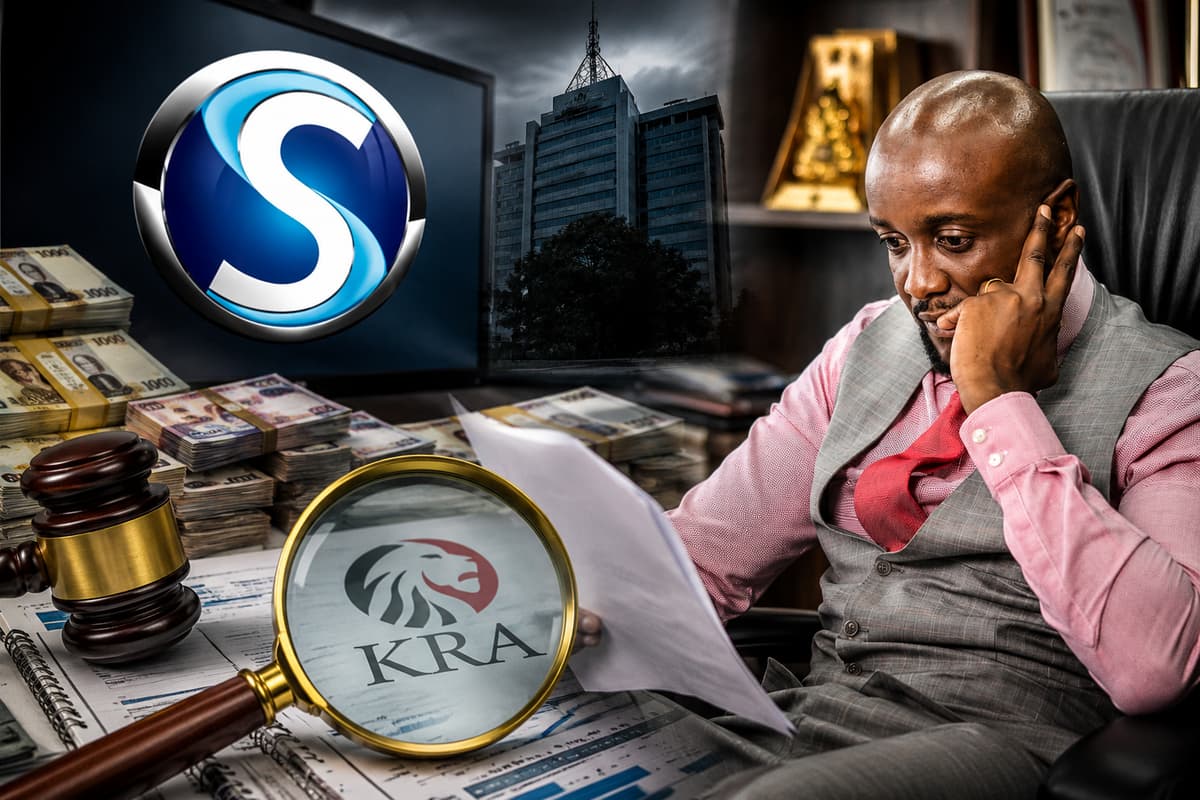
The dispute, she made clear, exists because of one thing and one thing only: the government’s controversial 30-year lease of Chemelil Sugar Company to Kibos Sugar and Allied Industries Limited, controlled by the Chatthe family of Kisumu.
“The rest are well-known and deeply connected people who still walk freely at night.” — MP James K’Oyoo
The Chatthe name Ragbhir Singh Chatte, also known as Jassi or Bhire; his brother Sukhwinder Singh Chatthe, also called Raju; and the extended Channan-Chatthe clan has been woven into the industrial fabric of the Kisumu sugar belt for two decades.
What that fabric has left behind, however, reads less like a development legacy and more like a rap sheet of pollution, fraud allegations, regulatory evasion, and now, a school under siege.
Kenya Insights has pieced together the full, documented anatomy of the Chatthe empire’s operations from the courts, parliament, regulatory agencies, and community testimony. What follows is the record they would rather you never read.
I. THE SUGAR THAT SHOULDN’T BE IN YOUR TEA
Three months before the attack on Chemelil Academy, a ship called the MV Agia Valentina docked at Mombasa Port carrying 27,839 metric tonnes of raw sugar from Durban, South Africa.
The cargo belonged to Mombasa Sugar Refineries Limited MSRL a subsidiary of the Chatthe Group’s Kibos Sugar conglomerate.
It entered Kenya under a special industrial customs code carrying a duty rate of only ten percent, roughly one-quarter of the levy applied to refined sugar for human consumption.
Industrial raw sugar is not fit for the table: it is unprocessed, unrefined, classified by the Kenya Bureau of Standards as unsuitable for direct human consumption, and is legally required to go straight to factory processing. It should never see the inside of a packet destined for your kitchen.
What government investigators found when they checked the books alarmed nine separate agencies simultaneously.
According to a Multi-Agency Team report generated from verification exercises at Mombasa Port, the Nairobi Freight Terminal, and the Kibos processing plant in Kisumu, the quantity Mombasa Sugar Refineries Limited had declared did not match what Kenya Ports Authority’s own OutTurn Report showed sitting in the bonded warehouse.
The difference: 1,481 metric tonnes of sugar that nobody could account for. That is not a rounding error. At current wholesale prices, that quantity represents tens of millions of shillings in untracked sweetener and in Kenya’s sugar sector, unaccounted tonnage at entry has historically had a single destination: the retail market.
1,481 metric tonnes of industrial sugar — stamped NOT FIT FOR HUMAN CONSUMPTION — went missing. Nine government agencies are watching. Nobody has been charged.
The Kenya Sugar Board issued 15 conditions for the eventual release of the consignment, demanding CCTV installations across every storage and processing site, officer escorts for every truck movement, and indelible ink stamping of every bag with the words ‘NOT FIT FOR HUMAN CONSUMPTION.’ Kibos Sugar’s Corporate Affairs Manager, Joyce Opondo, signed the Declaration of Compliance on March 27, 2026. It did not resolve the missing 1,481 tonnes. The consignment remained blocked.
By April 2026, industry insiders were telling investigators what this newspaper corroborated through multiple sources: a scheme in which raw industrial sugar, brought in at a fraction of the duty of refined table sugar, was allegedly repackaged and sold across Kenyan supermarkets and small shops as ordinary table sugar.
Cabinet Secretary Lee Kinyanjui had opened a special import window in August 2025 citing a domestic sugar shortfall Kenya produced only 551,805 tonnes in the first 11 months of 2025 against a national need exceeding one million tonnes but had promised strict controls.
Those controls, sources inside the industry alleged, were neutralised by phone calls from ‘above’ whenever officers moved to act. ‘Every time officers try to act, a phone call comes from above and the file simply disappears,’ one whistleblower told investigators according to reports seen by this newspaper.
In June 2026, just two days before the attack on Chemelil Academy, the National Assembly’s Departmental Committee on Trade, Industry and Cooperatives physically visited the Kibos Sugar facilities in Kisumu.
Committee Chairman Benard Shinali confronted officials about the absence of clearance documents for the movement of portions of the consignment from Mombasa to Nairobi and Kisumu.
‘There is no clearance document provided in your documentation. We need to see the document that authorised the movement of the sugar from the Mombasa warehouse to the Nairobi warehouse. We require answers urgently so that we can know Kenyans’ lives are safe,’ he said.
The Kenya Sugar Board’s acting CEO could not explain how 3,900 tonnes had reached Kisumu and a further 2,500 tonnes arrived at the Inland Container Depot in Nairobi before formal clearance was resolved. The committee directed that all activities on the consignment be suspended pending investigation.
The National Integrity Alliance, in a statement dated April 24, 2026, called this a constitutional violation not merely a commercial or criminal matter citing infringement of citizens’ right to safe food, consumer protection, and human dignity.
They drew explicit parallels to the 2023 condemned sugar scandal, in which bags of sugar that had been held in Mombasa since 2018 and declared unfit for human consumption found their way back into the market through a network of government officials, politicians, and traders.
That episode saw 27 government officers suspended, senior security officials investigated, and Kenya Bureau of Standards management placed under scrutiny. The warning then went unheeded. Now the same Chatthe-linked business sits at the centre of an almost identical investigation.
II. THE RIVERS THEY TURNED BLACK
Before the phantom sugar, before Chemelil, there was Kibos river. And Nyamasaria river. And Lielango river in Miwani. Ask the people who live downstream from the Chatthe Group’s original Kibos Sugar factory what the rivers looked like before the distillery was commissioned, and they will describe clean waterways where fish swam and children bathed.
Ask them what happened after, and the description shifts: black, odorous discharge; a thick liquid known as vinasse — the byproduct of alcohol distillation flowing openly into waterways that feed into Lake Victoria.
This is not community allegation. It is a finding of the Kisumu Environment and Lands Court, delivered in July 2019 after Benson Ambuti Adega and other residents proved in evidence that the Kibos Sugar Group including Kibos Power and Kibos Distillers had expanded its crushing capacity from 500 to over 1,650 tonnes per day, commissioned a distillery, a paper mill, and additional land parcels, all without the full Environmental Impact Assessments required by the Environmental Management and Coordination Act.
The court found the original EIA licence and its subsequent variations were not just deficient but in some cases ‘procured fraudulently,’ without proper studies, without public participation, and without covering the actual sites in operation. It declared the licences void from the very beginning and issued a permanent injunction against operations until full lawful compliance was demonstrated. NEMA had already shut portions of the distillery and paper operations. Downstream water samples showed elevated conductivity. Communities reported fish deaths, foul-smelling water, health complications, and loss of livelihoods linked to the rivers and the lake.
The Chatthe Group appealed.
In the Court of Appeal proceedings, a damning discovery emerged: documents purportedly from the Kisumu County Assembly’s Water, Environment and Natural Resources Committee submitted by Kibos Sugar as evidence that it had obtained a regulatory clean bill of health had never been discussed in the County Assembly at all. They were not in the Hansard.
The Vice Chairman of the very committee whose authority the documents claimed confirmed to the court that the report was a forgery. The Court of Appeal cited this finding explicitly. When environmental compliance reports submitted to a judicial tribunal are found to be fabricated, that is not a paperwork irregularity.
That is evidence of a business that, when the law closes in, manufactures its way out. The Court of Appeal ultimately gave Kibos a reprieve from the 2019 closure order but the record of the forged documents, the river pollution, the illegal EIA procurement, stands in the public record.
Documents purportedly from the Kisumu County Assembly committee were submitted in court to prove environmental compliance. The Vice Chairman confirmed the reports were forgeries.
The same Joyce Opondo who signed Kibos Sugar’s 2026 Declaration of Compliance at Mombasa Port the document meant to assure nine government agencies that 27,839 tonnes of sugar would be handled safely previously attributed contamination of a local river to a ‘clean-up exercise gone wrong,’ describing it as an accidental discharge. The company’s communications posture toward environmental accountability, it would appear, has been consistent across a decade.
III. THE STOLEN LAND AND THE VANISHING COURT FILE
The third strand of the Chatthe story concerns land: specifically, roughly 10,000 acres of prime nucleus estate attached to the defunct Miwani Sugar Mills in Kisumu County, land that communities from the Kano and Nandi peoples donated generations ago for the establishment of Kenya’s oldest sugar factory. The saga involves a court order that may have been forged, a case file that vanished from court records, a company that allegedly paid nothing for land it claims to have bought for Sh742 million, and Sukhwinder Singh Chatthe the chairman of Kibos Sugar and Allied Industries standing in a Kisumu criminal dock, acquitted only on technicalities in 2019.
The mechanics of the alleged fraud, as reconstructed from parliamentary hearings, court records, and the petition tabled by Suba South MP Caroli Omondi in February 2026, run as follows. In 1993, a claimant named Nagendra Saxena whose identity and origins remain the subject of a separate parliamentary petition demanding verification filed suit against Miwani Sugar Company allegedly seeking to recover a debt of KSh 114 million.
A subsequent court order, on the basis of which a public auction was held in 2007, was later found by Justice Olga Sewe then heading the judiciary in Kisumu to be a forgery.
The original case file had vanished from court records.
On July 29, 2011, the Court of Appeal nullified the entire auction transaction and affirmed that the land belonged to Miwani Sugar Company. Crossley Holdings Limited, the company that claims to have acquired the estate in that auction, is directly connected to the Chatthe family: Sukhwinder Singh Chatthe serves as its CEO.
In 2018, then-Director of Public Prosecutions Noordin Haji ordered the prosecution of Sukhwinder Singh Chatthe, Crossley Holdings, and seven other suspects for conspiracy to fraudulently transfer the land. The deputy court registrar believed to have orchestrated the forged court order was removed from the judiciary and also charged.
A Kisumu magistrates court acquitted Chatthe and co-accused in 2019, finding that the EACC investigation had been shoddy a verdict that exposed the weakness of the prosecution rather than exonerating the transaction. Parliament heard from Agriculture PS Hamadi Boga, in sworn testimony, that Crossley Holdings did not pay the Sh1.5 million bidding fee for the auction, and did not pay the Sh742 million auction price. There is no payment record. There is no transfer receipt. There is, in essence, no evidence that the transaction for which Crossley claims ownership actually took place as a legitimate commercial exchange.
In April 2025 the very month before the Chemelil Sugar lease was handed to the Chatthe Group Agriculture PS Kipronoh Ronoh signed a letter directing the Kenya Sugar Board to instruct its lawyers to sign a consent recognising Crossley Holdings as the lawful owner of the Miwani land.
The move, which would have unilaterally handed thousands of acres of disputed public-adjacent community land to a company whose ownership claim a court of appeal had nullified and whose chairman had faced criminal prosecution, was described in parliament as extraordinary.
Miwani Sugar’s own lawyers refused to sign, citing fraud and professional ethics.
By February 2026, a formal parliamentary petition had been tabled, putting the Cabinet and PS Ronoh on the spot. The National Assembly Lands Committee, after hearings in March 2026, heard the Agriculture PS contradict the Crossley claim entirely, telling MPs that the land belongs to the Government of Kenya directly contradicting the letter his own office had signed eleven months earlier.
The chairman of Kibos Sugar was prosecuted for fraud in the Miwani land case. A year later, his family’s company was awarded the Chemelil Sugar lease.
Kisumu Governor Anyang Nyong’o did not miss the juxtaposition. He flagged publicly and pointedly that the same government had awarded the Chemelil Sugar lease to Kibos Sugar whose chairman Sukhwinder Singh Chatthe had been among those prosecuted in the Miwani criminal case while the Miwani land dispute remained live in courts and parliament. No formal connection between the two decisions has been proven. The proximity, however, is a matter of public record.
IV. THE SCHOOL THEY DECIDED TO OWN
When Kibos Sugar and Allied Industries took over Chemelil Sugar Company on May 10, 2025, the government told parents and the community that the academy attached to the mill was explicitly excluded from the lease.
Agriculture PS Kipronoh Rono said so publicly. A transition team from the Education and Agriculture ministries was formed. It was meant to be reassuring. It was not.
By October 31, 2025, the original Chemelil Sugar Company had been dissolved and replaced by Chemelil Sugar Company 2025 Limited the new Chatthe entity.
On that same day, or within days of it, every teaching and non-teaching staff member at Chemelil Sugar Academy was declared redundant. This happened in the middle of national KCSE examinations, with students mid-exam and teachers needed at their posts. Salaries for November and December 2025 were suspended despite the school operating on fees paid by parents. Over 500 students would miss the entirety of the first school term of 2026. Staff who received new contracts found salary cuts of over 50 percent.
The Parents Association chair, Fredrick Otieno, told this newspaper’s source: ‘They suspended salaries for November and December on the guise that schools were closed, despite the fact that the school runs on a budget from fees paid by parents.’
When parents demanded answers at a Special General Meeting on January 7, 2026, the company’s head of corporate affairs, Jacob Jagero, was dismissive. He questioned the Parents Association’s right to manage ‘a school that belongs to a private entity,’ suggesting that ‘external forces’ were influencing parents. The school remained closed. In January 2026, as schools across Kenya reopened for the new academic year, Chemelil Sugar Academy’s gates stayed shut. More than 500 children sat at home.
The parents, denied answers and facing an operator whose own environmental and legal record they had now read about in newspapers, made a decision.
On June 11, 2026, a special general meeting resolved that the institution must be run independently through the Chemelil Educational Registered Trustees severing the academy from the mill’s new private management.
The resolution was unambiguous: this community asset, serving students from across Nyanza and the Rift Valley, would not be handed to the same interests that had turned rivers toxic, submitted forged documents in court, and fired staff mid-KCSE.
One week later, at precisely the moment students were reporting back after the half-term break, thirty armed men arrived at the gate.
V. THE PATTERN THAT CONNECTS EVERYTHING
The Chatthe Group’s corporate communications team would have you believe that each of these episodes is separate: the sugar import is a regulatory misunderstanding; the river pollution was an accidental discharge and anyway the courts gave Kibos a reprieve; the Miwani land case ended in acquittal; the school dispute is a contractual interpretation question; the attack is a criminal matter under investigation. In isolation, each framing has a surface plausibility. In aggregate, they reveal a method.
The method is this: expand aggressively into state assets and community-adjacent resources; meet resistance with litigation, manufactured compliance documentation, and political rehabilitation; externalise all costs environmental, social, educational onto the communities in which you operate; and when community institutions organise to protect themselves, ensure that organisation becomes uncomfortable enough to collapse.
The Chatthe Group did not build an empire by absorbing the social contract obligations of the state mills they displaced. They built it by ensuring those obligations were someone else’s problem.
Consider the timeline.
The 2019 court order closing their factory is quashed on appeal with the help of documents later found to be forgeries. The 2019 criminal acquittal in the Miwani case is secured through a shoddy prosecution.
The 2025 Chemelil lease is awarded without competitive advertising, without visible checks on the bidder’s regulatory and criminal history, and without meaningful public participation the very process that Kisumu Governor Nyong’o and multiple MPs condemned as secretive and irregular. And within twelve months of the Chemelil takeover, there are phantom tonnes of industrial sugar at the port, a school in crisis, and then a school under attack.
This is not a company that has had bad luck with regulators. This is a company whose record demonstrates that rules are obstacles to be negotiated around, not boundaries to respect.
The broader sugar sector context only sharpens the concern. Jaswant Singh Rai’s West Kenya Sugar already operating Nzoia Sugar under a lease described by the Auditor-General as ‘unsupported’ and obtained without a formal handover document, lease contract, or independent asset valuation now controls close to half of Kenya’s total milling capacity through West Kenya, Nzoia, Sukari, Olepito, and Naitiri, plus controversial access to Mumias Sugar’s electricity co-generation plant granted directly by State House over the objections of area leaders.
The concentration of sugar-belt power in two families Rai and Chatthe operating under opaque 30-year leases is not sugar sector reform. It is a transfer of strategic national infrastructure to oligarchs on terms that neither the Auditor-General nor Parliament can properly scrutinise, because the documents were never provided for audit review.
Ruth Odinga’s warning, issued from Kisumu on June 20, extended beyond Chemelil. ‘What happened at Chemelil mirrors what has already been happening in Muhoroni. Workers and farmers there welcomed the leasing of Muhoroni Sugar Company with real hope, after years of mismanagement under state ownership.
That hope has been betrayed.’ Her promise to issue a separate statement on the Crossley Holdings land controversy involving Miwani is not a political aside. It is a thread that, if pulled, leads back to the same family now running the school whose staff were beaten and whose offices were ransacked on June 18.
VI. WHAT PARLIAMENT MUST NOW DO
The Administration and Internal Security Committee chaired by Gabriel Tongoyo is tabling a preliminary report this week following interrogation of Interior Cabinet Secretary Kipchumba Murkomen. The questions on the table who sent the attackers, who are the ‘deeply connected’ individuals among the remaining eight suspects, and what does the lease transition have to do with any of it are the right questions. But they are the surface questions. The deeper questions are the ones this newspaper is putting to both the committee and the public:
Why was the Chemelil Sugar lease awarded to Kibos Sugar and Allied Industries when the chairman of the holding group was at the time a recently acquitted co-accused in a criminal fraud case involving the forgery of court orders and the theft of community land? What due diligence was conducted on the Chatthe Group’s regulatory history before the government handed them a 30-year public asset lease? Who in the Ministry of Agriculture or the Office of the Agriculture PS made the decision to proceed, and on whose political instruction? Why does the Kenya Sugar Board the regulatory body meant to oversee this sector lack a quorum following a court injunction in November 2023, rendering it unable to independently approve or reject imports? Who benefits from that vacuum? Why, as whistleblowers alleged to investigators, do enforcement actions against Kibos Sugar at Mombasa Port result in phone calls from ‘above’ that make files disappear?
The children of Chemelil 457 of them, all safe on June 18 according to police deserve those answers, not just the identities of the panga-wielders.
Their parents, who organised, voted, and moved to protect their school through Registered Trustees, were targeted because they made themselves a problem for an operator with a demonstrated record of treating inconvenient resistance as a cost to be managed.
Until the full chain of accountability is traced from the school gate to the boardroom to the lease agreement to the Cabinet decision to whoever made the phone calls — the violence at Chemelil Academy will remain what it currently is: a symptom without a diagnosis, and an injustice without a reckoning.
The children of Chemelil deserve to know not just who swung the pangas, but who gave the orders and who, in government, made all of this possible.
The Chatthe Group did not respond to detailed questions sent by this newspaper. Kibos Sugar’s corporate affairs contacts declined to comment on the record. Sukhwinder Singh Chatthe and Ragbhir Singh Chatte could not be reached for comment. The silence of men who control rivers, land, a refinery, a school, and a 30-year state lease is itself, at this point, a statement.







Comments