
Africa
Sudan’s RSF, Allies Sign Charter In Nairobi To Form Parallel Government
The signing took place in a closed event, in contrast to a flashier kick-off earlier this week in Nairobi.

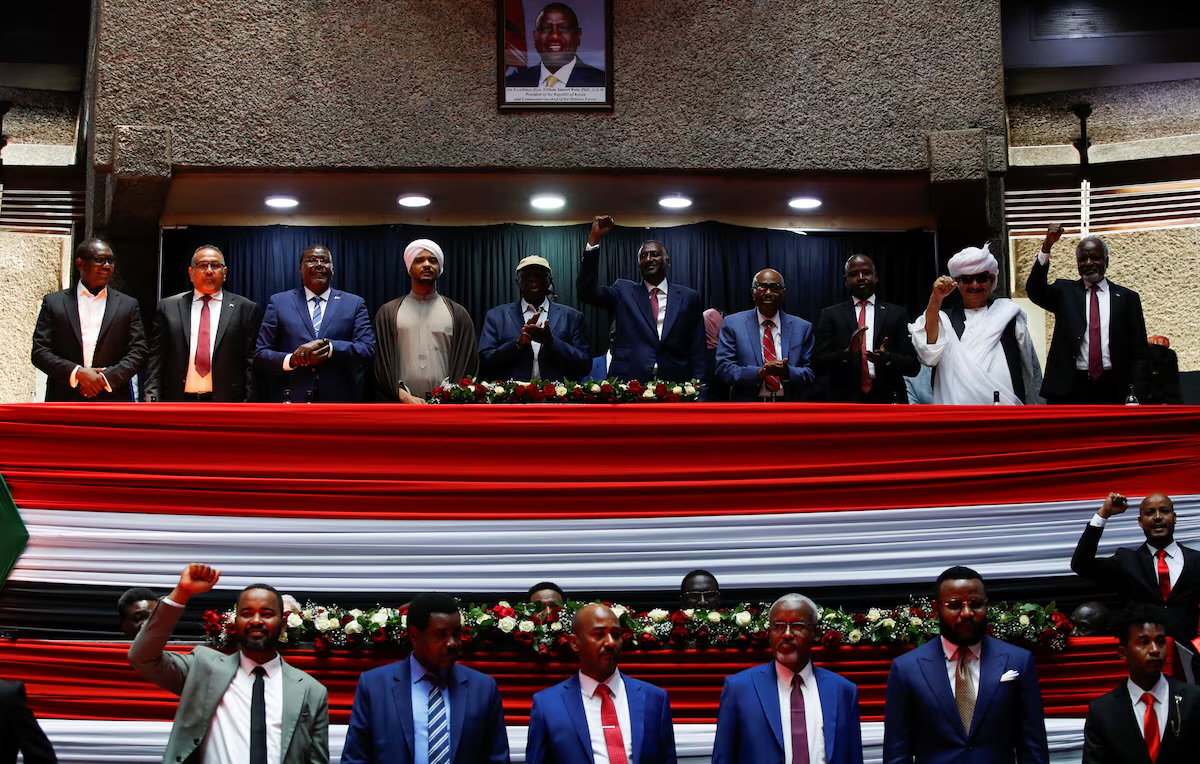
Sudan’s Rapid Support Forces signed a charter with allied political and armed groups late on Saturday to establish a “government of peace and unity”, signatories al-Hadi Idris and Ibrahim al-Mirghani told Reuters.
Among the signatories to the charter is Abdelaziz al-Hilu, a powerful rebel leader who controls vast swathes of territory and troops in South Kordofan state, and who has long demanded that Sudan embrace secularism.
Such a government, which has already drawn concern from the United Nations, is not expected to receive widespread recognition, but is a further sign of the splintering of the country during a civil war that has lasted almost two years.
The RSF has seized most of the western Darfur region and parts of the Kordofan region in the war, but is being pushed back from central Sudan by the Sudanese army, which has condemned the formation of a parallel government.
Idris, a former official and head of an armed group, said the government’s formation will be announced from inside the country in the coming days.
According to the text of the charter, the signatories agreed that Sudan should be a “secular, democratic, non-centralised state” with a single national army, though it preserved the right of armed groups to continue to exist.
The charter said the government did not exist to split the country, but rather to unify it and to end the war, tasks it said the army-aligned government operating out of Port Sudan had failed to do.
General Mohamed Hamdan Dagalo, head of the paramilitary RSF, which has been accused of widespread abuses including genocide, was hit with sanctions by the U.S. earlier this year.
Dagalo had previously shared power with the army and civilian politicians as part of an agreement following the ouster of Omar al-Bashir in 2019. The two forces ousted the civilian politicians in a 2021 coup before war erupted between them over the integration of their troops during a transition to democracy.
The conflict has devastated the country, creating an “unprecedented” humanitarian crisis and driving half the population into hunger, with famine in multiple areas.
The signing took place in a closed event, in contrast to a flashier kick-off earlier this week in Nairobi.
Both events were hosted in Kenya, drawing condemnation from Sudan and domestic criticism of Kenyan President William Ruto for plunging the country into a diplomatic melee.
The Sudanese government has accused the United Arab Emirates of backing the RSF militarily and financially, charges U.N. experts and U.S. lawmakers say are credible. The UAE denies the accusation.
Sudan earlier this week passed changes to the country’s constitutional document, giving the army expanded powers. General Abdel Fattah al-Burhan says the army would be announcing its “war cabinet” soon.
(Reuters)
Kenya Insights allows guest blogging, if you want to be published on Kenya’s most authoritative and accurate blog, have an expose, news TIPS, story angles, human interest stories, drop us an email on [email protected] or via Telegram




Court Upholds Gachagua Impeachment, Awards Him Sh50M In Constitutional Damages To Be Paid By Senate

Somali FIFA Referee Denied Entry To US Ahead Of 2026 World Cup: Reports

David Maraga: Kenya’s Ex-Chief Justice Arrested At Protest Against Building On National Park

KRA Warns It Will Automatically File Tax Returns for Kenyans Who Miss June 30 Deadline Using Its Own Data

Govt Plans to Monetise eCitizen Data in New Revenue Drive

Dennis Onyango: Why Raila Won Elections But Never Became President

Israel, Iran Trade Fire Despite Trump’s Call For Restraint

Dennis Onyango Lifts Lid on Raila’s Inner Circle, Says Sifuna Lost Baba’s Trust While Babu Was Viewed as a Threat

Sibling Rivalry? Cracks Emerge Within Linda Mwananchi

Instant Traffic Fines Still Active Despite Court Order, NTSA Clarifies

Cement, Cash and Courts: How the Hashu Dynasty Crushed the Ramji Brothers for Fourteen Years and Why the Walls Are Now Closing In

Inside The Urban Planning Cartel That Owns Nairobi

Why Ruto’s Favourite Candidate Adan Mohammed Could Be Locked Out of the KRA Top Job

LifeCare on the Brink: SHA Fraud, Stolen Wages, and the Rotten Empire Jayesh Saini Built

Este Medical Kenya Fights American’s Explosive Complaints

The Rot Inside Absa: How Bank Insiders Are Looting Nairobi’s Customers

Betika Faces DCI Probe, Directors Arrest and License Revocation Over Massive 29.5 Million Safaricom Customers’ Data Breach

Inside FAFSA Fraud: How Kenyan Cybercriminals Siphoned Millions from America’s Sh12 Billion Student Loan System

Fresh Move Launched to Remove Kenya Railways MD Mainga From Office After Awarding Sh817 Million Consultancy Contract

Court Confirms Safaricom Customers Data Was Sold To Betting Companies In Seven-Year Cover-Up
-
 Investigations4 days ago
Cement, Cash and Courts: How the Hashu Dynasty Crushed the Ramji Brothers for Fourteen Years and Why the Walls Are Now Closing In
-
 Investigations3 days ago
Inside The Urban Planning Cartel That Owns Nairobi
-
 Investigations2 weeks ago
LifeCare on the Brink: SHA Fraud, Stolen Wages, and the Rotten Empire Jayesh Saini Built
-
 Investigations1 week ago
Betika Faces DCI Probe, Directors Arrest and License Revocation Over Massive 29.5 Million Safaricom Customers’ Data Breach
-
 Investigations4 days ago
Fresh Move Launched to Remove Kenya Railways MD Mainga From Office After Awarding Sh817 Million Consultancy Contract
-
 News1 week ago
Eight Students Arrested In Kenya After Suspected Deadly School Arson Attack
-
 News1 week ago
How Uhuru’s Deal With Obama In 2015 Paved Way For America’s Ebola Plan In Kenya
-

 Investigations2 weeks ago
The Invisible Hand: Al Jazeera Further Exposes How Safaricom Became The Regime’s Most Powerful Spy