
Africa
Ruto Wants Haiti To Be Declared Part Of Africa
The Draft Declaration, also advocates for the transition of the Multinational Security Support (MSS) mission in Haiti into a full-fledged United Nations Peacekeeping Operation.

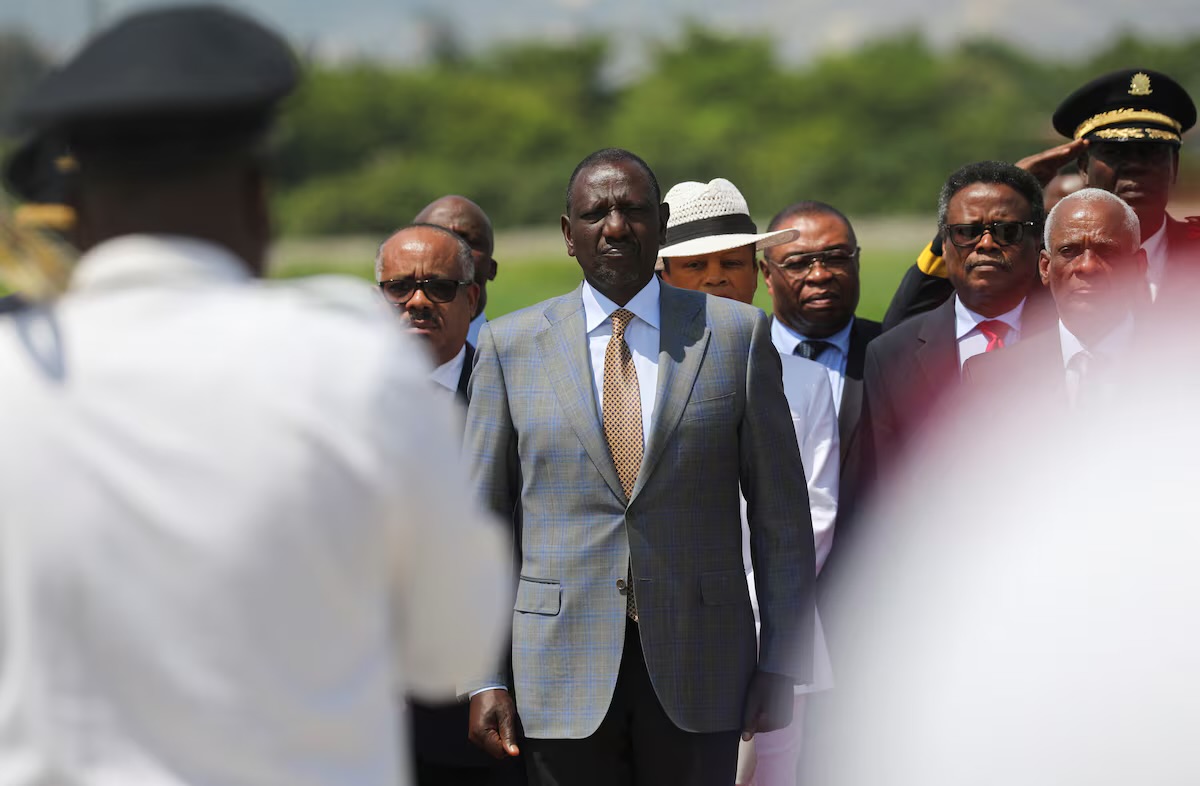
President William Ruto has called on the African Union (AU) to formally recognize Haiti as part of Africa’s Sixth Region. Speaking at the 38th Ordinary Assembly of the AU in Addis Ababa, Ethiopia, President Ruto proposed the adoption of a Draft Declaration on AU Solidarity with Haiti.
The proposal, announced by State House Spokesman Hussein Mohammed, seeks to affirm Haiti’s historical and cultural ties to Africa and ensure sustained support for the Caribbean nation, which is grappling with a devastating security and humanitarian crisis.
The Draft Declaration, also advocates for the transition of the Multinational Security Support (MSS) mission in Haiti into a full-fledged United Nations Peacekeeping Operation.
This proposal comes as Kenya prepares to lead the MSS mission, deploying 1,000 police officers to Haiti in a bid to restore order and combat the rampant gang violence that has paralyzed the nation.
Haiti’s Crisis:
Haiti’s turmoil has intensified since the assassination of President Jovenel Moïse in July 2021. The power vacuum has been exploited by armed gangs, leading to widespread violence and lawlessness.
As of October 2024, gangs controlled approximately 80% of Port-au-Prince, the nation’s capital, resulting in over 3,661 deaths and displacing around 700,000 people within the year.
The Haitian National Police, undermined by limited resources and support, have struggled to combat these well-armed groups effectively.
Kenya’s Role in Haiti
In response to international calls for assistance, Kenya has taken a leading role in the MSS Mission in Haiti. The United Nations Security Council authorized this mission in October 2023, aiming to assist Haitian authorities in restoring law and order.
Kenya’s commitment has been substantial; by January 2025, it had deployed over 600 police officers to Haiti, working alongside personnel from countries such as Jamaica, Guatemala, and El Salvador.
Despite these efforts, the mission has faced challenges, including insufficient funding and equipment, which have hindered its overall effectiveness.
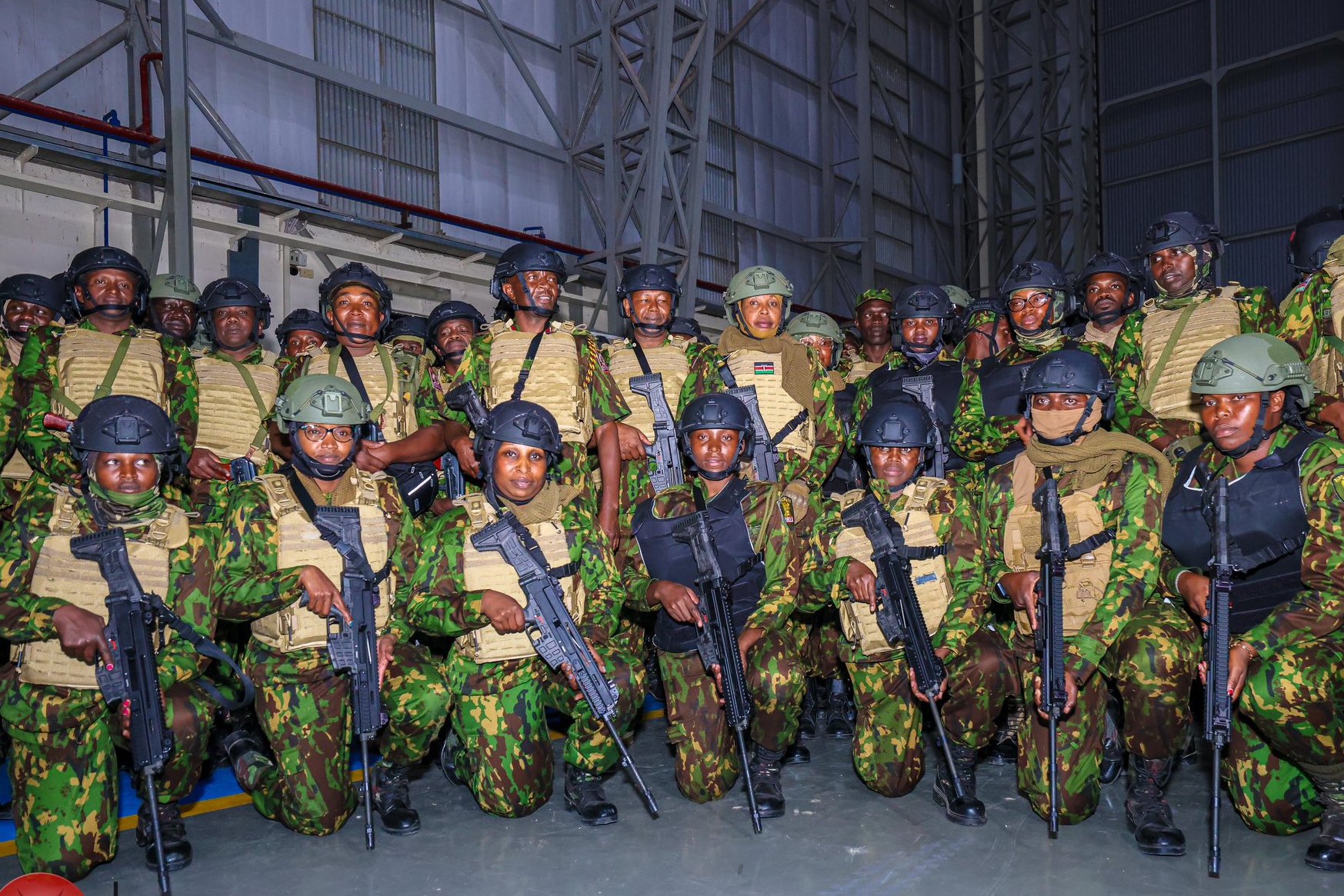
A new contingent of 144 Kenyan police officers was sent to Port-au-Prince, Haiti in January to join the Multinational Security Support (MSS) mission aimed at combating gang violence in the Caribbean nation.
President Ruto’s call for Haiti’s inclusion in the AU’s Sixth Region underscores a broader vision of pan-African solidarity.
By integrating Haiti more closely with African institutions, there is potential for enhanced cultural, economic, and political ties.
This move could also pave the way for more robust support mechanisms to address the ongoing crisis in Haiti, leveraging the collective resources and influence of the African continent.
President Ruto has framed Kenya’s involvement as a moral obligation, citing Haiti’s historical ties to Africa. “Haiti is the daughter of the African continent,” Ruto stated during a recent address. “Their struggle is our struggle, and their freedom is our freedom.”
The proposal to declare Haiti as Africa’s Sixth Region is seen as an extension of this sentiment.
The concept of a “Sixth Region” refers to the African diaspora, which the AU has long sought to engage as part of its broader vision for continental unity and development.
Haiti, with its predominantly African-descended population and rich cultural heritage, holds a special place in this narrative.
Historical Ties: Haiti and Africa
Haiti’s connection to Africa dates back to the transatlantic slave trade, which brought millions of Africans to the Caribbean.
The Haitian Revolution (1791–1804), led by figures like Toussaint Louverture and Jean-Jacques Dessalines, was a defining moment in the fight against colonialism and slavery.
The revolution not only established Haiti as an independent nation but also inspired liberation movements across Africa and the Americas.
In recent years, Haiti has sought closer ties with the AU, becoming a full member in 2016. However, the country’s inclusion as part of Africa’s Sixth Region would mark a significant symbolic and political shift, potentially unlocking new avenues for support and collaboration.
Challenges
While President Ruto’s proposal has been welcomed by some as a bold and visionary move, it has also raised questions about its feasibility and implications. Critics argue that the AU, which already faces numerous challenges across the continent, may lack the resources and political will to take on Haiti’s complex crisis.
Additionally, the MSS mission itself has been criticized for its lack of clarity and potential risks. Human rights groups have warned that foreign interventions in Haiti have historically failed to address the root causes of instability and, in some cases, exacerbated the crisis.
Moreover, the legal framework for Kenya’s involvement has been contentious. Earlier, Kenya’s High Court had ruled against the deployment, citing constitutional issues, only for the government to navigate around these through bilateral agreements. This has sparked debates on sovereignty and the international legal precedents being set.
Looking Forward
President Ruto’s vision for Haiti involves not only security but also economic and political stabilization, potentially setting a precedent for how African nations can contribute to global peace efforts.
The proposal at the AU Assembly could lead to a formal declaration, enhancing Haiti’s access to African support mechanisms, from peacekeeping to economic aid and cultural exchanges.
However, the success of this initiative will hinge on several factors: the reception by both AU member states and the Haitian populace, the effective transition of the mission to UN oversight, and the genuine improvement in Haiti’s security and governance.
As the world watches, the unfolding of these events will not only define Haiti’s immediate future but also set a tone for international cooperation in crises across continents.
Kenya Insights allows guest blogging, if you want to be published on Kenya’s most authoritative and accurate blog, have an expose, news TIPS, story angles, human interest stories, drop us an email on [email protected] or via Telegram











Kenya Picks Chinese Firm For Sh375 Billion JKIA Upgrade Project After Adani Fallout

The President’s Daughter and The Missing Witness: How Adut Salva Kiir’s Shadow Treasury Silenced Its Most Dangerous Critic

Kisii Under Siege: Governor Arati’s Wife Accused of Hijacking IFMIS and Running a Parallel Government

Al-Shabaab Issues Statement Defending Omar Artan, Accuses U.S. of Discrimination After Referee’s Deportation

Netanyahu To Run For Re-Election, His Party Says, After Trump Raises Doubts

US Cracks Down on Birth Tourism Schemes

Microsoft Limits Employee Use Of Anthropic’s Claude Fable 5 Over Data Retention Concerns, The Verge Reports

Standard Chartered Ghosts Haunt Joshua Oigara At Stanbic As Whistleblower Spills Beans

Caleb Amisi Says Linda Mwananchi Has Lost Direction, Announces Plans To Form A New Movement

Air Canada Pilot Flew Passengers For Years With A Fake Pilot’s License, Police Say

Cement, Cash and Courts: How the Hashu Dynasty Crushed the Ramji Brothers for Fourteen Years and Why the Walls Are Now Closing In

Inside The Urban Planning Cartel That Owns Nairobi

Why Ruto’s Favourite Candidate Adan Mohammed Could Be Locked Out of the KRA Top Job

LifeCare on the Brink: SHA Fraud, Stolen Wages, and the Rotten Empire Jayesh Saini Built

Este Medical Kenya Fights American’s Explosive Complaints

Betika Faces DCI Probe, Directors Arrest and License Revocation Over Massive 29.5 Million Safaricom Customers’ Data Breach

The Rot Inside Absa: How Bank Insiders Are Looting Nairobi’s Customers

Fresh Move Launched to Remove Kenya Railways MD Mainga From Office After Awarding Sh817 Million Consultancy Contract

Inside FAFSA Fraud: How Kenyan Cybercriminals Siphoned Millions from America’s Sh12 Billion Student Loan System

Court Confirms Safaricom Customers Data Was Sold To Betting Companies In Seven-Year Cover-Up
-
 Investigations6 days ago
Cement, Cash and Courts: How the Hashu Dynasty Crushed the Ramji Brothers for Fourteen Years and Why the Walls Are Now Closing In
-
 Investigations5 days ago
Inside The Urban Planning Cartel That Owns Nairobi
-
 Investigations1 week ago
Betika Faces DCI Probe, Directors Arrest and License Revocation Over Massive 29.5 Million Safaricom Customers’ Data Breach
-
 Investigations6 days ago
Fresh Move Launched to Remove Kenya Railways MD Mainga From Office After Awarding Sh817 Million Consultancy Contract
-

 News2 weeks ago
Eight Students Arrested In Kenya After Suspected Deadly School Arson Attack
-
 News2 weeks ago
How Uhuru’s Deal With Obama In 2015 Paved Way For America’s Ebola Plan In Kenya
-

 Business1 week ago
TRUST BETRAYED: How Senior DTB Bank Insiders Allegedly Looted Sh149 Million From a Customer’s Account Over Five Years
-

 Investigations5 days ago
Why Drivers Cheered Bolt’s Reported Exit: Inside the Slow Financial Strangulation of Thousands of Kenyan Drivers and Riders in Kenya