
News
New Bill in Parliament Seeks to Ban Muguka
Under the proposed changes, muguka would lose its status as a legally recognized crop, stripping away safeguards that currently prevent counties from unilaterally restricting or banning its trade.

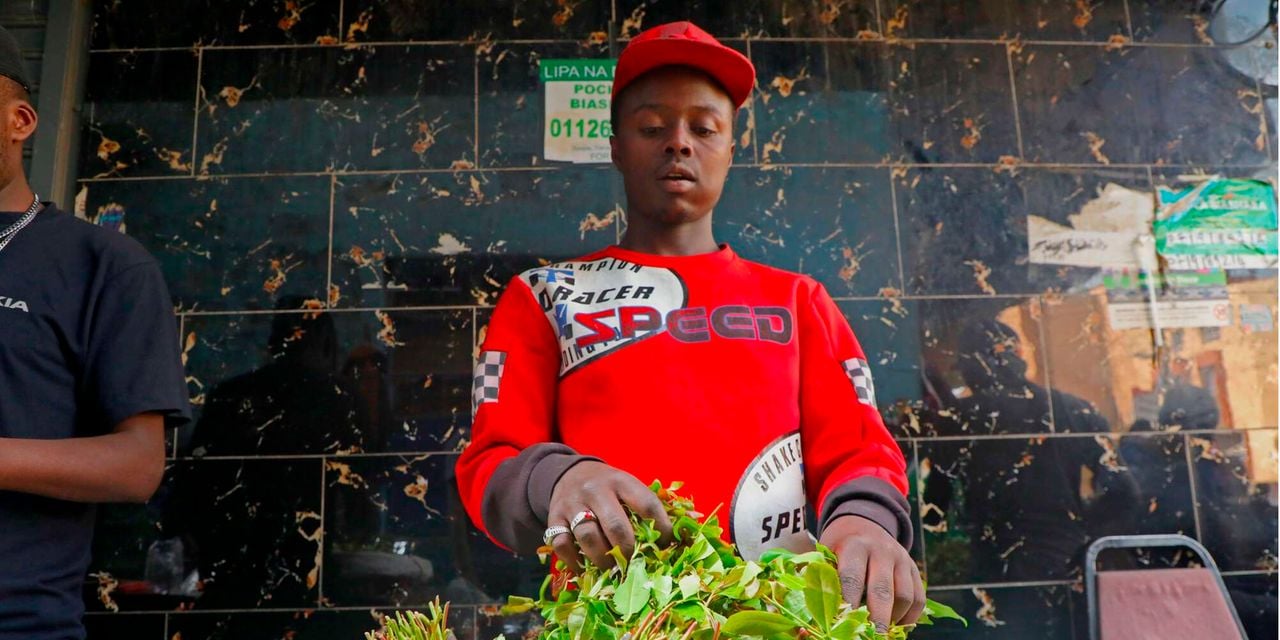
A controversial legislative proposal currently before Kenya’s National Assembly could fundamentally alter the legal status of muguka, potentially opening the door for counties to impose bans on the stimulant crop that supports thousands of farmers across the country.
The Bill, sponsored by Kilifi North Member of Parliament Owen Baya, seeks to amend the Crops Act by separating muguka from miraa (khat) and removing it from the list of scheduled crops—a designation that currently provides legal protection and government support.
Under the proposed changes, muguka would lose its status as a legally recognized crop, stripping away safeguards that currently prevent counties from unilaterally restricting or banning its trade.
The amendment specifically aims to “differentiate muguka from miraa and therefore expressly exclude muguka from being a scheduled crop,” according to the Bill’s text.
The timing of this legislative push comes amid escalating tensions between coastal counties and muguka stakeholders.
Mombasa, Kilifi, and Taita Taveta counties have already moved to ban the sale and distribution of the crop, citing health concerns including dependency, insomnia, elevated blood pressure, and other adverse effects.
For Embu County, where muguka cultivation is concentrated, the implications could be devastating.
The region hosts over 65,000 farmers who depend on the crop, which anchors an economy worth approximately 22 billion shillings.
The potential delisting threatens not only farmer livelihoods but also significant revenue streams—Mombasa County alone collects an estimated one million shillings daily in levies from muguka trade.
The economic stakes extend beyond individual farmers to entire market chains.
In coastal regions, which represent the primary consumer markets, muguka retails between 300 and 600 shillings per kilogram, with prices reaching 1,000 shillings during dry seasons when supply tightens.
Currently, scheduled crops under the 2013 Crops Act benefit from mandatory quality certification, government subsidies, extension services, research support, and national market structures.
Removing muguka from this framework would eliminate these protections and support mechanisms.
The legislative proposal adds a new dimension to an ongoing national debate about muguka regulation.
Last year, President William Ruto criticized attempts by coastal governors to ban the crops, emphasizing their legal recognition under Kenyan law.
However, if the current Bill passes, this legal foundation would be removed, potentially validating county-level restrictions.
The Bill’s progression through Parliament will be closely watched by multiple stakeholders—from Embu farmers whose economic survival depends on continued cultivation, to coastal communities concerned about public health impacts, to county governments seeking greater regulatory control over substances they view as problematic.
As the National Assembly considers this legislation, the outcome will determine whether muguka maintains its protected status or becomes vulnerable to a patchwork of county-level regulations that could fragment or eliminate key markets for this economically significant but controversial crop.
The debate reflects broader tensions in Kenya’s devolved governance system, where national economic interests sometimes clash with county-level social and health concerns, leaving Parliament to balance competing priorities that affect thousands of livelihoods and billions of shillings in economic activity.
Kenya Insights allows guest blogging, if you want to be published on Kenya’s most authoritative and accurate blog, have an expose, news TIPS, story angles, human interest stories, drop us an email on [email protected] or via Telegram












Karua Detained at Entebbe as Uganda Blocks Besigye Lawyer From Entering Country

How KCB and Airtel Turned Kenya’s Unbanked Into a Data Goldmine Behind a ‘Financial Inclusion’ Deal

The Chivayo Network: How a Convicted Fraudster Won Access to Presidents, Passports and Billion-Dollar Deals Across Africa

BURRIED TWICE: The Victoria Bank CEO Yogesh Pattni Files

Court Stops Transfer Of EABL Shares To Asahi By Diageo In A Fresh Snag

Death Before Justice: Stephen Ngei, Victim of Sh180 Million Laptop Tender Scam Linked to Allan Chesang, Killed in Highway Crash

Court Brands Sh1.1 Billion Fee Demand by Lawyer Victor Swanya “Excessive and Exorbitant,” Exposes How City Hall Lets Public Money Bleed Through Legal Bills

Trump Unveils New Air Force One

MR. NO SHOW: Finance Bill 2026 Exposes Ndindi Nyoro’s Political Conmanship

Billionaire Eric Muli Rebukes Musalia Mudavadi Over Nairobi Capital Relocation Debate

Businessman Philip Waithaka Kinuthia’s Minor Son Allegedly Drove Drunk, Killed Two Peponi Students in Ngong Road Horror Crash as Claims of Cover-Up Intensify

Inside NCBA’s Decline: How a Banking Giant Lost Its Strategic Edge

Cement, Cash and Courts: How the Hashu Dynasty Crushed the Ramji Brothers for Fourteen Years and Why the Walls Are Now Closing In

Standard Chartered Ghosts Haunt Joshua Oigara At Stanbic As Whistleblower Spills Beans

South Sudan: Adut Salva Kiir’s Shadow Treasury Exposed

Inside The Urban Planning Cartel That Owns Nairobi

THE VULTURE AND THE SCHEME How Nairobi West Hospital Became the Most Dangerous Institution in Kenya’s SHA Ecosystem and Why the Books Must Be Audited Now

How Adil Popat Saved His Empire On The Eve Of Imperial Bank Collapse and Why Kenya’s Mainstream Media Buried The Story

The President’s Daughter and The Missing Witness: How Adut Salva Kiir’s Shadow Treasury Silenced Its Most Dangerous Critic

Why John Ngumi Is Running From the EACC and Why the Sh415 Million Payday May Be the Least of His Worries
-
 News1 week ago
Businessman Philip Waithaka Kinuthia’s Minor Son Allegedly Drove Drunk, Killed Two Peponi Students in Ngong Road Horror Crash as Claims of Cover-Up Intensify
-
 Business2 weeks ago
Inside NCBA’s Decline: How a Banking Giant Lost Its Strategic Edge
-
 Business2 weeks ago
Standard Chartered Ghosts Haunt Joshua Oigara At Stanbic As Whistleblower Spills Beans
-
 Africa2 weeks ago
South Sudan: Adut Salva Kiir’s Shadow Treasury Exposed
-
 Investigations4 days ago
THE VULTURE AND THE SCHEME How Nairobi West Hospital Became the Most Dangerous Institution in Kenya’s SHA Ecosystem and Why the Books Must Be Audited Now
-
 Business1 week ago
How Adil Popat Saved His Empire On The Eve Of Imperial Bank Collapse and Why Kenya’s Mainstream Media Buried The Story
-
 Africa2 weeks ago
The President’s Daughter and The Missing Witness: How Adut Salva Kiir’s Shadow Treasury Silenced Its Most Dangerous Critic
-
 Business2 weeks ago
Why John Ngumi Is Running From the EACC and Why the Sh415 Million Payday May Be the Least of His Worries