
Investigations
Nairobi Speaker Demands MCAs End Sakaja Team’s Impunity Over Illegal High-Rise Buildings

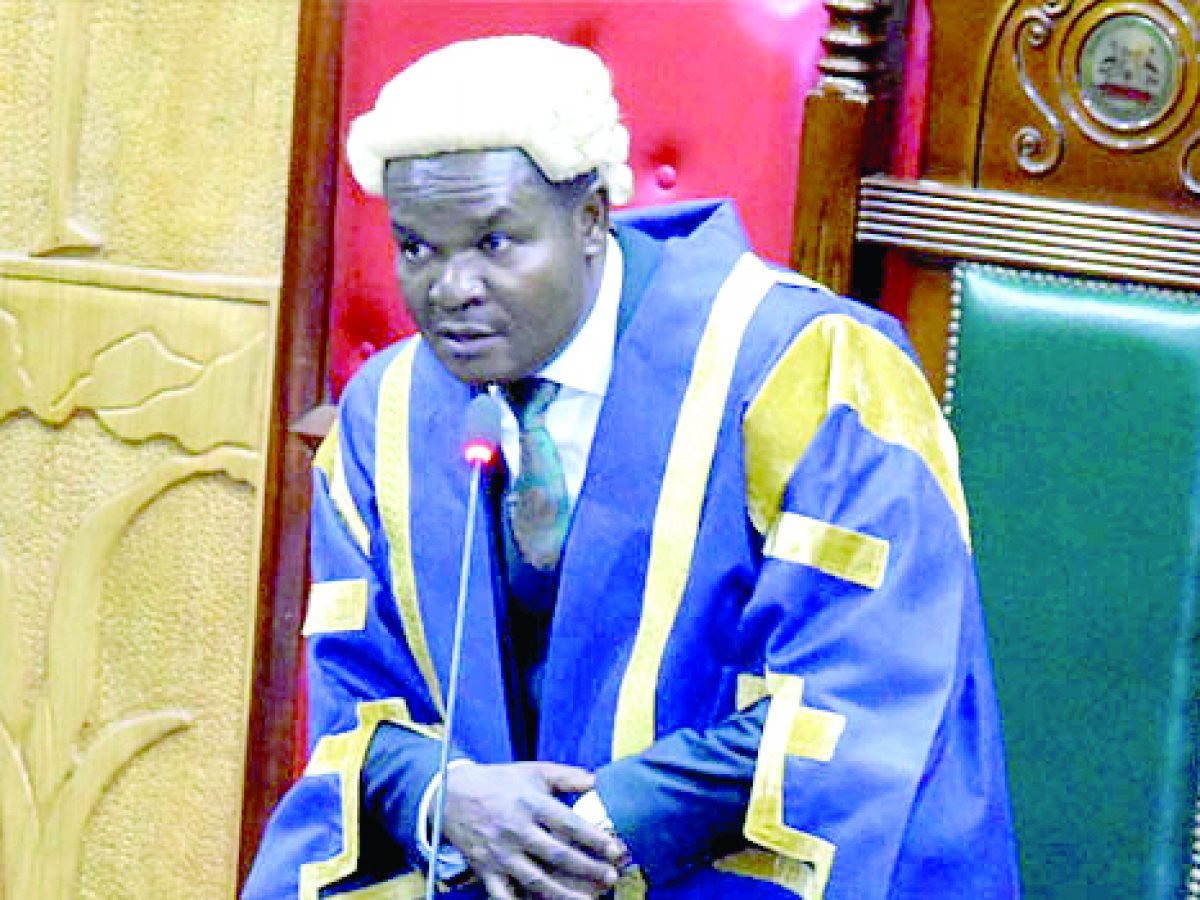
A storm is brewing in Nairobi’s corridors of power as County Assembly Speaker Kennedy Ng’ondi has boldly taken a stand against the unchecked rise of illegal high-rise buildings.
In a strongly worded address, Ng’ondi accused Governor Johnson Sakaja’s administration of overseeing rampant violations in the construction sector.
But he didn’t stop there—he also placed blame on city MCAs for their silence and inaction.
As illegal high-rises continue to mushroom across Nairobi, the Speaker’s call for accountability marks a pivotal moment in the city’s fight against urban lawlessness and poor planning enforcement.

These illegal structures often rise without any community consultation or assembly oversight, creating a toxic mix of corruption, incompetence, and risk to human life. [Photo/Courtesy]
Nairobi County’s Crisis: A City Plagued by Illegal High-rise Buildings
Nairobi is facing a planning disaster of epic proportions. At the heart of the storm are illegal high-rise buildings—unauthorized structures that are altering the city’s skyline while jeopardizing residents’ safety and undermining urban order.
Nairobi County Assembly Speaker Kennedy Ng’ondi is sounding the alarm, calling out both the executive arm of the county government and Members of the County Assembly (MCAs) for allowing this crisis to flourish.
In his address to the Assembly last week, Speaker Ng’ondi directly blamed Governor Johnson Sakaja’s administration for the illegal approvals of high-rise buildings.
According to Ng’ondi, the county’s physical planning department has become a breeding ground for impunity, operating without proper oversight or public engagement.
This, he said, has led to the proliferation of substandard buildings that flout the Physical Planning Act (Cap 286).
“Critical area of concern is physical planning and construction,” Ng’ondi stated. “We have left executive officials in the planning department to run affairs with little accountability.”
He pointed out that many of these buildings are approved without public participation—an outright violation of Section 19 of the Act.
More disturbingly, some MCAs appear unaware of developments happening right in their own wards, raising concerns over possible collusion or gross negligence.
These illegal structures often rise without any community consultation or assembly oversight, creating a toxic mix of corruption, incompetence, and risk to human life.
The Speaker highlighted that many committees within the County Assembly have abandoned their watchdog roles.
“Where they conduct inspection visits, their reports are not forthcoming or lack the detail needed to hold executive officials accountable,” Ng’ondi noted, adding that this lapse has contributed to the collapse of the Ward Development Fund and the disappearance of critical Bills from the House agenda.
Sakaja’s Aides Accused as Oversight Committees Go Silent
The spotlight has also turned on a failed effort to hold Governor Sakaja’s inner circle accountable. A sub-committee formed last year to investigate claims that Sakaja’s aides were meddling in the building approval process was abruptly disbanded.
A whistleblower from within the executive had alleged that certain aides were “calling the shots” in deciding which high-rise projects got greenlighted—a revelation that rocked City Hall but yielded no formal consequences.
Meanwhile, an earlier ad-hoc committee tasked with probing Nairobi’s drastic revenue collection dip remains in limbo, its findings yet to see the light of day almost two years later. This raises a serious concern: who is watching the watchers?
Ng’ondi’s warnings come as illegal high-rise buildings continue to reshape Nairobi’s skyline. Beyond the aesthetics, these structures present a ticking time bomb, particularly in overpopulated neighborhoods where emergency access is limited and infrastructure is already strained.
By challenging sectoral committees to reclaim their oversight power, Speaker Ng’ondi has ignited a critical conversation.
Whether Nairobi’s MCAs will finally rise to the occasion—or allow the city to sink further into disrepair—remains to be seen.
Illegal high-rise buildings are not just a planning issue; they are a governance crisis. And unless the county’s lawmakers step up, the cost could be paid in lives.
Kenya Insights allows guest blogging, if you want to be published on Kenya’s most authoritative and accurate blog, have an expose, news TIPS, story angles, human interest stories, drop us an email on [email protected] or via Telegram











Caleb Amisi Says Linda Mwananchi Has Lost Direction, Announces Plans To Form A New Movement

Air Canada Pilot Flew Passengers For Years With A Fake Pilot’s License, Police Say

Itumbi Claims Kalonzo Has Settled on Sifuna as Running Mate

THE KURIA NETWORK TAKES THE BOARDROOM: How Moses Kuria’s Inner Circle Seized Control of Africa Mega Agricorp And the Paper Trail That Links It All

Who Is The Somali Referee Barred From Entering The US For The World Cup?

Inside NCBA’s Decline: How a Banking Giant Lost Its Strategic Edge

Shiquo wa Hii Style Counts Costly Lesson After Anti-Counterfeit Raid Wipes Out Shop Stock

“Are They Giving Kickbacks To Government Officials?” The Scandalous Record Behind Kenya’s Most Favoured Chinese Contractor

Two MPs Defrauded of Sh93.5 Million in Karen Land Scam

Gachagua Rejects Sh50 Million Court Compensation, Calls It An Insult

Cement, Cash and Courts: How the Hashu Dynasty Crushed the Ramji Brothers for Fourteen Years and Why the Walls Are Now Closing In

Inside The Urban Planning Cartel That Owns Nairobi

Why Ruto’s Favourite Candidate Adan Mohammed Could Be Locked Out of the KRA Top Job

LifeCare on the Brink: SHA Fraud, Stolen Wages, and the Rotten Empire Jayesh Saini Built

Este Medical Kenya Fights American’s Explosive Complaints

Betika Faces DCI Probe, Directors Arrest and License Revocation Over Massive 29.5 Million Safaricom Customers’ Data Breach

The Rot Inside Absa: How Bank Insiders Are Looting Nairobi’s Customers

Inside FAFSA Fraud: How Kenyan Cybercriminals Siphoned Millions from America’s Sh12 Billion Student Loan System

Fresh Move Launched to Remove Kenya Railways MD Mainga From Office After Awarding Sh817 Million Consultancy Contract

Court Confirms Safaricom Customers Data Was Sold To Betting Companies In Seven-Year Cover-Up
-
 Investigations6 days ago
Cement, Cash and Courts: How the Hashu Dynasty Crushed the Ramji Brothers for Fourteen Years and Why the Walls Are Now Closing In
-
 Investigations5 days ago
Inside The Urban Planning Cartel That Owns Nairobi
-
 Investigations1 week ago
Betika Faces DCI Probe, Directors Arrest and License Revocation Over Massive 29.5 Million Safaricom Customers’ Data Breach
-
 Investigations6 days ago
Fresh Move Launched to Remove Kenya Railways MD Mainga From Office After Awarding Sh817 Million Consultancy Contract
-

 News2 weeks ago
Eight Students Arrested In Kenya After Suspected Deadly School Arson Attack
-

 News2 weeks ago
How Uhuru’s Deal With Obama In 2015 Paved Way For America’s Ebola Plan In Kenya
-

 Business7 days ago
TRUST BETRAYED: How Senior DTB Bank Insiders Allegedly Looted Sh149 Million From a Customer’s Account Over Five Years
-

 Investigations4 days ago
Why Drivers Cheered Bolt’s Reported Exit: Inside the Slow Financial Strangulation of Thousands of Kenyan Drivers and Riders in Kenya