
News
“Leaders Talk Big But Systems Don’t Move,” Vietnam Gas President Slams Kenya’s Leadership After Meeting With Ruto
According to Chau, Kenyan leaders are content with rhetoric while failing to build systems that actually deliver results.

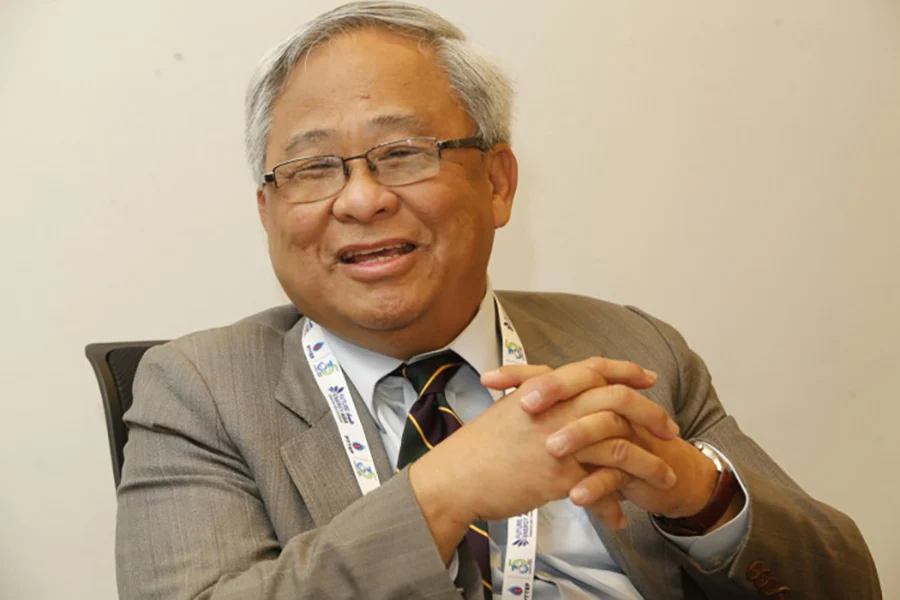
In a scathing critique that has sent ripples through diplomatic circles, Vietnam Gas President Doanh Chau publicly condemned Kenya’s leadership approach following high-level meetings with President William Ruto and Prime Cabinet Secretary Musalia Mudavadi in Nairobi.
Chau, who also serves as President at the Energy Science Group, didn’t mince words in his assessment: “Behind the polished language was a painful truth: there is no serious execution culture” in Kenya’s governance.
The energy executive’s critique centers on what he describes as Kenya’s fundamental challenge—not a shortage of money or talent, but “the absence of long-term vision and the dominance of short-term gain.”
According to Chau, Kenyan leaders are content with rhetoric while failing to build systems that actually deliver results.
“Leaders talk big, but systems don’t move,” Chau observed, pointing to the stark contrast in electricity generation between Vietnam and Kenya.
Despite having twice Kenya’s population, Vietnam produces over 17 times more power at 70 GW compared to Kenya’s mere 4 GW.
“This is not a side issue—it’s the foundation of economic development,” Chau emphasized.
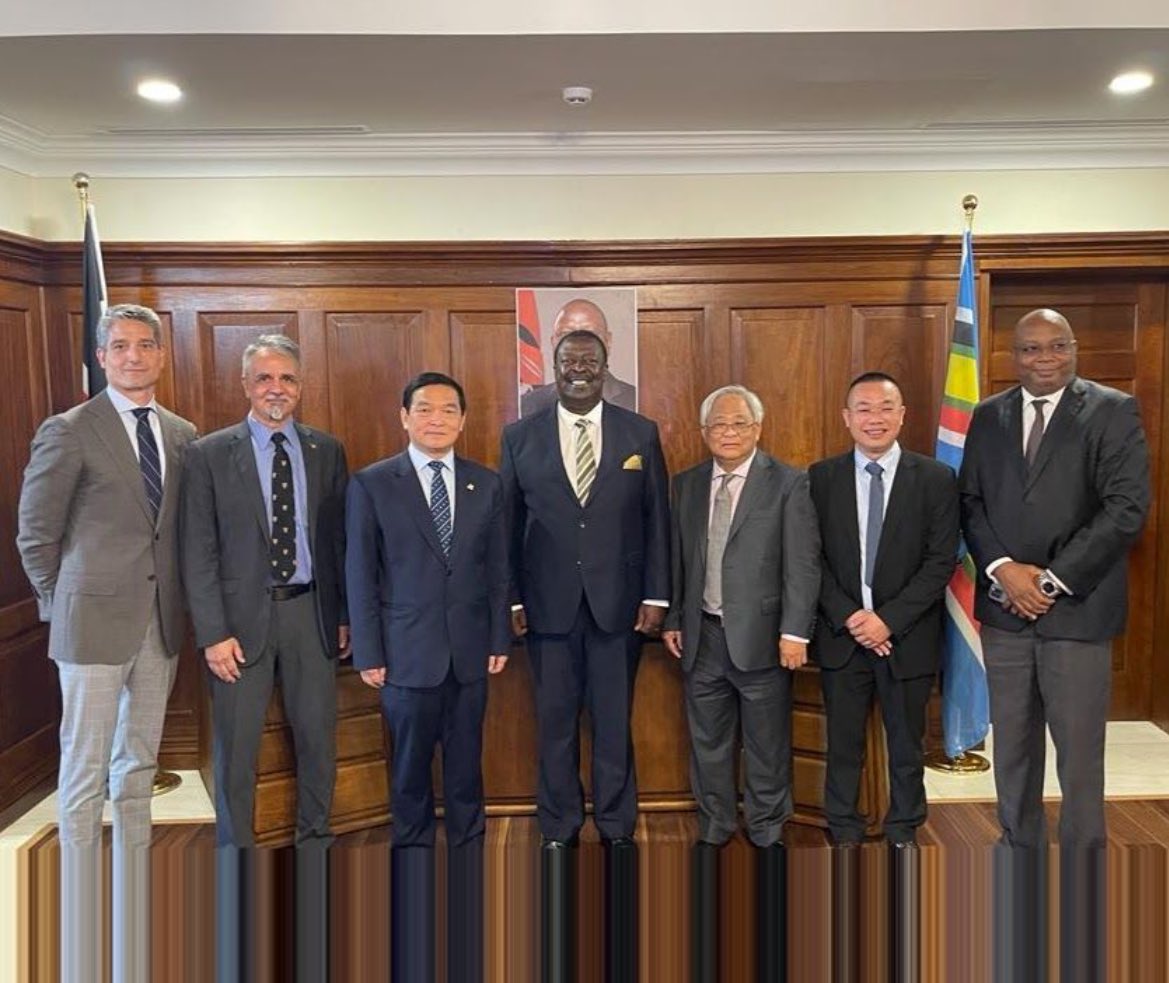
Prime Cabinet Secretary Musalia Mudavadi and Vietnam Gas President Doanh Chau.
He highlighted how Vietnam prioritized power infrastructure before establishing free trade zones, enabling its transformation into a global export hub, while Kenya built “a fancy expressway from Nairobi to Mombasa” without the export industry to justify such investment.
The Vietnam Gas president also criticized Kenya’s tourism sector, describing cumbersome 90-minute check-in processes at park gates and limited nighttime activities for visitors.
He characterized the Maasai market as “essentially a souvenir stand” rather than a genuine cultural experience.
Corruption remains another significant barrier, with Chau noting that investors are “scared off by petty corruption and legal instability” despite President Ruto’s ambitions to build public housing.
“There are no credible incentives, no serious risk guarantees,” he stated.
Public Reaction and Political Fallout
Chau’s blunt assessment has struck a chord with thousands of Kenyans on social media, many of whom have rallied behind his criticism of the Ruto administration.
Saboti MP Caleb Amisi seized the moment to lambast the government, stating, “When we say Kenyans elected people with big English, big words, big cars, big bank accounts, big choppers, big lies but small brains, we mean it. The world is disappointed with everyone in Ruto government.”
The legislator called for a transformation in leadership, adding, “Kenya needs a dedicated team of leaders with clear vision, charisma, focused, enthusiastic and smart. Kenya is supposed to be Africa’s finest economically. Kenya needs a renaissance.”
Citizen Martin Mwanza echoed these sentiments, highlighting the stark differences in how corruption is handled: “We seem to tolerate corruption, appointing corrupt people to government positions and expecting better results; how stupid are we, while countries like China hang corrupt people and Vietnam hangs drug lords instead of giving them state jobs?”
Social media user MoGAbdi distilled the critique to its essence: “Doanh Chau’s remarks expose Kenya’s deeper crisis: a leadership addicted to optics, not outcomes. No power, no planning, no serious execution. Investors see through the PR.”
The Democratic Action Party of Kenya (DAP-K) has also joined the chorus of criticism, with party leader Eugene Wamalwa demanding transparency regarding the outcomes of bilateral agreements signed during President Ruto’s numerous high-profile foreign trips.
Critics note the irony that President Ruto, renowned for his oratory skills and persuasive rhetoric—traits that have potentially attracted investor interest—now stands accused by President Chau of leading an administration that prioritizes talk over action.
In contrast, Chau praised Vietnam and Singapore’s leadership model, where “leaders are up at 5 a.m. working on execution, not speeches,” power supply remains constant, policies are “consistent and data-driven,” and incentives align with performance.
While acknowledging his critique comes “from a place of respect and care for Africa,” Chau’s parting message was unambiguous: “The global window is closing. Asia isn’t waiting. If Kenya and much of Africa want a real economic future, they must turn off the microphone—and turn on the power.”
Kenya Insights allows guest blogging, if you want to be published on Kenya’s most authoritative and accurate blog, have an expose, news TIPS, story angles, human interest stories, drop us an email on [email protected] or via Telegram


Kenya Picks Chinese Firm For Sh375 Billion JKIA Upgrade Project After Adani Fallout

The President’s Daughter and The Missing Witness: How Adut Salva Kiir’s Shadow Treasury Silenced Its Most Dangerous Critic

Kisii Under Siege: Governor Arati’s Wife Accused of Hijacking IFMIS and Running a Parallel Government

Al-Shabaab Issues Statement Defending Omar Artan, Accuses U.S. of Discrimination After Referee’s Deportation

Netanyahu To Run For Re-Election, His Party Says, After Trump Raises Doubts

US Cracks Down on Birth Tourism Schemes

Microsoft Limits Employee Use Of Anthropic’s Claude Fable 5 Over Data Retention Concerns, The Verge Reports

Standard Chartered Ghosts Haunt Joshua Oigara At Stanbic As Whistleblower Spills Beans

Caleb Amisi Says Linda Mwananchi Has Lost Direction, Announces Plans To Form A New Movement

Air Canada Pilot Flew Passengers For Years With A Fake Pilot’s License, Police Say

Cement, Cash and Courts: How the Hashu Dynasty Crushed the Ramji Brothers for Fourteen Years and Why the Walls Are Now Closing In

Inside The Urban Planning Cartel That Owns Nairobi

Why Ruto’s Favourite Candidate Adan Mohammed Could Be Locked Out of the KRA Top Job

LifeCare on the Brink: SHA Fraud, Stolen Wages, and the Rotten Empire Jayesh Saini Built

Este Medical Kenya Fights American’s Explosive Complaints

Betika Faces DCI Probe, Directors Arrest and License Revocation Over Massive 29.5 Million Safaricom Customers’ Data Breach

The Rot Inside Absa: How Bank Insiders Are Looting Nairobi’s Customers

Fresh Move Launched to Remove Kenya Railways MD Mainga From Office After Awarding Sh817 Million Consultancy Contract

Inside FAFSA Fraud: How Kenyan Cybercriminals Siphoned Millions from America’s Sh12 Billion Student Loan System

Court Confirms Safaricom Customers Data Was Sold To Betting Companies In Seven-Year Cover-Up
-
 Investigations6 days ago
Cement, Cash and Courts: How the Hashu Dynasty Crushed the Ramji Brothers for Fourteen Years and Why the Walls Are Now Closing In
-
 Investigations5 days ago
Inside The Urban Planning Cartel That Owns Nairobi
-
 Investigations1 week ago
Betika Faces DCI Probe, Directors Arrest and License Revocation Over Massive 29.5 Million Safaricom Customers’ Data Breach
-
 Investigations6 days ago
Fresh Move Launched to Remove Kenya Railways MD Mainga From Office After Awarding Sh817 Million Consultancy Contract
-

 News2 weeks ago
Eight Students Arrested In Kenya After Suspected Deadly School Arson Attack
-
 News2 weeks ago
How Uhuru’s Deal With Obama In 2015 Paved Way For America’s Ebola Plan In Kenya
-

 Business1 week ago
TRUST BETRAYED: How Senior DTB Bank Insiders Allegedly Looted Sh149 Million From a Customer’s Account Over Five Years
-

 Investigations5 days ago
Why Drivers Cheered Bolt’s Reported Exit: Inside the Slow Financial Strangulation of Thousands of Kenyan Drivers and Riders in Kenya