
News
Babu Owino Claims Munuve Was Poisoned With A ‘Lethal Biological Agent’ As Family Clashes with Autopsy Findings
The official examination revealed signs of oxygen deprivation, including darkened lips and fingernails, and identified another clot in a blood vessel in the lower limb, suggesting deep vein thrombosis as the initial condition.

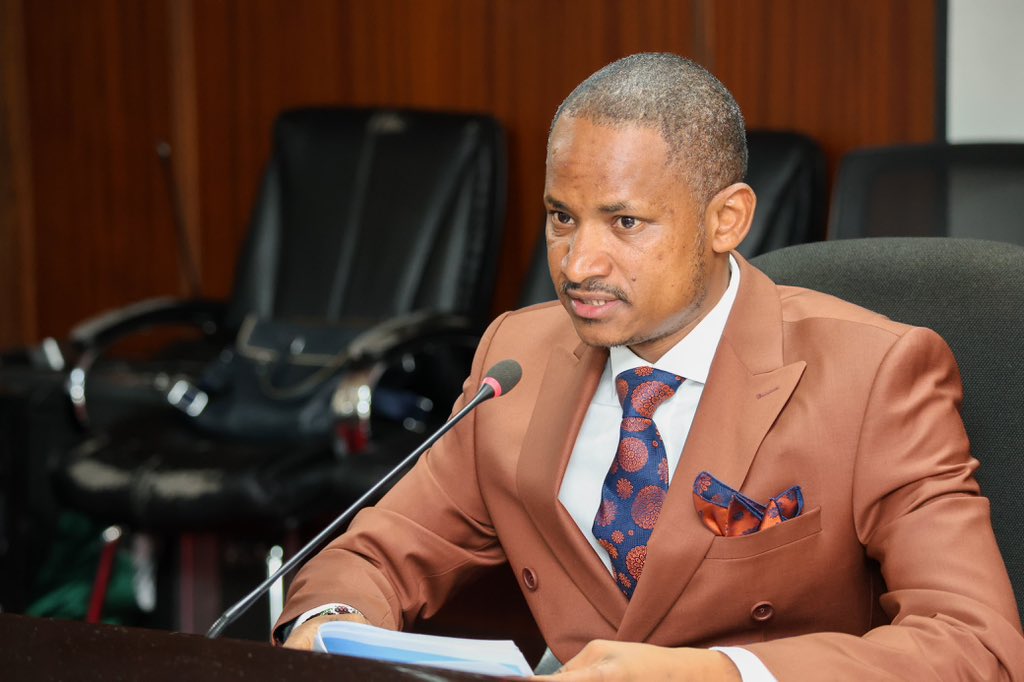
In a development that is likely to heighten political tensions in Nairobi County, Embakasi East MP Babu Owino has made explosive claims that the late Kariobangi North MCA Joel Munuve Kimanzi was poisoned with a “lethal biological agent,” contradicting the official autopsy report that attributed the death to a blood clot.
According to Chief Government Pathologist Dr. Johansen Oduor, who conducted the autopsy, Hon. Munuve died from a pulmonary embolism – a blood clot that traveled from his leg to his lungs, blocking blood flow and preventing oxygen from reaching vital organs.
“Upon opening the body, the most significant findings were in the lungs,” Dr. Oduor stated. “We discovered a large blood clot in the pulmonary artery, a condition that can lead to sudden death.”
The official examination revealed signs of oxygen deprivation, including darkened lips and fingernails, and identified another clot in a blood vessel in the lower limb, suggesting deep vein thrombosis as the initial condition.
However, MP Owino has contested these findings, claiming the blood clot was actually caused by poisoning, specifically pointing to organophosphates (OPs) as the potential agent.
“The autopsy report revealed that there was blood clot in the lungs which is caused by poisoning,” Owino stated. “Research indicates that organophosphate poisoning can cause a prothrombotic state, increasing the likelihood of blood clots.”
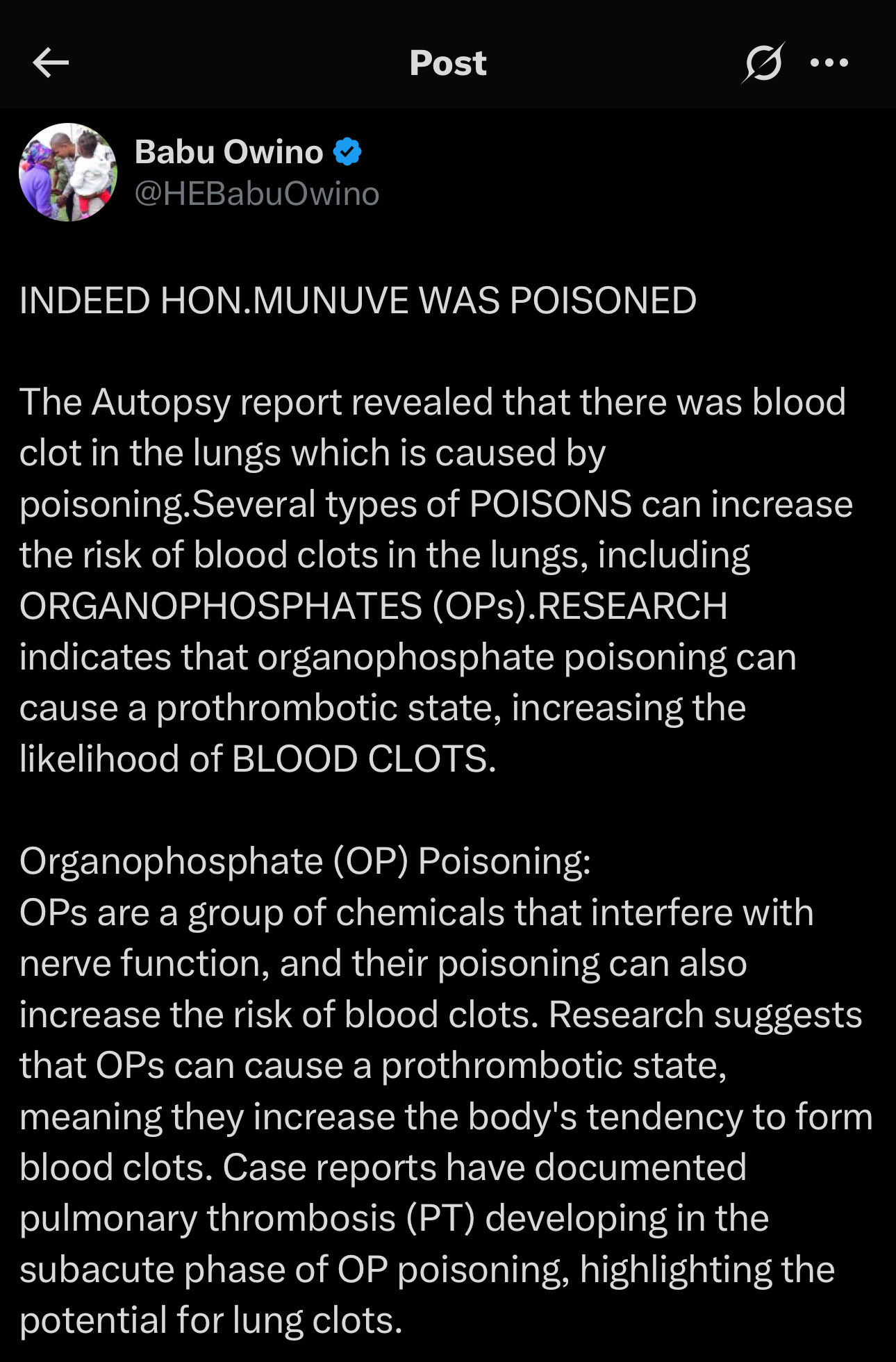
Organophosphates are chemicals commonly found in pesticides that interfere with nerve function. While medical literature does suggest they can potentially create conditions favorable for blood clot formation in some cases, Dr. Oduor’s report made no mention of poisoning as a factor.
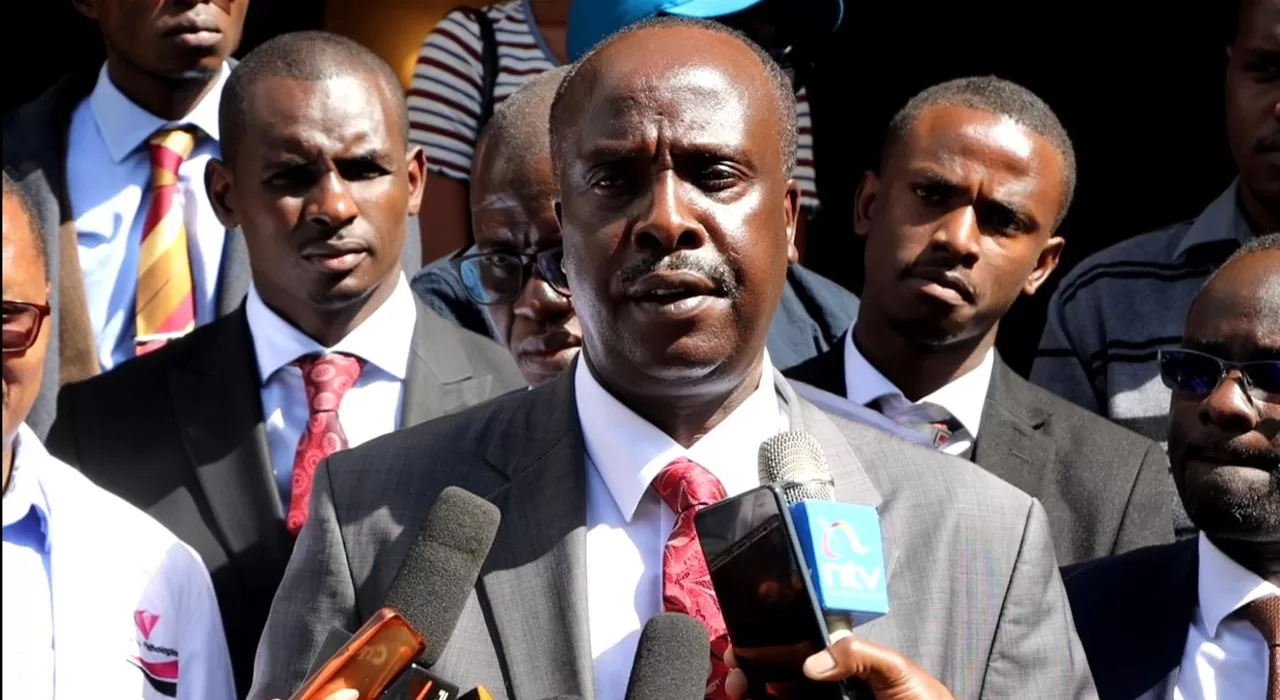
Lawyer Danstan Omari
Adding another dimension to the controversy, the family of Hon. Munuve, through their legal representatives Danstan Omari and Shedrack Wambui, has suggested possible medical negligence in their relative’s treatment.
They indicated that “proper diagnosis and timely medical intervention could have saved his life.”
The family has noted that various samples, including stomach contents and specific organs, have been submitted for further laboratory analysis, and they are awaiting final results before making definitive public statements.
A medical expert consulted for this story caution that while certain poisons can contribute to blood clot formation, pulmonary embolisms are most commonly caused by natural conditions such as prolonged immobility, certain medical conditions, or genetic predispositions.
Authorities have indicated that the comprehensive laboratory results being awaited by the family should provide more definitive answers in the coming weeks.
Kenya Insights allows guest blogging, if you want to be published on Kenya’s most authoritative and accurate blog, have an expose, news TIPS, story angles, human interest stories, drop us an email on [email protected] or via Telegram














Karua Detained at Entebbe as Uganda Blocks Besigye Lawyer From Entering Country

How KCB and Airtel Turned Kenya’s Unbanked Into a Data Goldmine Behind a ‘Financial Inclusion’ Deal

The Chivayo Network: How a Convicted Fraudster Won Access to Presidents, Passports and Billion-Dollar Deals Across Africa

BURRIED TWICE: The Victoria Bank CEO Yogesh Pattni Files

Court Stops Transfer Of EABL Shares To Asahi By Diageo In A Fresh Snag

Death Before Justice: Stephen Ngei, Victim of Sh180 Million Laptop Tender Scam Linked to Allan Chesang, Killed in Highway Crash

Court Brands Sh1.1 Billion Fee Demand by Lawyer Victor Swanya “Excessive and Exorbitant,” Exposes How City Hall Lets Public Money Bleed Through Legal Bills

Trump Unveils New Air Force One

MR. NO SHOW: Finance Bill 2026 Exposes Ndindi Nyoro’s Political Conmanship

Billionaire Eric Muli Rebukes Musalia Mudavadi Over Nairobi Capital Relocation Debate

Businessman Philip Waithaka Kinuthia’s Minor Son Allegedly Drove Drunk, Killed Two Peponi Students in Ngong Road Horror Crash as Claims of Cover-Up Intensify

Inside NCBA’s Decline: How a Banking Giant Lost Its Strategic Edge

Cement, Cash and Courts: How the Hashu Dynasty Crushed the Ramji Brothers for Fourteen Years and Why the Walls Are Now Closing In

Standard Chartered Ghosts Haunt Joshua Oigara At Stanbic As Whistleblower Spills Beans

South Sudan: Adut Salva Kiir’s Shadow Treasury Exposed

Inside The Urban Planning Cartel That Owns Nairobi

THE VULTURE AND THE SCHEME How Nairobi West Hospital Became the Most Dangerous Institution in Kenya’s SHA Ecosystem and Why the Books Must Be Audited Now

How Adil Popat Saved His Empire On The Eve Of Imperial Bank Collapse and Why Kenya’s Mainstream Media Buried The Story

The President’s Daughter and The Missing Witness: How Adut Salva Kiir’s Shadow Treasury Silenced Its Most Dangerous Critic

Why John Ngumi Is Running From the EACC and Why the Sh415 Million Payday May Be the Least of His Worries
-
 News1 week ago
Businessman Philip Waithaka Kinuthia’s Minor Son Allegedly Drove Drunk, Killed Two Peponi Students in Ngong Road Horror Crash as Claims of Cover-Up Intensify
-
 Business2 weeks ago
Inside NCBA’s Decline: How a Banking Giant Lost Its Strategic Edge
-
 Business2 weeks ago
Standard Chartered Ghosts Haunt Joshua Oigara At Stanbic As Whistleblower Spills Beans
-
 Africa2 weeks ago
South Sudan: Adut Salva Kiir’s Shadow Treasury Exposed
-
 Investigations4 days ago
THE VULTURE AND THE SCHEME How Nairobi West Hospital Became the Most Dangerous Institution in Kenya’s SHA Ecosystem and Why the Books Must Be Audited Now
-
 Business2 weeks ago
How Adil Popat Saved His Empire On The Eve Of Imperial Bank Collapse and Why Kenya’s Mainstream Media Buried The Story
-
 Africa2 weeks ago
The President’s Daughter and The Missing Witness: How Adut Salva Kiir’s Shadow Treasury Silenced Its Most Dangerous Critic
-
 Business2 weeks ago
Why John Ngumi Is Running From the EACC and Why the Sh415 Million Payday May Be the Least of His Worries