THE LAND GRAB AT THE GATEWAY
The Port of Mombasa is not merely a facility. It is the economic aorta of East Africa the single point through which goods flow for Kenya, Uganda, South Sudan, Rwanda, Burundi, eastern DRC, and beyond. Total cargo throughput hit a record 45.45 million tonnes in 2025. South Sudan alone accounted for 12.7 per cent of all transit volumes that year. The financial stakes attached to who controls cargo movement through this port are therefore not marginal. They are colossal.
Into this context drops a transaction that has enraged rights activists, alarmed Parliament, and sent at least one accountability watchdog racing toward the High Court. At Kipevu in Mombasa on prime Kenya Ports Authority land that belongs, in the constitutional sense, to every Kenyan an unnamed private company linked to a senior political figure has been handed a lease or allocation agreement with no competitive tender, no public participation, no environmental impact assessment, and no approval from either the National Environment Management Authority, the National Construction Authority, or Mombasa County Government.
On that public land, heavy machinery is moving.
A private Container Freight Station is being built. And the same company has been awarded an exclusive, single-sourced contract to handle 20 per cent of all South Sudan-bound cargo through the Port of Mombasa.
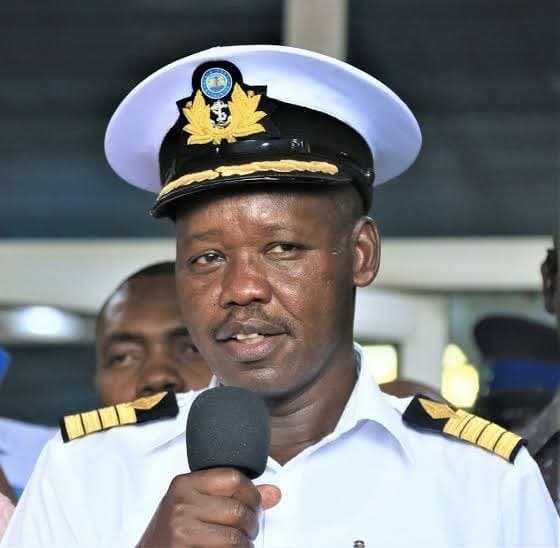
The man who signed off on this or at the very least presided over it is Captain William K. Ruto, Managing Director of the Kenya Ports Authority since March 2023. He has not commented. He has issued no press statement. He has not appeared before Parliament. He has not picked up his phone.
“This entire transaction reeks of high level influence-peddling, state capture and brazen land grab orchestrated purely due to the CFS owner’s proximity to power.” — Caleb Ng’wena, GHRC Programme Director
THE ULTIMATUM THAT EXPIRED
On June 9, 2026, Caleb Ng’wena, Programme Director of the Genesis for Human Rights Commission, sent Captain Ruto a formal seven-day ultimatum. The letter was precise in its demands.
Ng’wena required certified copies of the lease, licence, or allocation agreement between KPA and the private entity; a full public participation report; the complete ownership structure, CR12 form, and beneficial ownership disclosures of the company building the CFS; and all tender procurement records for the South Sudan cargo contract including the justification for single-sourcing, minutes of the tender evaluation committee, the letter of award, the signed contract, and the Local Purchase Order.
He received nothing.
The ultimatum expired. Documents at the National Assembly Committee on Transport and Infrastructure confirm the essentials of the transaction. Daily Nation, which first reported the story, confirmed it could not get a response from Captain Ruto either, reaching out to his known mobile number without reply. This publication attempted similar contact. The result was identical: silence, while earthmovers continue their work on land that is not Captain Ruto’s to dispense.
The GHRC has threatened punitive court orders against KPA, personal liability against Captain Ruto as the accounting officer, injunctive orders to halt the construction, and cancellation of what Ng’wena has called the fraudulent tender. It is not an idle threat. Parliament’s Transport and Infrastructure Committee holds the documents. The Ethics and Anti-Corruption Commission and the Director of Public Prosecutions have every legal reason to open files.
THE COMPANY WITHOUT A NAME AND WHAT THAT MEANS
One of the most striking features of this scandal is how effectively the central actor the company building on public land has been kept out of the public record. Neither the GHRC letter, the Daily Nation report, nor any parliamentary document in the public domain has yet named the company.
The GHRC is demanding that CR12 and the full beneficial ownership disclosure be produced precisely because those details have been withheld. What is known, and confirmed from multiple sources, is that the company is associated with a senior political figure described in the documents as a ‘high flying political figure’ whose proximity to power is offered as the explanation for how both the land and the cargo tender were obtained without competitive process.
In the history of Kenyan port governance, the South Sudan cargo corridor has been a battleground for years. It was at the heart of a 2023 legal dispute in which Autoport Nairobi Freight Terminal a firm linked to former Mombasa Governor Hassan Joho’s family and Compact Freight System Limited sought to have three senior KPA officials jailed for contempt after KPA allegedly violated court orders limiting which companies could handle South Sudan cargo.
South Sudan itself had nominated Autoport and Compact for the clearing role, before Nairobi later moved to open the corridor to any KRA-approved facility. The current arrangement in which a new, unnamed company has been handed 20 per cent of South Sudan transit cargo on a single-source basis represents exactly the kind of exclusive franchise that courts previously moved to prevent.
The financial value of this franchise is not trivial. At 12.7 per cent of 45 million tonnes of cargo throughput, South Sudan-bound traffic represents millions of tonnes of goods annually.
A 20 per cent exclusive share of that corridor secured without competitive bidding, on public land handed over without public participation is an asset worth hundreds of millions of shillings in annual revenue. The question of who benefits, and who enabled it, is not a procedural technicality. It is a question of corruption.
“The circumstances surrounding both acquisition of this public land and the awarding of the cargo handling tender raise monumental integrity questions.” — Caleb Ng’wena, June 9, 2026
THE LAW THAT IS BEING TREATED AS OPTIONAL
Under the National Construction Authority Act, every construction site in Kenya must display a site board carrying the project’s official name, Land Reference Number, client details, name and registration details of the NCA-registered contractor, full names of the lead architect, structural engineer, and quantity surveyor, and the statutory approval numbers issued by the county government, NCA, and NEMA.
There is no such board at the Kipevu CFS construction site. None of the required statutory approvals NEMA environmental clearance, NCA construction permit, or Mombasa County building approval appear to have been obtained.
The Public Procurement and Asset Disposal Act mandates competitive tendering for public contracts above prescribed thresholds. Single-source procurement is only lawful in prescribed exceptional circumstances, each of which requires written justification and sign-off. No such justification has been made public for the South Sudan cargo contract. There is no record of a public advertisement. There is no record of a tender evaluation committee sitting on this matter in any way that has been disclosed to either Parliament or the public.
The Constitution of Kenya, at Article 69 and the Environmental Management and Coordination Act, require environmental impact assessments for major developments, particularly those adjacent to sensitive marine and port infrastructure. The land is KPA’s held, as Ng’wena correctly states, in trust for the citizens of Kenya under constitutional principles of public trust doctrine. Alienating it to a private entity for a commercial venture without the mandatory steps is not an oversight. It is a violation.
A PATTERN, NOT AN ABERRATION
Those who would cast this as a single isolated misstep should examine Captain Ruto’s wider governance record at the Kenya Ports Authority. The pattern that emerges is not one of an isolated mistake by a broadly clean administrator. It is one of serial opacity around procurement, a consistent retreat from accountability when pressed, and large contracts that raise serious value-for-money concerns.
The most significant of these is the Sh31.2 billion tender awarded to TOA Corporation, a Japanese construction firm, for civil and building works at the Mombasa Special Economic Zone Development Project, financed under the Japan International Cooperation Agency’s Official Development Assistance loan. Francis Awino, president of the Bunge la Mwananchi lobby, filed a High Court petition in Mombasa in July 2025 seeking a declaration that Captain Ruto has breached Chapter Six of the Constitution and is unfit to hold public office.
The petition alleges collusion, abuse of discretion, concealment of procurement details, and the exclusion of local expertise.
The STEP framework used for the JICA loan does permit preferential procurement for Japanese firms but it does not exempt KPA from constitutional principles or the Public Procurement and Asset Disposal Act. Awino’s petition argues that critical information about repayment terms, procurement structure, subcontractor arrangements, and potential conflicts of interest was never disclosed. Captain Ruto’s lawyers have contested the petition, describing it as based on speculation and inadmissible hearsay. The case is before the courts.
Then there is the road. Nyali Member of Parliament Mohammed Ali the investigative journalist turned politician known as ‘Jicho Pevu’ has publicly alleged that a woman was awarded a tender worth Sh8 billion to construct an 800-metre internal road inside the Port of Mombasa. Eight billion shillings.
For 800 metres.
That is Sh10 million per metre, which Ali points out is 30 times the international benchmark of roughly 2 million US dollars per kilometre for road construction. KPA has offered no public breakdown of the project’s cost justification. The contract is active.
In 2023, Captain Ruto was questioned by the National Assembly Public Investment Committee over the KPA financial books for 2019-2020 before his tenure, he correctly noted but the questions persisted about Sh1.9 billion in unexplained establishment expenses, Sh242 million in container storage waivers of questionable validity, Sh879 million in overtime allowances paid in excess of the allowed 30 per cent cap, and Sh384 million in third-shift allowances paid at wrong rates.
The Auditor General’s report was uncomfortable reading. The Dock Workers Union publicly defended the leadership, attributing the overtime irregularities to SGR cargo transfer directives that overstretched the workforce. What was not resolved was who authorised the financial deviations and what recovery action was taken.
Broader claims some as yet unverified have linked KPA’s procurement machine to a narrative of Sh100 billion in questionable contracts during the current leadership era. Coast leaders have periodically rushed to Captain Ruto’s defence, attributing the scrutiny to frustrated tenderpreneurs. That may account for some of it. It does not account for all of it.
“Performance metrics do not cancel out governance concerns. Procurement transparency is a separate test altogether.”
THE SOUTH SUDAN CORRIDOR: HISTORY REPEATING
The South Sudan cargo corridor has been a politically charged battleground at the Port of Mombasa for years, making the current single-source exclusive award particularly alarming. In 2023, court orders were obtained by Autoport and Compact restricting KPA from altering South Sudan cargo handling arrangements. KPA was accused of releasing cargo to third parties in defiance of court orders prompting contempt applications seeking the imprisonment of three senior officials. The Transport Principal Secretary at the time had to write clarifying that shippers were free to use any KRA-approved bonded warehouse, not a specific facility, in an attempt to dissolve the exclusivity battle.
The pattern is clear: South Sudan cargo is a prize. It has attracted court battles, political intervention, and now, under the current KPA leadership, an exclusive single-source award to a company that remains unnamed and whose beneficial owners have been withheld from public view. That this award has been made on public land where construction is proceeding without statutory approvals is not a coincidence. It is the anatomy of state capture.
THE ACCOUNTING OFFICER’S SILENCE
Captain William K. Ruto is not a passive administrator at KPA. He is the accounting officer the person constitutionally and legally responsible for all decisions made by the institution.
The Public Finance Management Act is explicit: the accounting officer is personally answerable for the financial and procurement decisions of the entity they lead. Personal liability, as Ng’wena’s letter makes clear, is not a rhetorical flourish. It is a legal reality.
Under this framework, the allocation of public KPA land at Kipevu to a private entity without competitive process, without public participation, and without mandatory statutory approvals does not happen as a matter of institutional bureaucracy that bypasses the accounting officer.
Either Captain Ruto knew. Or he did not know which raises the equally serious question of who is running the Kenya Ports Authority.
His silence has lasted past the seven-day ultimatum. It has survived the Daily Nation story. It has persisted through this investigation. It continues while heavy machinery operates on national infrastructure. That silence, in the face of these specific and documented allegations, is no longer a communication strategy. It is, in the language of accountability, a confession of something worth hiding.
WHAT MUST NOW HAPPEN
The GHRC has the standing and stated intent to go to court. The National Assembly’s Transport and Infrastructure Committee, chaired by George Kariuki Macharia, holds documents that Parliament has not yet acted on with the urgency this situation demands. The EACC has a mandate. The DPP has an obligation. The Public Procurement Regulatory Authority exists precisely to investigate situations of this nature.
Several things must happen simultaneously. The company building on Kipevu must be named. Its CR12 and beneficial ownership structure must be placed in the public domain.
The lease or allocation agreement if one exists in lawful form must be published. The South Sudan cargo contract must be disclosed in full, including the justification for single-sourcing and the identity of every evaluating officer. NEMA must inspect the site and determine whether an environmental permit is required before construction proceeds another day. The NCA must order the site board erected and confirm whether any construction approval was granted. Mombasa County must clarify whether any building permit was issued.
And Captain William K. Ruto must answer his phone.
The Port of Mombasa handles the economic lifeline of seven nations. It is not a private estate. The land at Kipevu is held in public trust. The South Sudan cargo corridor is a national asset. These things are not available for private distribution by an accounting officer who goes underground when the questions become uncomfortable.
The public is watching. Parliament is watching. The courts await the filing. And somewhere in Mombasa, the machinery rolls on on land that belongs to Kenya, building a facility that nobody with authority will explain, awarded a contract that nobody is prepared to justify.
The silence is deafening. The construction is not.




Comments