
News
Kenya Is Losing Sh100B In Revenue To Counterfeit Businesses, Report Says

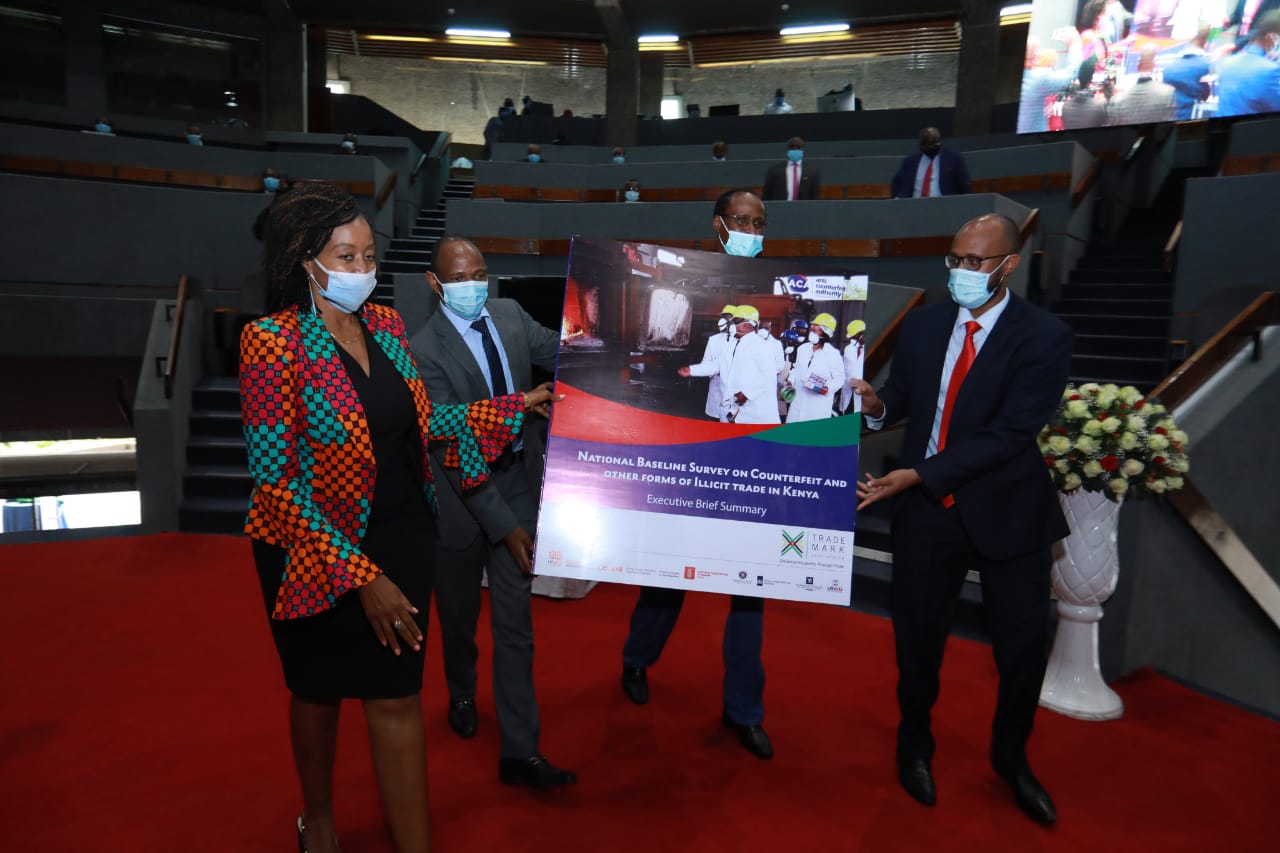
The Anti-Counterfeit Authority has Wednesday released findings of the National Baseline Survey on the extent of counterfeit and other forms of illicit trade in Kenya.
The purpose of the study is to determine the extent and magnitude of illicit trade in the country.
According to the study conducted between October 2019 and February 2020, the Government revenue lost in 2018 stood at Ksh 102.99 billion up from Ksh 101.23 billion in 2017.
From the 16 sectors of the economy that the study concentrated on, building, mining and construction were heavily affected by counterfeiting with a share of 23.37% in value of total illicit trade, followed by energy, electrical and electronics with a share of 14.67% in 2018.
The sector with the most government revenue loss was food, beverage and non-alcoholic drinks with a share of 23.19%, followed by textile and apparel at 20.09%.
Thirty (30) per cent of the firms were aware that their products were being counterfeited and sold in the market, whereas 56.4% of the sampled firms were not aware that their products are being counterfeited and sold in the market.
Between 2016 and 2018, 7,484 jobs were lost in Kenya due to illicit trade with counterfeiting accounting for 32.59% of the jobs lost.
The study also cites piracy as a critical form of illicit trade.
According to the findings, the loss of sales as a result of pirated products stood at Ksh 2.2 billion over the period 2016-2018.
Although the trend depicts marginal decline between 2017 and 2018, the loss as a result of total sales is quite high ranging between 37.69% and 42.14%, which is a clear indication of how piracy is wiping profitability of the affected firms and individuals.
“We have nabbed counterfeit goods over Ksh 2.8 Billion and surrendered them to law enforcement agencies for the prosecution of suspects,” noted Elema Halake, Executive Director, Anti-Counterfeit Authority.
He added: “As we celebrate World Anti-Counterfeit Day, we urge all Kenyans to beware of illicit goods when purchasing products in retail outlets. Additionally, we call upon the public and private sector especially the Kenya Association of Manufacturers to continue working closely with us as we battle this economic threat.”
The launch of the baseline survey report coincides with the unveiling of the National Illicit Trade Observatory (NITO), a tool that will enable monitoring of illicit trade in Kenya.
Capitalising on its partnership with TMEA through funding from DFID, ACA has established the observatory to complement and enhance efforts of the Multi-Agency Team on Illicit Trade established by the President, to eliminate unfair trade competition in Kenya.
The observatory tracks six types of illicit trade: counterfeit, piracy, substandard goods, uncustomed goods, restricted goods, and unexercised goods.
Also Read 68pc of Kenyans believe govt doing enough to control Covid-19
“The observatory is designed to be a data management and reporting tool where enforcement agencies will report seized goods (both from domestic and import markets), while the private sector shall be able to anonymously report on counterfeited products affecting their market share as well as their impact,” said Ahmed Farah, TMEA’s Kenya Country Programme Director.
The study was done in partnership with TradeMark East Africa (TMEA) through funding from the Department for International Development (DFID).
World Anti-Counterfeiting Day 2020 is now in its twenty-second year and was established in 1998 by the Global Anti-Counterfeiting Group (GACG) to enable the organization of local, national and regional events under the umbrella of an international campaign which could focus on the particular problems of counterfeiting and piracy in the countries or regions involved.
Kenya Insights allows guest blogging, if you want to be published on Kenya’s most authoritative and accurate blog, have an expose, news TIPS, story angles, human interest stories, drop us an email on [email protected] or via Telegram


Kenyan player wins a Ksh3.2 million jackpot

IEBC Sets August 10 Date For 2027 General Election

Furious Ruto Lashes Out at Gideon Moi Over Repeated ‘Blackmail, Extortionist’ Headlines on The Standard and KTN

Mombasa Gripped by ‘Male Organ Theft’ Panic as Social Media Fuels Mob Attacks and Fear

TOO MUCH PR, NOTHING TO SEE: How Gladys Wanga Built a Perfect Story of Transformation While Homa Bay Bled

Netanyahu Says Israel Must ‘Break Free from Dependence’ After Tensions With Trump Administration

Niger pulls Out Of International Criminal Court After Calling It Neo-Colonialist

Kenya Awards Sh154 Billion JKIA Upgrade Tender To Chinese Firm CRBC

The Untouchable: How KURA’s Silas Kinoti Has Survived A Decade Of Corruption Storms While Kenya’s Roads Bled

Fake Papers, Dirty Millions And The Analo Connect: How Kitisuru MCA Alvin Palapala Built a Shadow Empire Inside Nairobi’s Planning Machine

Businessman Philip Waithaka Kinuthia’s Minor Son Allegedly Drove Drunk, Killed Two Peponi Students in Ngong Road Horror Crash as Claims of Cover-Up Intensify

Inside NCBA’s Decline: How a Banking Giant Lost Its Strategic Edge

South Sudan: Adut Salva Kiir’s Shadow Treasury Exposed

Cement, Cash and Courts: How the Hashu Dynasty Crushed the Ramji Brothers for Fourteen Years and Why the Walls Are Now Closing In

Standard Chartered Ghosts Haunt Joshua Oigara At Stanbic As Whistleblower Spills Beans

Inside The Urban Planning Cartel That Owns Nairobi

THE VULTURE AND THE SCHEME How Nairobi West Hospital Became the Most Dangerous Institution in Kenya’s SHA Ecosystem and Why the Books Must Be Audited Now

The President’s Daughter and The Missing Witness: How Adut Salva Kiir’s Shadow Treasury Silenced Its Most Dangerous Critic

How Adil Popat Saved His Empire On The Eve Of Imperial Bank Collapse and Why Kenya’s Mainstream Media Buried The Story

Why John Ngumi Is Running From the EACC and Why the Sh415 Million Payday May Be the Least of His Worries
-
 News1 week ago
Businessman Philip Waithaka Kinuthia’s Minor Son Allegedly Drove Drunk, Killed Two Peponi Students in Ngong Road Horror Crash as Claims of Cover-Up Intensify
-
 Africa2 weeks ago
South Sudan: Adut Salva Kiir’s Shadow Treasury Exposed
-
 Business2 weeks ago
Standard Chartered Ghosts Haunt Joshua Oigara At Stanbic As Whistleblower Spills Beans
-
 Investigations6 days ago
THE VULTURE AND THE SCHEME How Nairobi West Hospital Became the Most Dangerous Institution in Kenya’s SHA Ecosystem and Why the Books Must Be Audited Now
-
 Africa2 weeks ago
The President’s Daughter and The Missing Witness: How Adut Salva Kiir’s Shadow Treasury Silenced Its Most Dangerous Critic
-
 Business2 weeks ago
How Adil Popat Saved His Empire On The Eve Of Imperial Bank Collapse and Why Kenya’s Mainstream Media Buried The Story
-
 Business2 weeks ago
Why John Ngumi Is Running From the EACC and Why the Sh415 Million Payday May Be the Least of His Worries
-
 Business5 days ago
Inside the Billion-Shilling Betrayal: How Senior Treasury Officials Plundered a UN Poverty Fund and Built a Real Estate Empire on the Backs of Kenya’s Rural Poor