
Coronavirus
Kemri researchers release their analysis of coronavirus strains

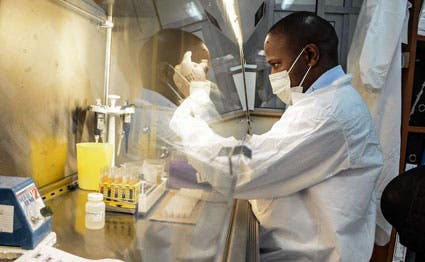
The coronavirus strain that is circulating and causing infection in the country is not different from others circulating elsewhere in the world, the Kenya Medical Research Institute (Kemri) has said.
In a first of its kind report in the country, a team of scientists at Kemri have analysed a set of 122 strains of the SARS-CoV-2, the virus that causes the coronavirus disease (Covid-19)
In a first of its kind report in the country, a team of scientists at Kemri have analysed a set of 122 strains of the SARS-CoV-2, the virus that causes the coronavirus disease (Covid-19).
By analysing the strains, the scientists say they obtained important information about the genetic composition of viral strains in 122 of the confirmed cases in Kenya.
Genome sequencing is ostensibly the process of determining the fingerprint of an organism which is done in a laboratory.
VIRUS VARIATIONS
The scientists from Kemri’s Centre for Virus Research (CVR) and Centre for Geographic Medicine Research-Coast (CGMR-C) in collaboration with the National Public Health Laboratory (NPHL) and County teams analysed 122 samples of the first 399 confirmed Covid-19 cases in the country to gain a comprehensive understanding of the variations of the virus that are present in the country.
“This successful sequencing for the novel coronavirus SARS-CoV-2 in Kenya is a significant milestone in the response to the pandemic in Kenya and the entire World, as this will strengthen surveillance for tracking mutations of the virus and aid in the tracing of the sources of community infections,” Prof Yeri Kombe, Kemri Director-General said.
The variation captured in these genomes, when compared to genomes sampled elsewhere, provides a fingerprint that might be associated with a particular virus and a patient with a particular cluster of transmission.
NINE IMPORTATIONS
The scientists found at least nine separate importations of the SARS-CoV-2 virus into Kenya before April 30.
Further, early cases came from multiple importations into the country from Europe and Asia.
Genome sequencing involves revealing the order of bases present in the entire genome of an organism. One such pool is the GISAID’s SARS-CoV-2 genome sequence database, a German-based public-private partnership that provides public access to the most complete collection of genetic sequence data of influenza viruses and related clinical and epidemiological data through its database.
These genome sequences which are being pooled into several databases are vital for tracking how the virus mutates over time as it spreads and for the development of diagnostic tests and vaccines.
The Kenyan team Wednesday deposited the sequence data at GISAID Gene.
TRANSMISSION CHAINS
One important aspect of managing emerging infections is identifying chains of transmission and assigned cases to clusters of infection.
Reports are now emerging of situations where some Kenyans who have tested positive for the virus cannot retrace their footsteps and identify how they might have contracted Covid-19.
A good share also only realise that they have the virus after taking the test. To ensure that scientists can trace people’s contacts, stronger systems of disease surveillance are needed – ones that draw on genome sequencing.
Sequence data are essential to design and evaluate diagnostic tests, to track and trace the ongoing outbreak, and to identify potential intervention options.
GENOME SEQUENCE DATA
Since the start of the Covid-19 outbreak, laboratories around the world have been generating viral genome sequence data that have been scrutinised by pools of researchers. This has enabled real-time progress in the understanding of the new disease and in the research and development of diagnostic kits, drugs, and vaccines.
Usually, viruses, like all pathogens, undergo [minor] changes over the course of a pandemic, and sequencing helps keep track of these changes, Prof Sam Kariuki, a microbiologist and the Kemri director of research and development explained.
“But so far no significant changes on this virus have been observed,” he added.
This sequencing makes Kenya the fourth African country to post the finger-print of the Covid-19 circulating in the continent.
[Daily Nation]
Kenya Insights allows guest blogging, if you want to be published on Kenya’s most authoritative and accurate blog, have an expose, news TIPS, story angles, human interest stories, drop us an email on [email protected] or via Telegram


THE GROUP CHAT THAT BROKE THE CARTEL: How Kenya’s Biggest Mattress Firms Used WhatsApp to Fix Your Prices, Then Used It to Destroy Themselves

Court Upholds Gachagua Impeachment, Awards Him Sh50M In Constitutional Damages To Be Paid By Senate

Somali FIFA Referee Denied Entry To US Ahead Of 2026 World Cup: Reports

David Maraga: Kenya’s Ex-Chief Justice Arrested At Protest Against Building On National Park

KRA Warns It Will Automatically File Tax Returns for Kenyans Who Miss June 30 Deadline Using Its Own Data

Govt Plans to Monetise eCitizen Data in New Revenue Drive

Dennis Onyango: Why Raila Won Elections But Never Became President

Israel, Iran Trade Fire Despite Trump’s Call For Restraint

Dennis Onyango Lifts Lid on Raila’s Inner Circle, Says Sifuna Lost Baba’s Trust While Babu Was Viewed as a Threat

Sibling Rivalry? Cracks Emerge Within Linda Mwananchi

Cement, Cash and Courts: How the Hashu Dynasty Crushed the Ramji Brothers for Fourteen Years and Why the Walls Are Now Closing In

Inside The Urban Planning Cartel That Owns Nairobi

Why Ruto’s Favourite Candidate Adan Mohammed Could Be Locked Out of the KRA Top Job

LifeCare on the Brink: SHA Fraud, Stolen Wages, and the Rotten Empire Jayesh Saini Built

Este Medical Kenya Fights American’s Explosive Complaints

The Rot Inside Absa: How Bank Insiders Are Looting Nairobi’s Customers

Betika Faces DCI Probe, Directors Arrest and License Revocation Over Massive 29.5 Million Safaricom Customers’ Data Breach

Inside FAFSA Fraud: How Kenyan Cybercriminals Siphoned Millions from America’s Sh12 Billion Student Loan System

Fresh Move Launched to Remove Kenya Railways MD Mainga From Office After Awarding Sh817 Million Consultancy Contract

Court Confirms Safaricom Customers Data Was Sold To Betting Companies In Seven-Year Cover-Up
-
 Investigations4 days ago
Cement, Cash and Courts: How the Hashu Dynasty Crushed the Ramji Brothers for Fourteen Years and Why the Walls Are Now Closing In
-
 Investigations3 days ago
Inside The Urban Planning Cartel That Owns Nairobi
-
 Investigations2 weeks ago
LifeCare on the Brink: SHA Fraud, Stolen Wages, and the Rotten Empire Jayesh Saini Built
-
 Investigations1 week ago
Betika Faces DCI Probe, Directors Arrest and License Revocation Over Massive 29.5 Million Safaricom Customers’ Data Breach
-
 Investigations4 days ago
Fresh Move Launched to Remove Kenya Railways MD Mainga From Office After Awarding Sh817 Million Consultancy Contract
-

 News2 weeks ago
Eight Students Arrested In Kenya After Suspected Deadly School Arson Attack
-

 News1 week ago
How Uhuru’s Deal With Obama In 2015 Paved Way For America’s Ebola Plan In Kenya
-

 Investigations2 weeks ago
The Invisible Hand: Al Jazeera Further Exposes How Safaricom Became The Regime’s Most Powerful Spy