
Coronavirus
Coronavirus: Pandemics And The Psychology Of Uncertainty

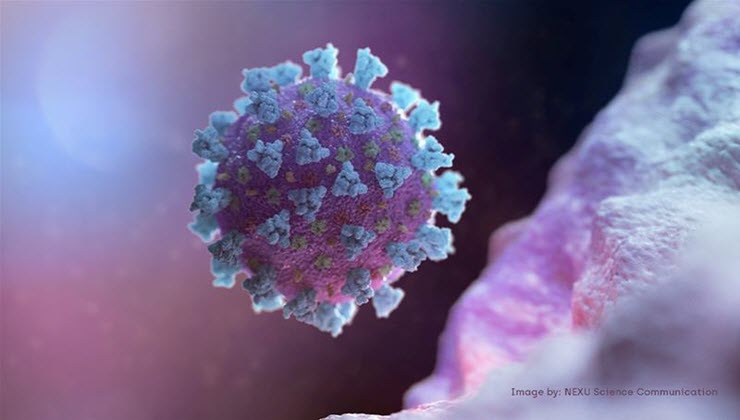
Many of the most serious global threats today involve a high degree of uncertainty: will the next flu outbreak turn into a pandemic? By how many degrees will global temperatures increase this century? Limiting the damage of such threats hinges on human choices, like the decision to get vaccinated or cut back on energy use. But we humans are famously bad at making decisions in already uncertain conditions. How can unpredictable global threats be communicated to most effectively guide our decision-making?
Take the threat of a pandemic virus rapidly spreading around the globe. Pandemics have killed millions in the past and it’s likely another will eventually come – we just don’t know when. In the early stages of a pandemic, people would be asked to take actions to help limit its spread, unpleasant actions like getting a vaccine or giving up travel plans. How could the director-general of the World Health Organization, health ministers and medical professionals around the world motivate people to take costly but necessary actions to help limit the spread of the disease?

Past research suggests people are notoriously unwilling to make sacrifices for others when the benefits are uncertain. In the case of pandemics, this means people would be especially unlikely to spend time going to a clinic or cancel a vacation because it’s not guaranteed that such steps would help stop the spread of disease. Thus, the uncertainty inherent to infectious diseases provides the ideal conditions for their spread: risk-seeking decisions in social situations.
Our work, conducted as part of the Oxford Martin Programme on Collective Responsibility for Infectious Disease, shows that when people have to make decisions that might harm others, they tend to act as if things will work out just fine.
In some of our studies, for instance, we asked hundreds of people whether they would stay home from work when infected with the “African Flu” (a fictional disease), which would be costly for their career but would help limit the spread of disease. Sometimes, we highlighted that it was uncertain whether they would infect a co-worker if they went to work. This uncertainty made people less willing to sacrifice and stay home. Consistent with previous studies on uncertainty, people said they were willing to risk hurting someone else for their own benefit when the harm was not certain to occur.
Luckily, it turns out there is another, more effective way to communicate uncertain threats like infectious disease. When uncertainty about human welfare is emphasized – for example, how much others might suffer from an infection – people strive to prevent the worst-case scenario.
In our studies, when we highlighted the chance that going to work might infect either somebody young and healthy for whom the infection would be no problem or an elderly person for whom the infection could be very serious, our participants said they were more willing to sacrifice and stay home. In other words, directing people’s attention to the uncertain impact of their actions on the well-being of others made them more willing to take on costs to prevent others from potential harm.
These findings highlight how journalists, global leaders and healthcare professionals can more effectively communicate the nature of uncertain but potentially devastating threats like pandemics. Often, when we talk about pandemics, we focus on whether or not one will occur in the near future and whether we are prepared to cope. The Economist, for example, recently remarked that “whether the world can forestall the next, unknown pandemic threat is uncertain”.
Our research suggests this approach may be counterproductive when it comes to motivating the costly, altruistic individual choices that may ultimately prove crucial for limiting the impact of a pandemic. Humans tend to put their self-interest first when it’s uncertain if doing so will cause harm.
But when the human costs of selfishness are made salient, people are more willing to forgo the personal and prioritize social interests, even amidst uncertainty. We think communicators should instead emphasize how selfish responses to global threats risk endangering the most vulnerable among us, such as babies, pregnant women and the elderly. Focusing uncertainty on how our actions might impact others – for example, how much they might suffer – can inoculate us against selfishness.
This article was first published on Weforum
Kenya Insights allows guest blogging, if you want to be published on Kenya’s most authoritative and accurate blog, have an expose, news TIPS, story angles, human interest stories, drop us an email on [email protected] or via Telegram


Humiliated, Handed Sh1,000 and Sent Away: Furious Residents Return Nathif Jama’s Money, Accuse Governor of Arrogance and Inhumane Treatment of Sick Woman

ICC’s Karim Khan Suspended Over Sexual Misconduct Claims

The Conquest of Tatu City, A New Zealander Story

VANISHING ACT: How China Jiangxi International Pocketed Billions in Kenyan Public Contracts, Then Walked Away

THE GROUP CHAT THAT BROKE THE CARTEL: How Kenya’s Biggest Mattress Firms Used WhatsApp to Fix Your Prices, Then Used It to Destroy Themselves

Court Upholds Gachagua Impeachment, Awards Him Sh50M In Constitutional Damages To Be Paid By Senate

Somali FIFA Referee Denied Entry To US Ahead Of 2026 World Cup: Reports

David Maraga: Kenya’s Ex-Chief Justice Arrested At Protest Against Building On National Park

KRA Warns It Will Automatically File Tax Returns for Kenyans Who Miss June 30 Deadline Using Its Own Data

Govt Plans to Monetise eCitizen Data in New Revenue Drive

Cement, Cash and Courts: How the Hashu Dynasty Crushed the Ramji Brothers for Fourteen Years and Why the Walls Are Now Closing In

Inside The Urban Planning Cartel That Owns Nairobi

Why Ruto’s Favourite Candidate Adan Mohammed Could Be Locked Out of the KRA Top Job

LifeCare on the Brink: SHA Fraud, Stolen Wages, and the Rotten Empire Jayesh Saini Built

Este Medical Kenya Fights American’s Explosive Complaints

The Rot Inside Absa: How Bank Insiders Are Looting Nairobi’s Customers

Betika Faces DCI Probe, Directors Arrest and License Revocation Over Massive 29.5 Million Safaricom Customers’ Data Breach

Inside FAFSA Fraud: How Kenyan Cybercriminals Siphoned Millions from America’s Sh12 Billion Student Loan System

Fresh Move Launched to Remove Kenya Railways MD Mainga From Office After Awarding Sh817 Million Consultancy Contract

Court Confirms Safaricom Customers Data Was Sold To Betting Companies In Seven-Year Cover-Up
-
 Investigations4 days ago
Cement, Cash and Courts: How the Hashu Dynasty Crushed the Ramji Brothers for Fourteen Years and Why the Walls Are Now Closing In
-
 Investigations3 days ago
Inside The Urban Planning Cartel That Owns Nairobi
-
 Investigations2 weeks ago
LifeCare on the Brink: SHA Fraud, Stolen Wages, and the Rotten Empire Jayesh Saini Built
-
 Investigations1 week ago
Betika Faces DCI Probe, Directors Arrest and License Revocation Over Massive 29.5 Million Safaricom Customers’ Data Breach
-
 Investigations4 days ago
Fresh Move Launched to Remove Kenya Railways MD Mainga From Office After Awarding Sh817 Million Consultancy Contract
-
 News2 weeks ago
Eight Students Arrested In Kenya After Suspected Deadly School Arson Attack
-
 News1 week ago
How Uhuru’s Deal With Obama In 2015 Paved Way For America’s Ebola Plan In Kenya
-

 Investigations2 weeks ago
The Invisible Hand: Al Jazeera Further Exposes How Safaricom Became The Regime’s Most Powerful Spy