
Coronavirus
Coronavirus Could Be Sexually Transmitted Like HIV, New Study

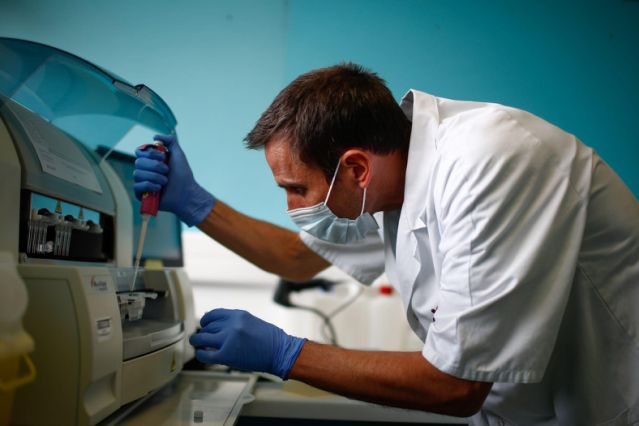
-
A new study from Chinese scientists found coronavirus particles in the semen of 16% of the male patients studied.
-
The virus was present in semen from both patients who had active infections and those who had recovered.
-
The researchers aren’t sure yet whether the virus can be spread through sexual contact.
Scientists are still learning about the ways the coronavirus moves through the body. Viral particles have been found in saliva, blood, urine, and stool samples.
A new study, published Thursday in the Journal of the American Medicine Association, found the coronavirus in semen, too. Particles were detected in the semen of both men who had active infections and those who had recovered.
The researchers aren’t yet sure, however, whether the finding means the virus can be sexually transmitted.
Roughly 16% of the men studied had the virus in their semen
A team of Chinese researchers took semen samples from 38 male COVID-19 patients in a hospital in the Henan province, which borders Wuhan, between January 26 and February 16.
The researchers detected the virus, whose official name is SARS-CoV-2, in the semen in six of the 38 patients — roughly 16%. Of the six, four were at the acute stage of active infection and two had recovered.
The six who tested positive ranged in age from their 20s to their 50s.
“There was no significant difference between negative and positive test results for patients by age, urogenital disease history, days since onset, days since hospitalization, or days since clinical recovery,” the study authors wrote.
It’s not yet known whether the virus can be passed through sex
The researchers noted that they’re not sure whether the virus can be sexually transmitted between people. It can, however, spread via saliva droplets.
The study authors also don’t yet know how exactly the coronavirus entered the patients’ testes. But the barrier between the bloodstream and various parts of the penis is imperfect, so viruses can pass through it, the researchers wrote. Inflammation, which the coronavirus causes, can impact this barrier, too.
Many types of viruses that aren’t typical STIs have also been found in semen in the past.
“The presence of viruses in semen may be more common than currently understood, and traditional non-sexually transmitted viruses should not be assumed to be totally absent in genital secretions,” the researchers wrote.
Other research on viruses in semen has shown that the Zika and Ebola viruses can be sexually transmitted.
It’s also possible that the coronavirus particles in semen wouldn’t be infectious.
More research is needed on the possibility of sexual transmission of the coronavirus, the researchers said.
“Studies on viral detection and semen persistence are beneficial to clinical practice and public health, especially concerning viruses that could cause high mortality or morbidity, such as SARS-CoV-2,” the researchers wrote.
Kenya Insights allows guest blogging, if you want to be published on Kenya’s most authoritative and accurate blog, have an expose, news TIPS, story angles, human interest stories, drop us an email on [email protected] or via Telegram


David Maraga: Kenya’s Ex-Chief Justice Arrested At Protest Against Building On National Park

KRA Warns It Will Automatically File Tax Returns for Kenyans Who Miss June 30 Deadline Using Its Own Data

Govt Plans to Monetise eCitizen Data in New Revenue Drive

Dennis Onyango: Why Raila Won Elections But Never Became President

Israel, Iran Trade Fire Despite Trump’s Call For Restraint

Dennis Onyango Lifts Lid on Raila’s Inner Circle, Says Sifuna Lost Baba’s Trust While Babu Was Viewed as a Threat

Sibling Rivalry? Cracks Emerge Within Linda Mwananchi

Instant Traffic Fines Still Active Despite Court Order, NTSA Clarifies

Why All Eyes Are On Gambling Authority CEO Peter Karimi As Kenya’s Betting Firms Race To Beat The June Licence Renewal Deadline

The Deal Behind Nairobi Animal Orphanage: Is This Really About Animals Or Billions In Prime Park Land

Cement, Cash and Courts: How the Hashu Dynasty Crushed the Ramji Brothers for Fourteen Years and Why the Walls Are Now Closing In

Inside The Urban Planning Cartel That Owns Nairobi

Why Ruto’s Favourite Candidate Adan Mohammed Could Be Locked Out of the KRA Top Job

LifeCare on the Brink: SHA Fraud, Stolen Wages, and the Rotten Empire Jayesh Saini Built

Este Medical Kenya Fights American’s Explosive Complaints

The Rot Inside Absa: How Bank Insiders Are Looting Nairobi’s Customers

Inside FAFSA Fraud: How Kenyan Cybercriminals Siphoned Millions from America’s Sh12 Billion Student Loan System

Betika Faces DCI Probe, Directors Arrest and License Revocation Over Massive 29.5 Million Safaricom Customers’ Data Breach

Court Confirms Safaricom Customers Data Was Sold To Betting Companies In Seven-Year Cover-Up

Fresh Move Launched to Remove Kenya Railways MD Mainga From Office After Awarding Sh817 Million Consultancy Contract
-
 Investigations4 days ago
Cement, Cash and Courts: How the Hashu Dynasty Crushed the Ramji Brothers for Fourteen Years and Why the Walls Are Now Closing In
-
 Investigations3 days ago
Inside The Urban Planning Cartel That Owns Nairobi
-
 Investigations2 weeks ago
LifeCare on the Brink: SHA Fraud, Stolen Wages, and the Rotten Empire Jayesh Saini Built
-
 Investigations1 week ago
Betika Faces DCI Probe, Directors Arrest and License Revocation Over Massive 29.5 Million Safaricom Customers’ Data Breach
-
 Investigations4 days ago
Fresh Move Launched to Remove Kenya Railways MD Mainga From Office After Awarding Sh817 Million Consultancy Contract
-

 News1 week ago
Eight Students Arrested In Kenya After Suspected Deadly School Arson Attack
-

 News1 week ago
How Uhuru’s Deal With Obama In 2015 Paved Way For America’s Ebola Plan In Kenya
-

 Investigations2 weeks ago
The Invisible Hand: Al Jazeera Further Exposes How Safaricom Became The Regime’s Most Powerful Spy