
Business
The Patriarch, His Children, and a Buried Sh3.9 Billion Fraud: The Story of Titus Muya That Kenya Was Never Meant to Read
A senior counsel posted the evidence publicly, tagged the Central Bank, named the proxies, and called for prosecutions. Mainstream Kenya looked away. Now, as the Family Bank founder celebrates a Sh4.7 billion paper windfall from the bank’s NSE debut, the questions he never answered are demanding to be asked again.


The bell rang at the Nairobi Securities Exchange on June 23, 2026, and Titus Kiondo Muya, 83 years old and immaculate in his suit, was photographed smiling at the camera as Family Bank’s shares surged 44 percent on their first day of trading.
Within hours, he and his circle of associates, a web of family members, corporate vehicles, and insurance affiliates strung across the bank’s shareholder register, had recorded a paper gain of Sh4.74 billion. A man who started with nothing, who once visited the National Treasury every Thursday for four years just to follow up on a banking licence application, had delivered to himself and his family one of the most lucrative single-day wealth events in Kenyan corporate history.
The press lapped it up.
The entrepreneurial fable was retold for the hundredth time: the self-made visionary from Kiambu who defied colonialism, humiliation by his boss, and the odds of building a bank without a university degree.
Special goodwill payments of Sh231.3 million dispensed by the bank to its founder in 2024 and 2025 went largely unexamined.
Director fees of Sh21.8 million in a single year went unreported. The Sh128.6 million in total emoluments paid to a man who left the executive suite over a decade ago were presented, if at all, as a warm institutional gesture of gratitude.
What was not presented, what has never been told in any mainstream Kenyan publication despite being documented in forensic detail and posted publicly with photographic evidence of official records, is a parallel story.
It is a story of alleged land theft on a spectacular scale, the brazen deployment of Muya’s own children as corporate fronts and legal human shields, a scheme to extract nearly Sh3.9 billion from Co-operative Bank through a fraudulent charge on stolen property, deep entanglement with the National Youth Service looting scandal, and a protective cordon of elite lawyers and prosecutorial discretion that appears to have kept the whole architecture safely buried while the empire grew.
That story begins not in 2026 but in April 2016, with a senior counsel named Nelson Havi.
The Man Who Tried to Sound the Alarm
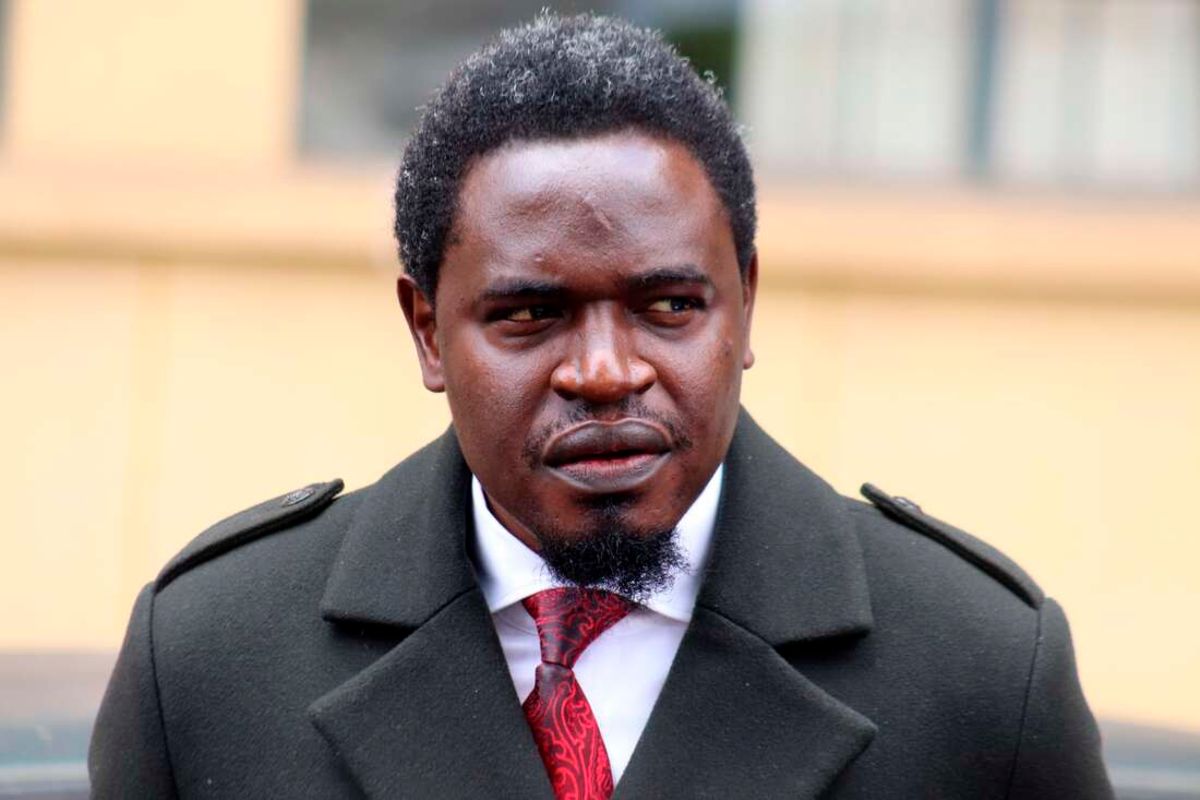
Former Law Society of Kenya President Nelson Havi.
Nelson Havi is not a fringe agitator. He is a senior counsel and a former president of the Law Society of Kenya. He is the kind of lawyer whose allegations carry institutional weight, whose documented assertions cannot be dismissed as the ramblings of a social media obsessive.
Between April 2016 and March 2019, Havi published a detailed, sustained, and evidence-laden account of what he alleged Titus Muya of Family Bank had done. He posted photographs of company registry extracts. He posted images of land charge documents. He tagged the Central Bank of Kenya, its Governor Patrick Njoroge, and Co-operative Bank directly. He named names. He called for prosecutions.
Nothing of substance followed. The story, which should have consumed Kenya’s financial press, simply did not exist as far as mainstream outlets were concerned.
Havi spoke into a void that he himself labelled ‘githeri media’ a damning indictment of an industry that he believed had consciously looked away from evidence that implicated one of Kenya’s most celebrated banking figures.
The first warning came on April 10, 2016.
Havi posted publicly that the law firm Anjarwalla and Khanna was involved in an attempted theft of Purple Saturn’s land involving Stephen Armstrong Jennings and Titus Muya.
He simultaneously launched what he tagged as a petition to remove Director of Public Prosecutions Keriako Tobiko a direct signal that he believed the DPP’s office was shielding the perpetrators rather than pursuing them through the criminal courts.
Those words, read now against the backdrop of the Family Bank NSE listing, the Sh4.7 billion windfall, and the Sh231 million goodwill payments, have a quality close to prophecy.
November 2016: The Mechanism of the Fraud Laid Bare
The core of what Havi alleged erupted in November 2016 in a series of posts accompanied by photographic exhibits. The scheme he described was not vague or circumstantial. It had names, amounts, mechanisms, and official records attached.
According to Havi’s documented account, two specific properties had been stolen by Titus Muya of Family Bank. Those stolen properties were then fraudulently charged to Co-operative Bank.
The fraudulent charge was registered not by Muya himself but by a proxy: one Francis Kenyeru Orioki, who allegedly received Sh50 million from Muya for performing this service before disappearing underground.
A second operative, identified as Cattwright Jacob, was also named in connection with the fraudulent registration.
The objective of the scheme was blunt. Once the properties were fraudulently charged against Co-op Bank’s name, pressure was applied to force the bank to pay out nearly Sh3.9 billion on that charge, despite the existence of court orders and Registrar of Companies records that should have rendered the entire exercise invalid.
Havi described the operation as being pursued with what he called ‘impunity’ and tagged Co-op Bank directly, demanding it resist the pressure and alert regulators.
Crucially, Havi was explicit about the role of Muya’s children in the structure. They were positioned as the visible faces and ostensible beneficiaries of the scheme, functioning as what Havi called ‘human shields’ for the patriarch.
By placing his own children in the foreground of the transaction, Muya created a layer of insulation: if scrutiny came, it would arrive first at the children while the patriarch maintained the appearance of distance.
This was not incidental positioning. According to Havi’s account, it was a deliberate architectural choice built into the fraud from the outset.
Other named actors at the Ministry of Lands and the land registry included Peter Mburu and James Kungu. Havi alleged that even the Chief Land Registrar at the time, one Jane Ndiba, was aware of what was happening through these operatives but declined to act.
The chain of alleged complicity extended from the land registry through proxy operatives to the highest levels of the institutions designed to prevent exactly this kind of fraud.
The NYS Connection: Where Stolen Public Money Met Stolen Land
The fraudulent Co-op Bank charge was not Havi’s only allegation against Muya. He drew explicit connections to the National Youth Service scandal, one of the most damaging corruption exposures in Kenya’s recent history.
In that scandal, billions of shillings meant for Kenya’s youth were systematically looted, with funds flowing through a network of bank accounts at multiple financial institutions, Family Bank included.
Family Bank’s institutional involvement in the NYS money flow is on the public record and is not disputed.
The bank entered a plea bargain agreement with the DPP, pleaded guilty to failing to report suspicious transactions, and was fined Sh64.5 million in 2018. Over Sh791 million in stolen NYS funds moved through a Family Bank account held by a company called Form Home Builders before being redistributed to twenty accounts at banks across Kenya.
Seven former Family Bank employees, including its chief executive at the time, faced charges of failing to report the transactions. The bank itself was eventually cleared from the charge sheet after fulfilling the plea deal conditions, while the individual employee cases continued.
What Havi alleged went beyond the institutional failure. He stated directly that ‘Titus Muya intended to launder NYS loot in Purple Saturn’s land,’ naming the same Anjarwalla and Khanna and the lawyer Ahmednasir Abdullahi as architects of the scheme.

Titus Muya.
This was an allegation not merely of regulatory non-compliance but of active participation in moving stolen public funds through a land vehicle. The public money that was meant for Kenya’s most vulnerable young people was, according to Havi, being cycled through a property deal involving the founder and children of one of Kenya’s largest banks.
No investigation into this specific allegation appears to have been concluded, no charges filed, no asset trace published.
Purple Saturn and the Tatu City Entanglement: Sh3.8 Billion Down a Legal Labyrinth
Purple Saturn Properties Limited sits at the intersection of several of the most contested property deals in Kenya’s recent history. It is a landholding vehicle connected to the vast Kofinaf coffee estate in Kiambu County, part of the sprawling land assemblage that eventually became the Tatu City development project promoted under the government’s Big Four Agenda.
Records from the Directorate of Criminal Investigation confirm that in 2013, Daykio Plantations Limited, the real estate company owned primarily by Titus Muya and linked through his son Julius to Kenya Orient Insurance, purchased 521 acres of the Ruera estate belonging to Kofinaf. That transaction appears straightforward on its face. What followed was anything but.
Daykio committed to purchasing Purple Saturn itself, with Sh430.5 million already released to Galba, a Mauritius-incorporated vehicle, and Daykio’s total investment in Tatu City eventually reaching what Havi described as nearly Sh3.8 billion. The deal then collapsed into litigation as Purple Saturn’s shareholding was fraudulently altered by local partners led by former Central Bank of Kenya Governor Nahashon Ngige Nyagah, according to the DCI report. Daykio found itself lodging a caveat at the Central Lands Registry and joining an expanding cast of litigants seeking to recover from what had become a catastrophic entanglement.
Havi’s version of events, published in 2018 and 2019, was sharper and more incendiary than the DCI report’s clinical language. He named Robert Reid alongside Muya’s children as the real culprits in the theft of Purple Saturn’s property. He accused Tobiko and Ahmednasir of having shielded the perpetrators by diverting the matter to the Ethics and Anti-Corruption Commission rather than pursuing criminal charges.
He published what he described as crucial evidence that mainstream media refused to print. And he noted that the Muya family, having poured nearly four billion shillings into Tatu City, now faced the grim irony of being exposed to possible prosecution for land theft themselves, even as the man he described as the real architect of the fraud, Stephen Armstrong Jennings, ran away with the money.
The legal proceedings between Daykio Plantations Limited and Purple Saturn Properties Limited and other defendants moved through the civil courts, producing a documented paper trail. The criminal dimension that Havi repeatedly demanded be opened appears to have been either closed or quietly shelved.
The Architecture of Impunity: How It Worked and Why It Held
What emerges from a complete reading of Havi’s documented account is not a collection of isolated incidents but a coherent, repeating pattern with recognisable structural features.
The first feature is the use of children as corporate frontmen. Across all the transactions Havi documented, from the fraudulent Co-op Bank charge to the Purple Saturn and Tatu City dealings, Muya’s children appear as the visible transacting parties. This is not unusual in a family business context, but Havi’s allegation is specific: the positioning was deliberate, designed to create a layer of deniability for the patriarch. When scrutiny arrived, it would encounter the children first. If they bore liability, the patriarch remained insulated.
The second feature is the use of paid proxies to execute the mechanics at the land registry. Francis Kenyeru Orioki allegedly received Sh50 million to register the fraudulent charge and then vanished. His disappearance after being paid is consistent with a structure designed to eliminate the evidence trail at precisely the point where official records were manipulated. Ground-level operatives carry the technical exposure; they are paid and discarded before any investigation can reach them.
The third feature is elite legal and prosecutorial protection.
Havi named Anjarwalla and Khanna, one of Kenya’s most prestigious commercial law firms, as being behind the Purple Saturn land attempt. He named Ahmednasir Abdullahi, one of Kenya’s most prominent advocates, as being involved in the shielding of culprits. He accused DPP Tobiko of diverting criminal referrals to the EACC, a body with no power to prosecute, as a way of neutralising the criminal exposure without formally closing the case.
The fourth feature is media silence. Havi did not whisper any of these allegations. He posted them publicly, with photographic evidence, on a platform accessible to every journalist, regulator, and editor in Kenya. He tagged institutions directly. He provided names, amounts, and descriptions of documents that could have been independently verified. The story simply did not get told. No paper of record picked up the thread. No television station followed the documents. The patriot-founder narrative was safer and more commercially appealing.
The 2026 Reckoning: A Listing, a Windfall, and Questions That Will Not Wait
Today, Family Bank is a listed company. Its shares trade on the main investment market segment of the Nairobi Securities Exchange. Its Q1 2026 profit after tax was Sh1.65 billion. Its shareholders’ funds stand at Sh34.3 billion. Its asset base exceeds Sh168 billion. Eight of its top ten shareholder positions at the time of listing were Muya-family interests, a concentration that prompted GCR Ratings to explicitly flag the family’s 31.9 percent combined stake as being ‘viewed unfavourably’ in its rating report.
The Muya family and associated entities, including Daykio Plantations at 9.53 percent, the estate of the late Rachael Njeri Muya at 10.05 percent, Brian Muyah, Ann Muya, Keriri Muya, and Sheila Kahaki Muya each at 2.01 percent, and Titus Muya himself at 4.42 percent, hold a combined stake worth billions now that the share price has been set by the market.
They were exempted from the standard two-year lock-in period that applies to most listed company insiders, meaning they are free to sell immediately, potentially pocketing billions more as they dilute to meet the CBK’s 25 percent collective ownership cap.
The same bank paid its founder Sh231.3 million in special goodwill payments across 2024 and 2025. In 2025 alone, Muya collected Sh128.6 million from the institution, including Sh93.13 million in ex-gratia payments, Sh21.8 million in director fees, and Sh13.64 million in allowances.
This from an institution whose own credit rating agency described the founder’s family stake as a governance concern.
Against this backdrop of celebration and enrichment, the questions that Nelson Havi raised between 2016 and 2019, and that no institution bothered to answer, take on a new and urgent character.
Which two properties were stolen by Muya and then fraudulently charged against Co-operative Bank in an attempt to extract Sh3.9 billion? Have those properties since been regularised, or do they remain in the Muya corporate estate? What happened to Francis Kenyeru Orioki after he allegedly pocketed Sh50 million and disappeared? Was he ever traced by law enforcement? Was any portion of the NYS funds that moved through Family Bank accounts connected to the land dealings that Havi identified? Were criminal referrals in the Purple Saturn matter genuinely made and genuinely diverted, or was the EACC referral always understood to be a terminus rather than a waystation? What due diligence did the Central Bank of Kenya, which is simultaneously the banking regulator and the institution Havi publicly tagged in his 2016 alerts, perform when those alerts were made?
For every ordinary depositor who now holds a relationship with a listed Family Bank, for every pension fund manager who has reviewed the prospectus, for every retail investor who bought shares at listing, these are not abstract questions. They concern the integrity of the foundational capital and the conduct of the foundational figure of the institution in which they have placed their money.
What Regulators Must Now Answer
The Central Bank of Kenya cleared Family Bank for its NSE listing. The Capital Markets Authority approved the transaction on June 11, 2026. Both institutions would have conducted their own due diligence. Both would have reviewed the bank’s history and its major shareholder’s record. The question is whether either institution reviewed Havi’s public posts, the documentary evidence he attached, or the specific allegations about the fraudulent Co-op Bank charge and its alleged architects.
If they did and concluded there was nothing to answer, the public is entitled to know on what basis. If they did not, they have failed in their fundamental mandate of protecting consumers and market participants from conduct that goes to the heart of institutional integrity.
The DPP’s office, which under Keriako Tobiko allegedly diverted criminal referrals in the Purple Saturn matter and which under Noordin Haji accepted the Family Bank NYS plea deal, has never publicly addressed the land fraud allegations Havi raised.
The EACC, to which the matter was allegedly diverted, has no public record of completing any investigation into Muya’s alleged role in the Purple Saturn theft.
None of this is secret.
The evidence was posted publicly by one of Kenya’s most senior lawyers over three years beginning in 2016. It is sitting on the internet, timestamped, with document photographs attached, waiting for the institutional courage that never came.
A PR Nightmare Rooted in Reality
The Muya family and their legal advisers will be aware, the morning this story is published, that the questions it raises are not new.
They are questions that have existed in the public domain since 2016. They will say, perhaps, that Havi’s allegations were never proven in court.
This is true.
They will say, perhaps, that the matters he raised were civil rather than criminal. This is contested by Havi’s own documented account, which repeatedly called for criminal prosecution and alleged that the criminal route was blocked.
What they cannot say is that the questions do not exist. What they cannot say is that Sh50 million proxy payments, fraudulent land registry charges, children positioned as corporate shields, and NYS money laundering allegations, all publicly documented by a senior counsel and former LSK president with photographic evidence of official records, are the kinds of things that a properly functioning regulatory system would have simply allowed to dissolve into silence.
The story was buried. The empire grew. The shares listed. The billions accumulated. The patriarch smiled for the cameras.
But the documents Havi posted in 2016, 2017, 2018, and 2019 did not disappear. They are the public record of allegations that were never tested, questions that were never answered, and an accountability deficit that has grown larger with every shilling the Muya family has added to its holdings while those questions went unasked.
A bank is only as trustworthy as the transparency of its foundations.
The foundation of Family Bank is a man about whom serious, documented, and publicly-articulated allegations of land theft and banking fraud were raised by a senior counsel and deliberately buried by every institution mandated to investigate them. New shareholders, rating agencies, depositors, and regulators now own that history. They did not create it. But they cannot pretend it does not exist.
The bell rang at the NSE on June 23. It is time for a different kind of bell to ring.
Kenya Insights allows guest blogging, if you want to be published on Kenya’s most authoritative and accurate blog, have an expose, news TIPS, story angles, human interest stories, drop us an email on [email protected] or via Telegram











Nyali MP Moha Jicho Pevu Caught Up In Alleged Sh44 Million KPA Debt Scam

Somalia Deputy PM Held at JKIA, Deported Over Questionable Acquisition of Kenyan Passport

The White-Coat Heist: How MP Shah Hospital Ran a Decade-Long Double-Extraction Racket While Hiding Behind Charity Status

The Patriarch, His Children, and a Buried Sh3.9 Billion Fraud: The Story of Titus Muya That Kenya Was Never Meant to Read

The Founder’s Ransom: How Titus Muya Had to Be Paid Sh231 Million to Let Go of Family Bank and Why That Bill Is Now Yours

Kenya’s gambling industry pushes back against a licensing bill

Kenya Airways Sinks Into Deeper Turbulence As American Supplier Sues In New York Court Over Sh129 Million Unpaid Debts

Kenyan player wins a Ksh3.2 million jackpot

IEBC Sets August 10 Date For 2027 General Election

Furious Ruto Lashes Out at Gideon Moi Over Repeated ‘Blackmail, Extortionist’ Headlines on The Standard and KTN

Businessman Philip Waithaka Kinuthia’s Minor Son Allegedly Drove Drunk, Killed Two Peponi Students in Ngong Road Horror Crash as Claims of Cover-Up Intensify

Inside NCBA’s Decline: How a Banking Giant Lost Its Strategic Edge

South Sudan: Adut Salva Kiir’s Shadow Treasury Exposed

Cement, Cash and Courts: How the Hashu Dynasty Crushed the Ramji Brothers for Fourteen Years and Why the Walls Are Now Closing In

Standard Chartered Ghosts Haunt Joshua Oigara At Stanbic As Whistleblower Spills Beans

Inside The Urban Planning Cartel That Owns Nairobi

THE VULTURE AND THE SCHEME How Nairobi West Hospital Became the Most Dangerous Institution in Kenya’s SHA Ecosystem and Why the Books Must Be Audited Now

The President’s Daughter and The Missing Witness: How Adut Salva Kiir’s Shadow Treasury Silenced Its Most Dangerous Critic

How Adil Popat Saved His Empire On The Eve Of Imperial Bank Collapse and Why Kenya’s Mainstream Media Buried The Story

Why John Ngumi Is Running From the EACC and Why the Sh415 Million Payday May Be the Least of His Worries
-
 News2 weeks ago
Businessman Philip Waithaka Kinuthia’s Minor Son Allegedly Drove Drunk, Killed Two Peponi Students in Ngong Road Horror Crash as Claims of Cover-Up Intensify
-
 Investigations1 week ago
THE VULTURE AND THE SCHEME How Nairobi West Hospital Became the Most Dangerous Institution in Kenya’s SHA Ecosystem and Why the Books Must Be Audited Now
-
 Business2 weeks ago
How Adil Popat Saved His Empire On The Eve Of Imperial Bank Collapse and Why Kenya’s Mainstream Media Buried The Story
-
 Business4 days ago
BURRIED TWICE: The Victoria Bank CEO Yogesh Pattni Files
-
 Business1 week ago
Inside the Billion-Shilling Betrayal: How Senior Treasury Officials Plundered a UN Poverty Fund and Built a Real Estate Empire on the Backs of Kenya’s Rural Poor
-

 Business1 week ago
The Listing That Doesn’t Lie: What the Market Isn’t Saying About Family Bank’s NSE Debut
-
 Business1 week ago
The Banker Who Walked Away: How Yogesh Pattni Survived a Financial Crime Scandal That Shook Kenya
-

 News6 days ago
My Life Is In Danger: Investor Drops Bombshell Expose On Thomas Ogutu CEO VeGrid Ltd And Fugitive Nairobi CEC Charles Kerich – DCI Inaction And Corruption Network Exposed