
Investigations
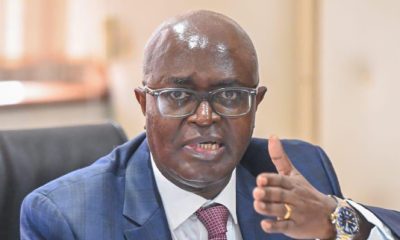
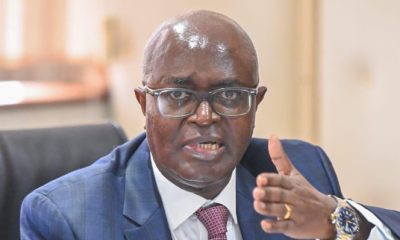
The Untouchable: How KURA’s Silas Kinoti Has Survived A Decade Of Corruption Storms While Kenya’s Roads Bled
Fresh insider revelations expose a proxy empire built on family-registered shell companies, a petroleum enforcer who moves like a ghost through KURA offices, a Special Purpose Vehicle linked to Meru’s political elite, and a decade-long pattern of petitions that rise, investigations that stall, and storms that never break. This is the architecture of impunity and the story its subject would do anything to kill.

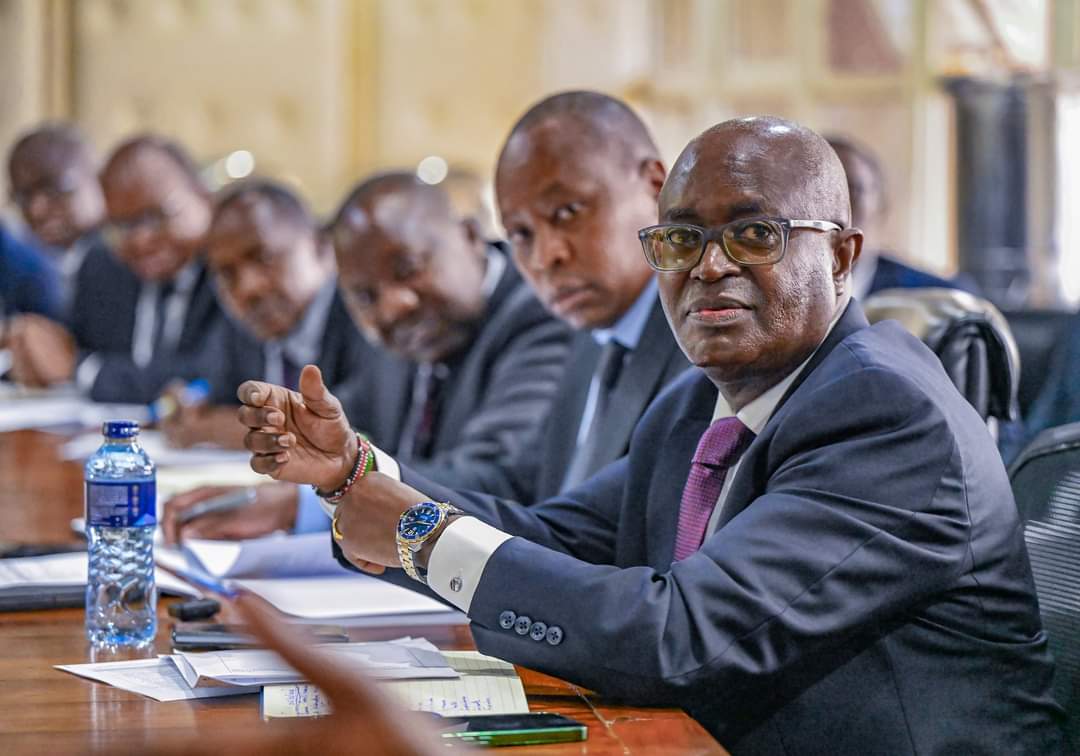
Somewhere between the slow grind of Nairobi’s perpetual construction sites and the labyrinthine corridors of the Kenya Urban Roads Authority’s Upper Hill headquarters, there exists an unwritten rule that every contractor working under KURA’s authority has learned, at considerable personal cost, to obey.
The rule is not in any procurement manual. It does not appear in the KURA Act. It is communicated informally, through intermediaries, on site visits, or during the quiet moments before the signing of a payment certificate.
The rule is simple: pay, or wait. And waiting, in the world of road construction where cashflow is everything and delayed certificates mean stalled payrolls and unpaid equipment leases, amounts to a slow financial execution.
Into this ecosystem walks a man known in certain circles simply as Chairman.
His full name is Henry Muriira Mbaabu. He is the founder of Interlink Petroleum Limited, incorporated in August 2009, a firm that trades in petroleum products including bitumen, the lifeblood of road construction as well as rice, sugar, and general merchandise.
On paper, Interlink is an indigenous success story: a Meru entrepreneur who built a petroleum business from the ground up, expanding from fuel distribution to become, according to his company’s own website, one of the leading indigenous petroleum companies in Kenya and East Africa.
In practice, multiple senior sources within KURA who have spoken to Kenya Insights at considerable risk to their careers and, they believe, their personal safety, describe Interlink and its chairman as something altogether more sinister.
According to these sources, Mbaabu is the operational face of what insiders describe as an extortion machinery with the blessing of KURA Director General Engineer Silas Murira Kinoti.
Contractors currently working on KURA sites across Kenya are allegedly being leaned on for cash facilitation fees, protection money, and straightforward kickbacks under the implicit threat of problems that only Kinoti’s inner circle can solve: delayed payment certificates, withheld progress approvals, sudden compliance issues materialising from nowhere.
A contractor who pays, sources say, finds that these problems vanish. One who refuses discovers how elastic KURA’s bureaucracy can be.
“DG Kinoti uses Mbaabu as a contractor and enforcer. Mbaabu is a mere Form Four school leaver with no formal training in any known field, yet he moves through KURA offices and sites like he owns the place. That is not a coincidence. That is a system.” — Senior KURA Engineer
The Interlink connection is not, in isolation, illegal. A petroleum company supplying bitumen to road contractors is routine commercial activity.
What makes it significant, insiders insist, is the alignment: Mbaabu’s company is strategically positioned at the supply chain intersection of every medium-scale KURA road project in the country, and Mbaabu himself reportedly enjoys unfettered access to KURA offices and construction sites that no ordinary supplier commands. He does not merely sell bitumen. He allegedly arbitrates outcomes.
The Proxy Architecture: Companies Without Names
The more damaging allegation is not about what Mbaabu does openly, but what Kinoti allegedly does invisibly.
Chapter Six of Kenya’s Constitution is unambiguous: state officers shall not engage in any business or trade that creates a conflict of interest with their public duties.
In practice, the provision is widely flouted through what accountability advocates have come to call the proxy architecture the registration of companies in the names of family members, relatives, trusted associates, and loyal businessmen, with the beneficial owner remaining carefully invisible.
Multiple senior KURA officials who spoke to Kenya Insights allege that Kinoti has perfected this architecture over more than a decade at the helm of the authority.
The companies, they say, are registered in the names of close relatives and a network of pre-qualified contractors, many described as Kikuyu businessmen with established relationships with the Director General’s inner circle.
The beneficial link back to Kinoti is, by design, unverifiable through any public registry.
The names on the incorporation papers are not his. The phone numbers on the company profiles are not his. The bank accounts receiving payment are not his at least, not directly.
“Kinoti has ensured he and others, mostly Kikuyus, have several companies but Kinoti’s name doesn’t appear. This is not only conflict of interest, but fraud and deception,” one senior officer at the agency told this reporter.
“All the medium to small construction works are ninety per cent allocated to himself through these proxies.”
The elegance of the system, from the perspective of those allegedly running it, is its resilience under scrutiny.
When questions arise, the proxy companies exist independently, with real registration documents and real directors. When pressure mounts, the proxies can be restructured or replaced. The beneficial owner floats above the evidence.
Interlink, insiders say, functions as the Special Purpose Vehicle at the apex of this structure.
Its diversified commercial portfolio petroleum, rice, sugar, general trading provides the perfect laundry mechanism for moving value extracted from the road construction chain.
Its shareholder and operational links to what insiders describe as “the who is who from Meru and Tigania” extend the political insurance policy well beyond Kinoti himself, connecting the operation to senior elected officials from Meru County whose names circulate in internal discussions but whose formal links to the company are not, on currently available evidence, publicly documented.
The Appointment That Never Should Have Been
To understand how the current situation came to exist, one must begin at the beginning.
Silas Murira Kinoti joined the Kenya Urban Roads Authority in 2009 as Manager (Roads). He was promoted to General Manager (Planning and Environment).
In September 2015, following the departure of the previous acting Director General, he assumed the role in an acting capacity a status he would maintain, extraordinarily, for nearly five years, until Transport Cabinet Secretary James Macharia formally confirmed him as Director General on June 18, 2020.
His appointment as substantive DG came on a three-year contract, renewable once a structure that places his maximum possible lawful tenure at six years from the date of formal appointment, meaning June 2026.
A petition currently before the Employment and Labour Relations Court in Nairobi, filed by Masha Wario against the Public Service Commission and the KURA Board and heard on June 16, 2026, argues precisely this point: that Kinoti’s continued presence in office is unconstitutional and unlawful, that his tenure has expired, and that he continues signing contracts and issuing administrative directives in violation of the law.
KURA and Kinoti have contested the petition. The court has yet to rule.
Even before his formal appointment, the concerns were being aired. Critics at the time said he was a conduit for CS Macharia who is himself now a subject of considerable scrutiny following his tenure across multiple transport and infrastructure portfolios to extract value from the agency.
Macharia’s appointment of Kinoti despite these concerns, and the four-year delay in filling the position substantively, is a story in itself. That delay effectively allowed Kinoti to operate in an institutional limbo that insiders say made him even harder to challenge: acting directors, lacking the security of formal tenure, are often more dependent on political protection and more likely to accommodate the demands of those who provide it.
The Stecol Years: When Chinese Walls Fell
The first major corruption narrative to attach itself to Kinoti’s name involved Stecol Corporation, a Chinese construction firm. During Kinoti’s tenure, KURA awarded Stecol contracts worth an estimated Sh19 billion across works in Nairobi, Kajiado, and Kiambu counties, including the upgrading of the Outering Road, the construction of the Allsops bridge linking Outering Road and Thika Superhighway, and the regeneration of 38 roads in Nairobi’s Eastlands.
The scale of Stecol’s presence at KURA during this period was extraordinary. Internal sources and industry players raised alarms, characterised by insiders as systematic contract inflation: Stecol was allegedly engaged not merely for construction but also for design, environmental studies, and socio-economic feasibility a bundling arrangement that placed the same firm in the role of both designer and builder, eliminating independent oversight of cost projections.
What makes the Stecol thread more alarming still is a dimension that received relatively little mainstream coverage at the time.
The African Development Bank had, in 2017, concluded a settlement with Sinohydro Corporation the parent entity from which Stecol derives its lineage over findings that Sinohydro had engaged in fraudulent practices in bidding for contracts. Despite this, and despite explicit warnings from AfDB’s Nairobi office, KURA continued awarding Stecol contracts.
Internal KURA sources accused two senior directors Ahmed Mohammed, then acting director of urban road development, and Daniel Muchiri, then acting director of urban roads planning and design of being key facilitators of the Stecol relationship.
Both were acting officials, a pattern that would recur: at KURA, the acting designation has allegedly become a mechanism for installing loyalists who can be removed easily if they become inconvenient but who, while in place, are entirely dependent on the DG’s protection for their continued occupation of the role.
The Auditor General’s Indictment That Nobody Acted On
The Auditor General has not been silent about KURA’s finances. Successive audit reports have flagged the authority’s failure to account for billions of shillings in public funds. The figure most recently cited in activist petitions is Sh2.7 billion that KURA has failed to adequately account for in Auditor General reports an indictment, critics argue, not merely of administrative failure but of deliberate financial opacity that has persisted across multiple audit cycles without triggering meaningful accountability.
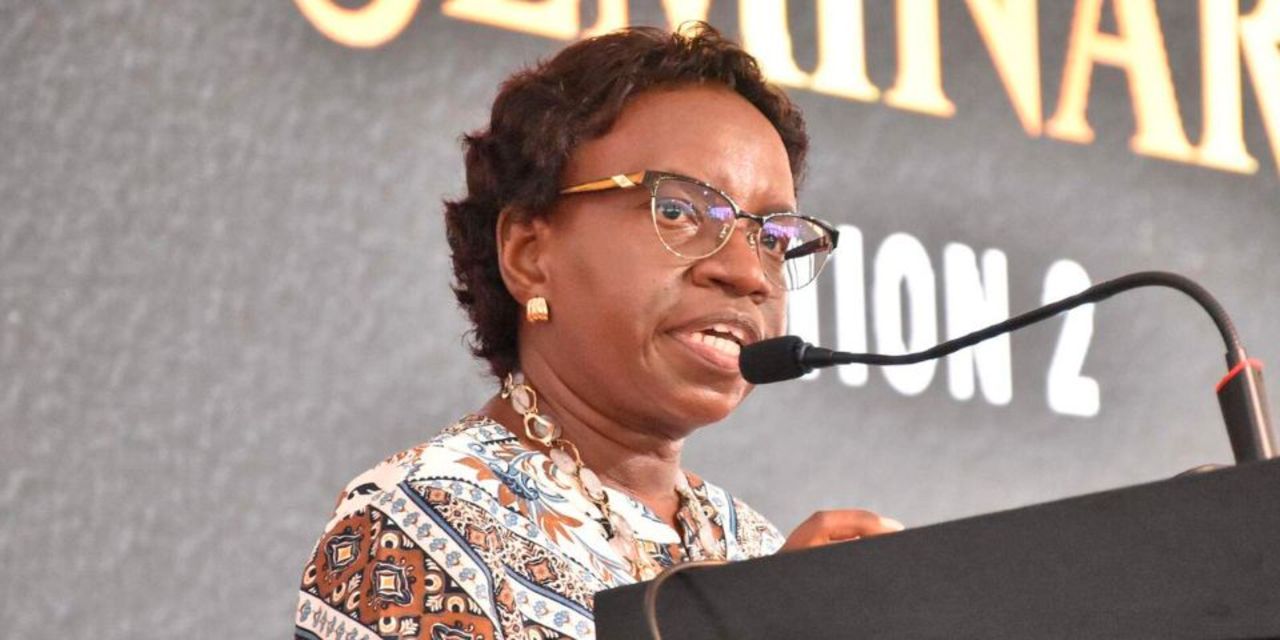
Auditor General Nancy Gathungu.
In November 2024, Kinoti appeared before the National Assembly’s Public Investments Committee on Commercial Affairs and Energy, chaired by Pokot South MP David Pkosing, to answer allegations of a Sh687 million overpayment to Cementers Construction Company for incomplete road and bridge works along Likoni and Enterprise Roads in Nairobi works initially contracted at Sh892 million.
The contractor, Kinoti told lawmakers, was pushing for mutual termination of the agreement, citing inflation and a change in scope mandated by Kenya Railways. Committee members were unmoved.
“Why does the contractor want to terminate the contract when most of the work is done?” Kiambu Town MP John Machua demanded.
Aldai MP Marianne Kitany noted the severe traffic disruption caused by the incomplete projects. Yet the investigation, like those before it, appears to have produced no criminal consequence for the authority’s leadership.
The Sh13.2 Billion Petition and the BRT Controversy
In 2024, activist Ezekiel Oyugi filed a petition at the High Court before Justice Chacha Mwita, seeking a declaration that Kinoti was unfit to hold public office following alleged procurement irregularities in the award of three road projects the Bus Rapid Transit Line 5, the Nairobi Intelligent Transport System, and the Outering Road improvement collectively valued at Sh13.2 billion.
The petition cited violations of public procurement laws and potential misappropriation of public funds, and asked the court to remove Kinoti from office. It has wound its way slowly through the judicial system. As of the time of this writing, it has produced no swift accountability.
The BRT story has continued to generate its own independent legal storms.
The Sh7.6 billion BRT Line 5 project along Nairobi’s Outer Ring Road funded by a Korean Export-Import Bank loan under the Economic Development Cooperation Fund was challenged in court by Beyond Trading Company Limited, which alleged that KURA violated constitutional and procurement laws by effectively restricting the tender to Korean firms, excluding the petitioner’s bid, and favouring a single contractor in the evaluation process.
The Public Procurement Administrative Review Board cleared KURA to proceed in June 2025. Beyond Trading escalated to the High Court, seeking conservatory orders.
The orders were denied.
In March 2026, KURA signed the contract with the Korean joint venture YOUNGJIN. The project is now under implementation though the constitutional petition challenging its procurement remains pending in the courts.
What is notable about the BRT controversy is not the specific legal arguments, which courts will resolve, but the pattern it represents. In the architecture of procurement at KURA, legal challenges arrive, PPARB processes unfold, courts are approached, interim orders are denied, contracts are signed anyway, and the project goes ahead under a cloud of unresolved legal questions.
By the time any court delivers a substantive finding, the contract is executed, the subcontracts are let, and the financial flows that critics say are the real objective of the exercise have long since occurred.
The Sh11.3 Billion Ghost Investigation
Perhaps the most revealing element of the Kinoti story is not what investigators have found, but what they have allegedly refused to finish finding.
In May 2026, a petitioner identified as Dr Joshua Charles Omondi filed a certificate of urgency before the Anti-Corruption and Economic Crimes Division of the High Court in Nairobi, seeking to compel the Ethics and Anti-Corruption Commission to conclude its investigations into an alleged Sh11.3 billion corruption scandal involving Kinoti.
Dr Omondi’s petition argues that the EACC’s failure to complete its investigations amounts to a constitutional violation and risks allowing Kinoti to evade accountability ahead of his retirement.
Crucially, Dr Omondi’s filing reveals that EACC obtained search warrants in connection with the Kinoti matter as far back as June 2025 nearly a year before the urgency petition was filed.
The warrants were secured. The evidence, presumably, was gathered. Yet the investigation has, by the petitioner’s account, remained glacially slow.
The EACC’s institutional pattern on high-profile matters is well documented.
In its 2024-2025 annual report, the commission recorded impressive headline figures: 4,183 complaints handled, 1,846 taken up for investigation, Sh3.4 billion in assets recovered, Sh22.9 billion in illegally acquired assets identified. Yet the gap between identification and prosecution remains enormous.
Only 12 of 58 EACC corruption cases were cleared for prosecution by the Office of the Director of Public Prosecutions over one three-month reporting period in 2025.
Investigations that should take months stretch into years. Search warrants expire. Witnesses recant. Political winds shift. And the subjects of the investigations remain in their offices, signing contracts.
“Even the media is compromised. All editors in the country are Kinoti’s friends. They collect money from him every day. It is hard to expose such things and the DG is taking advantage.” — anonymous EACC staff
This is the institutional ecosystem in which Kinoti has survived for more than a decade. EACC insiders, when pressed by this reporter, retreat to the standard formulation: they only investigate matters backed with evidence. Sources within the agency counter that the evidence exists and has existed for years, but that witnesses are afraid of professional and personal consequences, that political will at the level required to push a case to prosecution and sustain it through Kenya’s slow-moving courts is absent, and that the economic interests aligned against any successful prosecution are substantial.
The Question of Tenure: A Director General Beyond His Time
At the heart of multiple petitions now circling Kinoti is a question of elementary law. He was formally appointed Director General on June 18, 2020, on a three-year contract renewable once. Three years: June 2023.
Renewal: June 2026. The maximum lawful tenure, on this reading, expired this month. Yet as of the date of this report, Kinoti has not vacated the office. He has not announced a departure.
In July 2025, when his counterparts at KeRRA and KeNHA resigned amid a broader realignment of roads agency leadership under the Ruto administration, Kinoti took to his X account his full handle presenting his middle name, Murira to publicly and emphatically deny reports that he was proceeding on terminal leave. “These allegations are completely FALSE, MISLEADING, and should be treated with the disregard they deserve,” he wrote. He urged the public to rely only on official communication channels.
Kinoti has, through KURA’s communications machinery, consistently characterised all allegations against him as false, misleading, or the work of unnamed enemies and bad-faith actors.
He has not publicly addressed the specific proxy company allegations that are the subject of this report.
He has not addressed the specific Interlink and Mbaabu allegations. His public posture has been one of serene, almost contemptuous invulnerability a man who has heard these accusations so many times, and survived them so consistently, that he no longer considers them worth engaging with in any substantive way.
That posture is itself a form of evidence. It speaks to the confidence of a man who understands, from long experience, how the Kenyan accountability ecosystem works. Petitions are filed and served. Hearings are scheduled and adjourned. EACC opens files and does not close them. Parliament summons officials and receives explanations. Audit reports circulate and collect dust. The DG stays.
The Media Firewall and the Architecture of Silence
What keeps this system functional, insiders argue, is not merely the weakness of formal oversight institutions. It is the suppression of the informal accountability mechanism that, when it functions properly, feeds formal institutions with the pressure they need to act: independent journalism.
One source , anonymous staff member at the EACC, told Kenya Insights something that is either literally true or true in the more important sense that it represents the felt reality of an institution whose staff believe themselves to be watched.
“Even the media is compromised,” he said. “All editors in the country are Kinoti’s friends. They collect money from him every day. It is hard to expose such things and the DG is taking advantage by bribing the media.”
Whether or not this description of the media landscape is literally accurate in every newsroom and this reporter makes no such sweeping claim the consequence it describes is real.
Stories about KURA’s Director General have appeared in fragments over the years. Petitions have been filed and covered in brief news items.
Activist complaints have received cursory treatment.
But the long-form investigative treatment that follows the money through the proxy structure, maps the commercial relationships, documents the site-level extortion, and holds the evidence long enough to survive an injunction that journalism has been largely absent.
The result is a public discourse that has accumulated a general sense that something is badly wrong at KURA, without ever having a complete picture assembled and held in one place long enough to demand a response.
The abduction and torture of two online journalists during Kinoti’s tenure over an expose about KURA corruption and stalled Nairobi road projects carried out by officers from the Special Crimes Unit, a revelation that received inadequate institutional follow-up represents the most extreme illustration of what happens when the accountability gap is filled by journalists unwilling to be suppressed.
The episode did not result in the prosecution of those responsible.
It did not result in any serious inquiry into the KURA corruption allegations that triggered it. It became, instead, a data point in the unwritten manual of intimidation that governs coverage of the authority.
The Bitumen Pipeline: A Supply Chain Designed for Extraction
The particular genius of using a petroleum and bitumen company as the operational vehicle for the alleged extortion machinery is worth examining carefully, because it illuminates the way the system works in practice.
Bitumen is not a discretionary supply in road construction. It is the primary binding material in asphalt, without which roads cannot be built. Every road contractor working for KURA needs bitumen.
The price of bitumen fluctuates with global petroleum markets, and supply reliability matters enormously for project timelines and cost management. A supplier with influence over a Director General’s office does not need to demand cash overtly. He can simply price his product at a premium, offer delayed delivery as the alternative, and allow contractors to draw the obvious conclusions.
More directly, insiders allege that the Interlink structure enables the extraction of value from contractors through what are described as facilitation fees paid in exchange for the smooth processing of payment certificates and the avoidance of compliance problems.
In KURA’s contract administration machinery, where payment certificate approval sits with senior officials who report ultimately to the Director General, the ability to delay or accelerate a payment represents enormous economic power over contractors whose businesses are typically leveraged and whose cash cycles are tight.
A site manager or engineer who can call a number and have a payment problem resolved within days becomes a valuable intermediary. The fee for that service, extracted over hundreds of contracts across the country, aggregates into numbers that insiders say are very large.
The Pattern: How Every Storm Passes Without Rain
Reviewing the documented history of corruption allegations against Kinoti and KURA, what strikes the careful analyst is not the individual scandals but the pattern of their resolution. Or rather, their non-resolution.
A complaint is filed with EACC. EACC opens an investigation. The investigation proceeds slowly. A court petition is filed. The court directs parties to file responses. Responses are filed. Hearing dates are set. Hearing dates are adjourned. The investigation quietly stalls. The petition quietly dies or is not pursued vigorously. The subject of the complaint carries on as if nothing happened.
This pattern has repeated itself with the Stecol contracts, the Outering Road allegations, the Sh687 million Cementers overpayment, the Sh13.2 billion BRT petition, the BRT Line 5 procurement challenge, and the Sh11.3 billion EACC investigation.
In each case, the institutional machinery has been activated.
In each case, it has produced no conviction, no removal from office, no public accounting. The machinery is not broken in the sense of failing to produce motion; it produces abundant motion. What it does not produce is consequence.
The political protection dimension of this story cannot be responsibly ignored. Kinoti was appointed by CS James Macharia under the Uhuru Kenyatta administration.
His continuation in office through the transition to the Ruto administration, while his counterparts at KeRRA and KeNHA departed, suggests the maintenance of political accommodation at a level that has insulated him from the accountability pressures that removed others.
The specific nature of that accommodation who benefits, what has been exchanged, what political calculations sustain it is not publicly documented. But the pattern of survival is itself data.
In Kenyan public administration, DGs who are genuinely isolated from political protection do not survive the accumulation of audit flagging, activist petitions, media allegations, EACC investigations, and parliamentary grilling that Kinoti has faced over the past decade. Those who survive it are, invariably, those who are not isolated.
The New Storm and Why It Is Different
The fresh allegations reported in this piece the Interlink SPV, the Mbaabu enforcer role, the proxy company architecture, the site-level extortion are different from previous storms in one important respect: the granularity of the detail now emerging from within KURA itself.
Previous allegations were largely external: activists, disappointed contractors, opposition politicians. What is new is the volume and specificity of allegations coming from inside the authority, from senior engineers and officers who have observed the machinery at close range and who are now, for reasons this reporter has chosen not to examine too publicly lest it identify them, willing to provide accounts that go beyond the general and into the operational.
These sources describe specific offices, specific sites, specific conversation patterns, and specific relationship structures.
They describe Mbaabu’s physical movements through KURA’s Nairobi offices.
They describe the implicit understanding that permeates the contractor community about what is required to work in KURA’s sphere without friction.
They describe the mechanism by which Kinoti’s name stays off every piece of paper while the economic benefit flows, through pathways too indirect for any procurement auditor to trace without a sustained forensic investigation of the kind that the EACC has, thus far, not completed.
The question the current moment poses is whether Kenya has any institution left with the combination of resources, political independence, and institutional courage necessary to follow this evidence chain to its conclusion.
The EACC has the warrants. The courts have the petitions. Parliament has the audit reports. Journalists at least one have the sources. What has been missing is the will to connect these threads into a prosecution that sticks.
The Tarmac Tax
There is a final dimension to this story that deserves to be stated plainly. The infrastructure that is allegedly being used as a vehicle for enrichment the roads, the bridges, the urban corridors of Nairobi and other Kenyan cities was paid for by ordinary Kenyans through taxes, road levies, and loans contracted in Kenya’s name that future generations will repay.
The contractors who build these roads and who are allegedly forced to pay tribute to access them and to receive their rightful payment have passed on these costs, as contractors always do, in their project pricing.
The Kenyan taxpayer, therefore, pays twice: once for the infrastructure itself, and once for the system of extraction that allegedly feeds off it.
The tarmac on Nairobi’s urban roads is not merely a surface.
It is, if the insiders speaking now are even half right, a financial instrument a recurring revenue stream for a small group of people who have positioned themselves between the public purse and the public good.
That is the accusation. It has not been proven in court. It has not been disproven either.
What has been established, through a decade of audit reports, activist petitions, court filings, parliamentary appearances, and the whispered testimonies of people who fear for their careers and their safety, is that something at KURA is deeply and persistently wrong, and that the man at the top has, so far, remained above it all.
Whether the courts hearing the tenure petition, the EACC officers sitting on a year-old search warrant, or the parliamentary committee members who have grilled Kinoti over overpayments and unexplained financial gaps will finally convert accusation into consequence is not a question this reporter can answer.
It is a question that Kenya’s accountability institutions will answer or refuse to answer in the months ahead.
What this reporter can say, having spent weeks with sources who spoke at personal risk, is this: the record assembled here is not thin. It is not speculative. It is a documented pattern of conduct that would, in any jurisdiction where public office genuinely carries public accountability, have ended a career long ago.
Kenya Insights allows guest blogging, if you want to be published on Kenya’s most authoritative and accurate blog, have an expose, news TIPS, story angles, human interest stories, drop us an email on [email protected] or via Telegram








TOO MUCH PR, NOTHING TO SEE: How Gladys Wanga Built a Perfect Story of Transformation While Homa Bay Bled

Netanyahu Says Israel Must ‘Break Free from Dependence’ After Tensions With Trump Administration

Niger pulls Out Of International Criminal Court After Calling It Neo-Colonialist

Kenya Awards Sh154 Billion JKIA Upgrade Tender To Chinese Firm CRBC

The Untouchable: How KURA’s Silas Kinoti Has Survived A Decade Of Corruption Storms While Kenya’s Roads Bled

Fake Papers, Dirty Millions And The Analo Connect: How Kitisuru MCA Alvin Palapala Built a Shadow Empire Inside Nairobi’s Planning Machine

Migori Payment Row Deepens As Branding Firm Demands Sh3.8 Million Over Unpaid Piny Luo Festival Deal

Utumishi Girls Fire Suspects To Be Charged With Murder

Putin Says Russia Ready For Peace Talks With Ukraine Based on Anchorage, Istanbul Agreements

South Sudanese Must Give Adut Salva Kiir The Benefit Of The Doubt

Businessman Philip Waithaka Kinuthia’s Minor Son Allegedly Drove Drunk, Killed Two Peponi Students in Ngong Road Horror Crash as Claims of Cover-Up Intensify

Inside NCBA’s Decline: How a Banking Giant Lost Its Strategic Edge

South Sudan: Adut Salva Kiir’s Shadow Treasury Exposed

Cement, Cash and Courts: How the Hashu Dynasty Crushed the Ramji Brothers for Fourteen Years and Why the Walls Are Now Closing In

Standard Chartered Ghosts Haunt Joshua Oigara At Stanbic As Whistleblower Spills Beans

Inside The Urban Planning Cartel That Owns Nairobi

THE VULTURE AND THE SCHEME How Nairobi West Hospital Became the Most Dangerous Institution in Kenya’s SHA Ecosystem and Why the Books Must Be Audited Now

The President’s Daughter and The Missing Witness: How Adut Salva Kiir’s Shadow Treasury Silenced Its Most Dangerous Critic

How Adil Popat Saved His Empire On The Eve Of Imperial Bank Collapse and Why Kenya’s Mainstream Media Buried The Story

Why John Ngumi Is Running From the EACC and Why the Sh415 Million Payday May Be the Least of His Worries
-
 News1 week ago
Businessman Philip Waithaka Kinuthia’s Minor Son Allegedly Drove Drunk, Killed Two Peponi Students in Ngong Road Horror Crash as Claims of Cover-Up Intensify
-
 Africa2 weeks ago
South Sudan: Adut Salva Kiir’s Shadow Treasury Exposed
-
 Business2 weeks ago
Standard Chartered Ghosts Haunt Joshua Oigara At Stanbic As Whistleblower Spills Beans
-
 Investigations5 days ago
THE VULTURE AND THE SCHEME How Nairobi West Hospital Became the Most Dangerous Institution in Kenya’s SHA Ecosystem and Why the Books Must Be Audited Now
-
 Africa2 weeks ago
The President’s Daughter and The Missing Witness: How Adut Salva Kiir’s Shadow Treasury Silenced Its Most Dangerous Critic
-
 Business2 weeks ago
How Adil Popat Saved His Empire On The Eve Of Imperial Bank Collapse and Why Kenya’s Mainstream Media Buried The Story
-
 Business2 weeks ago
Why John Ngumi Is Running From the EACC and Why the Sh415 Million Payday May Be the Least of His Worries
-
 Business5 days ago
Inside the Billion-Shilling Betrayal: How Senior Treasury Officials Plundered a UN Poverty Fund and Built a Real Estate Empire on the Backs of Kenya’s Rural Poor