
Business
Standard Chartered Ghosts Haunt Joshua Oigara At Stanbic As Whistleblower Spills Beans
A Disgraced Procurement Officer Has Spent Three Years Constructing a Paper Trail That Follows Kenya’s Most Celebrated Banker From Chiromo Road to Stanbic Holdings. The DCI Has Already Summoned Him Once. A South Sudan Prosecutor Wants Him Too. Now a Citizen’s Petition to the Central Bank Is Asking Whether He Should Hold Any Regulated Role At All.

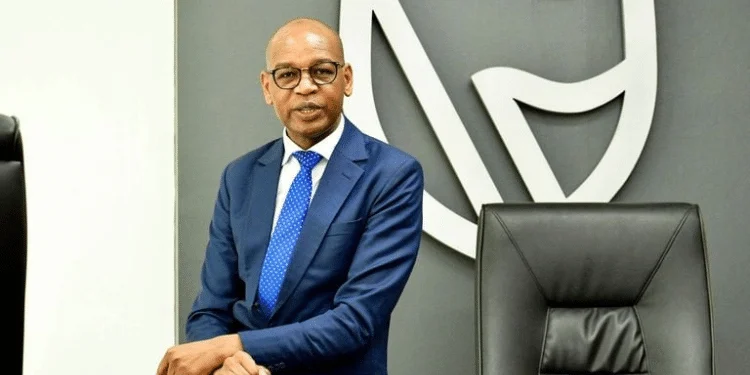
Joshua Oigara has spent his entire adult life building an imperial career. He started at PricewaterhouseCoopers, moved through Bidco Africa and Bamburi Cement, and in January 2013 became the youngest chief executive of a Nairobi Securities Exchange-listed bank when KCB Group handed him the top job at age 37.
He served KCB for nine and a half years, chaired the Kenya Bankers Association from 2018 to 2021, advised on the Vision 2030 Delivery Board, served on the WRC Safari Rally steering committee, and received the Chief of the Order of the Burning Spear from former President Uhuru Kenyatta.
He was the Financial Times’ pick for one of Africa’s top 25 leaders to watch.
By December 2022 he was CEO of Stanbic Bank Kenya. By September 2025 he was Regional Chief Executive for East Africa across six countries. By March 2026 he was CEO and Director of Stanbic Holdings Plc, the listed holding company, sitting at the apex of Africa’s largest bank by assets. The ascent has been, by any conventional measure, extraordinary.
It is also, according to a growing body of documented evidence and sworn allegations before Kenyan courts, an ascent that has been made possible by the systematic failure of regulators to ask, and answer, a single consequential question: what exactly was Joshua Oigara doing between 2018 and 2021, when he ran Standard Chartered Bank Kenya, and what did he know about the alleged fraud that a former procurement officer named David Dimba says was happening on his watch?
THE STANDARD CHARTERED YEARS: THE PERIOD IN QUESTION
Oigara arrived at Standard Chartered Kenya as CEO in 2018, at precisely the moment Dimba says the rot was deepening. His role was unambiguous. As the Country Chief Executive, Oigara chaired the monthly Country Management Committee, the senior forum where every major vendor contract, procurement overrun and financial decision of consequence was reviewed. He was, in Dimba’s documented account, the most senior person in the building.
Dimba joined the bank in 2011 and rose to sourcing manager, a position with direct sight lines into the bank’s largest spending decisions.
By 2019, he was flagging what he believed was a systemic scheme to extract money through inflated vendor contracts.
A cleaning firm called Tafika Cleaners Limited, he alleges, held a contract worth approximately 36 million shillings that had grown without competitive bidding to over 127 million shillings by 2020. A set of IT vendors sharing the same IP address and postal box, he claims, were paid a combined 410 million shillings for network optimisation work that was never implemented.
Senior managers were, he alleges, coding personal shopping trips in Dubai and Johannesburg as client entertainment through the bank’s Concur expense system, with the total running to approximately 23 million shillings.
And a politically connected client was, he claims, allowed to move roughly four million US dollars through shell entities without proper Know Your Customer checks, a transaction he says he flagged in 2019 and was told not to pursue.
The idea that a CEO who chaired the Country Management Committee every month for three years did not know what was happening in his own procurement division is, in Dimba’s word, laughable.
Dimba went through every available internal channel: the Country Head of Compliance, the Regional Head of Investigations in Dubai, the global whistleblower hotline.
He was suspended in June 2020 and dismissed in February 2022. Oigara had left Standard Chartered in late 2021. Within 13 months of his departure, he was installed as CEO at Stanbic Bank Kenya. The man who allegedly presided over the worst period of institutional corruption in the bank’s recent history had moved, without a single regulatory review or public accounting, to a rival’s top seat.
THE KCB INHERITANCE: A CLEANUP THAT WASN’T HIS PROBLEM
Before Standard Chartered, Oigara ran KCB Group for nine and a half years. The growth figures are real and are widely cited: profit before tax more than doubled from 20.1 billion shillings in 2013 to 47 billion shillings in 2021. Total assets crossed one trillion shillings.
KCB-Mpesa, the mobile lending platform built in collaboration with Safaricom, put the bank at the centre of Kenya’s fintech revolution.
What is less cited, but equally documented, is what the expansion left behind. By the time Oigara stepped down in May 2022, seven months before his contract was due to expire, KCB’s non-performing loan ratio stood at 16.5 percent, already elevated, and climbing.
His successor Paul Russo inherited a book whose problems the incoming CEO described publicly as legacy NPLs and legal claims requiring deep surgery.
Russo’s team wrote off 10 billion shillings in loans, set aside 2.3 billion for legal claims, spent 1.5 billion on a voluntary staff exit programme, and built a dedicated special loans recovery unit to manage assets that had been under stress for years.
By June 2023, KCB Kenya’s NPL ratio had reached 19.6 percent, and the Boardlot Sultan market analysis published on 10 June 2026 confirms the peak reached approximately 19.2 percent in 2024 before the cleanup began to take effect.
One bank analyst, writing in that period, used a phrase that has circulated widely in Kenya’s banking community since: the CEO who climbs the mountain often leaves the cleanup for those who follow.
Companies placed into receivership or administration by KCB to recover Oigara-era debts read like a cross-section of Kenya’s industrial economy.
East Africa Portland Cement surrendered approximately 2,000 acres of land in Mavoko against a 6.8 billion shilling debt. Savannah Cement, Proctor and Allan, Diamond Industries, Elson Plastics and Korara Highlands Tea were all placed under administration or receivership in 2024 and 2025, with combined exposures running into billions of shillings.
The asset recovery operation that followed Oigara’s exit has been one of the largest and most aggressive in Kenyan corporate history.
STANBIC: A NEW BANK, OLD TROUBLES
The legal trouble at Stanbic did not take long to find Oigara. By October 2024, the Banking Fraud Investigations Unit had summoned him to its Kiambu Road headquarters to record a statement about an eight-year dispute between Stanbic and Air Afrik Aviation Limited, a Kenyan airline that had operated an account at the bank’s Juba branch in South Sudan.
The dispute concerned 7.22 million US dollars, approximately 932 million shillings, that the Bank of South Sudan credited to Air Afrik’s account in February 2016 for a leasing agreement with the South Sudanese government.
Stanbic reversed the credit and Air Afrik accused the bank of fraudulent false accounting and illegally freezing and withdrawing money from its account.
The DCI’s investigators informed Oigara’s lawyers they were probing the bank for unsafe and unsound banking practices including fraudulent false accounting. Oigara rushed to the High Court. His lawyers argued, with some justification, that the disputed transactions occurred before he joined Stanbic and that the DCI was improperly interfering in an active civil suit already pending before Justice Nixon Sifuna in the commercial division.
In November 2024, Justice Bahati Mwamuye granted a conservatory order barring the Banking Fraud Investigations Unit from questioning Oigara or any Stanbic employees, and restraining the Director of Public Prosecutions from filing criminal charges until the petition was fully determined.
The order shielded Oigara from the investigators, but it did not end the affair.
In December 2024, South Sudan’s Public Prosecution Attorney issued a separate summons requiring Oigara to appear in Juba by December 19 to answer or defend himself for offences under section 110 of the South Sudan Penal Code.
The South Sudan police separately issued an international arrest warrant against Fredrick Owuor Ouko, Stanbic’s South Sudan country head, over the same dispute. Two jurisdictions, one banking executive, one deepening spiral.
The High Court order did not make Oigara innocent. It made him unreachable. That is a different thing.
THE DIMBA PETITION AND THE FIT-AND-PROPER TEST
Into this environment, Dimba filed his Citizen’s Petition to the Central Bank of Kenya in early June 2026. Among his demands is a specific one that cuts directly to Oigara’s current position: a review by the Central Bank of Kenya of Oigara’s suitability under the fit and proper person framework that governs who may hold directorships in regulated financial institutions.
Under the Banking Act and CBK’s own prudential guidelines, a person seeking or holding a senior position at a licensed institution must demonstrate, among other things, integrity and the absence of pending criminal investigations or serious allegations of financial misconduct.
Dimba’s argument is straightforward: a man who chaired the Country Management Committee during the period when 410 million shillings in allegedly fictitious IT payments were made, and who left without ever being investigated, should not be allowed to accumulate executive authority across six East African countries without the regulator first answering what he knew.
The Central Bank has not responded publicly to the petition. It has not confirmed or denied whether a fit and proper review of Oigara has been initiated.
The Banking Fraud Investigations Unit, which Dimba had previously been referred to by a parliamentary committee, has not forwarded a file to the Director of Public Prosecutions in relation to the Standard Chartered allegations.
As of June 2026, no charges have been filed, no bar imposed, and no investigation publicly confirmed.
THE ARCHITECTURE OF IMPUNITY
What makes Oigara’s trajectory uniquely disturbing is not any single allegation but the cumulative pattern.
At KCB, he departed seven months early with the NPL book at 16.5 percent and climbing, leaving a cleanup that cost his successors tens of billions of shillings and years of painful restructuring.
At Standard Chartered Kenya, where he served as CEO from 2018 to 2021, a former insider has filed sworn court papers alleging that 410 million shillings in fraudulent IT payments were made, that a cleaning contract grew by 250 percent through fictitious variation orders, and that a politically connected money laundering suspect was explicitly described to Dimba as untouchable.
At Stanbic, the DCI has attempted to question him in relation to alleged fraudulent false accounting, and South Sudan’s criminal justice system is actively pursuing the matter across an international border.
At each institution, Oigara has survived.
The mechanism is always the same: powerful board support, expensive legal representation, regulatory paralysis, and the kind of social capital that comes from three decades of building alliances at the top of Kenya’s corporate pyramid.
The Boardlot Sultan profile published on 10 June 2026 calls him a Strategic Institutionalist.
The less flattering but equally accurate description is a man who has consistently managed to position himself above the consequences of institutional failure while the junior staff, the pensioners, and the whistleblowers absorb the damage below.
Kenya placed on the FATF grey list in February 2024 precisely because the global anti-money laundering watchdog found that the country could not demonstrate a single successful investigation and prosecution of a money laundering offence.
The Financial Reporting Centre, which briefly opened an inquiry into the Standard Chartered money laundering allegation in 2023, made no public findings.
The Banking Fraud Investigations Unit, as a parliamentary report noted, failed to interview key witnesses in the Dimba complaint.
The DCI, which attempted to question Oigara about Stanbic’s Air Afrik dispute, was blocked by a High Court conservatory order obtained within weeks of the summons being issued. The pattern is not coincidental. It is a system.
WHAT THE RECORD SAYS
Every morning before seven, David Dimba posts to his 120,000 LinkedIn followers. His pinned tagline has not changed. A bank’s real capital is trust. You stole mine. Now I’m taking it back. The line was written with Standard Chartered in mind, but it applies equally to the entire institutional ecosystem that has allowed Joshua Oigara to move from KCB to Standard Chartered Kenya to Stanbic Holdings Plc to Regional Chief Executive for East Africa at Africa’s largest bank without ever once being required to answer, in a criminal court or before the Central Bank, what he knew and when he knew it.
Every month that passes without a credible, independent answer is a month in which the most senior banking executive operating in East Africa carries unresolved allegations from three institutions across three legal jurisdictions. That is not a clean record. It is a deferred reckoning.
Kenya Insights allows guest blogging, if you want to be published on Kenya’s most authoritative and accurate blog, have an expose, news TIPS, story angles, human interest stories, drop us an email on [email protected] or via Telegram


Al-Shabaab Issues Statement Defending Omar Artan, Accuses U.S. of Discrimination After Referee’s Deportation

Netanyahu To Run For Re-Election, His Party Says, After Trump Raises Doubts

US Cracks Down on Birth Tourism Schemes

Microsoft Limits Employee Use Of Anthropic’s Claude Fable 5 Over Data Retention Concerns, The Verge Reports

Standard Chartered Ghosts Haunt Joshua Oigara At Stanbic As Whistleblower Spills Beans

Caleb Amisi Says Linda Mwananchi Has Lost Direction, Announces Plans To Form A New Movement

Air Canada Pilot Flew Passengers For Years With A Fake Pilot’s License, Police Say

Itumbi Claims Kalonzo Has Settled on Sifuna as Running Mate

THE KURIA NETWORK TAKES THE BOARDROOM: How Moses Kuria’s Inner Circle Seized Control of Africa Mega Agricorp And the Paper Trail That Links It All

Who Is The Somali Referee Barred From Entering The US For The World Cup?

Cement, Cash and Courts: How the Hashu Dynasty Crushed the Ramji Brothers for Fourteen Years and Why the Walls Are Now Closing In

Inside The Urban Planning Cartel That Owns Nairobi

Why Ruto’s Favourite Candidate Adan Mohammed Could Be Locked Out of the KRA Top Job

LifeCare on the Brink: SHA Fraud, Stolen Wages, and the Rotten Empire Jayesh Saini Built

Este Medical Kenya Fights American’s Explosive Complaints

Betika Faces DCI Probe, Directors Arrest and License Revocation Over Massive 29.5 Million Safaricom Customers’ Data Breach

The Rot Inside Absa: How Bank Insiders Are Looting Nairobi’s Customers

Inside FAFSA Fraud: How Kenyan Cybercriminals Siphoned Millions from America’s Sh12 Billion Student Loan System

Fresh Move Launched to Remove Kenya Railways MD Mainga From Office After Awarding Sh817 Million Consultancy Contract

Court Confirms Safaricom Customers Data Was Sold To Betting Companies In Seven-Year Cover-Up
-
 Investigations6 days ago
Cement, Cash and Courts: How the Hashu Dynasty Crushed the Ramji Brothers for Fourteen Years and Why the Walls Are Now Closing In
-
 Investigations5 days ago
Inside The Urban Planning Cartel That Owns Nairobi
-
 Investigations1 week ago
Betika Faces DCI Probe, Directors Arrest and License Revocation Over Massive 29.5 Million Safaricom Customers’ Data Breach
-
 Investigations6 days ago
Fresh Move Launched to Remove Kenya Railways MD Mainga From Office After Awarding Sh817 Million Consultancy Contract
-
 News2 weeks ago
Eight Students Arrested In Kenya After Suspected Deadly School Arson Attack
-
 News2 weeks ago
How Uhuru’s Deal With Obama In 2015 Paved Way For America’s Ebola Plan In Kenya
-
 Business1 week ago
TRUST BETRAYED: How Senior DTB Bank Insiders Allegedly Looted Sh149 Million From a Customer’s Account Over Five Years
-

 Investigations5 days ago
Why Drivers Cheered Bolt’s Reported Exit: Inside the Slow Financial Strangulation of Thousands of Kenyan Drivers and Riders in Kenya