
Business
The President’s Helicopter: How Ruto’s Aviation Empire Lands a Historic Airbus Milestone While His Government Writes the Tax Code
Rotorjet Aviation, affiliated with President William Ruto’s Kwae Island Development Limited, took delivery on May 12, 2026, of the 1,000th Airbus H130 ever built. The acquisition drops into a political petri dish of breathtaking proportions: a sitting head of state expanding a helicopter fleet that has previously been chartered to government agencies he now commands, as his own Finance Bill proposes sweeping tax exemptions for aviation parts.

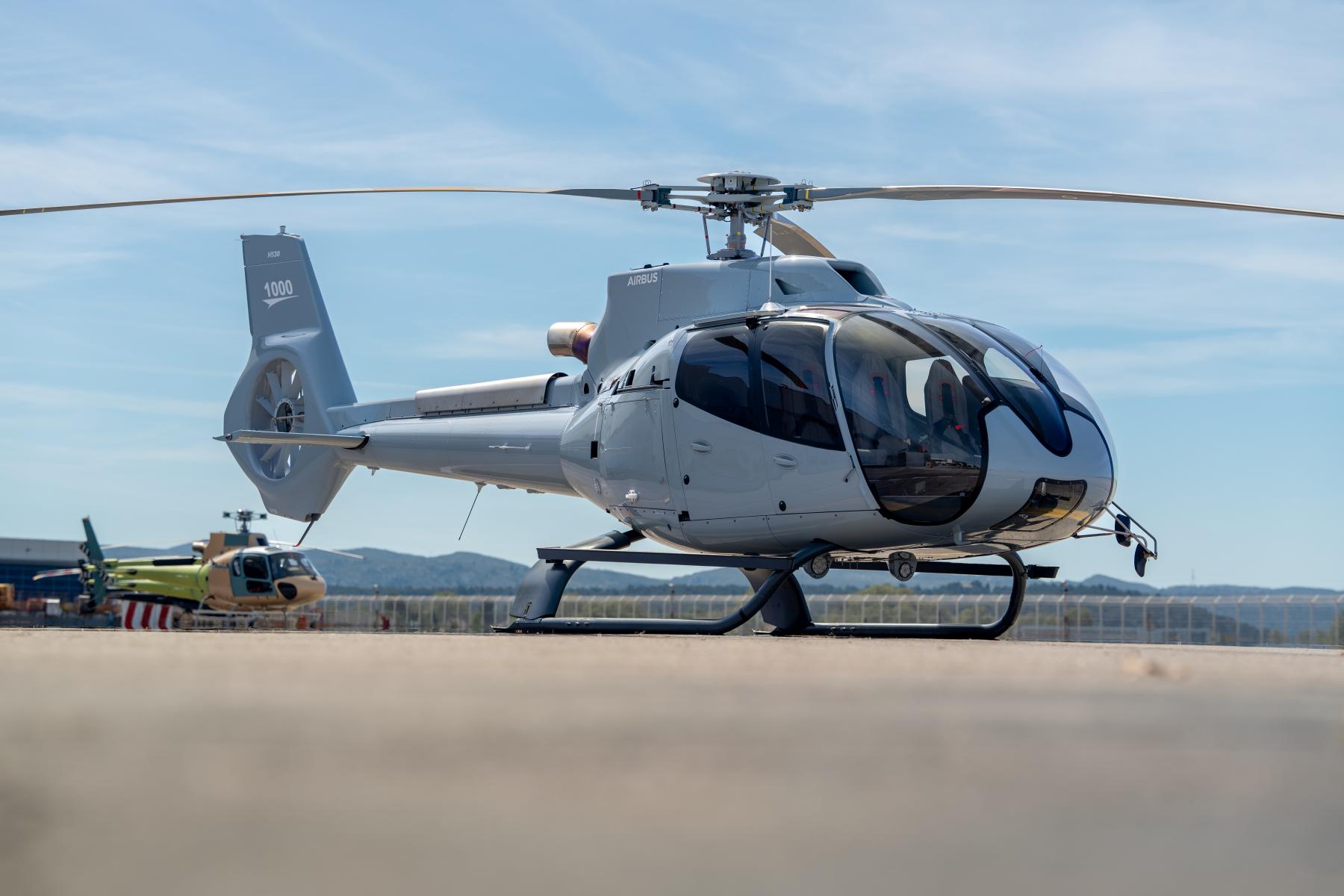
On the morning of May 12, 2026, at Wilson Airport in Nairobi, a modest ceremony marked an immodest moment. Airbus Helicopters, the world’s largest rotorcraft manufacturer, delivered its 1,000th H130 helicopter to Rotorjet Aviation, a Kenyan operator registered at the same Wilson Airport address as Kwae Island Development Limited, the multi-billion-shilling helicopter company publicly identified by government officials as being among the assets of President William Samoei Ruto.
The milestone delivery, confirmed by German financial news service Ad-Hoc-News citing Airbus data, was designed by Airbus as a prestige event. What Airbus did not advertise was the political biography of the man behind the operation.
The timing alone is enough to make any constitutional lawyer’s pen stall on the page. Treasury Cabinet Secretary John Mbadi tabled the Finance Bill, 2026, in Parliament just days before the delivery, proposing a raft of amendments to the Value Added Tax Act and the Miscellaneous Fees and Levies Act that touch aviation directly.
The Bill proposes to preserve import duty exemptions on aircraft parts falling under Chapter 88 of the customs tariff, the very chapter covering helicopter parts, engines, and ancillary aerospace equipment.
A helicopter operator importing spare parts, maintenance components, or avionics in Kenya stands to benefit materially from how this clause lands.
Kwae Island Development Limited and Rotorjet Aviation are helicopter operators importing equipment in Kenya.
A sitting president is expanding a helicopter empire that has previously been chartered to the very government agencies he now commands, as his own Finance Bill reshapes the tax terrain beneath his feet.
THE EMPIRE AT WILSON AIRPORT
Kwae Island Development Limited, known in the industry by its acronym KIDL, has operated from Wilson Airport in Nairobi for more than sixteen years. The company runs two aircraft hangars at the facility and has built what is, by any regional measure, a formidable private helicopter fleet.
The late Interior Cabinet Secretary Fred Matiang’i, appearing before the Departmental Committee on Administration and Security in 2021, listed KIDL among the identified properties of then-Deputy President William Ruto, a disclosure that sent parliamentary gallery watchers scrambling for their notebooks.
The five helicopters then in the fleet were valued at approximately Sh2.6 billion, according to a Daily Nation report compiled from that same parliamentary sitting.
The fleet is not a collection of generic workhorses. It includes an Airbus H145 T2 acquired at approximately Sh970 million, a Eurocopter 130 T2 acquired at approximately Sh740 million, an Airbus H130 valued at approximately Sh330 million, and two Airbus H125 models valued at approximately Sh290 million each.
All Airbus, all premium, all commercially deployable. The newest addition, the 1,000th H130 in Airbus history, adds to this catalogue in a manner that Airbus clearly considered worthy of a dedicated press moment.
KIDL’s CEO is Captain Marco Brighetti, a Nairobi-born pilot who began flying in 1989. He is supported by Christopher Stewart, director of flight operations, a qualified former military pilot with over 5,000 recorded helicopter flight hours.
The company’s operating arm, Rotorjet Aviation, handles the commercial charter side of the enterprise, offering executive transport, mountain rescue, luxury safaris, wildlife monitoring, survey work, and air ambulance services.
It is under the Rotorjet branding that the new H130 was received, though Rotorjet and KIDL share the same Wilson Airport base and the same operational lineage.
CHARTERED TO THE GOVERNMENT HE NOW LEADS
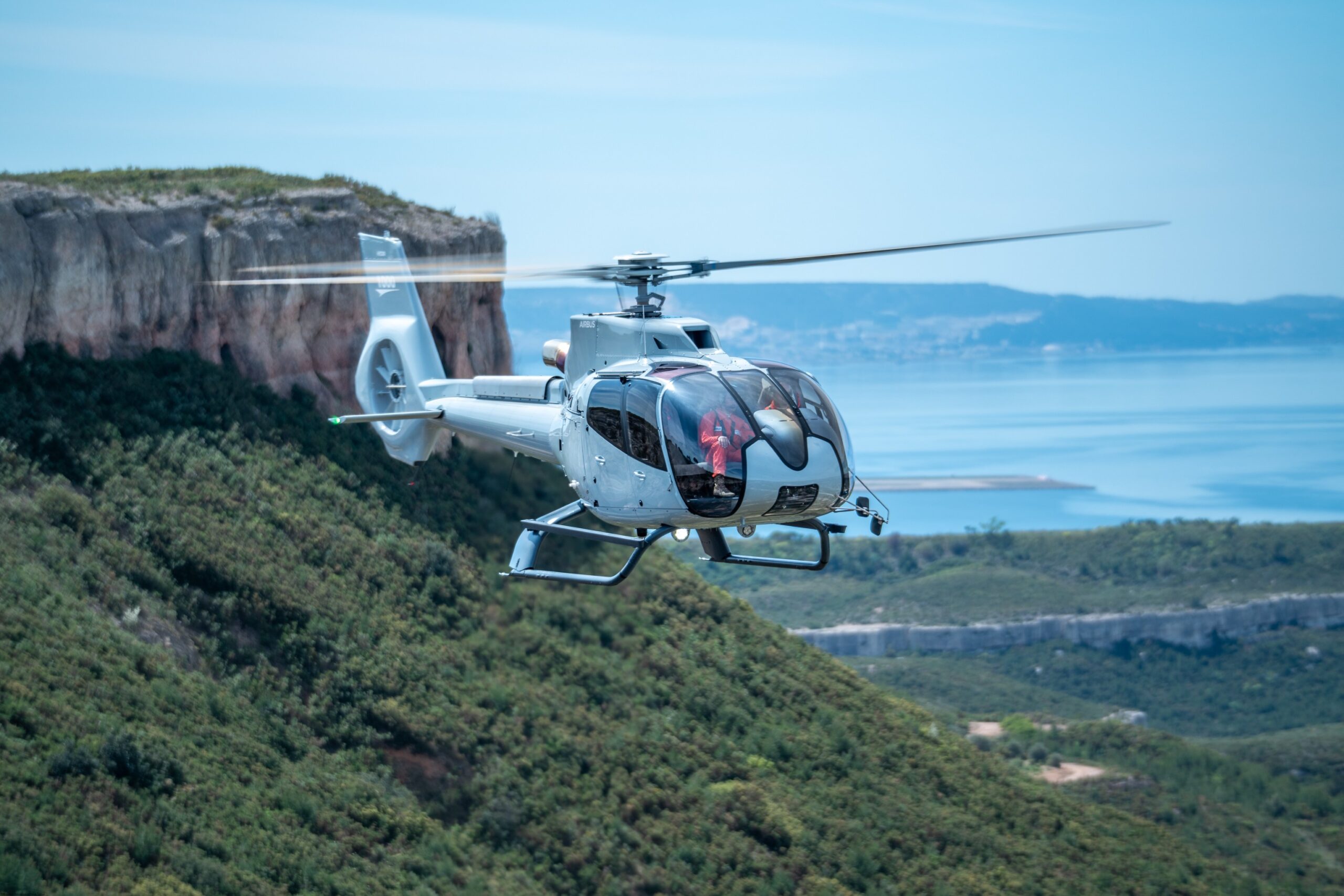
The conflict of interest that surrounds KIDL is not theoretical. It is documented and historical. Earlier reporting by Kenya Insights, confirmed by reporting in Kenya-Today, established that helicopters operated by KIDL had been chartered to the Kenya Power and Lighting Company, the Kenya Pipeline Company, and the Ministry of Energy while Ruto served as Deputy President.
The same energy sector entities that were, at that time, under the supervision of a Cabinet Secretary in a government of which Ruto was the number two. Those entities are now under the executive authority of a President who is the owner of the company from which they were chartering aircraft.
The Ministry of Energy is today the portfolio of a Cabinet Secretary appointed by and serving at the pleasure of President Ruto. Kenya Power, the Kenya Pipeline Company, and the Energy and Petroleum Regulatory Authority are state corporations whose boards and management are approved or influenced by the executive.
When the government writes a cheque to Rotorjet Aviation or KIDL for helicopter services, it writes that cheque to a company in the beneficial ownership of the man who commands the public officials who authorise those same cheques.
When the government writes a cheque to Rotorjet Aviation for helicopter services, it writes that cheque to a company in the beneficial ownership of the man who commands the officials who authorise those same cheques.
KIDL also secured the air ambulance contract from the National Hospital Insurance Fund, which later became the Social Health Authority, despite documented concerns about its operational capacity to meet the contract’s geographic requirements.
The contract was awarded and then challenged, with the company subsequently outsourcing some missions to Amref Flying Doctors to cover areas beyond its reach. NHIF and now SHA are public bodies whose leadership is appointed under the executive structure that Ruto now heads.
THE FINANCE BILL DIMENSION
The Finance Bill, 2026, tabled by Treasury CS Mbadi in late April 2026, introduces a set of amendments that lawyers at Cliffe Dekker Hofmeyr, Bowmans, and Grant Thornton have described in their respective analyses as significant for the aviation sector.
The Bill proposes changes to Chapter 88 exemptions under the Miscellaneous Fees and Levies Act, refining which categories of aircraft and aircraft parts qualify for exemption from the Import Declaration Fee and the Railway Development Levy.
Parts of aircraft and spacecraft falling within specified tariff codes are preserved as exempt. Helicopter parts fall within Chapter 88.
Aviation industry experts have consistently warned, across successive Finance Bills, that changes to Chapter 88 exemption status directly affect the cost base of helicopter operators who depend on imported spare parts, maintenance equipment, and avionics.
An operator whose import costs are shielded by a legislative exemption enjoys a structural cost advantage.
An operator whose fleet is expanding, as KIDL’s is with the addition of the new H130, has an even more direct financial stake in whether those exemptions survive parliamentary scrutiny intact.
Kenya Insights is not in a position to confirm that the Finance Bill’s Chapter 88 provisions were written with KIDL in mind.
What we can confirm is that a sitting president’s commercial aviation company stands to benefit materially from the way those provisions are drafted, that the president in question is constitutionally responsible for the executive whose officials oversee tax policy implementation, and that Parliament has not, as of the date of this publication, subjected this specific conflict to any formal scrutiny.
THE CONSTITUTIONAL FRAMEWORK
The architects of Kenya’s 2010 Constitution were not naive about the temptations of executive power. Chapter Six, which deals with leadership and integrity, was inserted precisely because previous decades had demonstrated what happens when public office and private interest are permitted to share the same address without supervision.
Article 73 of the Constitution is specific: authority assigned to a State officer is a public trust to be exercised in a manner that demonstrates respect for the people, brings honour to the nation, promotes public confidence in the integrity of the office, and, critically, requires the declaration of any personal interest that may conflict with public duties.
Article 75 goes further.
It provides that a State officer must behave, whether in public and official life, in private life, or in association with other persons, in a manner that avoids any conflict between personal interests and public or official duties, and that avoids compromising any public or official interest in favour of a personal interest.
The penalty for contravention is dismissal from office and disqualification from holding any other State office thereafter.
These are not advisory guidelines.
They are constitutional commands.
The Ethics and Anti-Corruption Commission, which is constitutionally mandated to enforce these provisions, has not publicly initiated any investigation into the business arrangements between KIDL and the government entities that have chartered its aircraft.
Parliament’s relevant departmental committees, which have oversight over the energy sector and public procurement, have not summoned KIDL’s management or demanded disclosure of the charter contracts.
The Auditor-General’s reports on Kenya Power, KPC, and the Ministry of Energy have, to Kenya Insights’ knowledge, not specifically identified helicopter charter expenditure as a concern warranting the scrutiny it deserves.
Article 73 is not an aspiration. Article 75 is not a suggestion. They are constitutional commands with constitutional consequences. Someone must enforce them.
WHAT AIRBUS CELEBRATED AND WHAT IT CONCEALED
For Airbus Helicopters, the delivery of the 1,000th H130 to Rotorjet Aviation was a marketing triumph. The H130 programme, which traces its lineage to the Eurocopter EC130 that entered service in 2001, has by end of 2024 accumulated over 3.5 million flight hours with 467 operators globally.
Reaching the 1,000th delivery milestone is a genuine industrial achievement for a light single-engine helicopter in a competitive market.
Airbus noted in its product documentation that the H130 is intended for medical evacuation, aerial survey, and tourism, precisely the missions that Rotorjet cited when accepting the aircraft.
What the Airbus promotional context did not address, and is not required to address, is the political economy that sits behind the Kenyan operator.
Airbus sells helicopters.
It does not adjudicate the constitutional propriety of who owns the companies that buy them.
That responsibility falls to Kenyan institutions, and Kenyan institutions have, to date, not risen to it.
Emmanuel Macron, France’s president, was in Nairobi for the Africa Forward Summit around the same period, announcing a 23-billion-euro French investment package for the continent.
French aerospace interests, including Airbus, have a declared economic stake in deepening their presence in African markets. The delivery of the 1,000th H130 to a Kenyan operator, with the attendant publicity, serves that strategic narrative regardless of who the beneficial owner of the Kenyan operator happens to be.
THE BLANK PAGE WHERE ACCOUNTABILITY SHOULD BE
Kenya has a functioning EACC, a Parliament with investigative committees, a Director of Public Prosecutions with broad prosecutorial discretion, a Director of Criminal Investigations with legal powers to open files, and a Judiciary that has repeatedly demonstrated willingness to enforce Chapter Six against public officers when properly presented with evidence. What Kenya appears to lack, in this instance, is an institution willing to take the first step.
The established facts are not in dispute.
KIDL is publicly identified as a Ruto-affiliated company.
It operates helicopters from Wilson Airport. Those helicopters have previously been chartered to KPLC, KPC, and the Energy Ministry, all entities under executive authority.
The company has now expanded its fleet with a headline acquisition from the world’s leading helicopter manufacturer.
The Finance Bill, 2026, contains provisions affecting helicopter parts import costs.
The president is constitutionally required to declare any personal interest that may conflict with his public duties and to avoid any conduct that compromises public interest in favour of personal interest.
None of these facts require innuendo. None require inference beyond what the public record already supports.
What they require is an institution with the courage to ask the question formally. That institution, whichever one it turns out to be, has not yet found its footing.
A PATTERN, NOT AN ABERRATION
What makes the KIDL situation particularly significant is its character as a sustained, institutionalised arrangement rather than an isolated transaction.
From the time Ruto served as Deputy President through his current tenure as President, the helicopter operation has continued to grow, continued to chart aircraft to public entities, and continued to operate in a regulatory environment that Ruto’s own government shapes.
The new H130, the 1,000th of its line, did not land in a vacuum.
It landed in the middle of a pattern that has been building for at least a decade.
Kenya’s governance tradition has long tolerated conflicts of interest that would end political careers in jurisdictions with more aggressive enforcement cultures.
The Constitution of 2010 was written, in part, as a corrective to that tradition.
The question that the delivery at Wilson Airport on May 12, 2026, poses with renewed urgency is simple: is the Constitution a document that Kenya enforces, or a document that Kenya performs?
The EACC has the Commission’s phone on its wall. Parliament has committee rooms and subpoena powers.
The DPP has a prosecutorial charter that does not require political permission.
The answer to that question will be written, or not written, by those institutions in the days and weeks ahead. The helicopter, meanwhile, is already home.
KEY FACTS AT A GLANCE
Company: Kwae Island Development Ltd (KIDL) / Rotorjet Aviation, Wilson Airport, Nairobi
Associated With: President William Samoei Ruto (as publicly identified by former CS Fred Matiang’i in Parliament, 2021)
Fleet Value: Approximately Sh2.6 billion for existing five helicopters (2021 valuation)
New Acquisition: Airbus H130 T2 — the 1,000th H130 ever delivered by Airbus Helicopters
Delivery Date: May 12, 2026, Wilson Airport, Nairobi
Declared Use: Medical evacuation, aerial survey, and tourism (per Rotorjet)
Previous Charters: Kenya Power (KPLC), Kenya Pipeline Company (KPC), Ministry of Energy (documented)
Other Contract: NHIF (now SHA) air ambulance contract (previously reported, contested)
Finance Bill Link: Finance Bill 2026 Chapter 88 provisions affecting helicopter parts import exemptions
Constitutional Provisions: Articles 73 and 75, Constitution of Kenya 2010 — leadership integrity and conflict of interest
Enforcement Bodies: EACC, Parliament, DPP, DCI — none have publicly initiated proceedings as at date of publication
Kenya Insights allows guest blogging, if you want to be published on Kenya’s most authoritative and accurate blog, have an expose, news TIPS, story angles, human interest stories, drop us an email on [email protected] or via Telegram




The President’s Helicopter: How Ruto’s Aviation Empire Lands a Historic Airbus Milestone While His Government Writes the Tax Code

“TikTok Who? YouTube Sorry. A Kenyan-Built Platform Just Dropped—and 20 African Ministers Showed Up To Launch It.”

Denial Under Duress: The Untold Collapse Threatening David Lagat’s DL Group’s Empire

Stung By West Africa Rejections, France Courts Rest Of Continent at Kenya Summit

THE INSURER THAT TOOK YOUR PREMIUM AND FORGOT YOUR NAME: How ICEA Lion Left a Client Begging for Sh7.8 Million Across Four Months

Safaricom’s Sh1.4 Billion Reckoning: How Kenya’s Most Profitable Company Stole a Man’s Idea and Got Caught

Bush Air Safaris Founder John Ndiritu Risks Losing Property Over Disputed Loan Claim

Bia Tosha’s Claim For Injunction Is Designed To Sabotage The Sh300bn Sale of EABL Shares

KDC Accelerates the Creative Economy, Innovation and Youth-Led Enterprise Growth at Africa Forward Summit

Luxury Play for Influence: Inside Kempinski’s High-Stakes Bet on Brazzaville

How Did a Sh468K KRA Salary Allegedly Turn Into Sh30 Billion? Questions Deepen Over Commissioner George Obel and Ciala Resort Owner’s Wealth

Nairobi Freezes Binance Accounts in Sweeping Anti-Fraud Crackdown as Global Scandal Record Haunts World’s Largest Crypto Exchange

The Man Behind the Badge: How Prof. Erastus Kanga Turned Kenya’s Premier Wildlife Agency into a Theatre of Corruption, Fear and Impunity

THE UNTOUCHABLE CLERK: How Fatuma Mwalupa Allegedly Turned Kwale Assembly Into a Personal Treasury and Outsmarted Scrutiny

THE BRAZEN RETURN: Triton Thief Yagnesh Devani, Who Pillaged Kenya of Sh7.6 Billion and Fled, Now Asks the Same Courts He Escaped to Restore His Stolen Wealth

Green Gold, Rotten Roots: How Kenya’s Biggest Avocado Firms Hijacked a Sh5.8 Billion Harvest Ban

TotalEnergies Moves to Sue TikToker for Sh10 Million Over Contaminated Fuel Claim as Kenya’s Petroleum Sector Burns

Kenyan Motorists Stare At Possible Engine Damage And Heavy Losses As Report Confirms Substandard Fuel In Circulation

Why the April 21 Flopped Protests Expose Kenya’s Rudderless Opposition

KETRACO CEO Advert Marred By Controversies As Fears Grow That Kipkemoi Kibias Is A Predetermined Candidate
-
 Investigations2 weeks ago
How Did a Sh468K KRA Salary Allegedly Turn Into Sh30 Billion? Questions Deepen Over Commissioner George Obel and Ciala Resort Owner’s Wealth
-
 Business2 weeks ago
Green Gold, Rotten Roots: How Kenya’s Biggest Avocado Firms Hijacked a Sh5.8 Billion Harvest Ban
-

 Africa1 week ago
The $24 Million Heist at the End of the World
-

 Investigations2 weeks ago
Serial Scammers Strike Again: How Kelvin ‘Sonko’ Onyango and Seth Steve Okute Built a Gold Fraud Empire on Kenya’s Reputation
-
 Investigations2 weeks ago
The Greek Heist: How Inform Lykos Allegedly Robbed Kenyan Taxpayers of Sh650 Million While Printing the Nation’s Exams and Ballots
-

 Investigations1 week ago
The Judge, The Disgraced Magistrate, The Auctioneer-Husband, The Fixer And The Lawyer: Anatomy Of A Sh16 Million Judicial Bribery Racket
-
 Business5 days ago
Safaricom’s Sh1.4 Billion Reckoning: How Kenya’s Most Profitable Company Stole a Man’s Idea and Got Caught
-
 Business2 weeks ago
Fly 748 Returns to Kenya’s Skies With Fresh Push for Affordable Coastal Travel