
Business
Green Gold, Rotten Roots: How Kenya’s Biggest Avocado Firms Hijacked a Sh5.8 Billion Harvest Ban
In one of the most brazen regulatory heists in Kenyan agribusiness history, major export firms shipped 33,205 tonnes of avocados worth Sh5.8 billion during a government-imposed ban, stripped orchards bare ahead of ripening, and left nearly 300 legitimate exporters scrambling for fruit as the official season opened. This is not incompetence. This is capture.

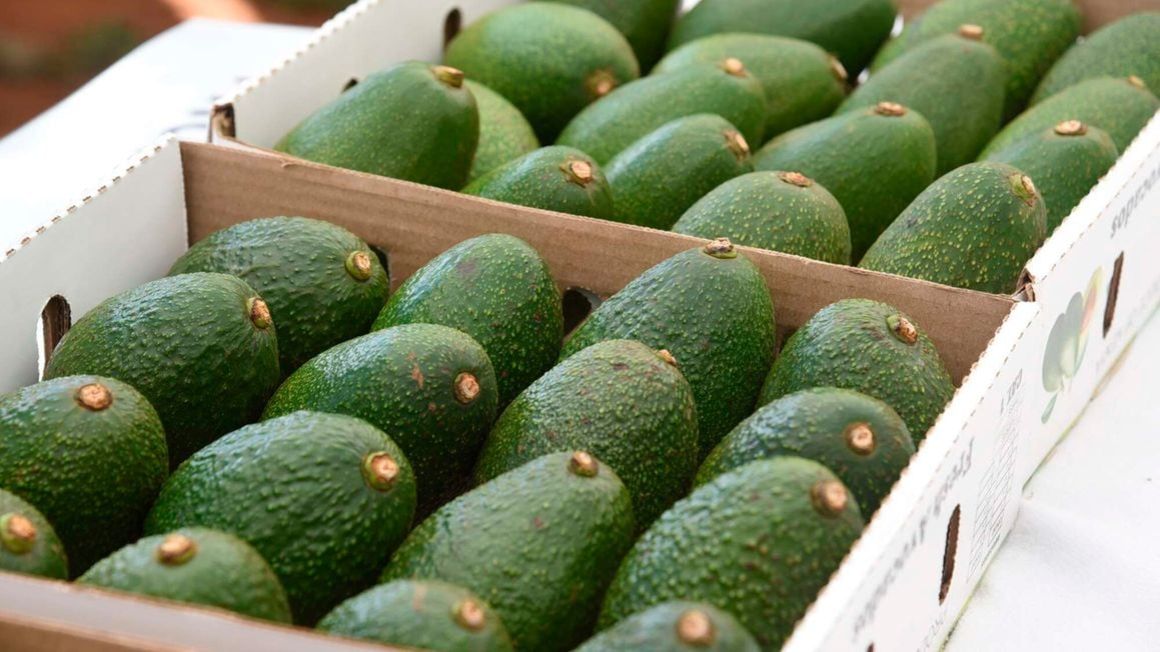
The numbers do not lie, even when the regulators do. Between November 2025 and the last days of March 2026, a total of 3,107 shipping containers loaded with fresh avocados left Kenya for international markets.
The Agriculture and Food Authority had explicitly closed the sea export season from October 20, 2025, a directive backed by the weight of the Crops (Horticultural Crops) Regulations, 2020.
The ban existed for one purpose: to stop immature, unripe fruit from reaching European supermarket shelves and destroying the hard-won reputation of Kenya’s most valuable export fruit.
It failed. Not because the ban was unenforceable.
It failed because the very agencies mandated to enforce it were issuing the certificates that made the exports legal on paper.
According to export data released by KenTrade, the Horticultural Crop Directorate approved Sh5.832 billion worth of avocado export certificates during the 12-week closed season.
The 33,205 tonnes that left Kenya during this period represents, by the most conservative industry estimates, roughly one-third of the country’s entire normal annual avocado production.
The second flush of avocados from Western Kenya and the North Rift, the only crop that qualifies for limited exemptions under the regulations, amounts under normal circumstances to approximately three percent of the national harvest.
No mathematical contortion brings three percent close to thirty percent. The arithmetic alone is damning.
Among the major firms whose names appear in connection with the banned consignments are Seasons Orchards, Keitt Exporters, and Kenya Fresh Exporters Limited.
These are not small backstreet operators.
They are established commercial players with packhouses, export certifications, and relationships with international buyers stretching across Europe and the Middle East.
That these firms continued shipping during the ban, with export licenses issued by AFA and phytosanitary certificates from the Kenya Plant Health Inspectorate Service, tells only part of the story.
The larger scandal is the system that allowed it to happen, again and again, while the industry watched and regulators looked away.
“These companies never stopped exporting, and they have left the country with scanty supplies of fit avocados.” — Senior industry executive, speaking on condition of anonymity
THE ANATOMY OF A REGULATORY COLLAPSE
To understand how thousands of tonnes of banned produce obtained official clearance, one must understand the architecture of Kenya’s avocado export system.
Two agencies hold the keys. The Horticultural Crops Directorate, a directorate within AFA, issues export licenses and certificates authorising each shipment.
The Kenya Plant Health Inspectorate Service issues phytosanitary certificates confirming that the produce meets the health and safety standards of the receiving country. Without both documents, a container of avocados cannot legally leave Kenya for international markets.
KEPHIS Managing Director Theophilus Mutui, confronted with the evidence of exports occurring during the ban, offered a defence that would be remarkable in its audacity were it not so transparently self-serving.
His agency, Mutui said, only issues phytosanitary certificates after confirming that produce meets required export standards. The export licenses, he insisted, come from AFA.
He did not explain how his inspectors were certifying as export-ready fruit that was, by multiple European buyer accounts, so immature it turned black upon thawing and collapsed on supermarket shelves within days of arrival.
He also did not explain how his agency was issuing phytosanitary certificates for consignments that, by his own implicit admission, should not have been leaving the country at all.
AFA Director General Bruno Linyiru had, in the weeks before the ban collapsed into public scandal, been issuing strongly worded notices to the industry. He accused exporters of violating packaging regulations, sourcing from unregistered suppliers, and obstructing government inspectors. What he did not explain was why his directorate was simultaneously issuing the export certificates that allowed those same exporters to fill containers and ship fruit to Rotterdam.
The AFA ultimately admitted at a stakeholder meeting on March 31, 2026, that exports had taken place during the ban. The authority said it was compiling a list of offenders. As of the time of publication, no license had been publicly revoked and no name had been released.
HCD Director Christine Chesaro told the March 31 stakeholders meeting that her directorate had compiled a list of exporters who had received certificates in breach of the ban, and that action would be taken.
When pressed for specifics by journalists a week later, Chesaro said she needed to ask the exporters themselves whether they would permit their names to be released.
That a government regulator believes it requires the consent of rule-breakers before naming them in a public accountability process speaks to the depth of institutional capture within this sector.
The HCD extended the ban publicly, citing poor rainfall. Privately, industry insiders say the real reason was that the orchards had already been emptied.
THE MOROCCO TRAIL: KENYA’S STOLEN BRAND
The consequences of repeated regulatory failure are already reshaping the global avocado trade in ways that will cost Kenya billions of shillings in the years ahead. Industry sources with direct knowledge of European buyer behaviour have told Kenya Insights that the pattern of immature Kenyan fruit arriving in European markets during banned periods triggered a commercial workaround that has become an open secret within the trade.
Kenyan avocados, their country of origin a liability rather than an asset, were being rerouted through Morocco to strip the Kenyan brand off the packaging before reaching European retailers.
FAO trade data from 2025 lends weight to those accounts. Morocco’s declared avocado exports doubled to 141,000 tonnes in 2025 from fewer than 60,000 tonnes the previous year. Morocco does not produce anything close to that volume domestically.
Its own avocado industry, while growing, has nowhere near the scale or established export infrastructure to explain such a surge.
Morocco has become, according to multiple trade sources, a laundering route for Kenya’s reputation-damaged fruit.
The Kenyan brand, built over decades by farmers across Murang’a, Kiambu, Nakuru, and Kisii, is being quietly buried under North African labelling so that buyers in Amsterdam, Berlin, and Paris will not know what they are buying.
The market consequences are severe and mounting. Morocco overtook Kenya as Africa’s largest avocado exporter in 2025 by volume, a historic shift attributable in significant part to the erosion of Kenyan supply chain reliability and product quality.
Moroccan avocados command higher prices in European markets, according to the USDA’s Foreign Agricultural Service.
The price gap between Kenyan and Moroccan fruit reflects directly the reputational discount European buyers now apply to Kenyan-origin produce.
Kenya, which accounts for approximately six percent of global avocado production and exports the vast bulk of its harvest to Europe and the Middle East, is watching that market position erode in real time.
ON EUROPEAN SHELVES: THE EVIDENCE REJECTED
A European importer has confirmed to industry contacts the rejection of an entire consignment traced to Seasons Orchards, citing pest infestation and fruit immaturity.
The consignment, routed through the Netherlands before onward shipment to Germany, arrived with fruits that had a critically short shelf life.
Upon thawing, the avocados turned black, a definitive indicator of harvest well below the minimum twenty percent dry matter content required for export certification.
The fruits were rubbery, bitter, and commercially worthless. The dispute between the exporting firm and the European importer has not been publicly resolved.
In a weeks-long investigation by FarmBizAfrica, which tracked banned consignments from Kenyan packhouses to European supermarket shelves, quality controllers at receiving importers shared dated photographs of the fruit alongside its branded Kenyan packaging.
The images, described by those who reviewed them, showed produce that had clearly been harvested months before biological maturity.
The EU classifies Kenya as a high-risk source for the False Codling Moth, a quarantine pest that triggers one-hundred-percent consignment rejection at European ports of entry upon detection.
That risk is compounded at every point when immature, poorly inspected fruit leaves the country with legitimate-looking regulatory documentation attached to it.
Investigators tracked more than seven sites where avocados were sourced and exported during the ban without the mandatory farm inspections that the limited exemption provisions require.
The regulations explicitly provide that any second-flush crop qualifying for exemption must undergo a complete farm inspection confirming maturity indices before a certificate is issued.
None of the seven sites investigated had received such an inspection. The certificates were issued regardless. This is not a technicality. It is the core mechanism by which the ban was rendered meaningless.
“Tonnes of avocados were exported between November and March, some of it immature. This will heavily impact jobs and the industry next year.” — Avocado oil processor, speaking anonymously
THE ARTIFICIAL SHORTAGE: WHO PROFITS FROM SCARCITY
The consequences of the ban’s hollowing out fell with crushing force on the nearly three hundred compliant exporters who had honoured the closed season restriction.
When AFA finally reopened the export season on April 2, 2026, almost a month later than the normal season-open date, those exporters arrived at packhouses to find orchards across the major growing counties already stripped bare.
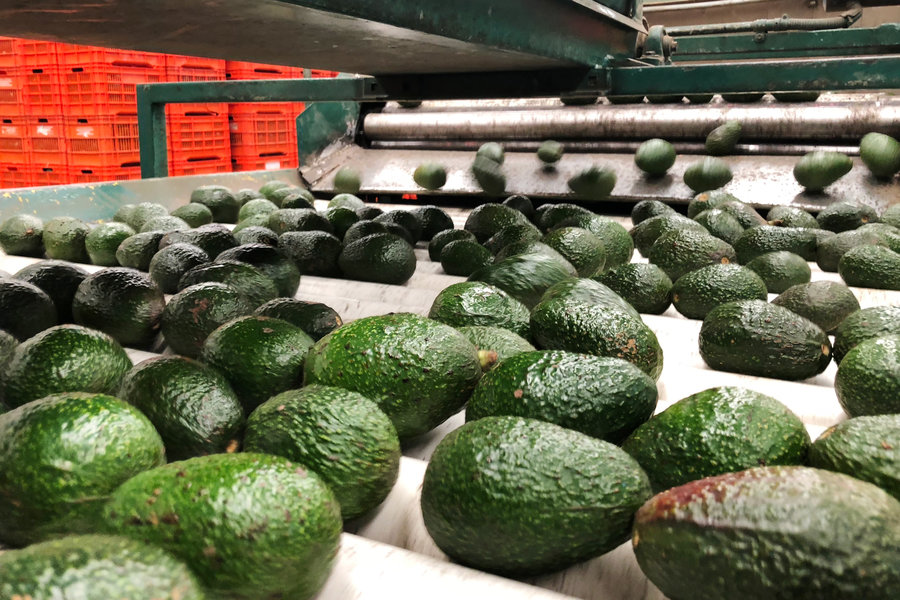
The fruit was gone.
The companies that had shipped through the ban had sourced country-wide during the closed period, approaching smallholder farmers desperate to sell their perishable produce and purchasing at whatever price the power imbalance allowed.
Waithaka Wagura, chief executive of the Avocado Exporters Association of Kenya, confirmed the outcome without equivocation. There is an artificial shortage, he said, and it was created by the illegal exports.
The association had raised formal complaints with regulators.
The complaints produced no enforcement action before the damage was complete. Wagura later issued a statement distancing AEAK from any suggestion of complicity in the illegal exports, but the broader industry consensus is unambiguous: a small number of well-connected exporters used regulatory access to devastate the seasonal cycle for everyone else.
Oil processors have been particularly hard hit. Kenya’s avocado oil processing sector expanded dramatically in the 2024-2025 period, attracting significant domestic and international investment on the back of surging global demand for avocado oil in premium food and cosmetics markets.
Avocado oil production tripled between 2024 and 2025, rising from 3,326 metric tonnes to 10,188 metric tonnes in a single year. That trajectory now faces direct threat. Processors require mature, high-dry-matter fruit that cannot be sourced when orchards have been pre-emptively stripped. Several processors have approached the Kenya Association of Manufacturers to intervene with the Horticultural Crops Directorate. At least one processor warned publicly that company closures are a genuine prospect if the regulatory failure is not addressed before the next season.
A PATTERN OLDER THAN THIS SCANDAL
What is happening in 2026 is not an aberration. It is the acceleration of a pattern that industry insiders say began in earnest two years ago, when AFA introduced the closed season framework specifically to stop the export of immature fruit.
The framework was designed in direct response to European buyer complaints about the quality of Kenyan avocados.
In 2023, HCD closed sea exports from November 3 of that year.
In 2024, the closure came into effect from October 25. Each year, a handful of major exporters continued shipping. Each year, the regulatory documentation followed the shipments. Each year, the ban was publicly maintained while being privately circumvented.
The Avocado Society of Kenya had been raising the alarm as far back as December 2023, when its chief executive Ernest Muthomi publicly named specific companies allegedly exporting immature fruit and accused HCD of colluding with them. HCD’s response was not to investigate the named companies.
It was to write a letter to the Avocado Society accusing it of spreading unverified information, causing disharmony in the industry, and injuring Kenya’s trade relations. The agency that was being accused of regulatory capture responded by attempting to silence the accuser. The named companies were not suspended. No inspections were announced. The exports continued.
Industry experts have noted that the problem worsened precisely when it should have improved. The 2025 closed season ban came into effect on October 20, backed by the same regulatory language that had failed to stop the pattern in previous years.
Agriculture Principal Secretary Paul Ronoh publicly warned of cartels exploiting farmers in rural areas, brokers who dupe smallholders into harvesting early and then disappear.
The warning was accurate and entirely useless in the absence of any enforcement action against the well-capitalised exporters doing exactly what Ronoh described at an industrial scale.
Kenya’s avocado output hit 848,122 tonnes in 2024. The country is losing its market dominance not because it cannot grow the fruit, but because a cartel within the industry has captured the regulatory apparatus that should protect it.
THE KRA WALL AND WHAT LIES BEHIND IT
Kenya Insights sought to obtain granular export data from the Kenya Revenue Authority to verify the full scale of the in-ban exports and identify the specific entities responsible for the largest volumes.
The KRA declined to release the data, citing confidentiality provisions under the Tax Procedures Act, 2015.
The provision is legitimate in the context of individual taxpayer information.
Its application here, to aggregate trade data from a public export certification system operated by a government directorate, represents a misuse of the confidentiality framework that benefits the firms whose names remain hidden.
KenTrade data, however, provides enough of the picture to be deeply troubling. The 3,107 containers cleared during the ban represent a volume of trade that simply cannot be explained by the legitimate second-flush exemption that both KEPHIS and AEAK acknowledge was the only legal basis for any export during the closed period.
The second flush from Western Kenya and the North Rift, the two regions with a biological basis for later-maturing crops, typically yields approximately three percent of the national harvest.
The exports during the ban amounted to a figure approaching one-third of the annual national total. The gap between three percent and thirty percent is not an administrative oversight. It is the signature of organised, systemic fraud conducted through an officially licensed export documentation process.
THE MARKET DAMAGE: COMPETITORS ARE ALREADY MOVING
Kenya’s avocado sector earned Sh41 billion from fruit exports in 2024, a jump of Sh8.7 billion from the previous year, on the back of a thirty-four percent increase in production to 848,122 tonnes. That trajectory was supposed to continue in 2026, with the USDA forecasting export growth of 7.4 percent to approximately 130,000 tonnes.
The forecast assumes a functioning regulatory environment.
What actually exists is a sector where the dominant commercial actors can violate a government ban and obtain official documentation to cover their tracks, without facing any public enforcement action months after the violation became public knowledge.
The competitive consequences are structural. South Africa, Tanzania, and Peru are all positioned to capture market share that Kenya’s quality failures make available.
China’s market, newly opened to Kenyan avocados under the zero-tariff arrangement flagged off in March 2026, offers an enormous commercial opportunity.
Kenya’s ability to exploit that opportunity depends entirely on its ability to present Chinese buyers with consistent, mature, traceable produce.
A sector where thirty percent of the annual production equivalent is shipped before biological maturity, without proper farm inspections, and in violation of the government’s own closed-season rules, is not a sector that can credibly pitch itself as a reliable premium supplier to the world’s largest consumer market.
European buyers, who absorb the majority of Kenya’s avocado exports through the Netherlands redistribution hub, have raised quality concerns with sufficient seriousness that Kenya was already classified as high-risk on pest grounds before the scale of the 2026 ban violations became public.
The EU’s rapid alert system for food and feed is triggered by individual pest detections. A systematic pattern of immature, poorly inspected fruit entering European supermarket chains from Kenyan exporters is precisely the kind of supply chain failure that results in enhanced inspection requirements, higher rejection rates, and, in the worst case, temporary suspension of market access.
WHAT ACCOUNTABILITY WOULD LOOK LIKE
The Horticultural Crops Directorate has, as of the writing of this investigation, neither published a list of the exporters it says it has compiled, nor confirmed that any enforcement action has been taken, nor explained how its own certification processes approved Sh5.8 billion worth of exports that it now acknowledges were non-compliant.
This is not a complicated accountability question.
The directorate issued export certificates.
Those certificates are numbered, dated, and attached to named exporting entities. The data exists within HCD’s own systems. The directorate’s refusal to release it, and its suggestion that it requires the consent of the rule-breakers before naming them, constitutes an active obstruction of public accountability.
AFA Director General Bruno Linyiru, whose directorate is implicated both in the failure to prevent the exports and in the issuance of the certificates that authorised them, has made no public statement since the March 31 stakeholders meeting acknowledging that exports occurred during the ban.
The authority has pledged to revoke licenses.
No license has been publicly revoked.
Agriculture Cabinet Secretary Mutahi Kagwe, who oversees both AFA and the broader horticultural sector, has not publicly commented on the scandal despite its scale and the damage it is inflicting on one of Kenya’s most valuable agricultural export industries.
What enforcement would require is straightforward in legal terms. The Crops (Horticultural Crops) Regulations, 2020, are explicit.
Handling produce in non-compliant packaging, sourcing from unregistered suppliers, obstructing inspectors, and exporting outside the designated season without the required farm inspection are each violations for which license revocation is a specified sanction.
If the export certificates were issued by HCD employees in breach of the ban, those officials are potentially liable under multiple provisions of the Public Service Commission Act and the Anti-Corruption and Economic Crimes Act. The Director of Criminal Investigations has the authority to investigate.
The Ethics and Anti-Corruption Commission has the authority to investigate. Neither agency has announced any inquiry.
Nearly a million Kenyan farmers grow avocados. They are the last people who will benefit from the capture of the regulatory system by a cartel of exporters. They are the first to pay the price.
THE FARMERS PAY FIRST
Behind the volumes and the regulatory failures and the European supermarket photographs are approximately 966,000 Kenyan farmers who grow avocados, seventy percent of them smallholders farming less than one acre with between ten and twenty trees per household.
For these farmers, avocados are not a hedge fund commodity.
They are school fees and hospital bills and the difference between a meal and hunger.
When brokers allied with the large exporting companies arrived in their shambas during the closed season and offered to buy their fruit, those farmers did not know they were being recruited into a regulatory violation.
They knew they had perishable produce and someone with a truck was offering money.
The cartels that Agriculture PS Ronoh warned about operate precisely at this intersection of farmer desperation and buyer sophistication.
They strip orchards of immature fruit at farmgate prices calibrated to smallholder vulnerability, aggregate that fruit into the industrial volumes that fill export containers, and process the shipments through a certification system that has been captured well enough to issue compliant-looking documentation for non-compliant produce.
The farmer gets paid below-market rates for fruit that was not yet ready. The exporter gets Sh5.8 billion worth of export revenue in twelve weeks. The regulator gets nothing on record.
The Kenya Association of Manufacturers, approached by oil processors seeking intervention with HCD, has reportedly promised to raise the matter. This is the state of governance in Kenya’s avocado sector.
Industry associations are lobbying other industry associations to approach a government directorate to enforce the government’s own regulations against the government-certified export companies that violated them.
The circularity would be comic were the stakes not so severe.
Kenya Insights allows guest blogging, if you want to be published on Kenya’s most authoritative and accurate blog, have an expose, news TIPS, story angles, human interest stories, drop us an email on [email protected] or via Telegram


Green Gold, Rotten Roots: How Kenya’s Biggest Avocado Firms Hijacked a Sh5.8 Billion Harvest Ban

The Greek Heist: How Inform Lykos Allegedly Robbed Kenyan Taxpayers of Sh650 Million While Printing the Nation’s Exams and Ballots

Serial Scammers Strike Again: How Kelvin ‘Sonko’ Onyango and Seth Steve Okute Built a Gold Fraud Empire on Kenya’s Reputation

Fly 748 Returns to Kenya’s Skies With Fresh Push for Affordable Coastal Travel

How Did a Sh468K KRA Salary Allegedly Turn Into Sh30 Billion? Questions Deepen Over Commissioner George Obel and Ciala Resort Owner’s Wealth

High Court to Set the Record Straight in Long-Running Bia Tosha Petition

Kenya’s betting tax reform and why it matters

KETRACO CEO Advert Marred By Controversies As Fears Grow That Kipkemoi Kibias Is A Predetermined Candidate

I Will Bribe Every Judge in Town- MP Jack Wamboka

KNH ON THE BRINK: How Corruption, Revenue Plunder and State Neglect Are Destroying Kenya’s Flagship Hospital
How Did a Sh468K KRA Salary Allegedly Turn Into Sh30 Billion? Questions Deepen Over Commissioner George Obel and Ciala Resort Owner’s Wealth

The Lawyer at the Centre of Kenya’s State Machine: Eric Gumbo, the AG’s Bypassed Office, and the Half-Billion-Shilling Question

Inside Details Of Sh78 Billion Fraud in KPC’s Mombasa-Nairobi Line 5 Pipeline Project That Has Continued To Bleed The Country

Poison at the Pump: How Kenya’s Fuel Marking System May Be Exposing Millions to Cancer-Causing Chemicals

THE ZAKHEM-ECOBANK MACHINE: How Kenya’s Courts Were Weaponised to Drain a State Corporation of Over KES 78 Billion

Kenyan Motorists Stare At Possible Engine Damage And Heavy Losses As Report Confirms Substandard Fuel In Circulation

The Teflon Company: How Gulf Energy’s Insiders Built Billions on Kenya’s Fuel, and Walked Away Clean

Nairobi Freezes Binance Accounts in Sweeping Anti-Fraud Crackdown as Global Scandal Record Haunts World’s Largest Crypto Exchange

Mombasa Lawyer Exposed In Sh600 Million Alleged Double-Dealing Diani Property Transaction

The Man Behind the Badge: How Prof. Erastus Kanga Turned Kenya’s Premier Wildlife Agency into a Theatre of Corruption, Fear and Impunity
-
 Investigations2 days ago
How Did a Sh468K KRA Salary Allegedly Turn Into Sh30 Billion? Questions Deepen Over Commissioner George Obel and Ciala Resort Owner’s Wealth
-
 Business1 week ago
Nairobi Freezes Binance Accounts in Sweeping Anti-Fraud Crackdown as Global Scandal Record Haunts World’s Largest Crypto Exchange
-
 Investigations1 week ago
The Man Behind the Badge: How Prof. Erastus Kanga Turned Kenya’s Premier Wildlife Agency into a Theatre of Corruption, Fear and Impunity
-

 Investigations1 week ago
THE FIXER IN THE FILE ROOM: How Parliamentary Health Committee Clerk Adan Gindicha Cleared Mediheal Hospital of Organ Harvesting Claims Despite Mounting Evidence
-
 Investigations1 week ago
KETRACO CEO Advert Marred By Controversies As Fears Grow That Kipkemoi Kibias Is A Predetermined Candidate
-
 Investigations1 week ago
KNH ON THE BRINK: How Corruption, Revenue Plunder and State Neglect Are Destroying Kenya’s Flagship Hospital
-

 Investigations2 weeks ago
THE BRAZEN RETURN: Triton Thief Yagnesh Devani, Who Pillaged Kenya of Sh7.6 Billion and Fled, Now Asks the Same Courts He Escaped to Restore His Stolen Wealth
-

 Investigations1 week ago
EXCLUSIVE: Odibets Bought Stolen Data From Millions Of Kenyans