
News
Iran War: Hormuz Crisis Raises Fears For Global Agriculture And Food Security
Analysts warn that spiraling Middle East conflict could jolt global food markets by disrupting fertilizer supplies and agricultural production

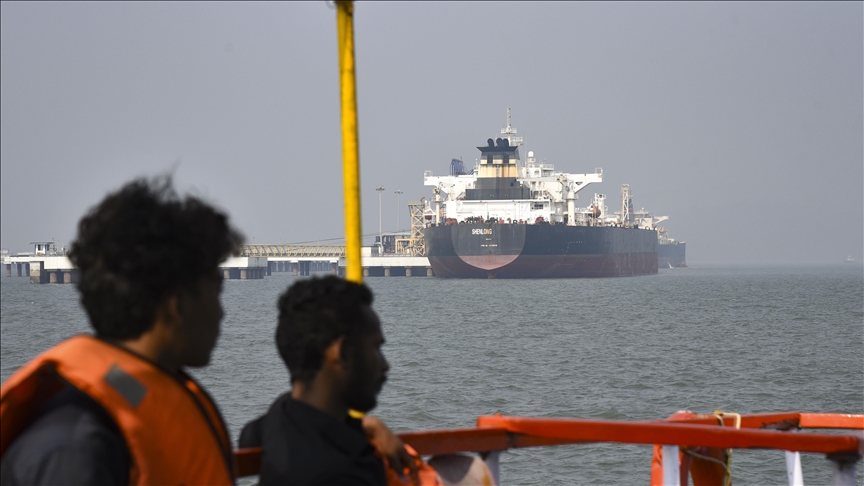
– Crisis could create a ‘domino effect’ that could last ‘for an extended period of time’ and drive higher food prices worldwide, say experts
The escalating US-Israel war with Iran could ripple through global food markets, analysts warn, threatening fertilizer supplies, agricultural production and food prices.
The closure of shipping through the Strait of Hormuz – a route that carries about a fifth of the world’s liquefied natural gas and vast volumes of oil – has already sent oil prices soaring to alarming highs.
But experts say fertilizer exports from the Gulf, food imports into the region and global agricultural supply chains could also face pressure if the crisis drags on, potentially driving higher food prices worldwide.
The Gulf is a major center for fertilizer production and exports, with Iran, Qatar, Saudi Arabia, the UAE and Bahrain all depending on the Strait of Hormuz for their shipments.
Together, these five accounted for 23% of global ammonia trade and 34% of global urea trade in 2024, according to the International Fertilizer Association.
The wider Middle East region made up nearly 30% of global export supply for major fertilizers, including nitrogen, phosphate and potash, while almost half of all global urea trade also originated there in 2024.
A 2025 analysis by analytics firm Kpler estimated that a closure of the Strait of Hormuz could tighten fertilizer supply chains by 33%, with sulfur supplies falling by 44% and urea by 30%.
Joseph Glauber, a research fellow at the International Food Policy Research Institute, pointed out that the Gulf’s importance goes beyond fertilizer exports, as it is also a major source of LNG, a key feedstock in fertilizer production.
The major fertilizer products “are going to come under pressure by the fact that there’s just less natural gas available,” Glauber told Anadolu.
He warned that prolonged restrictions on nitrogen-based fertilizer shipments could have a major effect, with major importers such as Brazil, the US, Thailand and India especially exposed to disruption.
Staple crops such as corn, wheat and rice also depend heavily on fertilizers, making food production vulnerable if supplies tighten.
“Without a steady supply of high-grade commercial fertilizer, yields really suffer, and that’s going to have direct implications for international agricultural trade and food prices around the world,” said Richard Volpe, an agricultural economics expert at California Polytechnic State University.
He said weak harvests could also affect future seasons, creating a “domino effect” that could last “for an extended period of time.”
– Imports and inflation
The conflict could also hit food supply chains through shipping delays and congestion at ports.
Volpe said the first effects would likely be seen in longer waiting times and disrupted trade routes: “That’s absolutely likely to affect food availability around the world.”
He said fertilizer shortages may not hit the current crop cycle immediately because many farmers have already bought supplies for this season, but the problem could become more serious for the next planting season.
Glauber, meanwhile, said farmers may end up reducing fertilizer use or switching to crops that need fewer inputs if the conflict drags on.
Analysts say the strongest link between the conflict and food prices may ultimately be energy.
Volpe called higher energy costs the most pressing concern for the global food supply chain, citing their “multiplier effect.”
“As we go down the food supply chain, go downstream towards consumers, those higher energy costs are going to be compounded,” he said.
Even if the conflict ended quickly, higher energy costs could still push food prices up within one or two months, he added.
Glauber agreed that energy markets are likely to have a bigger effect on retail food prices than fertilizer shortages alone.
– Can markets adapt?
Experts say the length of the conflict will determine how deeply it affects global food systems.
“The longer this conflict persists, the longer will be the ramifications for global food prices and food availability,” Volpe said.
He warned that some short-term effects are already unavoidable.
“I think we’re already past the point of no return for seeing some short-term impacts,” he added.
Kenneth Medlock, senior director of the Center for Energy Studies at Rice University’s Baker Institute, said agricultural markets would need to find alternative supplies, “which are not typically readily available.”
He emphasized that the system’s full flexibility depends on other facilities’ capacity to increase output in the short run.
Volpe said the crisis shows why countries need more flexible trade routes and supply chains.
“This conflict is just another sort of reminder that it makes sense to keep as many trade pathways open and flexible at any point in time,” he said.
Glauber said markets would eventually adapt, but at a price.
“I’m confident that the market will work in that regard, but at a higher cost. That’s, I think, the real concern,” he added.
Medlock also believes the global agricultural system has some capacity to adjust.
“It is important to note that none of the Persian Gulf countries rank in the top 20 countries for global agricultural commodity exports, so the global system has the capacity to manage what is going on, albeit at higher prices,” Medlock said.
Kenya Insights allows guest blogging, if you want to be published on Kenya’s most authoritative and accurate blog, have an expose, news TIPS, story angles, human interest stories, drop us an email on [email protected] or via Telegram


THE GHOST AT ELYSEE PLAZA: How Ghanaian Businessman Erick Agbeko Built a Two-Decade Empire of Land Fraud in Kenya

Njuca Consolidated, Three Firms Faces Auction of 65 Properties Over Crippled Cash Flow

Why Absa Bank Is On The Spot For Enabling Sh150 Million Alleged Insider Fraud In Vetlab Club

Somalia’s Disputed President Allegedly Siphons Up to $6 Million Monthly from Kenyan Miraa Trade, Sharing the Spoils with Nairobi’s Shadow Cartels

Ahmed Adan Hefow: Governor Otuoma’s Trusted Right-Hand Man at the Centre of Busia’s Deepening Finance Scandal

Karua Detained at Entebbe as Uganda Blocks Besigye Lawyer From Entering Country

How KCB and Airtel Turned Kenya’s Unbanked Into a Data Goldmine Behind a ‘Financial Inclusion’ Deal

The Chivayo Network: How a Convicted Fraudster Won Access to Presidents, Passports and Billion-Dollar Deals Across Africa

BURRIED TWICE: The Victoria Bank CEO Yogesh Pattni Files

Court Stops Transfer Of EABL Shares To Asahi By Diageo In A Fresh Snag

Businessman Philip Waithaka Kinuthia’s Minor Son Allegedly Drove Drunk, Killed Two Peponi Students in Ngong Road Horror Crash as Claims of Cover-Up Intensify

Inside NCBA’s Decline: How a Banking Giant Lost Its Strategic Edge

Cement, Cash and Courts: How the Hashu Dynasty Crushed the Ramji Brothers for Fourteen Years and Why the Walls Are Now Closing In

South Sudan: Adut Salva Kiir’s Shadow Treasury Exposed

Standard Chartered Ghosts Haunt Joshua Oigara At Stanbic As Whistleblower Spills Beans

Inside The Urban Planning Cartel That Owns Nairobi

THE VULTURE AND THE SCHEME How Nairobi West Hospital Became the Most Dangerous Institution in Kenya’s SHA Ecosystem and Why the Books Must Be Audited Now

The President’s Daughter and The Missing Witness: How Adut Salva Kiir’s Shadow Treasury Silenced Its Most Dangerous Critic

How Adil Popat Saved His Empire On The Eve Of Imperial Bank Collapse and Why Kenya’s Mainstream Media Buried The Story

Why John Ngumi Is Running From the EACC and Why the Sh415 Million Payday May Be the Least of His Worries
-
 News1 week ago
Businessman Philip Waithaka Kinuthia’s Minor Son Allegedly Drove Drunk, Killed Two Peponi Students in Ngong Road Horror Crash as Claims of Cover-Up Intensify
-
 Business2 weeks ago
Inside NCBA’s Decline: How a Banking Giant Lost Its Strategic Edge
-
 Africa2 weeks ago
South Sudan: Adut Salva Kiir’s Shadow Treasury Exposed
-
 Business2 weeks ago
Standard Chartered Ghosts Haunt Joshua Oigara At Stanbic As Whistleblower Spills Beans
-
 Investigations4 days ago
THE VULTURE AND THE SCHEME How Nairobi West Hospital Became the Most Dangerous Institution in Kenya’s SHA Ecosystem and Why the Books Must Be Audited Now
-
 Africa2 weeks ago
The President’s Daughter and The Missing Witness: How Adut Salva Kiir’s Shadow Treasury Silenced Its Most Dangerous Critic
-
 Business2 weeks ago
How Adil Popat Saved His Empire On The Eve Of Imperial Bank Collapse and Why Kenya’s Mainstream Media Buried The Story
-
 Business2 weeks ago
Why John Ngumi Is Running From the EACC and Why the Sh415 Million Payday May Be the Least of His Worries