
Business
Parliament Faults Vodacom’s Safaricom Share Sale As Kenya Stands To Lose, Makes New Orders
Once the transaction closes, Vodacom’s effective holding in Safaricom will surge to 55 percent, making the South African operator, itself a subsidiary of British telecom giant Vodafone Group, the outright majority owner of East Africa’s most powerful private enterprise.

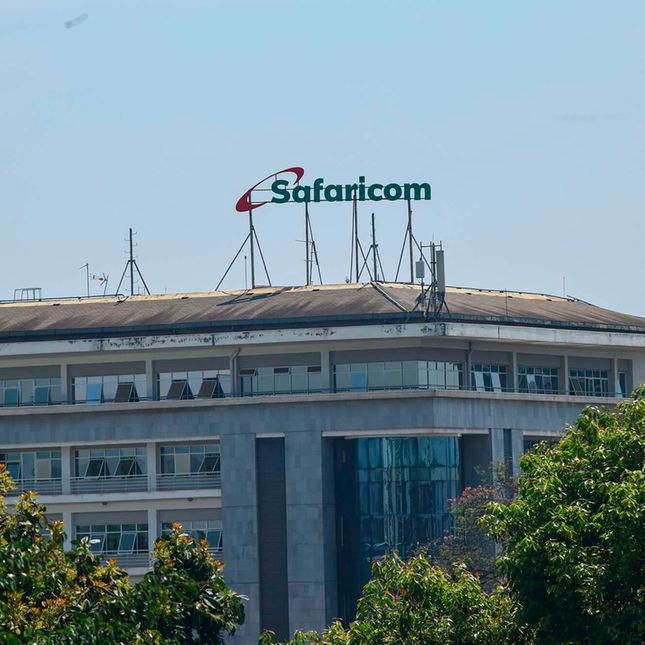
Parliament has cleared the way for the government to sell its 15 percent stake in Safaricom PLC to South Africa’s Vodacom Group, but not before issuing a damning catalogue of omissions, contractual ambiguities and structural weaknesses in a deal that lawmakers themselves admit may shortchange the Kenyan public by an amount that, depending on whose arithmetic one uses, runs well into the hundreds of billions of shillings.
The approval, recommended by the joint committees on Finance and National Planning and Public Debt and Privatisation in a report tabled on March 10, 2026, amounts to a conditional endorsement laced with enough qualifications to fill a legal brief and haunted by a central question that no government official has yet answered with any precision: at Sh34 per share, is Kenya selling its crown jewel at a bargain counter price?
The transaction, first announced by Finance Cabinet Secretary John Mbadi on December 4, 2025, involves the disposal of 6,009,814,200 Safaricom shares, representing 15 percent of the company, to Vodacom at Sh34 per share, generating gross proceeds of Sh204.3 billion.
An additional upfront payment of Sh40.2 billion, structured as an advance on future dividends from the government’s residual 20 percent stake, brings total projected inflows to Sh244.5 billion.
The money, the government insists, will seed the newly established National Infrastructure Fund rather than be absorbed into the recurrent budget.
Once the transaction closes, Vodacom’s effective holding in Safaricom will surge to 55 percent, making the South African operator, itself a subsidiary of British telecom giant Vodafone Group, the outright majority owner of East Africa’s most powerful private enterprise.
“The deal was undervalued. Kenyans have been given a raw deal. The joint committee is incompetent.” — Kiharu MP Ndindi Nyoro, National Assembly, March 10, 2026
THE DIVIDEND GAP THAT PARLIAMENT HAD TO CHASE DOWN
The most revealing detail in the joint committee’s report is not what it approved, but what it found missing from the deal as originally structured. Lawmakers discovered that the transaction’s foundational document, Sessional Paper No. 3 of 2025, is silent on whether the Treasury will receive dividends from the 15 percent stake for the financial year ending March 2026, should the deal close before that date.
The omission is not trivial. Safaricom declared an interim dividend of Sh0.85 per share in February 2026, a payout on which the Treasury will collect Sh11.92 billion based on its current 35 percent holding.
The full-year dividend for the year to March 2024 was Sh1.20 per share, generating Sh16.83 billion for the government.
At a company recording 52.1 percent net profit growth to Sh42.7 billion in the first half of its current financial year, the final dividend for FY2026 is expected to be considerably higher.
The committee noted in its report that the deal fails to specify whether it is structured on an ex-dividend or cum-dividend basis, meaning Parliament was asked to approve a Sh244.5 billion transaction without knowing who pockets potentially Sh17 billion or more in annual dividends depending on the closing date.
The committees have recommended that the effective date of the transaction be set at April 1, 2026, or later, to ensure the government collects what is rightfully its share of the 2025 financial year’s earnings.
They have also invoked Section 142 of the Companies Act, which stipulates that dividends are payable to shareholders registered at the time of declaration, and directed the Treasury to renegotiate with Vodacom to formalise this entitlement.
The absence of this basic commercial clarity from a deal of this magnitude speaks less to oversight and more to a negotiation conducted with suspicious haste.
The committees’ language is careful but pointed. They describe the absence of explicit dividend clarification as creating uncertainty that could trigger unintended revenue loss or post-completion disputes.
In the understated dialect of parliamentary committee reports, that is about as close to an accusation of reckless deal-making as procedural propriety allows.
THE PRICE KENYA ACCEPTED — AND THE PRICE KENYA COULD HAVE HAD
The arithmetic of the undervaluation argument is not partisan noise. It is a calculation that has been advanced by the Institute of Certified Public Accountants of Kenya (ICPAK), the Technology Service Providers Association, Kiharu MP Ndindi Nyoro, economics professor Fredrick Onyango Ogola, and, implicitly, by the Kenya Bankers Association’s own proposal to open a portion of the shares to the retail market.
At Sh34 per share, the government is pricing the entire Safaricom business at roughly Sh1.36 trillion.
In 2021, before Safaricom committed billions to its Ethiopian expansion, the shares traded at Sh45, implying a valuation of Sh1.8 trillion. With Ethiopia now approaching operational break-even, with half-year net profits up more than 50 percent, with M-Pesa processing over 100 million daily transactions and commanding a 91 percent mobile money market share, the argument that Safaricom is worth less today than it was four years ago does not survive even casual scrutiny.
Nyoro told Parliament’s joint committee in January that limiting the sale to a single strategic partner denied the state the price discovery that competitive bidding would have produced, and that an open international tender might have generated an additional Sh150 billion for the national treasury.
ICPAK chairperson Prof Elizabeth Kalunda told the same committees that the Sh34 per share price had not been accompanied by a clear explanation of the valuation methodology, and that independent benchmarking or third-party validation was minimal
The government has never publicly named the transaction adviser who recommended the price. CS Mbadi told a television interviewer on China’s CGTN in January that no transaction adviser was appointed at the proposal stage.
“Either the people at the National Treasury are putting their interests first, are just incompetent, or both.” — Kiharu MP Ndindi Nyoro
That admission, buried in a cable television appearance, is perhaps the single most consequential sentence uttered by any government official in this entire affair. A Sh204.3 billion equity disposal, the largest privatisation transaction Kenya has undertaken since independence, was apparently structured without the benefit of a financial adviser.
The government’s defence is that Vodacom’s premium of 23.6 percent above the six-month volume-weighted average price represents fair value for a block trade.
The committees accepted this framing, noting that the negotiated price aligns with market movements and that dealing exclusively with Vodacom minimises execution risk.
That reasoning, however, takes the market price as the appropriate baseline, which is precisely what critics challenge.
A block sale premium over a suppressed market price is not the same thing as a fair valuation of an asset with Sh48 billion in annual dividends.
THE ALLEGATION THAT HAS NOT GONE AWAY: WAS THE PRICE ENGINEERED?
The most explosive allegation in this affair, one that has received considerably less media coverage than it deserves, is Nyoro’s claim before Parliament’s joint committee that 16 billion Safaricom shares were immobilised by the buyer in June 2025, months before the deal was announced, in a move he alleges was designed to signal oversupply to the market and suppress the share price ahead of the transaction.
If accurate, the implication is that Vodacom, as an insider buyer with material non-public knowledge of a potential acquisition, engineered the very market conditions used to justify the price it subsequently agreed to pay.
The Capital Markets Authority, the Communications Authority, and the Competition Authority have each told Parliament they are satisfied with the transaction and consider the Sh34 price competitive for a block sale. None of them, in their public submissions, addressed the immobilisation allegation directly.
The CMA’s chief executive Wycliffe Shamiah told the committee that Safaricom had already sought regulatory approval for the shareholding change.
The regulatory enthusiasm for the deal stands in some contrast to the reluctance of the High Court, which has twice declined to issue interim conservatory orders but has also not dismissed three separate constitutional petitions challenging the transaction.
Journalist and activist Tony Gachoka and Professor Ogola have petitioned the Constitutional Division of the Milimani High Court, arguing violations of Articles 1, 10 and 227 of the Constitution. Vodacom Group, strikingly, has sought to be struck out as a respondent in that case, arguing it is not party to a shareholding decision made by the sovereign government.
That legal manoeuvre may be procedurally sound; it is also the move of a company that prefers to buy an asset than defend its purchase.
WHAT PARLIAMENT DEMANDED — AND WHAT THE CONTRACT STILL DOES NOT SAY
The joint committee’s report, co-chaired by Molo MP Kimani Kuria and Mbalambala MP Omar Shurie, appended a list of conditions to its recommendation that reads like a retroactive negotiation.
Lawmakers extended the job protection period for Safaricom’s 6,777 employees from three years to the duration of the transaction, and specified that no acquisition-related redundancies should occur within five years of closing.
The dealer, agent and business partner protections embedded in what the Safaricom Dealer Association calls the shared-prosperity model were extended from three years in the original term sheet to ten years in the committee’s recommendation.
These are not minor administrative adjustments; they are fundamental changes to the structure of a transaction that was already partially executed.
The committees also directed that Vodacom’s commitment to retain Kenyan leadership and governance structures be formally incorporated into the share purchase agreement, after observing that the existing commitment appears only in the Sessional Paper and not in the legally binding commercial contract.
In other words, Parliament approved a deal in which the most politically sensitive protections, those covering jobs, local suppliers, Kenyan board composition and the Safaricom Foundation, exist as policy aspirations in a government document rather than as enforceable obligations in law.
The Majority Leader, Kimani Ichung’wah, told the House the deal was sound. Several opposition members, including Suba South’s Caroli Omondi and Kitui Central’s Makali Mulu, were unpersuaded, with Omondi declaring flatly that Nyoro was correct and accusing the government of misleading Kenyans.
THE DIVIDEND MACHINE VODACOM IS BUYING — AND WHAT KENYA IS SURRENDERING
To understand the full financial weight of what is being transferred, it is necessary to look at Safaricom’s dividend history with the dispassion of a finance ministry that apparently did not apply its own numbers to the question before signing the term sheet.
Between 2014 and 2024, Safaricom paid Sh564.1 billion in dividends to all shareholders, of which the government received Sh197.4 billion.
In FY2020 alone, when global businesses were contracting, Safaricom paid Sh56.09 billion in dividends. In FY2019, it paid two rounds, a final of Sh50.08 billion and a special of Sh24.84 billion. The company has maintained an 80 percent dividend payout ratio as formal policy and reaffirmed it will not change that policy despite increased borrowings for the Ethiopian expansion.
What this means in practice is that the government, having received Sh40.2 billion as an advance on its future dividends, will not collect a single shilling of dividends from its remaining 20 percent stake for somewhere between two and three years while that advance amortises.
Vodacom’s own financial controller, Shaun Biljon, said in December 2025 that the company expects to recoup the advance in just over two years, based on an internal rate of return of 16.5 percent, capped at 18 percent.
Translated from corporate finance into plain language: Vodacom is lending Kenya its own money, at a mid-teens discount rate, secured against Kenya’s future dividend entitlements.
The government framed this facility as low-cost financing.
An independent financial analysis by Mwango Capital concluded the framing was misleading, noting that the correct structure indicates the state is monetising near-term Safaricom dividends at a mid-teens discount rate, not borrowing below sovereign yields.
Vodacom is, in effect, lending Kenya its own future dividend income, charging 16.5 percent interest on money that would have flowed to the Consolidated Fund regardless.
THE NATIONAL SECURITY DIMENSION NOBODY IN GOVERNMENT HAS ADEQUATELY ADDRESSED
Safaricom is not, in any meaningful analytical sense, a telecommunications company. It is a financial infrastructure provider that happens to operate a mobile network.
M-Pesa alone accounts for nearly half of Kenya’s GDP in transaction value flowing through its rails on any given day.
The platform serves 38 million Kenyan customers, facilitates government services including eCitizen and Huduma Namba, supports the National Hospital Insurance Fund’s digital payments architecture, and is embedded in the operational fabric of the Kenya Revenue Authority’s tax collection systems.
The united opposition in Parliament argued, with some force, that an entity of this description is not a portfolio asset available for routine privatisation but a national security infrastructure that the state has an obligation to govern.
The government’s response, that it will retain two board seats, require a Kenyan CEO and chair, and that Vodacom must consult the government before Safaricom expands outside Kenya, is constitutionally weightless in the absence of statutory underpinning.
Two board seats in a 55-percent-controlled company do not amount to veto power over strategic decisions that affect 38 million mobile money users. The Safaricom Dealer Association has warned that Vodacom’s more centralised model in other African markets risks dismantling the shared-prosperity dealer network.
The Technology Service Providers Association has called for golden share provisions and foreign ownership limits. Wiper leader Kalonzo Musyoka has questioned the transparency of the process.
The Kenya Bankers Association proposed offering at least 300 million shares to ordinary Kenyan citizens rather than transferring the entirety of the 15 percent to Vodacom. None of these proposals were incorporated in the final committee recommendation.
WHAT PARLIAMENT APPROVED IS NOT NECESSARILY WHAT WILL HAPPEN
The committee’s report has been tabled and debated. The full National Assembly must still vote to adopt it. At least three constitutional petitions continue before the High Court. COMESA has granted approval, but approvals from the Capital Markets Authority, the Communications Authority, the Central Bank of Kenya and the East African Community Competition Authority remain pending in various stages.
The parliamentary clock that ticked from the December 2025 announcement expires on or around March 26, 2026, after which the sessional paper takes effect automatically if no parliamentary action has been taken.
The committees, by tabling their report, have reset that dynamic, but the final vote on the House floor will be a reckoning for government loyalists who must explain to their constituents why Kenya’s most profitable listed company was handed to a foreign majority owner at a price that the country’s own accountancy body, its bankers’ association, and a former chair of the Budget and Appropriations Committee all described as inadequate.
The government’s fiscal predicament is real. With Sh12 trillion in public debt, interest payments consuming Sh1.097 trillion of a Sh3.321 trillion revenue projection, and only Sh29.8 billion available for development expenditure in the current fiscal year, the Ruto administration is not wrong to pursue asset monetisation.
The question is not whether to sell, but at what price, to whom, through what process, and with what binding protections. On each of those four questions, the parliamentary record suggests the government either did not ask, did not disclose, or did not negotiate hard enough.
The joint committee’s demands for renegotiation, its extension of worker protections, its insistence on formalising safeguards in the contract rather than the sessional paper, and its directive to clarify the dividend entitlement before closing are not routine legislative adjustments.
They are a parliamentary acknowledgment that the deal, as signed, was incomplete, opaque in key financial particulars, and structured more in the buyer’s interest than in the seller’s.
Vodacom, for its part, is acquiring majority control of a business that generated Sh42.7 billion in net profit in a single half-year, that commands 91 percent of the mobile money market in one of Africa’s fastest-growing digital economies, and that is positioned at the intersection of telecommunications, financial services and national data infrastructure, all at a price that its own funding structure suggests it will recover in full within two years from dividends alone.
Whether Parliament’s conditions survive the negotiating table, and whether the High Court will allow the transaction to close without first hearing the constitutional questions it raises, are questions that will define not just Safaricom’s ownership structure but the precedent Kenya sets for how a sovereign state ought to sell its most consequential assets.
The answer, at this stage of an unfinished process, is that the price of getting it wrong will compound, year after year, in the dividends that flow south.
Kenya Insights allows guest blogging, if you want to be published on Kenya’s most authoritative and accurate blog, have an expose, news TIPS, story angles, human interest stories, drop us an email on [email protected] or via Telegram


How Did a Sh468K KRA Salary Allegedly Turn Into Sh30 Billion? Questions Deepen Over Commissioner George Obel and Ciala Resort Owner’s Wealth

High Court to Set the Record Straight in Long-Running Bia Tosha Petition

Kenya’s betting tax reform and why it matters

KETRACO CEO Advert Marred By Controversies As Fears Grow That Kipkemoi Kibias Is A Predetermined Candidate

I Will Bribe Every Judge in Town- MP Jack Wamboka

KNH ON THE BRINK: How Corruption, Revenue Plunder and State Neglect Are Destroying Kenya’s Flagship Hospital

Receivers In TransCentury Sh6B KRA Tax Arrears Are Biased And Must Be Removed, COFEK Claims

The Man Behind the Badge: How Prof. Erastus Kanga Turned Kenya’s Premier Wildlife Agency into a Theatre of Corruption, Fear and Impunity

THE FIXER IN THE FILE ROOM: How Parliamentary Health Committee Clerk Adan Gindicha Cleared Mediheal Hospital of Organ Harvesting Claims Despite Mounting Evidence

Nairobi Freezes Binance Accounts in Sweeping Anti-Fraud Crackdown as Global Scandal Record Haunts World’s Largest Crypto Exchange

Forged Legacy: How Kaplan and Stratton’s Peter Gachuhi Is Accused of Faking a Top AG’s Will as State Claims Damning Evidence

The Lawyer at the Centre of Kenya’s State Machine: Eric Gumbo, the AG’s Bypassed Office, and the Half-Billion-Shilling Question

Inside Details Of Sh78 Billion Fraud in KPC’s Mombasa-Nairobi Line 5 Pipeline Project That Has Continued To Bleed The Country

Sold And Abandoned: How Diageo and Asahi Are Locking Kenya’s EABL Minority Shareholders Out Of East Africa’s Biggest Corporate Heist

Poison at the Pump: How Kenya’s Fuel Marking System May Be Exposing Millions to Cancer-Causing Chemicals

How Firm Linked To Mombasa Tycoon Jaffer Was Allowed To Import Fuel At Bloated Price And Set To Make Billions In Profits From Iranian War Crisis In Kenya

THE ZAKHEM-ECOBANK MACHINE: How Kenya’s Courts Were Weaponised to Drain a State Corporation of Over KES 78 Billion

The Teflon Company: How Gulf Energy’s Insiders Built Billions on Kenya’s Fuel, and Walked Away Clean

Kenyan Motorists Stare At Possible Engine Damage And Heavy Losses As Report Confirms Substandard Fuel In Circulation

Mombasa Lawyer Exposed In Sh600 Million Alleged Double-Dealing Diani Property Transaction
-
 Business1 week ago
Nairobi Freezes Binance Accounts in Sweeping Anti-Fraud Crackdown as Global Scandal Record Haunts World’s Largest Crypto Exchange
-

 Business2 weeks ago
THE FUEL CABAL: How Mohamed Jaffer, a KPC Insider, and a Ministry Official Are Alleged to Have Manufactured Kenya’s Worst Petroleum Crisis in Three Years, While Kenyans Burned
-
 Investigations1 week ago
EXCLUSIVE: Odibets Bought Stolen Data From Millions Of Kenyans
-
 Investigations1 week ago
THE FIXER IN THE FILE ROOM: How Parliamentary Health Committee Clerk Adan Gindicha Cleared Mediheal Hospital of Organ Harvesting Claims Despite Mounting Evidence
-

 Investigations1 week ago
THE BRAZEN RETURN: Triton Thief Yagnesh Devani, Who Pillaged Kenya of Sh7.6 Billion and Fled, Now Asks the Same Courts He Escaped to Restore His Stolen Wealth
-
 Investigations6 days ago
The Man Behind the Badge: How Prof. Erastus Kanga Turned Kenya’s Premier Wildlife Agency into a Theatre of Corruption, Fear and Impunity
-
 Investigations6 days ago
KNH ON THE BRINK: How Corruption, Revenue Plunder and State Neglect Are Destroying Kenya’s Flagship Hospital
-
 Politics1 week ago
Why the April 21 Flopped Protests Expose Kenya’s Rudderless Opposition