
Business
The New Master of the Nation: How a Tanzanian Billionaire With a President in His Pocket Just Bought Kenya’s Most Powerful Press
When AKFED sold its 54 per cent controlling stake in Nation Media Group to Rostam Aziz’s Taarifa Ltd, it handed a media empire spanning four countries to a man whose name is etched into Tanzania’s worst corruption scandal, whose gas empire in Mombasa was personally commissioned by President William Ruto, and who now owns the newsrooms that are supposed to hold that same government to account.

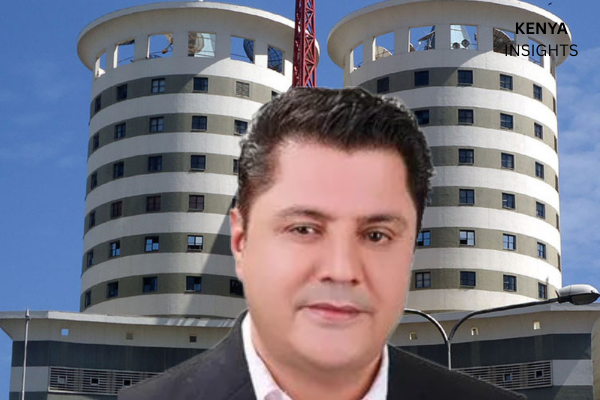
The Aga Khan Fund for Economic Development issued a statement from Geneva on Tuesday that was polite, dignified and retrospective.
It spoke of six decades of editorial independence, of a free press built from a Kiswahili-language weekly purchased in 1959, of 30 brands and 62 million digital users and a legacy of democratic contribution. What the statement did not adequately reckon with was the character of the man now inheriting all of that.
Rostam Abdulrasul Aziz, Tanzania’s first dollar billionaire, former CCM parliamentarian, and the man Tanzanian parliamentary investigators linked to the Richmond Development Company corruption scandal that toppled a prime minister, has acquired the 54.08 per cent controlling stake in Nation Media Group PLC that the Aga Khan Fund for Economic Development (AKFED) held through NPRT Holdings Africa Limited.
The deal, announced simultaneously in Geneva and confirmed by Nairobi market filings, transfers 92,618,177 ordinary shares to Aziz’s vehicle Taarifa Ltd. The transaction price has not been disclosed.
The combined platform that Aziz now effectively controls includes the Daily Nation, Business Daily, NTV Kenya, Nation FM, The EastAfrican, the Daily Monitor in Uganda, The Citizen and Mwananchi in Tanzania, and a regional digital audience that the group itself values at over 62 million users. In any country, that would be a significant accumulation of editorial power for a single private owner with active business interests across the region.
In Kenya in 2026, a country hurtling toward a general election while its press freedom ranking dropped from 102nd to 117th out of 180 countries in a single year according to Reporters Without Borders, it is something else entirely.
THE MAN WHO JUST BECAME KENYA’S MOST POWERFUL PUBLISHER
Aziz was born in August 1960 in the Igunga District of Tabora Region, the son of one of the wealthiest trading families in East Africa. He was educated at the University of Exeter before returning to Tanzania to multiply a fortune that eventually earned him a Forbes billionaire designation in 2013. He was, at the time, the only dollar billionaire in East Africa according to the Henley and Partners Africa Wealth Report, a distinction he held as recently as 2022.
His business empire has ranged across telecommunications, mining, agriculture, real estate, and energy. He was the man who facilitated Vodacom South Africa’s entry into Tanzania, eventually accumulating a 35 per cent stake in Vodacom Tanzania before exiting in two tranches in 2014 and 2019, earning a combined $460 million from those transactions alone.
He controls Caspian Limited, which operates as Tanzania’s largest contract mining company, servicing DeBeers and Barrick Gold. He controls MIC Tanzania, giving him ownership of Tigo Tanzania and Zanzibar Telecom, together reaching over 13 million mobile customers.
He owns Taifa Gas Group, a company whose journey into Kenya is central to understanding how Aziz came to acquire NMG.
He has also always been in media. In 1999, Aziz co-founded Mwananchi Communications Limited in Tanzania in partnership with Ambassador Ferdinand Ruhinda. The company later launched The Citizen, an English-language daily.
Critically, he brought in Nation Media Group itself as a partner in that venture. NMG purchased the controlling shares of Mwananchi Communications in December 2002.
The commercial relationship that began more than two decades ago has now been inverted. The junior partner has purchased the parent.
Through his vehicle New Habari (2006) Limited, Aziz also maintains ownership of several influential Swahili newspapers in Tanzania including Mtanzania, The African, Bingwa, Dimba and Rai, though critics have long noted that his control there is exercised through proxies.
The acquisition of NMG adds a regional media dimension that dwarfs anything he has previously owned, placing him in command of editorial operations in Kenya, Uganda, Tanzania and Rwanda simultaneously.
The man who once forced Nation Media Group to pull down stories about him now owns Nation Media Group.
THE RUTO CONNECTION AND THE GAS EMPIRE THAT OPENED EVERY DOOR
To understand what the NMG acquisition means for press freedom in Kenya specifically, one must understand what happened in Mombasa in February 2023.
Taifa Gas Investments SEZ Ltd, Aziz’s energy company, had for years been attempting to build a $130 million cooking gas terminal at the Dongo Kundu Special Economic Zone in Likoni, Mombasa.
The project, intended to house a 30,000-tonne liquefied petroleum gas terminus, had been blocked by regulatory opposition in Kenya during the Uhuru Kenyatta era. Then came September 2022, and the election of William Samoei Ruto as Kenya’s fifth president.
On February 24, 2023, five months into his presidency, Ruto personally presided over the groundbreaking ceremony for Aziz’s Mombasa gas plant.
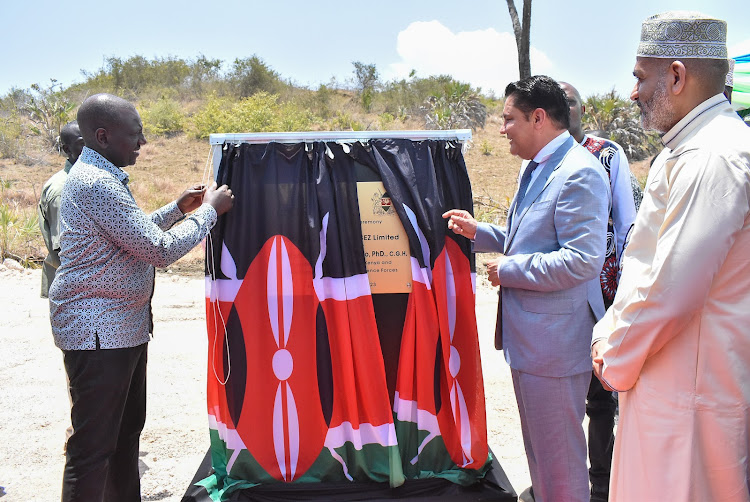
President William Ruto (left) and Taifa Gas Group Chairman Rostam Aziz during the ground-breaking ceremony of the 30,000-tonne plant at the Dongo Kundu Special Economic Zone in Likoni, Mombasa on February 24, 2023.
At that ceremony, Ruto said of Aziz: ‘I know the struggles he has been through to get to this point. The investment should have been done five years ago, but it was delayed due to government shenanigans here in Kenya. I have put that to an end.’ The project was then described by Tanzanian and Kenyan media as the largest single private foreign direct investment in Kenya since the collapse of the East African Community in 1977.
The Ruto administration’s clearing of the path for Aziz’s gas investment was not incidental.
Analysts and business press had been explicit for years that the Aziz camp was closely allied with Ruto while Uhuru Kenyatta was in power.
Business insiders pointed to rivalries with coast-based businessman Muhammed Jaffer of Africa Gas and Oil, who was seen as aligned with the late Raila Odinga camp that Kenyatta had backed before the 2022 election. When Ruto won, the Aziz gas investment, which had been stalled for years, suddenly had a presidential champion.
That Ruto and Aziz share a bond warm enough for a sitting head of state to publicly launch a private business investment and describe its regulatory delays as ‘government shenanigans’ that he personally corrected is not a matter of speculation. It is on camera. It is on record. And it is now the backdrop against which journalists employed by Aziz’s newly acquired media house must decide how to cover William Ruto’s government in the run-up to the 2027 general election.
THE RICHMOND SHADOW: A CORRUPTION SCANDAL THAT NEVER FULLY WENT AWAY
Aziz’s path to extraordinary wealth has not been without shadow. The most significant of those shadows is the Richmond scandal, which shook Tanzania in 2007 and 2008 and ultimately forced the resignation of Prime Minister Edward Lowassa along with two cabinet ministers.
In 2006, Tanzania faced a crippling electricity shortage caused by drought. The government, bypassing standard procurement procedures, awarded an emergency contract to Richmond Development Company, a US-registered entity, to supply 100 megawatts of diesel generators to the state utility TANESCO.
The contract, valued at approximately TSh 172 billion, included a provision guaranteeing payment of $137,000 daily regardless of actual output. The generators arrived late, underperformed, and the deal was ultimately passed to another entity, Dowans Holdings. Tanzania lost over $120 million on the arrangement.
A parliamentary select committee chaired by Dr Harrison Mwakyembe investigated and tabled its findings in February 2008. The committee found that Richmond was a briefcase company with no relevant experience, financial capacity, or clear US registration.
The report found that Aziz had been granted power of attorney by Richmond by late 2005, making him the legal representative of the company at the critical time it won the tender in 2006.
The report further stated that the real proprietors of Richmond were Prime Minister Lowassa and, in the committee’s words, ‘his close friend, Igunga MP Rostam Aziz.’ Lowassa resigned. Two ministers resigned. The entire cabinet was dissolved.
Aziz denied the allegations then, as he has consistently since. He called for a panel of judges to review the committee’s findings, insisting the report was wrong about his role. No criminal prosecution followed. But the scandal’s association with his name never disappeared.
In July 2011, when the ruling CCM party called on leaders tainted by corruption accusations to resign, Aziz became the first Tanzanian MP in history to voluntarily vacate his parliamentary seat, citing what he called ‘dirty politics’ within the party. He has remained outside active politics since, though his business influence and his relationships with sitting governments have never diminished.
WHEN NMG WAS HIS ADVERSARY
There is a particular irony sharpening Tuesday’s transaction.
During the Taifa Gas regulatory battles in Kenya, Aziz’s lobbying machinery was pointed, among other targets, directly at Nation Media Group. Business news monitoring services reported that the group was forced to pull down critical stories about the Taifa Gas investment and apologise to Aziz. The details of those interactions have not been independently verified in full, but the broad pattern is on record.
The man who once used political leverage to neutralise NMG coverage of his own business interests now sits at the top of NMG’s ownership chain.
Journalists at the Daily Nation, Business Daily, NTV, and The EastAfrican are now ultimately employed by a proprietor whose business empire has active interests in Kenya, Tanzania, Uganda and Zambia.
Their reporting on the Ruto administration, on energy policy, on telecommunications regulation and on regional business affairs will all occur within an ownership structure in which the proprietor has documented commercial relationships with the very governments and industries being reported on.
Press freedom organisations have been watching NMG with concern for reasons entirely separate from the ownership change.
Reporters Without Borders documented in December 2024 that Safaricom threatened the group with SLAPP suits, suspended advertising contracts, and demanded internal hearings following NMG’s investigation into surveillance practices.
Cabinet Secretary Moses Kuria threatened to withdraw all government advertising from NMG in 2023 after the group published an investigation into a cooking oil import scheme allegedly involving government officials.
The Kenyan government was estimated to owe NMG alone approximately Ksh 800 million in unpaid advertising debts as of 2024, a structural leverage point that no commercial media organisation can afford to ignore.
Kenya’s press freedom ranking fell from 102nd to 117th place in a single year. Now its biggest media house has a new owner with active business deals involving the sitting government.
A FINANCIALLY WOUNDED INSTITUTION
NMG arrived at this ownership transition in a condition of significant financial distress. From a profit peak of over Ksh 2.5 billion in 2013, the group recorded its first back-to-back annual losses in more than a decade in 2023 and 2024. The net loss for 2024 was Ksh 254.4 million, following a Ksh 205.7 million loss the year before. Group turnover fell 12.5 per cent to Ksh 6.23 billion in 2024. The board suspended dividend payments to shareholders.
The group has closed regional newsrooms in Mombasa, Meru, Kakamega and Kisii, in addition to implementing multiple rounds of staff reductions since 2016.
These financial pressures are not unique to NMG. The global collapse of print advertising revenue, the rise of social media platforms that have captured advertising spend from legacy media, and the specific challenge of building viable digital subscription businesses in relatively low-income markets have combined to squeeze media economics across East Africa.
NMG has been investing in its digital transformation, reaching 83 per cent digital content delivery by end of 2024 and targeting $55 million in digital revenue by 2027.
But a financially distressed media institution is also a more vulnerable one. Advertisers, regulators, and now a new proprietor with active business interests across the region all have structural leverage over a newsroom that needs revenue to survive.
Aziz and Taarifa Ltd have committed publicly to investing in NMG’s digital transformation, and Sultan Allana of AKFED has expressed confidence that editorial independence will be maintained. Those are the correct things to say at the moment of announcement.
The harder test comes when a Taarifa-linked story needs investigating or when the Ruto government applies pressure to a newsroom whose majority owner has a Ksh 16 billion gas plant to protect in Mombasa.
WHAT FOLLOWS IN THE REGION
The implications extend beyond Kenya’s borders. NMG’s Daily Monitor in Uganda is one of that country’s most credible independent news organisations in a media environment that has become increasingly hostile under the Museveni government.
The Citizen and Mwananchi in Tanzania, two publications that Aziz himself helped found before selling his stake, now return under his indirect control in a country where the ruling CCM, the party he served for nearly two decades, remains in government under President Samia Suluhu Hassan. Rwanda, a market where press freedom rankings are among the continent’s most restrictive, rounds out the group’s regional footprint.
Aziz told the media at announcement: ‘NMG is an institution of profound importance to East Africa, and we will uphold its editorial independence while investing in its continued success as the region’s leading independent media organisation.’ The commitment is noted.
But Aziz also has a documented history as both a political actor and a commercial operator whose interests regularly intersect with the state. The confidence of AKFED’s Sultan Allana that ‘NMG will continue to uphold the values of independent journalism’ is understandable from a departing shareholder who built those values over 66 years. It does not bind the incoming majority owner in any legally enforceable way.
There is a school of thought that argues private billionaire ownership is neutral or even beneficial for media, that financial stability provided by a deep-pocketed proprietor is preferable to the slow death of a loss-making independent institution.
That argument has merit in the abstract.
It loses considerable force when the billionaire proprietor has publicly documented commercial ties to the sitting head of government in the group’s most important market, when that proprietor has a history of using business relationships to manage media coverage of himself, and when the country involved is approaching an election in an environment of documented government pressure on the press.
The Daily Nation was founded on the conviction, articulated by its founder the late Aga Khan IV, that a free press is indispensable to democratic society.
For 66 years, that conviction had the backing of an owner with no commercial interests in Kenya beyond the media house itself, and whose development mission was structurally incompatible with editorial capture.
What backs that conviction now is the word of a Tanzanian billionaire with a gas terminal in Mombasa, a telecommunications empire in Dar es Salaam, and a warm relationship with the man in State House.
Whether those assurances prove sufficient will not be determined in Geneva announcement rooms. It will be determined the next time a Daily Nation editor receives a call she would rather not have received, and decides whether the story runs.
Kenya Insights allows guest blogging, if you want to be published on Kenya’s most authoritative and accurate blog, have an expose, news TIPS, story angles, human interest stories, drop us an email on [email protected] or via Telegram





The Rot Inside Absa: How Bank Insiders Are Looting Nairobi’s Customers

The President’s Helicopter: How Ruto’s Aviation Empire Lands a Historic Airbus Milestone While His Government Writes the Tax Code

“TikTok Who? YouTube Sorry. A Kenyan-Built Platform Just Dropped—and 20 African Ministers Showed Up To Launch It.”

Denial Under Duress: The Untold Collapse Threatening David Lagat’s DL Group’s Empire

Stung By West Africa Rejections, France Courts Rest Of Continent at Kenya Summit

THE INSURER THAT TOOK YOUR PREMIUM AND FORGOT YOUR NAME: How ICEA Lion Left a Client Begging for Sh7.8 Million Across Four Months

Safaricom’s Sh1.4 Billion Reckoning: How Kenya’s Most Profitable Company Stole a Man’s Idea and Got Caught

Bush Air Safaris Founder John Ndiritu Risks Losing Property Over Disputed Loan Claim

Bia Tosha’s Claim For Injunction Is Designed To Sabotage The Sh300bn Sale of EABL Shares

KDC Accelerates the Creative Economy, Innovation and Youth-Led Enterprise Growth at Africa Forward Summit

How Did a Sh468K KRA Salary Allegedly Turn Into Sh30 Billion? Questions Deepen Over Commissioner George Obel and Ciala Resort Owner’s Wealth

Nairobi Freezes Binance Accounts in Sweeping Anti-Fraud Crackdown as Global Scandal Record Haunts World’s Largest Crypto Exchange

The Man Behind the Badge: How Prof. Erastus Kanga Turned Kenya’s Premier Wildlife Agency into a Theatre of Corruption, Fear and Impunity

THE UNTOUCHABLE CLERK: How Fatuma Mwalupa Allegedly Turned Kwale Assembly Into a Personal Treasury and Outsmarted Scrutiny

THE BRAZEN RETURN: Triton Thief Yagnesh Devani, Who Pillaged Kenya of Sh7.6 Billion and Fled, Now Asks the Same Courts He Escaped to Restore His Stolen Wealth

Green Gold, Rotten Roots: How Kenya’s Biggest Avocado Firms Hijacked a Sh5.8 Billion Harvest Ban

TotalEnergies Moves to Sue TikToker for Sh10 Million Over Contaminated Fuel Claim as Kenya’s Petroleum Sector Burns

Kenyan Motorists Stare At Possible Engine Damage And Heavy Losses As Report Confirms Substandard Fuel In Circulation

Why the April 21 Flopped Protests Expose Kenya’s Rudderless Opposition

KETRACO CEO Advert Marred By Controversies As Fears Grow That Kipkemoi Kibias Is A Predetermined Candidate
-
 Business2 weeks ago
Green Gold, Rotten Roots: How Kenya’s Biggest Avocado Firms Hijacked a Sh5.8 Billion Harvest Ban
-

 Africa1 week ago
The $24 Million Heist at the End of the World
-

 Investigations2 weeks ago
Serial Scammers Strike Again: How Kelvin ‘Sonko’ Onyango and Seth Steve Okute Built a Gold Fraud Empire on Kenya’s Reputation
-
 Business5 days ago
Safaricom’s Sh1.4 Billion Reckoning: How Kenya’s Most Profitable Company Stole a Man’s Idea and Got Caught
-
 Investigations2 weeks ago
The Greek Heist: How Inform Lykos Allegedly Robbed Kenyan Taxpayers of Sh650 Million While Printing the Nation’s Exams and Ballots
-

 Investigations1 week ago
The Judge, The Disgraced Magistrate, The Auctioneer-Husband, The Fixer And The Lawyer: Anatomy Of A Sh16 Million Judicial Bribery Racket
-
 Business2 weeks ago
Fly 748 Returns to Kenya’s Skies With Fresh Push for Affordable Coastal Travel
-
 Investigations5 days ago
Denial Under Duress: The Untold Collapse Threatening David Lagat’s DL Group’s Empire