
News
Israel and Iran Ambassadors Face Off in Kenya As War Escalates
With more than 1,300 dead and schoolgirls buried under rubble, two diplomats sitting an hour apart in Nairobi offered the world two incompatible versions of the same war

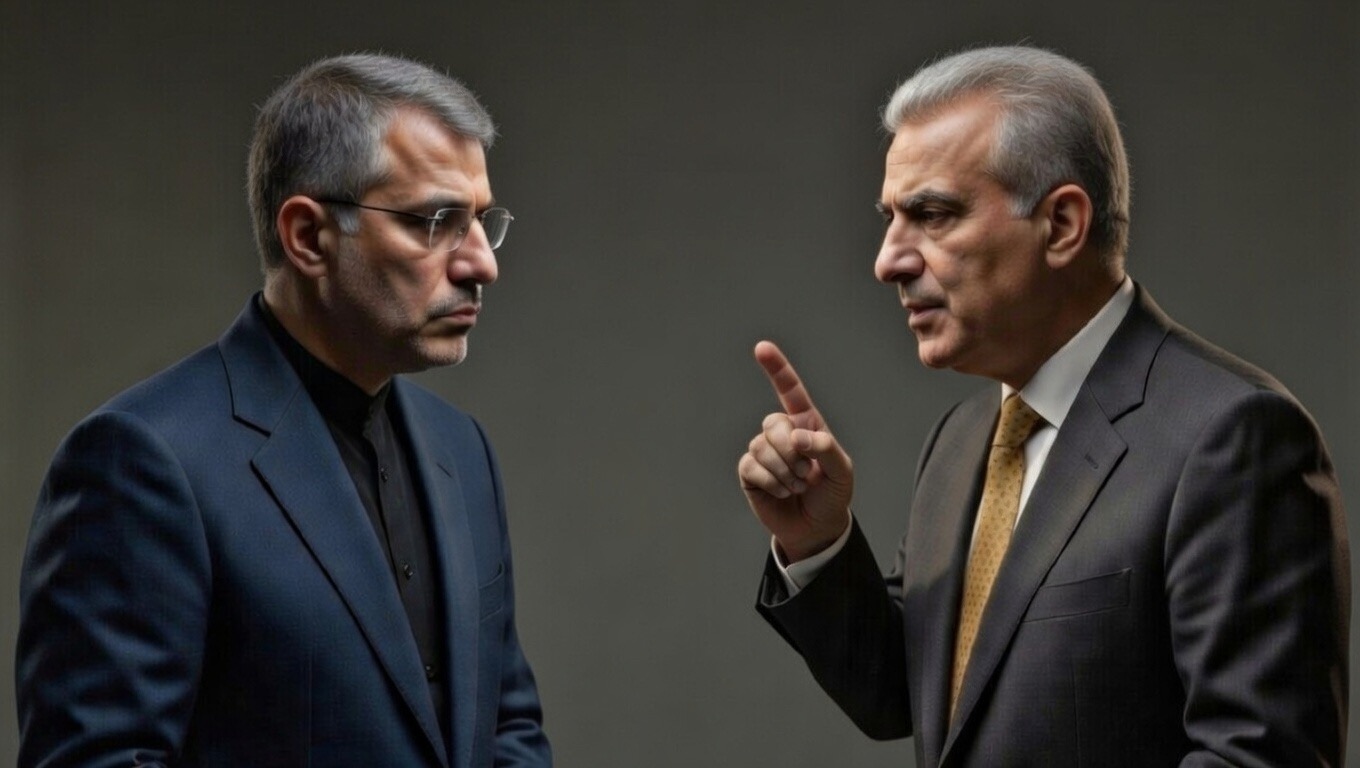
NAIROBI, Kenya, March 7 — They sat in separate offices across the same capital city, speaking with the quiet authority of men whose words carry the weight of war. One insisted the bombing of a girls’ primary school was enemy propaganda. The other said 185 little girls were dead, and that the number was still climbing. This is what diplomacy looks like when the world is on fire.
As United States and Israeli warplanes pounded Iran for a seventh consecutive day on Friday, raining penetrator bombs on deeply buried missile sites and regime infrastructure in Tehran, the ambassadors of both Israel and Iran to Kenya fought a parallel battle for the African narrative, dispensing opposite and irreconcilable accounts of the most dangerous conflict the Middle East has seen in a generation.
Israel’s Ambassador to Kenya, Gideon Behar, told Capital FM on Thursday that the joint US-Israeli military campaign — code-named Operation Epic Fury and launched on February 28 — was a pre-emptive strike against an existential threat. Iran’s Ambassador to Kenya, Dr Ali Gholampour, told the Nation that his country had no choice but to defend itself and that it alone would decide when the fighting stopped.
The death toll in Iran from the US-Israeli bombardment had risen to at least 1,332 by Friday, according to the Iranian Red Crescent, including more than 181 children. Among the dead is Iran’s Supreme Leader, Ayatollah Ali Khamenei, who was killed on the opening night of the assault when strikes targeted his office compound in Tehran. Iran’s parliament building, its state broadcaster headquarters, and a presidential office complex have since been reduced to rubble, as US B-2 stealth bombers drop 2,000-pound penetrator munitions on underground ballistic missile facilities and the US Central Command reports having struck nearly 2,000 targets inside Iran.
Iran has struck back with waves of missiles and drones targeting Israel and military installations across nine countries, killing US soldiers in Kuwait, damaging an oil refinery in Bahrain, hitting an Amazon data centre in the UAE, and sending a drone into a British air base runway in Cyprus. At least six American service members have been confirmed killed in the conflict, all from a single Iranian strike on a base in Kuwait. The US embassy there has been closed indefinitely.
On Friday, US President Donald Trump demanded Iran’s unconditional surrender and said he would not negotiate on any other terms. His defence secretary, Pete Hegseth, warned the bombardment was about to surge dramatically. Israel’s military announced a new phase of operations, targeting what it called regime infrastructure across the capital.
* * *
In Nairobi, the proxy battle for hearts and minds played out with equal intensity. Behar, speaking in a virtual interview with the Nation, was asked about the bombing of a girls’ primary school in the southern Iranian town of Minab on the first day of the war, a strike that killed at least 180 students and staff, a figure Iran’s own health ministry confirmed. His answer was instantaneous and categorical: fake news, he said. Iranian propaganda.
Gholampour had a different version, one buttressed by satellite imagery, independent analysts, UNESCO, the UN Human Rights Office, and Nobel Peace Prize laureate Malala Yousafzai. By Friday, UNICEF had confirmed at least 181 children were among the more than 1,300 dead in Iran. A school in Tehran’s Niloufar Square had been struck earlier that day; Iran’s Foreign Ministry posted footage of destroyed classrooms to X. US Secretary of State Marco Rubio said American forces would never deliberately target a school and that the Department of Defence was investigating whether the strike was theirs.
On the nuclear question, Behar argued the strikes were necessary precisely because of timing. Iran, he said, had been on the verge of moving its nuclear programme into tunnels too deep to hit from the air. The Iranians had been dragging their feet through negotiations for years, buying time. The talks had collapsed in early February 2026 after the US demanded a complete halt to all uranium enrichment and Iran refused.
“We knew that once these capabilities were buried underground it would be almost impossible to stop them from acquiring an atomic bomb,” Behar told the Nation. “Our action was a pre-emptive action to stop an existential threat against Israel.”
The International Atomic Energy Agency had said as recently as March 2 that it had no indication any nuclear installation had been hit or damaged in the strikes, though Iran said at least one site had been targeted. The strikes follow the October 2025 triggering of snapback sanctions against Iran by the United Kingdom, Germany and France under the 2015 nuclear deal.
Gholampour rejected the nuclear justification entirely, calling the war an illegal act of military aggression in violation of the United Nations Charter. Iran, he said, would decide when it ended. “Everything depends on when the aggression is stopped. If it is stopped, our authorities will consider the situation. But if not, then we will continue to defend ourselves — we have no other choice, because this is an imposed war against my nation and my country,” the ambassador said.
Behar also widened the frame beyond the nuclear issue, accusing Tehran of financing militant networks across Africa, including in the Horn of Africa. Destroying Iran’s capacity to fund such networks, he argued, would reduce the operational reach of extremist groups on the continent. He described ordinary Iranians as friendly and peaceful, painting the war as one against a terrorist regime that the Iranian people themselves opposed, pointing to the nationwide protests that security forces crushed in early 2026.
* * *
Kenya was drawn into the diplomatic crossfire almost immediately. President William Ruto condemned Iran’s retaliatory strikes on the UAE, Qatar, Saudi Arabia, Iraq, Oman, Kuwait, Jordan and Bahrain, warning that the regionalisation of the conflict posed a grave threat to international peace and security. He did not mention the original US-Israeli attack on Iran. Tehran was not amused.
Gholampour told the Nation he was surprised that Kenya had chosen to condemn Iran’s response rather than the initial aggressor. The Ministry of Foreign Affairs scrambled to clarify that Nairobi was not taking sides but was opposed to the ballooning of the conflict through attacks on countries not at war. Foreign Affairs Principal Secretary Korir Sing’oei said Kenya was only opposed to escalating violence, not backing any belligerent. The apparent contradiction left analysts questioning whether Ruto’s statement reflected considered foreign policy or, as one Nation columnist put it, personal ties to American evangelical networks rather than Kenya’s national interests.
The stakes for Kenya are vast. Some 500,000 Kenyans live and work in the Middle East, with roughly 300,000 in Saudi Arabia, 70,000 in Qatar and between 60,000 and 80,000 in the UAE. Iran is among Kenya’s top ten tea export destinations, purchasing 13 million kilogrammes worth Sh4.26 billion in 2024. Kenya Airways suspended flights to Dubai and Sharjah as airspace closures disrupted routes. Treasury Cabinet Secretary John Mbadi warned Parliament that a prolonged war would force Kenya to rethink its economic strategy as supply chains fracture and oil prices surge to their highest levels since September 2023.
Interior Cabinet Secretary Kipchumba Murkomen met Behar on March 3 to explore deepening Kenya-Israel cooperation, a meeting that sparked sharp reactions online. Gholampour, meanwhile, moved to reassure Kenyans that Iran’s missiles would not reach Kenyan territory, saying the country’s strikes were deliberately limited in range to US military targets and designed to signal defensive rather than expansionist intent. Kenya hosts a US military base in Manda, Lamu County.
As the conflict entered its seventh day on Friday with no end in sight, Nairobi’s balancing act grew harder by the hour. International relations expert Professor Macharia Munene, who tracks Kenya’s foreign policy, described Ruto’s response as a survival tactic. “He wants to be in the good books of the US and Israel,” Munene said. “But the optics have complicated Kenya’s diplomatic posture in a region where it has deep labour and trade ties.”
Behar ended his media interviews with confidence in the conflict’s outcome. He predicted a more stable Middle East once what he called the destabilising influence of the Iranian regime had been removed, and described Kenya and Israel as close partners built on mutual respect and a long history of cooperation. Gholampour ended his with defiance. Iran, he said, had been under attack in violation of international law, and the international community, Kenya included, had an obligation to direct its condemnation at the aggressors.
Meanwhile, in Minab, the families of the dead continued to bury their children.
Kenya Insights allows guest blogging, if you want to be published on Kenya’s most authoritative and accurate blog, have an expose, news TIPS, story angles, human interest stories, drop us an email on [email protected] or via Telegram


The Chivayo Network: How a Convicted Fraudster Won Access to Presidents, Passports and Billion-Dollar Deals Across Africa

BURRIED TWICE: The Victoria Bank CEO Yogesh Pattni Files

Court Stops Transfer Of EABL Shares To Asahi By Diageo In A Fresh Snag

Death Before Justice: Stephen Ngei, Victim of Sh180 Million Laptop Tender Scam Linked to Allan Chesang, Killed in Highway Crash

Court Brands Sh1.1 Billion Fee Demand by Lawyer Victor Swanya “Excessive and Exorbitant,” Exposes How City Hall Lets Public Money Bleed Through Legal Bills

Trump Unveils New Air Force One

MR. NO SHOW: Finance Bill 2026 Exposes Ndindi Nyoro’s Political Conmanship

Billionaire Eric Muli Rebukes Musalia Mudavadi Over Nairobi Capital Relocation Debate

Lawyer Cliff Ombeta Warns Against Taking Insurance Cover With Old Mutual: “Talk to Me Before You Do, Their Imara Cover Is a Fraud”

My Life Is In Danger: Investor Drops Bombshell Expose On Thomas Ogutu CEO VeGrid Ltd And Fugitive Nairobi CEC Charles Kerich – DCI Inaction And Corruption Network Exposed

Businessman Philip Waithaka Kinuthia’s Minor Son Allegedly Drove Drunk, Killed Two Peponi Students in Ngong Road Horror Crash as Claims of Cover-Up Intensify

Inside NCBA’s Decline: How a Banking Giant Lost Its Strategic Edge

Cement, Cash and Courts: How the Hashu Dynasty Crushed the Ramji Brothers for Fourteen Years and Why the Walls Are Now Closing In

Standard Chartered Ghosts Haunt Joshua Oigara At Stanbic As Whistleblower Spills Beans

South Sudan: Adut Salva Kiir’s Shadow Treasury Exposed

Inside The Urban Planning Cartel That Owns Nairobi

THE VULTURE AND THE SCHEME How Nairobi West Hospital Became the Most Dangerous Institution in Kenya’s SHA Ecosystem and Why the Books Must Be Audited Now

How Adil Popat Saved His Empire On The Eve Of Imperial Bank Collapse and Why Kenya’s Mainstream Media Buried The Story

Why John Ngumi Is Running From the EACC and Why the Sh415 Million Payday May Be the Least of His Worries

The President’s Daughter and The Missing Witness: How Adut Salva Kiir’s Shadow Treasury Silenced Its Most Dangerous Critic
-
 News1 week ago
Businessman Philip Waithaka Kinuthia’s Minor Son Allegedly Drove Drunk, Killed Two Peponi Students in Ngong Road Horror Crash as Claims of Cover-Up Intensify
-
 Business2 weeks ago
Inside NCBA’s Decline: How a Banking Giant Lost Its Strategic Edge
-
 Business2 weeks ago
Standard Chartered Ghosts Haunt Joshua Oigara At Stanbic As Whistleblower Spills Beans
-
 Africa1 week ago
South Sudan: Adut Salva Kiir’s Shadow Treasury Exposed
-
 Investigations3 days ago
THE VULTURE AND THE SCHEME How Nairobi West Hospital Became the Most Dangerous Institution in Kenya’s SHA Ecosystem and Why the Books Must Be Audited Now
-
 Business1 week ago
How Adil Popat Saved His Empire On The Eve Of Imperial Bank Collapse and Why Kenya’s Mainstream Media Buried The Story
-
 Business1 week ago
Why John Ngumi Is Running From the EACC and Why the Sh415 Million Payday May Be the Least of His Worries
-
 Africa2 weeks ago
The President’s Daughter and The Missing Witness: How Adut Salva Kiir’s Shadow Treasury Silenced Its Most Dangerous Critic