
News
What Latest Ukraine Talks Reveal About Putin’s State Of Mind
For starters, that he’s not ready to sign a peace deal. At least, not right now

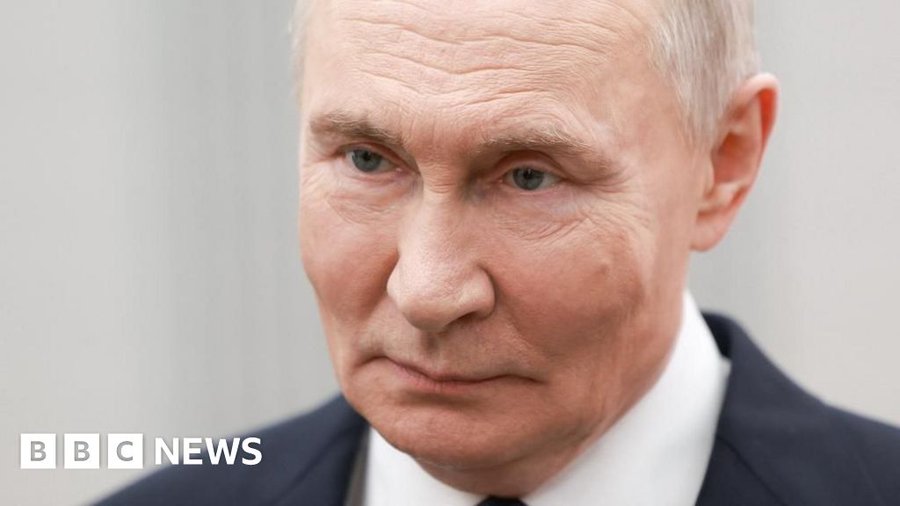
What does the latest round of diplomacy on Ukraine tell us about Russian President Vladimir Putin’s mood and intentions?
For starters, that he’s not ready to sign a peace deal. At least, not right now.
And certainly not the deal (or deals) on the table.
“No compromise version has yet been found,” commented Kremlin foreign policy aide Yuri Ushakov after five hours of talks in Moscow involving Putin, US envoy Steve Witkoff, and Donald Trump’s adviser and son-in-law Jared Kushner.
No compromise is no real surprise, considering the Kremlin leader’s uncompromising comments in recent days.
In various statements he has condemned the Ukrainian leadership as a “thieving junta”, accused European leaders of trying to sabotage peace efforts, and insisted that Russia holds the initiative on the battlefield.
On a couple of recent occasions Russian TV showed Putin in military fatigues, studying maps of the front line and trumpeting military gains, many of which Ukraine and international observers have denied.
After nearly four years of Russia’s full-scale invasion of Ukraine, despite the heavy losses Russia has suffered on the battlefield and the damage to the Russian economy, President Putin seems convinced that he is winning this war and that now is not the moment to stop.
At least, that is what he would like the West to believe: that nothing can stop him now from achieving his goals.
I’ve said before that, in many ways, Vladimir Putin reminds me of a car with no brakes, no steering wheel and no reverse gear; a vehicle careering full speed down the motorway.
Nearly four years after the full-scale invasion of Ukraine there is still no sign of the “Putinmobile” turning off, turning back, or coming to a halt.
He certainly wants his opponents to think that nothing or no one can force him to change direction: neither European leaders, nor the Trump administration, nor President Zelensky.
But cars need fuel (a constant supply).
And, to fight a war, countries need money (a constant supply).
For now, despite international sanctions, Russia’s government is still able to finance the “special military operation” – its war on Ukraine. But economic pressures are building: revenues from oil and gas have been falling, the budget deficit growing.
Even Putin admits there are problems, referring to “imbalances” in the economy.
“In several sectors, production output not only failed to increase this year but actually decreased,” Putin said this week. “Are we satisfied with such trends? No.”
The big unknown: at what point, if at all, will economic concerns start to influence the Kremlin’s calculations on the battlefield?
(BBC)
Kenya Insights allows guest blogging, if you want to be published on Kenya’s most authoritative and accurate blog, have an expose, news TIPS, story angles, human interest stories, drop us an email on [email protected] or via Telegram


Blocked: How Mombasa Tycoon Ashok Doshi Has Stopped Imperial Bank Depositors From Getting Their Money

SEX SCANDAL ROCKS KISUMU POLYTECHNIC: Top Officials Linked as Secretary Accuses New Council Chairman of Naivasha Advances

Why Ruto’s Favourite Candidate Adan Mohammed Could Be Locked Out of the KRA Top Job

DCI Arrests Woman in Sh55.7 Million Gold Fraud Targeting American Citizen in Nairobi

Court Confirms Safaricom Customers Data Was Sold To Betting Companies In Seven-Year Cover-Up

Paybill 585555: How Airtel Kenya’s Interoperability Gateway Became A Criminal Pipeline Draining Millions From Unsuspecting M-Pesa Users

The Man Who Starved Kenya’s Voice

The Rot Inside Absa: How Bank Insiders Are Looting Nairobi’s Customers

The President’s Helicopter: How Ruto’s Aviation Empire Lands a Historic Airbus Milestone While His Government Writes the Tax Code

“TikTok Who? YouTube Sorry. A Kenyan-Built Platform Just Dropped—and 20 African Ministers Showed Up To Launch It.”

How Did a Sh468K KRA Salary Allegedly Turn Into Sh30 Billion? Questions Deepen Over Commissioner George Obel and Ciala Resort Owner’s Wealth

Nairobi Freezes Binance Accounts in Sweeping Anti-Fraud Crackdown as Global Scandal Record Haunts World’s Largest Crypto Exchange

THE UNTOUCHABLE CLERK: How Fatuma Mwalupa Allegedly Turned Kwale Assembly Into a Personal Treasury and Outsmarted Scrutiny

The Man Behind the Badge: How Prof. Erastus Kanga Turned Kenya’s Premier Wildlife Agency into a Theatre of Corruption, Fear and Impunity

THE BRAZEN RETURN: Triton Thief Yagnesh Devani, Who Pillaged Kenya of Sh7.6 Billion and Fled, Now Asks the Same Courts He Escaped to Restore His Stolen Wealth

Green Gold, Rotten Roots: How Kenya’s Biggest Avocado Firms Hijacked a Sh5.8 Billion Harvest Ban
Why Ruto’s Favourite Candidate Adan Mohammed Could Be Locked Out of the KRA Top Job

Why the April 21 Flopped Protests Expose Kenya’s Rudderless Opposition

KETRACO CEO Advert Marred By Controversies As Fears Grow That Kipkemoi Kibias Is A Predetermined Candidate

THE PHANTOM COVER: Unlicensed Broker Vanishes With Sh42M, Hussein Mohammed Fingered In The Alleged CHAN 2024 Insurance Scandal
-
 News2 days ago
Why Ruto’s Favourite Candidate Adan Mohammed Could Be Locked Out of the KRA Top Job
-

 Business2 weeks ago
Safaricom’s Sh1.4 Billion Reckoning: How Kenya’s Most Profitable Company Stole a Man’s Idea and Got Caught
-
 Investigations2 weeks ago
Denial Under Duress: The Untold Collapse Threatening David Lagat’s DL Group’s Empire
-
 Business2 weeks ago
THE INSURER THAT TOOK YOUR PREMIUM AND FORGOT YOUR NAME: How ICEA Lion Left a Client Begging for Sh7.8 Million Across Four Months
-
 Business6 days ago
The Rot Inside Absa: How Bank Insiders Are Looting Nairobi’s Customers
-

 Business2 weeks ago
Bush Air Safaris Founder John Ndiritu Risks Losing Property Over Disputed Loan Claim
-
 Business7 days ago
The President’s Helicopter: How Ruto’s Aviation Empire Lands a Historic Airbus Milestone While His Government Writes the Tax Code
-

 Africa2 weeks ago
Stung By West Africa Rejections, France Courts Rest Of Continent at Kenya Summit