
News
Burundi Expels WHO Representative And 3 Experts, Declares Them Persona Non Grata

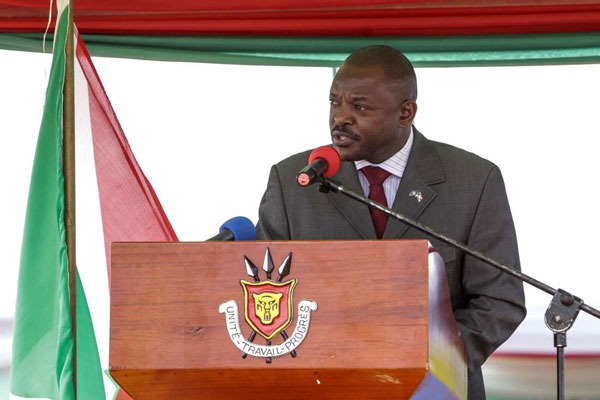
Burundi government is expelling four employees of the World Health Organization WHO including the organization’s country representative. These employees have been declared Persona Non-Grata and have until May 15th to leave Burundi.
The distrust between Burundi Government and WHO officials were highlighted an RFI report last month mentioning a pending decision to recall three senior WHO officials, including the representative in Burundi, Walter Kazadi.
It was reported that the World Health Organization in Burundi was kept out of samples and tests, unchecked sources on social media mentioned that the WHO team was ordered to leave the field.
The Burundian Ministry of Health did not want to react to the question of WHO representatives in Burundi.
Some commentators link the Burundi Government decision to the ramification of an exclusive investigation done in neighbor DRCongo by journalists Emmanuel Freudenthal and Joao Coelho on World Health Organization staff working on behalf of the response, accused of taking advantage of the system by increasing conflicts of interest and pressure on the teams responsible for combating the spread of the Ebola epidemic.
Technically the persona non grata doctrine does not apply to United Nations personnel. As described in the 1961 Vienna Convention on Diplomatic Relations, the doctrine applies to diplomatic agents who are accredited by one state to another, in the context of their bilateral relations.
The United Nations is not a state, and its personnel is not accredited to the states in which they are deployed, but work under the sole responsibility of the Secretary-General.
Founded in 1948, the World Health Organization (WHO), one of the most powerful UN agencies with more than 7,000 employees worldwide, recommends, with all its expertise, but remains dependent on the will of states. This does not prevent it from being regularly criticized.
After the 2009 H1N1 flu, which was less deadly than feared, WHO had been accused of having overreacted under pressure from pharmaceutical companies to declare the pandemic, which had caused the mass production of drugs.
WHO was later blamed, during the terrible Ebola epidemic in West Africa (2013), for failing to measure the scale of the crisis from the start.
A reform later, the UN agency can respond more quickly and effectively to epidemic outbreaks, as it is currently doing in the DRC, confronted since 2018 with an Ebola epidemic.
The arrival of the coronavirus in late December in China has raised criticism
Kenya Insights allows guest blogging, if you want to be published on Kenya’s most authoritative and accurate blog, have an expose, news TIPS, story angles, human interest stories, drop us an email on [email protected] or via Telegram


Govt Confirms NYOTA Second Grant Disbursement Date

Untouchable? How Bitok’s History Has Been Riddled With Mega Scandals and Why The PS Has Become Ruto’s Unnecessary Baggage

Google Must Let UK Publishers Opt Out Of AI Search Under New Rules

Maraga’s 2027 Bid Hit by Explosive Sexual Harassment Claims as Former Insider Alleges Cover-Up and Victim Intimidation

Tanzanian President Visits Russia

Why PayPal Is Freezing Kenyan Accounts in Massive Crackdown

Inside Bharat Thakrar’s Plot for a Hostile Scangroup Takeover

The Man Who Keeps Coming Back: How a Corrupt History and a Missing Masters Degree Could Finally Lock Wamukota Out of the KETRACO Corner Office

Yet Another Blow for Bia Tosha as Court Rejects Bid to Halt Diageo–Asahi Transaction

US to Slash Number of African Embassies Processing Visas from 50 to 20, Kenya Remains a Key Hub

Why Ruto’s Favourite Candidate Adan Mohammed Could Be Locked Out of the KRA Top Job

THE GREAT HOLLOWING: How James Mworia Extracted KES 750 Million While 33,000 Centum Shareholders Lost Everything

Este Medical Kenya Fights American’s Explosive Complaints

Safaricom’s Sh1.4 Billion Reckoning: How Kenya’s Most Profitable Company Stole a Man’s Idea and Got Caught

LifeCare on the Brink: SHA Fraud, Stolen Wages, and the Rotten Empire Jayesh Saini Built

The Rot Inside Absa: How Bank Insiders Are Looting Nairobi’s Customers

The $24 Million Heist at the End of the World

Denial Under Duress: The Untold Collapse Threatening David Lagat’s DL Group’s Empire

THE INSURER THAT TOOK YOUR PREMIUM AND FORGOT YOUR NAME: How ICEA Lion Left a Client Begging for Sh7.8 Million Across Four Months

Court Confirms Safaricom Customers Data Was Sold To Betting Companies In Seven-Year Cover-Up
-
 Business2 days ago
THE GREAT HOLLOWING: How James Mworia Extracted KES 750 Million While 33,000 Centum Shareholders Lost Everything
-
 News1 week ago
Este Medical Kenya Fights American’s Explosive Complaints
-
 Investigations1 week ago
LifeCare on the Brink: SHA Fraud, Stolen Wages, and the Rotten Empire Jayesh Saini Built
-
 Americas1 week ago
Inside FAFSA Fraud: How Kenyan Cybercriminals Siphoned Millions from America’s Sh12 Billion Student Loan System
-
 News5 days ago
Eight Students Arrested In Kenya After Suspected Deadly School Arson Attack
-

 Investigations3 days ago
Betika Faces DCI Probe, Directors Arrest and License Revocation Over Massive 29.5 Million Safaricom Customers’ Data Breach
-
 Investigations1 week ago
LSK On The Spot For Renewing Rogue Lawyer Dennis Onyango’s Licence Despite Mounting Evidence He Held Foreign Investors’ Millions Hostage
-
 News4 days ago
How Uhuru’s Deal With Obama In 2015 Paved Way For America’s Ebola Plan In Kenya