
World
UK Supreme Court Says Trans Women Are Not Legally Women

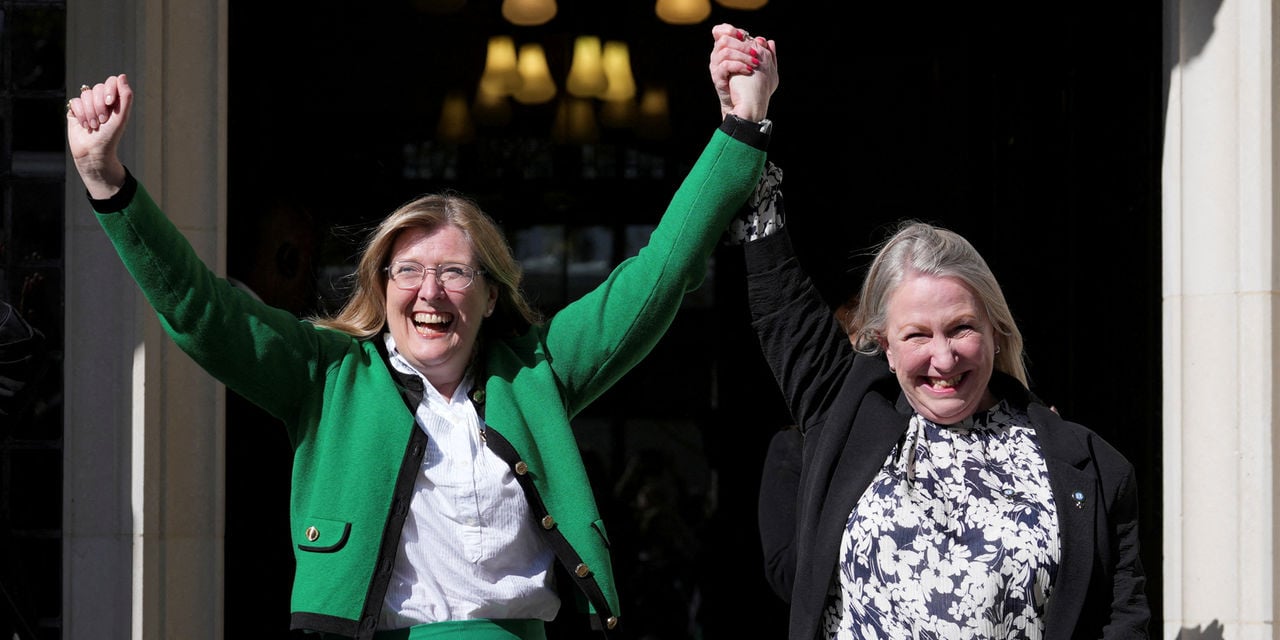
Britain’s highest court ruled on Wednesday that only biological and not trans women meet the definition of a woman under equality laws, a landmark decision greeted with concern by trans supporters but welcomed by the government as bringing clarity.
The much anticipated ruling centred on whether a trans woman with a gender recognition certificate (GRC), a formal document giving legal recognition of someone’s new gender, is protected from discrimination as a woman under Britain’s Equality Act.
Critics said that including a trans woman as a woman under the law could impinge on single-sex services for women such as refuges, hospital wards and sports. But transgender campaigners said that excluding them could lead to discrimination, especially over employment issues.
“The unanimous decision of this court is that the terms ‘women’ and ‘sex’ in the Equality Act 2010 refer to a biological woman and biological sex,” Deputy President of the Supreme Court Patrick Hodge said.
“But we counsel against reading this judgment as a triumph for one or more groups in our society at the expense of another – it is not.”
Transgender rights have become a highly political issue in Britain and other parts of the world. Some critics say the conservative right has weaponised identity politics to attack minority groups, while others argue that liberal support for transgender people has infringed on the rights of biological women.
In the United States, legal challenges are underway after President Donald Trump issued executive orders that include barring transgender people from military service.
Scottish guidance
Wednesday’s judgment in Britain followed legal action by a campaign group, For Women Scotland (FWS), against guidance issued by the devolved Scottish government that accompanied a 2018 law designed to increase the proportion of women on public sector boards.
The guidance said a trans woman with a gender recognition certificate was legally a woman. FWS, which was backed by lesbian rights groups, lost its case in the Scottish courts, but the Supreme Court ruled in its favour.
“Today the judges have said what we always believed to be the case: that women are protected by their biological sex, that sex is real and that women can now feel safe that services and spaces designated for women are for women,” Susan Smith, co-director of FWS, told cheering supporters outside court.
Britain’s Labour government said the Supreme Court’s decision would bring clarity for hospitals, refuges and sports clubs.
“Single-sex spaces are protected in law and will always be protected by this government,” a government spokesperson said.
The Supreme Court said trans people – whether trans women or men – would not be disadvantaged by its decision as the Equality Act afforded them protection against discrimination or harassment.
Harry Potter author J.K. Rowling, who has been publicly gender critical, was among those who welcomed the decision.
“It took three extraordinary, tenacious Scottish women with an army behind them to get this case heard by the Supreme Court and, in winning, they’ve protected the rights of women and girls across the UK,” Rowling said on X.
Trans rights campaigners said the ruling had worrying implications.
“Today is a challenging day, and we are deeply concerned at the widespread, harmful implications of today’s Supreme Court ruling,” a consortium of LGBT+ organisations, including prominent group Stonewall, said in a statement.
“We need to take the time to digest the full implications of the ruling and to understand what this will mean on both legal and practical levels … it is important to be reminded that the Supreme Court reaffirmed that the Equality Act protects trans people against discrimination.”
Trans woman and campaigner Ellie Gomersall said it was “another attack on the rights of trans people to live our lives in peace”.
Legal experts said the ruling showed equality legislation might need to be urgently updated to ensure trans people were protected.
“In the short-term this ruling has the power to create further division and increase tensions,” said Phillip Pepper, employment partner at law firm Shakespeare Martineau.
“However, it will offer long-term clarity for businesses which have been left to interpret ambiguous, contradictory legislation on their own until this point, potentially landing in hot water as a result.”
Kenya Insights allows guest blogging, if you want to be published on Kenya’s most authoritative and accurate blog, have an expose, news TIPS, story angles, human interest stories, drop us an email on [email protected] or via Telegram


‘The Polygamist’ Pirated Book Go On Sale in Nairobi Following Show Popularity

Justice Mong’are, the Machakos Injunction and the EABL-Asahi Questions Kenya Cannot Ignore

The EABL–Asahi Deal and the Growing Demand for Judicial Transparency

Samburu Governor Lati Lelelit Exposed For Paying Sh60 Million To Ghost Workers

THE GHOST AT ELYSEE PLAZA: How Ghanaian Businessman Erick Agbeko Built a Two-Decade Empire of Land Fraud in Kenya

Njuca Consolidated, Three Firms Faces Auction of 65 Properties Over Crippled Cash Flow

Why Absa Bank Is On The Spot For Enabling Sh150 Million Alleged Insider Fraud In Vetlab Club

Somalia’s Disputed President Allegedly Siphons Up to $6 Million Monthly from Kenyan Miraa Trade, Sharing the Spoils with Nairobi’s Shadow Cartels

Ahmed Adan Hefow: Governor Otuoma’s Trusted Right-Hand Man at the Centre of Busia’s Deepening Finance Scandal

Karua Detained at Entebbe as Uganda Blocks Besigye Lawyer From Entering Country

Businessman Philip Waithaka Kinuthia’s Minor Son Allegedly Drove Drunk, Killed Two Peponi Students in Ngong Road Horror Crash as Claims of Cover-Up Intensify

Inside NCBA’s Decline: How a Banking Giant Lost Its Strategic Edge

South Sudan: Adut Salva Kiir’s Shadow Treasury Exposed

Cement, Cash and Courts: How the Hashu Dynasty Crushed the Ramji Brothers for Fourteen Years and Why the Walls Are Now Closing In

Standard Chartered Ghosts Haunt Joshua Oigara At Stanbic As Whistleblower Spills Beans

Inside The Urban Planning Cartel That Owns Nairobi

THE VULTURE AND THE SCHEME How Nairobi West Hospital Became the Most Dangerous Institution in Kenya’s SHA Ecosystem and Why the Books Must Be Audited Now

The President’s Daughter and The Missing Witness: How Adut Salva Kiir’s Shadow Treasury Silenced Its Most Dangerous Critic

How Adil Popat Saved His Empire On The Eve Of Imperial Bank Collapse and Why Kenya’s Mainstream Media Buried The Story

Why John Ngumi Is Running From the EACC and Why the Sh415 Million Payday May Be the Least of His Worries
-
 News1 week ago
Businessman Philip Waithaka Kinuthia’s Minor Son Allegedly Drove Drunk, Killed Two Peponi Students in Ngong Road Horror Crash as Claims of Cover-Up Intensify
-
 Business2 weeks ago
Inside NCBA’s Decline: How a Banking Giant Lost Its Strategic Edge
-
 Africa2 weeks ago
South Sudan: Adut Salva Kiir’s Shadow Treasury Exposed
-
 Business2 weeks ago
Standard Chartered Ghosts Haunt Joshua Oigara At Stanbic As Whistleblower Spills Beans
-
 Investigations5 days ago
THE VULTURE AND THE SCHEME How Nairobi West Hospital Became the Most Dangerous Institution in Kenya’s SHA Ecosystem and Why the Books Must Be Audited Now
-
 Africa2 weeks ago
The President’s Daughter and The Missing Witness: How Adut Salva Kiir’s Shadow Treasury Silenced Its Most Dangerous Critic
-
 Business2 weeks ago
How Adil Popat Saved His Empire On The Eve Of Imperial Bank Collapse and Why Kenya’s Mainstream Media Buried The Story
-
 Business2 weeks ago
Why John Ngumi Is Running From the EACC and Why the Sh415 Million Payday May Be the Least of His Worries