
Business
Stanbic Pays Sh32M for Blunder That Cost Customer Lucrative Tender Deal as Bank Warns of New Wave of Fraud

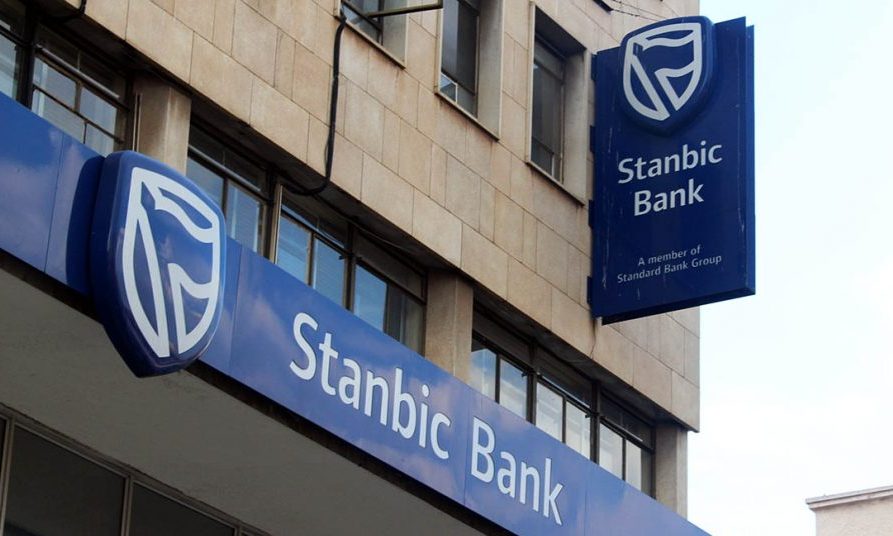
Lender faces double blow as Court of Appeal upholds damages award while midnight fraud cases surge among millennials
Stanbic Bank Kenya is grappling with a costly legal defeat and rising fraud incidents, highlighting the evolving challenges facing the banking sector in an increasingly digital landscape.
The Court of Appeal has upheld a Sh32.4 million damages award against the bank for a clerical error that cost Kenya Haulage Agency Limited a lucrative government contract.
The case, which dates back to 2011, centered on a seemingly minor mistake that had major financial consequences.
The Costly One-Day Error
The trouble began when Kenya Haulage Agency Limited bid for a Kenya Ports Authority (KPA) tender to supply 10 pneumatic rubber fenders.
The company instructed Stanbic Bank to issue the required tender security of Sh250,000, valid for 120 days as specified in the tender documents.
However, the bank issued a bid bond valid for only 119 days instead of the required 120 days.
This single-day discrepancy proved fatal, as KPA disqualified the company’s bid for non-compliance with the mandatory bond validity period.
In their June 5, 2025 judgment, Court of Appeal Justices Agnes Murgor, Pauline Nyamweya, and George Odunga ruled that the bank’s error was both foreseeable and directly caused the client’s loss.
“The loss of the actual tender was not only foreseeable but also a proximate loss in the circumstances, given the appellant’s actual knowledge as regards the purpose of the bank guarantee,” the judges stated.
The court found that Stanbic Bank owed a duty of care to its client and that the failure to follow express instructions amounted to negligence.
Kenya Haulage Agency had already secured goods for delivery and stood to make a profit of $250,860 (Sh32.4 million) from the contract.
A New Breed of Fraud
As Stanbic deals with the fallout from this legal setback, the bank is simultaneously warning customers about a surge in sophisticated fraud schemes targeting digital banking users.
Abraham Ongenge, Head of Personal and Private Banking at Stanbic Bank, revealed that fraud incidents are increasingly occurring during late-night hours, particularly between midnight and 1 AM on Friday and Saturday nights.
The primary targets are millennials – individuals born between 1981 and 1996 – who are more likely to be out socializing and using digital payment platforms.
“We are seeing a lot of fraud attempted on digital channels through some form of social engineering,” Ongenge explained during a recent media briefing.
“The consequence is that customers are losing money through tactics like people calling and posing as bank employees, asking for personal information to access accounts.”
The fraud patterns reveal how criminals are adapting to modern banking habits.
Many incidents involve social engineering tactics where unsuspecting customers in social venues are tricked into revealing passwords and other confidential information.
After millennials, baby boomers – those born between 1946 and 1964 – are the next most targeted group due to their substantial savings.
The fraud wave has also infiltrated the corporate sector, with criminals impersonating bank CEOs to deceive companies.
These sophisticated schemes involve fake emails that appear to come from bank executives, instructing firms to redirect payments to fraudulent accounts.
“They are changing email addresses and posing as chief executive officers, informing companies about changes of accounts and asking them to pay money into different accounts,” Ongenge warned.
The twin challenges facing Stanbic Bank – the legal defeat and rising fraud incidents – underscore the complex operational environment in which modern banks operate.
The Court of Appeal ruling serves as a stark reminder that even minor administrative errors can have significant financial consequences, while the fraud surge highlights the need for continuous investment in customer education and security technology.
As Ongenge noted, “The journey of banking has changed. We cannot move out of digital spaces. We have to be more responsible in investing in awareness and technology that allows us to protect our customers.”
The Sh32.4 million judgment against Stanbic Bank, combined with the rising costs of fraud prevention and customer protection, illustrates the mounting pressures on financial institutions to maintain operational excellence while adapting to an increasingly digital and risky environment.
Kenya Insights allows guest blogging, if you want to be published on Kenya’s most authoritative and accurate blog, have an expose, news TIPS, story angles, human interest stories, drop us an email on [email protected] or via Telegram














Nyali MP Moha Jicho Pevu Caught Up In Alleged Sh44 Million KPA Debt Scam

Somalia Deputy PM Held at JKIA, Deported Over Questionable Acquisition of Kenyan Passport

The White-Coat Heist: How MP Shah Hospital Ran a Decade-Long Double-Extraction Racket While Hiding Behind Charity Status

The Patriarch, His Children, and a Buried Sh3.9 Billion Fraud: The Story of Titus Muya That Kenya Was Never Meant to Read

The Founder’s Ransom: How Titus Muya Had to Be Paid Sh231 Million to Let Go of Family Bank and Why That Bill Is Now Yours

Kenya’s gambling industry pushes back against a licensing bill

Kenya Airways Sinks Into Deeper Turbulence As American Supplier Sues In New York Court Over Sh129 Million Unpaid Debts

Kenyan player wins a Ksh3.2 million jackpot

IEBC Sets August 10 Date For 2027 General Election

Furious Ruto Lashes Out at Gideon Moi Over Repeated ‘Blackmail, Extortionist’ Headlines on The Standard and KTN

Businessman Philip Waithaka Kinuthia’s Minor Son Allegedly Drove Drunk, Killed Two Peponi Students in Ngong Road Horror Crash as Claims of Cover-Up Intensify

Inside NCBA’s Decline: How a Banking Giant Lost Its Strategic Edge

South Sudan: Adut Salva Kiir’s Shadow Treasury Exposed

Cement, Cash and Courts: How the Hashu Dynasty Crushed the Ramji Brothers for Fourteen Years and Why the Walls Are Now Closing In

Standard Chartered Ghosts Haunt Joshua Oigara At Stanbic As Whistleblower Spills Beans

Inside The Urban Planning Cartel That Owns Nairobi

THE VULTURE AND THE SCHEME How Nairobi West Hospital Became the Most Dangerous Institution in Kenya’s SHA Ecosystem and Why the Books Must Be Audited Now

The President’s Daughter and The Missing Witness: How Adut Salva Kiir’s Shadow Treasury Silenced Its Most Dangerous Critic

How Adil Popat Saved His Empire On The Eve Of Imperial Bank Collapse and Why Kenya’s Mainstream Media Buried The Story

Why John Ngumi Is Running From the EACC and Why the Sh415 Million Payday May Be the Least of His Worries
-
 News2 weeks ago
Businessman Philip Waithaka Kinuthia’s Minor Son Allegedly Drove Drunk, Killed Two Peponi Students in Ngong Road Horror Crash as Claims of Cover-Up Intensify
-
 Investigations1 week ago
THE VULTURE AND THE SCHEME How Nairobi West Hospital Became the Most Dangerous Institution in Kenya’s SHA Ecosystem and Why the Books Must Be Audited Now
-
 Business19 hours ago
The Patriarch, His Children, and a Buried Sh3.9 Billion Fraud: The Story of Titus Muya That Kenya Was Never Meant to Read
-

 Business5 days ago
BURRIED TWICE: The Victoria Bank CEO Yogesh Pattni Files
-

 Business1 week ago
Inside the Billion-Shilling Betrayal: How Senior Treasury Officials Plundered a UN Poverty Fund and Built a Real Estate Empire on the Backs of Kenya’s Rural Poor
-

 Business2 weeks ago
The Listing That Doesn’t Lie: What the Market Isn’t Saying About Family Bank’s NSE Debut
-

 Business1 week ago
The Banker Who Walked Away: How Yogesh Pattni Survived a Financial Crime Scandal That Shook Kenya
-

 News7 days ago
My Life Is In Danger: Investor Drops Bombshell Expose On Thomas Ogutu CEO VeGrid Ltd And Fugitive Nairobi CEC Charles Kerich – DCI Inaction And Corruption Network Exposed