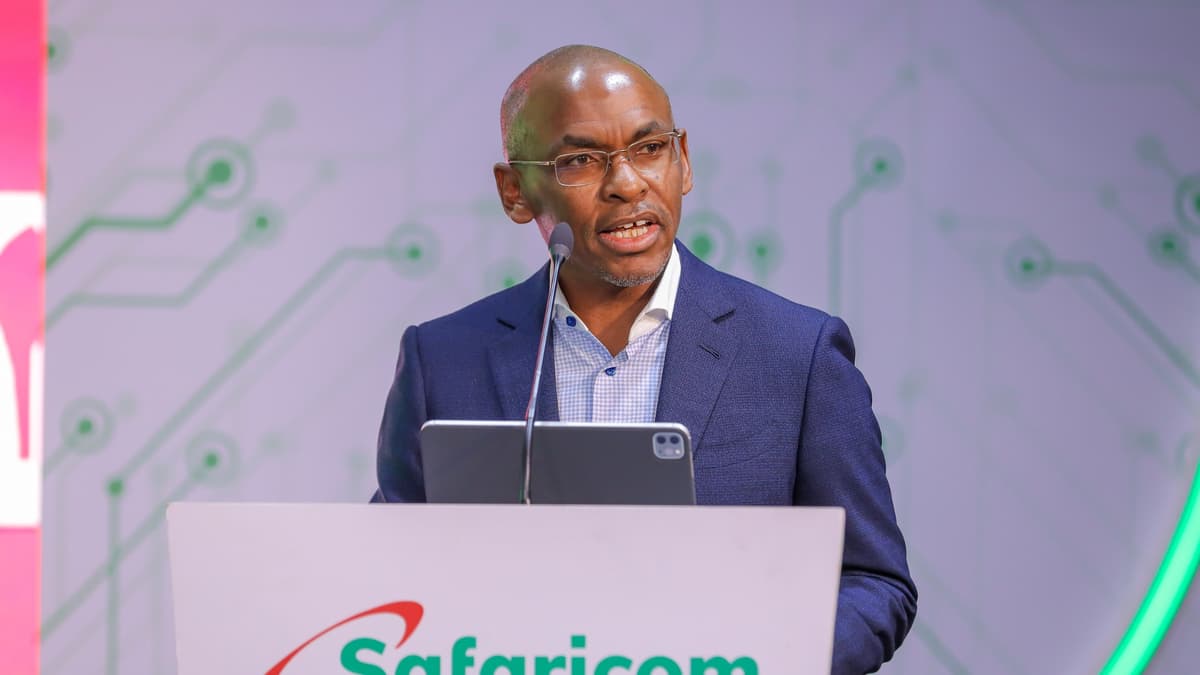
It is done. On June 30, 2026, the last working day of a month in which courts, petitioners, and a watching public fought to slow the clock, South Africa’s Vodacom Group completed the purchase of a 15 percent stake in Safaricom Plc, executing the largest single transaction in the history of the Nairobi Securities Exchange.
The block trade was settled on the NSE’s dedicated board, pushing the bourse’s daily turnover to a staggering Sh208.15 billion in a single session, up from Sh4.7 billion the previous day, with 6.06 billion shares changing hands in one stroke.
“This is a landmark moment for Vodacom, for Safaricom, and for the communities we serve across East Africa,” Vodacom Group CEO Shameel Joosub said in a statement released the same day. It was the kind of corporate language designed to sound inclusive while describing an act of control.
Joosub knows what he has acquired.
Vodacom’s effective stake in Safaricom has now risen from roughly 40 percent to 55 percent, while the Kenyan government’s holding falls from 35 percent to 20 percent. The operating system of Kenya’s digital economy has a new majority owner, and that owner sits in Johannesburg.
But what Joosub did not mention in his triumphant statement is that the four-month court battle that Kenyans fought to block this transaction extracted an immediate, measurable cost from the Treasury.
Because the deal closed on June 30 rather than the originally intended March 31, the government missed the August 4 cut-off for Safaricom’s shareholder register, which closes for payment of a final dividend of Sh1.15 per share.
The arithmetic is pitiless: on the 6 billion shares the Treasury has now sold, that is Sh16.1 billion in dividends that Kenya will never collect. It walked away from Sh16 billion in its rush to complete a deal it was simultaneously arguing in court was time-sensitive to the national interest.
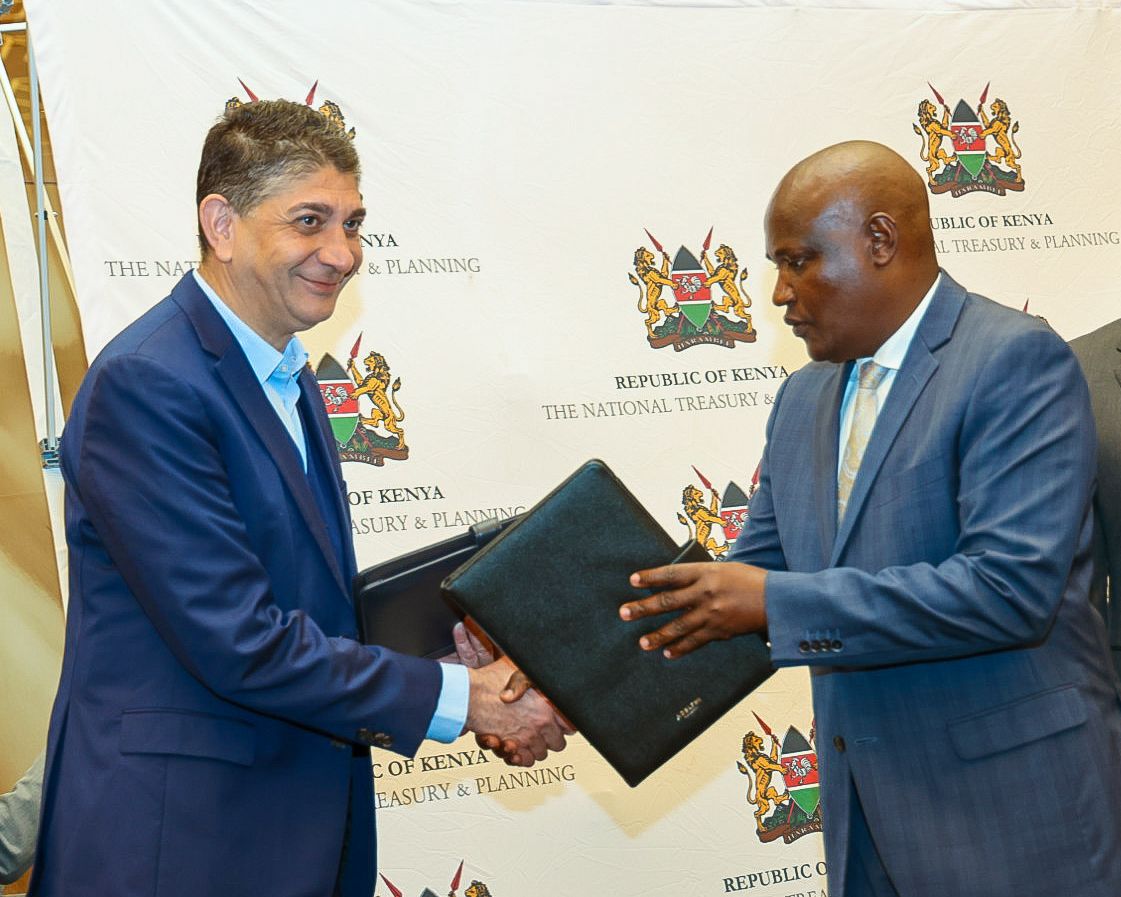
The Sh16.1 billion, however, is the smallest number in this story. It is also the one the government wants you to argue about, because it distracts from the figure that former Principal Secretary and energy sector expert Irungu Nyakera has filed as sworn evidence before the High Court: KES 437 billion.
That is the total quantified loss to Kenyan taxpayers from this single transaction, by the analysis of an expert witness whose affidavit sits on record in Constitutional Petition E051 of 2026.
The court battle delayed the cash. It could not change the outcome. The petitioners won three months of scrutiny. They lost the war. And KES 437 billion went with it.
THE ANATOMY OF A SURRENDER
The headline numbers are now confirmed. The National Treasury received Sh244.5 billion in total proceeds: Sh204.3 billion for six billion shares sold at Sh34 per share, plus Sh40.2 billion in advanced dividends structured as a prepayment backed by the government’s remaining 20 percent stake.
Vodacom is also buying the five percent stake held by parent firm Vodafone Group at the same Sh34 price, bringing its total ownership to 55 percent once both legs close.
The government’s stake drops to 20 percent.
The public retains 25 percent on the NSE. Proceeds are earmarked for the National Infrastructure Fund, established under legislation President Ruto signed into law on the eve of Parliament’s approval of the divestiture.
The fiscal logic is hard to argue with on the surface. Facing high public debt, limited room to raise taxes, and annual debt repayments that absorb 40 percent of government revenues, President Ruto’s administration turned to asset sales to bolster its finances.
What is harder to argue is that this particular asset, the company that runs M-Pesa, sits at the centre of Kenya’s financial infrastructure, and holds the personal and transactional data of tens of millions of citizens, was the right one to sell majority control of, and that the terms extracted for that control were anywhere near adequate.
KES 437 BILLION: THE EXPERT WITNESS NUMBER THE GOVERNMENT HOPES YOU IGNORE
Before the Court of Appeal lifted the conservatory orders on June 26, former Principal Secretary Irungu Nyakera, CBS, filed an expert witness affidavit before the High Court in Constitutional Petition E051 of 2026.
It is among the most forensically detailed independent valuations of the Safaricom transaction placed on any public record. Its conclusions are devastating.
Nyakera applied five internationally recognised valuation methodologies to the shares sold at KES 34 each: discounted cash flow analysis, dividend discount modelling, comparable company multiples, sum-of-the-parts valuation, and precedent transaction analysis.
The result was a fair value range of KES 57 to KES 80 per share. At the conservative midpoint of KES 57.90, Kenya left KES 143.7 billion on the table on the share price alone.
But that figure excludes M-Pesa. Nyakera’s affidavit addresses this separately and the numbers are sobering. M-Pesa processes KES 38.3 trillion in annual transactions, a volume that exceeds twice Kenya’s entire gross domestic product.
Applying the valuation multiple used when Mastercard invested in MTN MoMo, the comparable African mobile money platform, values M-Pesa at approximately KES 1.27 trillion.
The government sold its share of that platform at a price that ignored this embedded value entirely, adding another KES 133.8 billion to the loss calculation.
The third component is the dividend stream.
The government accepted KES 40.2 billion upfront in exchange for the future dividend stream accruing to its 20 percent stake during the period of the advance.
Nyakera’s affidavit calculates the present value of that stream at approximately KES 200 billion. The advance therefore represents an additional KES 159.8 billion in surrendered value, the difference between what the Treasury accepted and what that income stream was actually worth on a discounted basis.
KES 143.7 billion on the share price. KES 133.8 billion on M-Pesa. KES 159.8 billion on the dividend stream. Total: KES 437 billion. Filed under oath. On the court record. Ignored by the government.
Add the three components and the total minimum quantified loss to Kenyan taxpayers is KES 437 billion, by sworn expert evidence before a High Court that has not yet ruled on whether the sale was constitutionally lawful.
Nyakera’s indictment of the process goes beyond arithmetic.
A transparent and competitive sale, he argues in his affidavit, would have allowed the market to determine the best price through competing bids and independent price discovery.
Instead, the transaction was bilaterally negotiated between the Treasury and Vodacom, without a competitive tender, without an independent Kenyan valuation commissioned on behalf of taxpayers, and without equivalent disclosure to Parliament of the shareholder agreement terms that American securities regulators received two months after the vote.
Parliament’s own joint committee found the Sh34 price represented a 17 to 19 percent premium above the six-month volume-weighted average.
That defence, on Nyakera’s analysis, is comparing the sale price to recent traded levels at a time when the market did not have full information about the deal’s governance implications.
A VWAP premium is not a control premium. It is not an M-Pesa premium. It is not a fair value. It is a market price comparison that flatters the seller only if you agree to ignore everything that makes Safaricom worth more than its trading price suggests.
THE SH16 BILLION THAT WENT TO JOHANNESBURG THIS WEEK
Set aside the KES 437 billion for a moment and return to this week’s most immediate and concrete loss, because it crystallises the entire deal’s logic.
Safaricom’s board declared a final dividend of Sh1.15 per share for the financial year ended March 2026, payable to shareholders on the register as of August 4.
Had the sale of the stake been delayed beyond that date, the Treasury would have earned Sh16.1 billion from the 6 billion shares it has now sold.
Instead, Vodacom completed its purchase on June 30. The South African group acquires 6 billion Kenyan shares on Tuesday and collects a Sh16.1 billion dividend cheque six weeks later.
The Treasury, which spent months arguing in court that every week of delay was costing the country, will receive not a shilling of it.
This is not a minor arithmetic footnote. Safaricom’s net profit for the year rose 67 percent to Sh95.6 billion, and the company raised its per share final dividend to Sh1.15 from Sh0.65 previously.
The government was entitled to that payout on its departing 6 billion shares. It gave it up by rushing to close before the register date. The urgency that the state argued was essential to the national interest cost it Sh16 billion in a single week.
THE SEC FILING SAFARICOM DID NOT WANT YOU READING
On May 22, 2026, Vodafone Group, Vodacom’s 65 percent-owning parent dual-listed in London and on NASDAQ, quietly lodged a new shareholder agreement with the U.S. Securities and Exchange Commission.
The filing was triggered by Vodafone’s American listing obligations, not by any requirement under Kenyan law.
It contains the deal’s real mechanism of control, written in language no Treasury press conference or Safaricom investor note has matched in clarity: Safaricom’s board would be required to appoint the chief executive from a list of nominees provided by Vodafone Kenya Limited (VKL), the holding vehicle through which Vodacom controls Safaricom, for as long as VKL holds more than 50 percent of the company.
The agreement is precise about the scope of Kenyan involvement. VKL “undertakes, insofar as possible and provided it is aware of the potential appointment, to notify and consult with the GOK prior to the Board appointing or replacing a Chairman and/or Chief Executive Officer.” Consult, not approve.
Notify, not veto.
The chairmanship is the one post genuinely ring-fenced for a Kenyan national, with VKL committing to ensure the chair holds Kenyan citizenship only “insofar as possible,” a qualification that any lawyer will confirm is not a guarantee.
This disclosure did not exist in equivalent form in the sessional paper Parliament approved in March. Lawmakers were told the conditions included a Kenyan CEO and chairman, no redundancies, and protection for local suppliers and agents.
The SEC filing, lodged five weeks after Parliament’s approval, confirms what some MPs feared and the public was never told in plain language: the next CEO of Safaricom will not be chosen from an open field.
They will come from a shortlist drawn up in Johannesburg. Parliament consented to a transaction whose full terms were disclosed to American regulators after the vote, not before.
PETER NDEGWA: THE CEO WHOSE CONTRACT NOBODY WILL CONFIRM
This is where the ownership story collides with the most consequential and least examined leadership question in Safaricom’s history.
Peter Ndegwa became Safaricom’s first Kenyan chief executive in April 2020, ending two decades of expatriate leadership that began with Michael Joseph, a South African installed by Vodafone when the company launched in 2000.
By any conventional governance reading, his tenure should have been the company’s most transparent. It has instead become its most opaque.
Ndegwa’s contract was expected to lapse on March 31, 2026. It is now July 1. There has been no formal announcement of renewal, exit timeline, or succession plan.
The Consumers Federation of Kenya described the resulting information vacuum as having “devolved into speculation and guesswork,” an unusual state for a publicly traded company of Safaricom’s stature. Safaricom’s board charter reportedly caps CEO tenure at seven years.
Ndegwa joined in April 2020. He is in his seventh year, leading a company whose majority ownership just shifted, whose next CEO will be selected from a Johannesburg-approved shortlist, and whose board has not seen fit to tell the shareholders of East Africa’s most valuable listed company whether its chief executive holds a confirmed contract.
The contrast with his predecessors is the story Safaricom would rather not have drawn. Founding CEO Michael Joseph oversaw a decade of structured growth before a clearly communicated exit in 2010, while successor Bob Collymore had his contract extensions publicly announced in advance.
Ndegwa’s tenure, by contrast, is defined by opacity at the very moment when transparency matters most, because the mechanism for choosing his successor has just been formally transferred to a foreign boardroom.
On performance, Ndegwa has a formidable record.
He steered the company through a pandemic that struck in his first week, expanded into Ethiopia in 2021, and delivered record results.
By FY2026, total revenue had crossed KSh 400 billion for the first time, up 62.9 percent from the KSh 262.56 billion he inherited, with net profit hitting a record KSh 95.61 billion, the largest of any company in East and Central Africa. The share price, which had collapsed to KSh 13.30 in February 2024 on Ethiopia losses, rallied 136 percent to KSh 31.40 by June 2026.
The numbers are real. So is the governance problem.
A CEO whose contract status could not be confirmed to shareholders for three months was, during that same window, the public face of a company arguing in court against deeper scrutiny of the very transaction that would relocate his succession mechanism to a foreign holding company. That is not a coincidence of timing. That is a governance culture comfortable with opacity when opacity serves the deal.
A CEO whose contract nobody can confirm is presiding over the transaction that hands away the right to choose his own successor. That is not irony. That is the story.
THE SURVEILLANCE ALBATROSS
The tenure-extension silence did not arrive in a vacuum. It followed two years in which Safaricom’s relationship with Kenya’s security state became the most serious corporate accountability fight in the company’s history, and in which Ndegwa’s own conduct revealed the company’s default response to accountability: deny, threaten, and wait for the news cycle to move.
In October 2024, a Daily Nation investigation produced with journalists Namir Shabibi and Claire Lauterbach alleged that Safaricom, in concert with British firm Neural Technologies Limited, developed software granting security agencies “virtually unfettered access to private consumer data,” including call data records that bore “signs of manipulation and falsification” in cases tied to suspected enforced disappearances.
The Kenya Human Rights Commission and Muslims for Human Rights formally accused the company of facilitating “criminal and unconstitutional practices” that may have aided Kenyan security forces in tracking and capturing suspects.
Ndegwa denied everything at a public results presentation: “There have been some reports on this matter that, in my view, are not accurate, and we have made our position clear to those who have misreported it. If we were sharing customer data, it would lead to a crisis and chaos in our business.”
Then came the retaliation. Reporters Without Borders documented that Safaricom threatened the Nation Media Group with a SLAPP suit demanding the article be withdrawn, then suspended close to five million dollars per month in advertising spend with the group.
Safaricom also filed a formal complaint against Nation Media Group with the Media Council, accusing the investigation of being “misleading, inaccurate, inflammatory, biased and generally lacking in accountability.” RSF condemned the pressure and called on Kenyan authorities to protect the investigative journalists involved.
An Al Jazeera documentary broadcast in May 2026 went further, describing an architecture in which approximately ten Criminal Investigation Department officers operated from a dedicated floor inside Safaricom’s headquarters, while National Intelligence Service agents were stationed informally within the company’s facilities.
The Kenya National Commission on Human Rights documented 82 abductions and forced disappearances between June and December 2024.
Amnesty International’s November 2025 report stated that human rights defenders it interviewed believed state surveillance was supported by Safaricom data, enabling clandestine police units to locate and track activists who were subsequently forcibly disappeared.
Throughout this expanding record, Safaricom has not responded to the Al Jazeera documentary, has not responded to the specific findings of the Nation Media Group investigation, and Ndegwa has given no public accounting of the Law Enforcement Liaison Office or the Neural Technologies embedded system.
This is the governance record of the company now handing its CEO selection rights to Vodacom. Access Now has reportedly called on Vodacom to launch an independent inquiry into the allegations. There is no indication it has responded.
THE COURTROOM FIGHT AND WHAT IT DID NOT DECIDE
The constitutional challenge was filed by broadcaster Tony Gachoka together with Prof. Frederick Ogola, Samuel Kahara Macharia, and Paul Maina Mugo, who argued that the proposed sale violated constitutional requirements governing disposal of public assets, lacked adequate public participation and transparency, and undervalued the government’s shares.
A separate petition was later brought by former Vice President Kalonzo Musyoka, citing alleged constitutional violations. Nyakera’s expert witness affidavit was filed in support of those petitions, placing the KES 437 billion loss figure on the High Court’s record.
A High Court bench comprising Justices Francis Gikonyo, Roselyne Aburili and Tabitha Ouya suspended the sale in May, citing unresolved questions on data sovereignty and public participation.
The appellate court lifted the orders on June 26, ruling on timing rather than legality, and explicitly declining to determine the constitutionality of the underlying sale. The substantive constitutional petitions remain alive.
Ndegwa himself, pressed on the valuation by MPs, chose careful distance: “We were not involved in determining or seeking to see what the right share price is because as Safaricom, we are the subject of the sale. When two shareholders are having a transaction, you leave it to them to determine how they want to conclude a transaction.” It is a legally defensible position and also the posture of a chief executive declining to advocate for the national interest in a transaction that will define his company’s governance for a generation.
Kalonzo Musyoka put it plainly after the appeals ruling: “The Court of Appeal has now lifted the conservatory order. But the lifting of that order is not a green light.”
WHO COMES AFTER NDEGWA, AND WHO DECIDES
No successor to Ndegwa has been named. No exit date has been publicly confirmed. But the question of succession is now the most important governance question at Safaricom, and the answer is no longer Nairobi’s to give.
The issue will not simply be who replaces Ndegwa. It will be who has the power to replace him. If the next CEO comes from a list controlled by Vodafone Kenya Limited, Safaricom’s board may still make the formal appointment, but the centre of gravity will have shifted. Nairobi may host the boardroom, but Johannesburg and London will shape the shortlist.
Ndegwa has sat on the Vodacom Group Executive Committee since August 2020, which may well recommend him for an extension under the new ownership structure.
But the era in which Safaricom’s CEO succession could be viewed primarily as a Kenyan corporate decision appears to be ending. Safaricom had an expatriate CEO for its first twenty years.
The new shareholder agreement, filed quietly with American regulators and never disclosed to Parliament in equivalent terms before the vote, restores that model. Six years of the first Kenyan CEO. Then back to Johannesburg’s shortlist.
WHAT WAS SURRENDERED
The deal is done. The record Sh208 billion single-day turnover on the NSE will be cited for years as evidence of market depth. Vodacom CEO Shameel Joosub will frame it as a partnership. Safaricom’s board will point to the performance numbers. The government will deposit Sh244.5 billion into the National Infrastructure Fund and call it responsible fiscal management.
What none of them will volunteer is the full accounting, as filed under oath in the High Court by a former Principal Secretary whose expert affidavit remains on the record.
The Treasury collected Sh244.5 billion and surrendered KES 143.7 billion in undervalued share price alone, KES 133.8 billion in unacknowledged M-Pesa value, and KES 159.8 billion in the gap between the advance dividend payment accepted and the present value of the income stream it replaced.
The total quantified loss: KES 437 billion, by sworn expert testimony.
It sold the controlling stake, not a minority position but the decisive share that tips governance, without a competitive tender, without an independent Kenyan valuation commissioned on behalf of taxpayers, and without negotiating a control premium that any investment bank in London or New York would have demanded as standard practice.
In its rush to close before a court deadline, it also left Sh16.1 billion in final dividends on the table for Vodacom to collect from the August register.
It handed the shortlisting rights for Safaricom’s next CEO to a foreign holding company, through a clause disclosed to American regulators after Parliament voted.
It transferred majority ownership of a company that human rights organisations, investigative journalists, Al Jazeera, and Amnesty International have spent two years documenting as a central node in a state surveillance architecture responsible for 82 documented abductions, a company whose CEO denied those allegations at a results call and whose response to the journalism that surfaced them was to threaten SLAPP suits and pull advertising.
That company is now a Vodacom subsidiary. Its data is now subject to the governance standards, the foreign legal processes, and the group-level compliance architecture of a South African parent whose own accountability to Kenyan law will be a matter for courts, not contracts, to test.
The constitutional petitions remain. The High Court will eventually rule on whether this sale was ever lawfully Kenya’s to complete. If it finds it was not, the legal remedy for a transaction already settled, shares transferred, money deposited, a foreign company consolidated, will be a question of enforcement that no court has yet had to answer.
In the meantime, the operating system of Kenya’s modern economy boots under new management. The first dividend cheque on the departed 15 percent goes not to the National Infrastructure Fund but to Johannesburg.
The CEO of the company at the centre of it all is still in his chair, still without a confirmed contract, still not having publicly acknowledged the clause that decides who comes after him. And on the court record, under the sworn signature of a former Principal Secretary, is a number the government has not challenged, cannot ignore, and will not explain.
KES 437 billion. Filed under oath. On the High Court record. Shameel Joosub called it a landmark moment. He is right. Landmarks mark places you cannot walk back from.




Comments