
News
Principals and Deputies in Secondary Schools Must Now Hold Master’s Degrees, TSC Announces

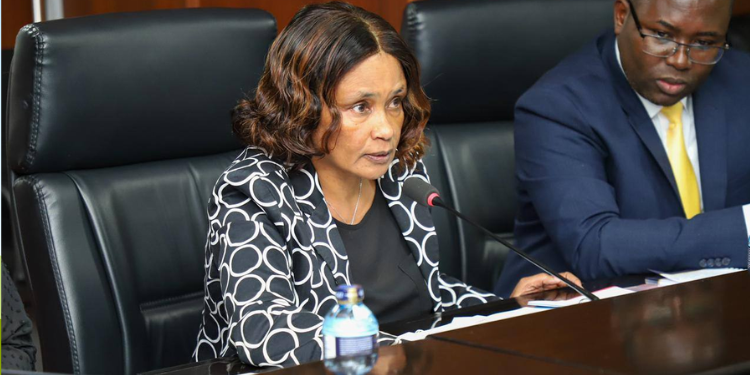
The Teachers Service Commission has introduced stringent new academic requirements for senior leadership positions in secondary schools, marking a significant shift in the qualifications needed to helm Kenya’s post-primary institutions.
Under the revised guidelines presented to the Senate Education Committee on September 12, principals of secondary schools must now hold a master’s degree in a relevant field, while their deputy counterparts are similarly bound by this elevated academic threshold.
The new framework represents a departure from previous requirements where a master’s degree, though advantageous, was not mandatory for these positions.
The commission’s document outlines comprehensive criteria for appointment, stipulating that prospective principals must possess a bachelor’s degree in education or equivalent qualification, demonstrate classroom competence, and have served as deputy head or in an equivalent position for at least three years.
Additionally, candidates must complete relevant Teacher Professional Development modules and meet Chapter Six constitutional requirements regarding integrity and leadership.
For deputy principals, the requirements mirror those of their senior counterparts, though they must have served as senior masters for a minimum of three years before consideration.
The policy extends beyond secondary schools, with primary school head teachers now required to hold bachelor’s degrees in education, while maintaining their Primary Teacher Education certificates.
The commission has also reinforced geographical deployment restrictions, ensuring that institutional heads do not serve in their home counties despite President William Ruto’s earlier directive to abolish the delocalisation policy.
School administrators are further limited to nine continuous years at any single station, with tertiary institution deans and registrars restricted to six-year tenures.
However, the new requirements have sparked considerable opposition from teacher unions. The Kenya Union of Post-Primary Education Teachers and the Kenya National Union of Teachers have condemned the changes as abrupt and discriminatory, arguing that they unfairly disadvantage experienced educators who lack master’s degrees.
Moses Nthurima, Kuppet’s deputy secretary-general, criticised the timing of the directive, noting that the recent Collective Bargaining Agreement deliberately excluded master’s degrees as promotion requirements.
He argued that the commission should have first supported teachers in pursuing advanced qualifications rather than imposing sudden mandates.
The unions have also challenged the continued enforcement of delocalisation policies, particularly when combined with promotions that separate teachers from their families or remove them from hardship areas where they receive additional allowances.
These changes reflect the commission’s broader alignment with the Competency Based Education framework, emphasizing enhanced academic credentials and professional development in educational leadership.
However, the implementation faces significant resistance from educators who view the requirements as punitive rather than progressive, setting the stage for potential industrial relations challenges as the policy takes effect.
Kenya Insights allows guest blogging, if you want to be published on Kenya’s most authoritative and accurate blog, have an expose, news TIPS, story angles, human interest stories, drop us an email on [email protected] or via Telegram


Justice Mong’are, the Machakos Injunction and the EABL-Asahi Questions Kenya Cannot Ignore

The EABL–Asahi Deal and the Growing Demand for Judicial Transparency

Samburu Governor Lati Lelelit Exposed For Paying Sh60 Million To Ghost Workers

THE GHOST AT ELYSEE PLAZA: How Ghanaian Businessman Erick Agbeko Built a Two-Decade Empire of Land Fraud in Kenya

Njuca Consolidated, Three Firms Faces Auction of 65 Properties Over Crippled Cash Flow

Why Absa Bank Is On The Spot For Enabling Sh150 Million Alleged Insider Fraud In Vetlab Club

Somalia’s Disputed President Allegedly Siphons Up to $6 Million Monthly from Kenyan Miraa Trade, Sharing the Spoils with Nairobi’s Shadow Cartels

Ahmed Adan Hefow: Governor Otuoma’s Trusted Right-Hand Man at the Centre of Busia’s Deepening Finance Scandal

Karua Detained at Entebbe as Uganda Blocks Besigye Lawyer From Entering Country

How KCB and Airtel Turned Kenya’s Unbanked Into a Data Goldmine Behind a ‘Financial Inclusion’ Deal

Businessman Philip Waithaka Kinuthia’s Minor Son Allegedly Drove Drunk, Killed Two Peponi Students in Ngong Road Horror Crash as Claims of Cover-Up Intensify

Inside NCBA’s Decline: How a Banking Giant Lost Its Strategic Edge

South Sudan: Adut Salva Kiir’s Shadow Treasury Exposed

Cement, Cash and Courts: How the Hashu Dynasty Crushed the Ramji Brothers for Fourteen Years and Why the Walls Are Now Closing In

Standard Chartered Ghosts Haunt Joshua Oigara At Stanbic As Whistleblower Spills Beans

Inside The Urban Planning Cartel That Owns Nairobi

THE VULTURE AND THE SCHEME How Nairobi West Hospital Became the Most Dangerous Institution in Kenya’s SHA Ecosystem and Why the Books Must Be Audited Now

The President’s Daughter and The Missing Witness: How Adut Salva Kiir’s Shadow Treasury Silenced Its Most Dangerous Critic

How Adil Popat Saved His Empire On The Eve Of Imperial Bank Collapse and Why Kenya’s Mainstream Media Buried The Story

Why John Ngumi Is Running From the EACC and Why the Sh415 Million Payday May Be the Least of His Worries
-
 News1 week ago
Businessman Philip Waithaka Kinuthia’s Minor Son Allegedly Drove Drunk, Killed Two Peponi Students in Ngong Road Horror Crash as Claims of Cover-Up Intensify
-
 Business2 weeks ago
Inside NCBA’s Decline: How a Banking Giant Lost Its Strategic Edge
-
 Africa2 weeks ago
South Sudan: Adut Salva Kiir’s Shadow Treasury Exposed
-
 Business2 weeks ago
Standard Chartered Ghosts Haunt Joshua Oigara At Stanbic As Whistleblower Spills Beans
-
 Investigations4 days ago
THE VULTURE AND THE SCHEME How Nairobi West Hospital Became the Most Dangerous Institution in Kenya’s SHA Ecosystem and Why the Books Must Be Audited Now
-
 Africa2 weeks ago
The President’s Daughter and The Missing Witness: How Adut Salva Kiir’s Shadow Treasury Silenced Its Most Dangerous Critic
-
 Business2 weeks ago
How Adil Popat Saved His Empire On The Eve Of Imperial Bank Collapse and Why Kenya’s Mainstream Media Buried The Story
-
 Business2 weeks ago
Why John Ngumi Is Running From the EACC and Why the Sh415 Million Payday May Be the Least of His Worries