
News
Mexican President Blames The US For Bloodshed In Sinaloa As Cartel Violence Surges

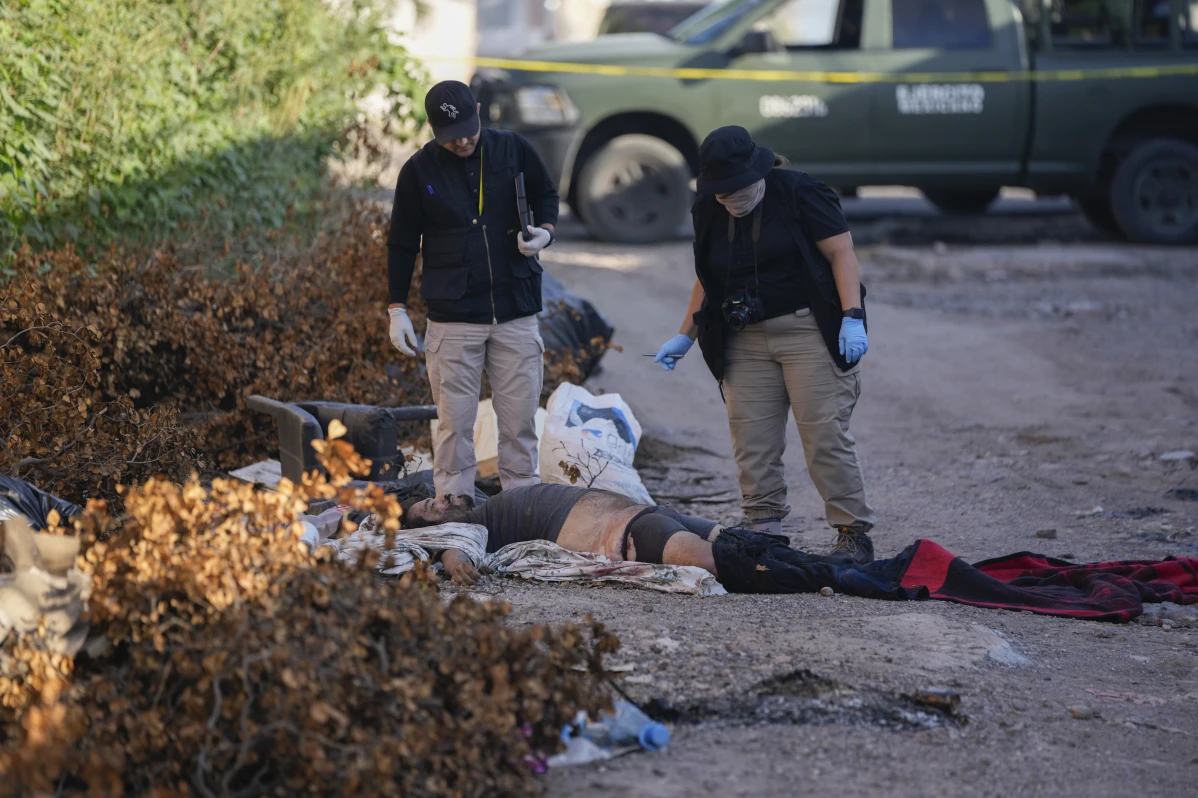
CULIACAN, Mexico (AP) — Mexican President Andrés Manuel López Obrador blamed the United States in part on Thursday for the surge in cartel violence terrorizing the northern state of Sinaloa which has left at least 30 people dead in the past week.
Two warring factions of the Sinaloa cartel have clashed in the state capital of Culiacan in what appears to be a fight for power since two of its leaders were arrested in the United States in late July. Teams of gunmen have shot at each other and the security forces.
Meanwhile, dead bodies continued to pop up around the city. On one busy street corner, cars drove by pools of the blood leading to a body in a car mechanic shop, while heavily armed police in black masks loaded up another body stretched out on a side street of the Sinaloan city.
Asked at his morning briefing if the U.S. government was “jointly responsible” for this violence in Sinaloa, the president said, “Yes, of course … for having carried out this operation.”
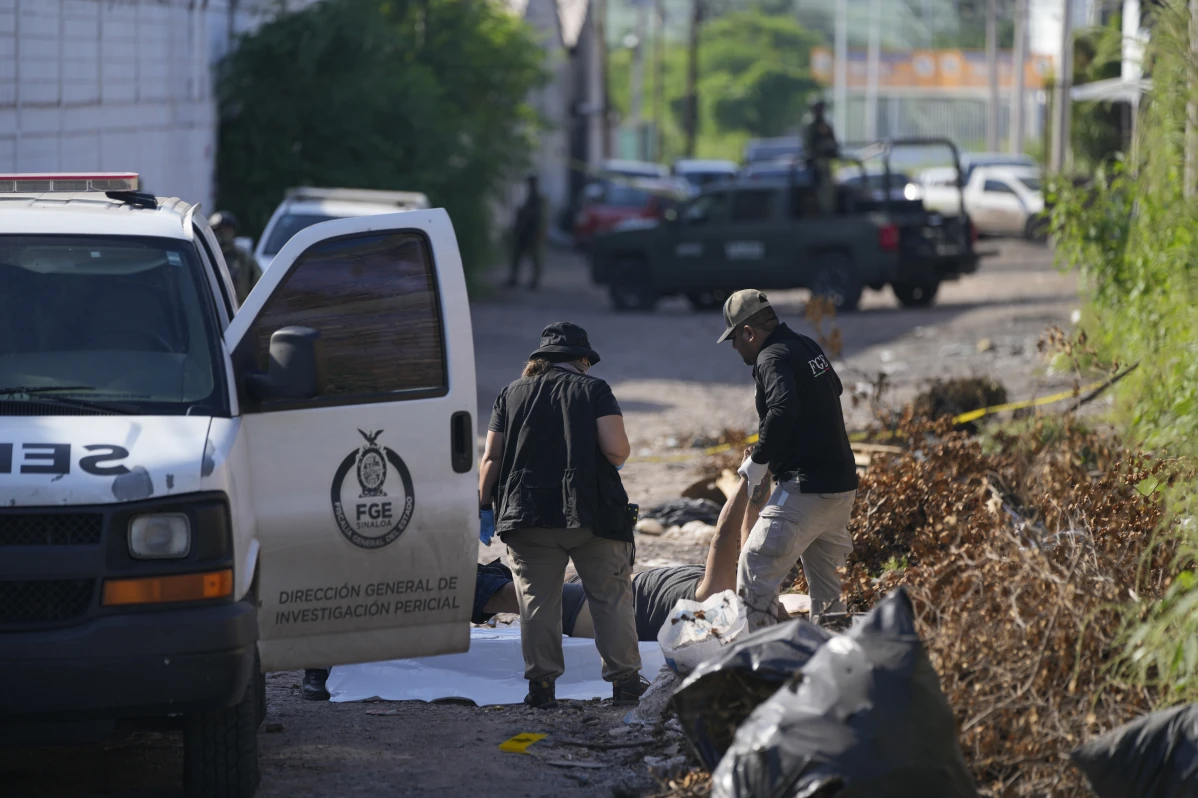
Forensic investigators remove a body from the street in La Costerita, Culiacan, Sinaloa state, Mexico, Thursday, Sept. 19, 2024. (AP Photo/Eduardo Verdugo)
The recent surge in cartel warfare had been expected after Joaquín Guzmán López, a son of former Sinaloa cartel leader Joaquín “El Chapo” Guzmán, landed near El Paso, Texas on July 25 in a small plane with Ismael “El Mayo” Zambada.
Zambada was the cartel’s elder figure and reclusive leader. After his arrest, he said in a letter circulated by his lawyer that he had been abducted by the younger Guzmán and taken to the U.S. against his will.
On Thursday afternoon, another military operation covered the north of Culiacan with military and circling helicopters.
Traffic was heavy in Culiacan and most schools were open, even though parents were still not sending their children to classes. Businesses continue to close early and few people venture out after dark. While the city has slowly reopened and soldiers patrol the streets, many families continue to hide away, with parents and teachers fearing they’ll be caught in the crossfire.
“Where is the security for our children, for ourselves too, for all citizens? It’s so dangerous here, you don’t want to go outside,” one Culiacan mother told the Associated Press.
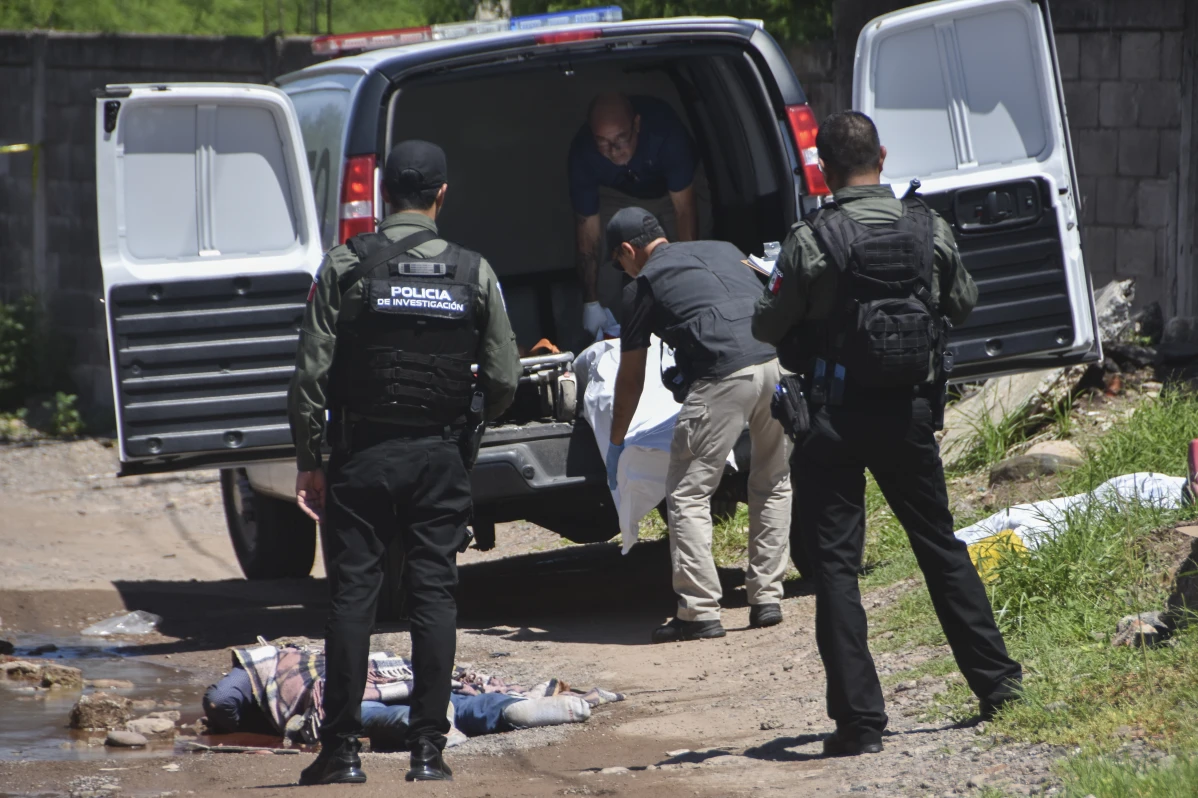
Police watch forensics remove bodies from a street in Culiacan, Sinaloa state, Mexico, Tuesday, Sept. 17, 2024. (AP Photo)
The mother, who didn’t want to share her name out of fear of the cartels, said that while some schools have recently reopened, she hasn’t allowed her daughter to go for two weeks. She said she was scared to do so after armed men stopped a taxi they were traveling in on their way home, terrifying her child.
During his morning news briefing, López Obrador had claimed American authorities “carried out that operation” to capture Zambada and that “it was totally illegal, and agents from the Department of Justice were waiting for Mr. Mayo.”
“If we are now facing instability and clashes in Sinaloa, it is because they (the American government) made that decision,” he said.
He added that there “cannot be a cooperative relationship if they take unilateral decisions” like this. Mexican prosecutors have said they were considering bringing treason charges against those involved in the plan to nab Zambada.
He was echoed by President-elect Claudia Sheinbaum, who said later in the day that “we can never accept that there is no communication or collaboration.”
It’s the latest escalation of tensions in the U.S.-Mexico relationship. Last month, the Mexican president said he was putting relations with the U.S. and Canadian embassies “on pause” after ambassadors criticized his controversial plan to overhaul Mexico’s judiciary by requiring all judges to stand for election.
Still, the Zambada capture has fueled criticisms of López Obrador, who has throughout his administration refused to confront cartels in a strategy he refers to as “hugs not bullets.” On previous occasions, he falsely stated that cartels respect Mexican citizens and largely fight amongst themselves.
While the president, who is set to leave office at the end of the month, has promised his plan would reduce cartel violence, such clashes continue to plague Mexico. Cartels employ an increasing array of tactics, including roadside bombs or IEDs, trenches, home-made armored vehicles and bomb-dropping drones.
Last week, López Obrador publicly asked Sinaloa’s warring factions to act “responsibly”and noted that he believed the cartels would listen to him.
But the bloodshed has only continued.
Kenya Insights allows guest blogging, if you want to be published on Kenya’s most authoritative and accurate blog, have an expose, news TIPS, story angles, human interest stories, drop us an email on [email protected] or via Telegram




Kenya Airways Sinks Into Deeper Turbulence As American Supplier Sues In New York Court Over Sh129 Million Unpaid Debts

Kenyan player wins a Ksh3.2 million jackpot

IEBC Sets August 10 Date For 2027 General Election

Furious Ruto Lashes Out at Gideon Moi Over Repeated ‘Blackmail, Extortionist’ Headlines on The Standard and KTN

Mombasa Gripped by ‘Male Organ Theft’ Panic as Social Media Fuels Mob Attacks and Fear

TOO MUCH PR, NOTHING TO SEE: How Gladys Wanga Built a Perfect Story of Transformation While Homa Bay Bled

Netanyahu Says Israel Must ‘Break Free from Dependence’ After Tensions With Trump Administration

Niger pulls Out Of International Criminal Court After Calling It Neo-Colonialist

Kenya Awards Sh154 Billion JKIA Upgrade Tender To Chinese Firm CRBC

The Untouchable: How KURA’s Silas Kinoti Has Survived A Decade Of Corruption Storms While Kenya’s Roads Bled

Businessman Philip Waithaka Kinuthia’s Minor Son Allegedly Drove Drunk, Killed Two Peponi Students in Ngong Road Horror Crash as Claims of Cover-Up Intensify

Inside NCBA’s Decline: How a Banking Giant Lost Its Strategic Edge

South Sudan: Adut Salva Kiir’s Shadow Treasury Exposed

Cement, Cash and Courts: How the Hashu Dynasty Crushed the Ramji Brothers for Fourteen Years and Why the Walls Are Now Closing In

Standard Chartered Ghosts Haunt Joshua Oigara At Stanbic As Whistleblower Spills Beans

Inside The Urban Planning Cartel That Owns Nairobi

THE VULTURE AND THE SCHEME How Nairobi West Hospital Became the Most Dangerous Institution in Kenya’s SHA Ecosystem and Why the Books Must Be Audited Now

The President’s Daughter and The Missing Witness: How Adut Salva Kiir’s Shadow Treasury Silenced Its Most Dangerous Critic

How Adil Popat Saved His Empire On The Eve Of Imperial Bank Collapse and Why Kenya’s Mainstream Media Buried The Story

Why John Ngumi Is Running From the EACC and Why the Sh415 Million Payday May Be the Least of His Worries
-
 News1 week ago
Businessman Philip Waithaka Kinuthia’s Minor Son Allegedly Drove Drunk, Killed Two Peponi Students in Ngong Road Horror Crash as Claims of Cover-Up Intensify
-
 Africa2 weeks ago
South Sudan: Adut Salva Kiir’s Shadow Treasury Exposed
-
 Investigations6 days ago
THE VULTURE AND THE SCHEME How Nairobi West Hospital Became the Most Dangerous Institution in Kenya’s SHA Ecosystem and Why the Books Must Be Audited Now
-
 Business2 weeks ago
How Adil Popat Saved His Empire On The Eve Of Imperial Bank Collapse and Why Kenya’s Mainstream Media Buried The Story
-
 Business2 weeks ago
Why John Ngumi Is Running From the EACC and Why the Sh415 Million Payday May Be the Least of His Worries
-

 Business1 week ago
The Listing That Doesn’t Lie: What the Market Isn’t Saying About Family Bank’s NSE Debut
-

 Business6 days ago
Inside the Billion-Shilling Betrayal: How Senior Treasury Officials Plundered a UN Poverty Fund and Built a Real Estate Empire on the Backs of Kenya’s Rural Poor
-
 Business3 days ago
BURRIED TWICE: The Victoria Bank CEO Yogesh Pattni Files