
Business
HOLD THE PUMP: Kenya’s Petroleum Dealers Threaten National Blackout Unless EPRA Breaks Its Own Rules And Hike Fuel Prices
With Brent crude already above $113 and Vivo stations running dry in Nairobi, a cartel of independent fuel dealers is using a geopolitical war it did not cause to extract a pricing concession it has wanted for years. The question is whether their ultimatum is a legitimate market distress signal or corporate opportunism dressed in the language of national emergency.

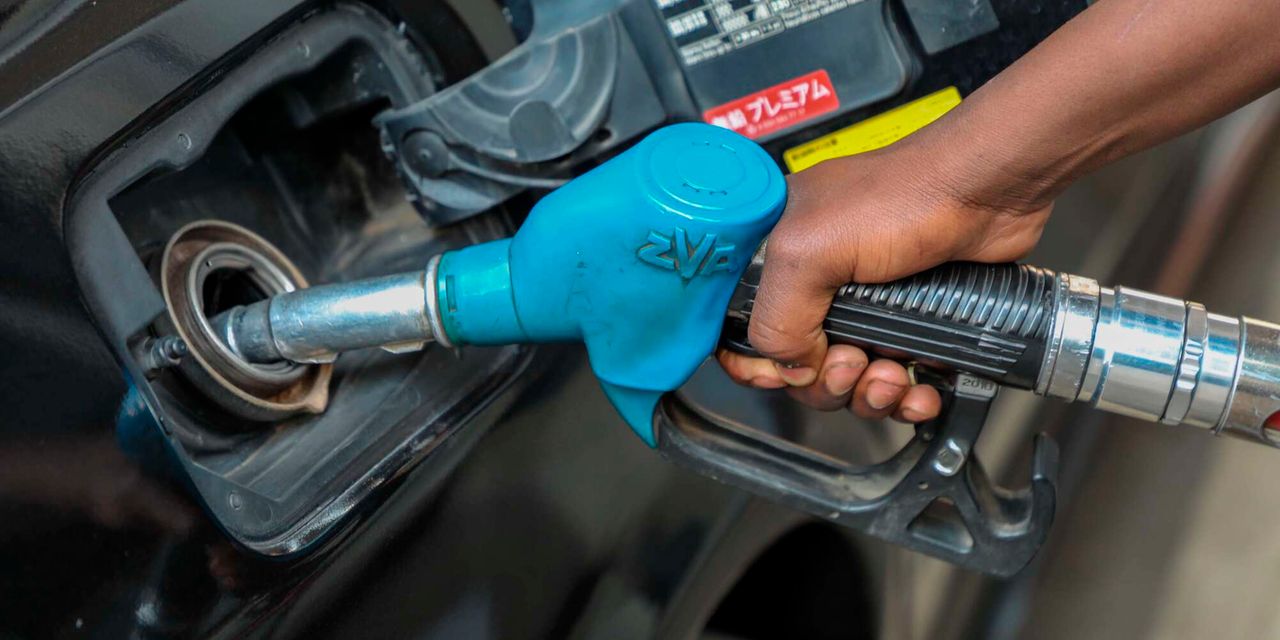
Kenya woke up on Monday, March 23, to a quiet but unmistakable crisis. Shell-branded Vivo Energy stations along Magadi Road and in Kiserian had been running intermittently dry since Saturday.
The company’s outlet at Kipande House in Nairobi’s central business district exhausted its diesel stocks by morning and expected its petrol supplies to disappear before nightfall.
Across the city, taxi drivers were making five-stop odysseys searching for fuel. Boda boda operators in South B, South C and Nairobi West found nothing. A Westlands-based taxi driver named Steve Wakio told reporters he was forced to abandon his car and borrow a motorcycle to locate a dispensing pump near Wilson Airport.
That same morning, the United Energy and Petroleum Association, the lobby group representing Kenya’s network of independent petroleum dealers, dropped what can only be described as an ultimatum. Through its chairperson Irene Kimathi, UNEPA warned that its members would halt fuel supply nationwide unless the Energy and Petroleum Regulatory Authority reviewed pump prices upward immediately.
The threat was stark. The framing was urgent. And the timing, delivered against the backdrop of the worst global oil supply shock since the 1970s, was carefully chosen.
This story is not simply about a fuel shortage. It is about who is exploiting that shortage, who is being hurt by it, and whether the regulatory architecture of Kenya’s downstream petroleum sector is fit to withstand the kind of geopolitical earthquake currently unfolding in the Middle East.
The War That Started Everything
On February 28, 2026, the United States and Israel launched Operation Epic Fury, a coordinated airstrike campaign targeting military, nuclear and leadership infrastructure inside Iran, including attacks that resulted in the death of Supreme Leader Ali Khamenei.
Iran’s response was immediate and strategically catastrophic for global energy markets. Its Islamic Revolutionary Guard Corps issued prohibitions on vessel passage through the Strait of Hormuz, backed up by missile and drone attacks on commercial shipping. By March 12, Iran had confirmed 21 attacks on merchant vessels.
Tanker traffic through the strait, which in normal times carries roughly 20 percent of global seaborne oil trade, collapsed by approximately 70 percent, with more than 150 ships anchoring outside the chokepoint rather than risk transit.
The numbers are staggering. Brent crude surpassed $100 per barrel on March 8 for the first time in four years. It peaked above $126. By March 23, Brent was trading above $113 per barrel, a jump of more than $40 from the pre-war baseline of roughly $70.
The International Energy Agency, in language it has never previously used, described the situation as the greatest global energy and food security challenge in history.
The IEA’s member countries responded with the largest coordinated release of emergency oil reserves ever recorded, nearly 400 million barrels, equivalent to one-third of total government reserve holdings.
East and southern Africa are disproportionately exposed.
According to CITAC energy consultancy executive director Elitsa Georgieva, approximately 75 percent of the fuel imports consumed by the region originate from the Middle East.
Kenya, which consumes about 100,000 barrels of petroleum products daily and imports 100 percent of its refined fuel requirements, sits at the sharp end of that vulnerability.
The country’s sole refinery at Mombasa has been dormant for years after being shut down on grounds of economic unviability, a decision that left Kenya permanently dependent on refining capacity in the Gulf, India and Southeast Asia. That capacity is now under siege.
“The biggest fuel suppliers to Kenya are rationing product. A few distributors are experiencing stockouts in the villages.” — Martin Chomba, Petroleum Outlets Association of Kenya
Industry insiders speaking to the Daily Nation indicated that one vessel expected to deliver 85 million litres of fuel arrived having loaded only 60 million litres, the shortfall directly attributable to safety concerns during transit through the Strait of Hormuz.
Of approximately 60 vessels expected at Mombasa over a two-week window, only two were carrying petroleum products. The Shimanzi petroleum depot in Mombasa was being warned by fuel transporters of impending stockouts.
Saudi Arabia simultaneously announced reduced crude supply allocations to its Asian refinery clients for April 2026, a second consecutive month of cuts that will squeeze the secondary supply chains India, South Korea and Southeast Asian refiners use to produce the finished petroleum products that Kenya imports.
The G-to-G Deal Under Pressure
Kenya’s primary fuel import mechanism, the government-to-government arrangement originally designed to avert the dollar crisis of 2023, provides the country with a 180-day credit period for purchases from Saudi Aramco, the Emirates National Oil Company and Abu Dhabi National Oil Company.
The deal was renewed and extended to 2028. It was supposed to represent supply security. Instead, it has become the primary source of anxiety, because all three suppliers have reported attacks on their refining infrastructure since the war began, have experienced facility shutdowns and have begun rationing the cargoes they allocate to importers.
Energy and Petroleum Cabinet Secretary Opiyo Wandayi summoned oil marketers for an emergency meeting as early as March 10, assuring the public that Kenya held adequate reserves and that G-to-G contingency planning with Aramco, ADNOC and ENOC was underway.
He said imports had been secured through to the end of April 2026.
However, the situation on the ground contradicted official assurances almost immediately. Petroleum Principal Secretary Mohamed Liban was reduced to issuing a statement through a Member of Parliament’s live television interview on March 23, blaming the apparent shortages on hoarding by oil marketers who were speculating on price increases.
Industry insiders described a market in which wholesalers were refusing to sell to independent dealers at regulated prices, prioritising franchised outlets or simply withholding stock in anticipation of higher margins following the next EPRA price review.
Who is UNEPA, and What Does It Actually Want?
Understanding the UNEPA ultimatum requires understanding what UNEPA represents and what it has been demanding from the regulatory system for years, because this is not the first time Irene Kimathi and the association have threatened fuel supply disruption as a lever against the regulator.
UNEPA is the umbrella body for Kenya’s independent, non-franchised petroleum dealers.
These are the roughly 800 retail outlets operating outside the direct supply networks of multinationals like Vivo Energy, TotalEnergies and Rubis. Independent dealers occupy the bottom rung of the downstream market hierarchy.
They do not import fuel.
They purchase from wholesale Oil Marketing Companies who do, and they retail it to end consumers at EPRA-regulated maximum prices. Their margins, their operating costs and their profitability are all tightly constrained by EPRA’s monthly pricing formula.
The structural grievance is genuine and documented. EPRA’s pricing formula sets both a maximum retail price and an OMC wholesale margin.
For years, independent dealers complained that large oil marketing companies were selling to them at wholesale prices that, once dealer transport and operating costs were added, left margins so thin as to make the business unviable.
A 2022 statement by Kimathi, then serving as Mt Kenya East Petroleum Dealers Association chairperson, captured it plainly: large OMCs were selling to independent dealers at prices near the retail cap in Nairobi, making it impossible for rural dealers who bore additional transport costs to operate profitably.
The complaint was that wholesale price caps, while officially set by EPRA’s formula, were not being enforced in practice against the major suppliers.
EPRA did respond, over time. In March 2025, the regulator implemented the first phase of recommendations from its Cost of Service Study for Petroleum Products, raising OMC operating margins for super petrol from Ksh 12.39 per litre to Ksh 15.24, with comparable increases for diesel and kerosene.
A second phase increase followed in July 2025, producing the largest single pump price spike in over a year.
A third phase increase is scheduled for July 2026. In total, the cost-of-service study identified that combined retail margins should be raised from the then-current Ksh 8.19 per litre to Ksh 12.78, a revision that the IEA Kenya research unit warned could reflect industry self-interest, given that oil marketing companies themselves were key informants in the data collection underpinning the study.
The point is this: the regulated margin for fuel dealers in Kenya has been increasing. EPRA has been responsive to dealer cost pressures. The claim that current prices are unsustainable because margins have not been reviewed since 2019, which Kimathi made in 2022, is factually superseded by the 2025 revisions.
What UNEPA now demands is something categorically different: the suspension of price regulation altogether during the present crisis, to allow market forces to set the pump price at whatever the global disruption dictates. That is not a margin adjustment. That is deregulation by emergency decree.
The retail margin for super petrol was Ksh 12.39 per litre in early 2025. After EPRA’s phased revisions, it stands at over Ksh 15 per litre. The claim that margins have been frozen is false.
The Hoarding Problem: Blackmail or Business Reality?
The government’s own account of what is driving the visible shortage is damning. PS Liban on March 23 explicitly stated that oil marketers are hoarding fuel in anticipation of higher prices.
This is a precise description of speculative inventory behaviour: a dealer acquires or holds stock at current prices, withholds it from the pump, and waits for the regulatory review to set a higher price that will inflate the margin on the withheld volume.
It is not illegal.
It is, however, a manufactured shortage, and it is happening to ordinary Kenyans who need fuel to commute, farm, operate small businesses and access healthcare.
The Star’s spot check on March 23 found Nairobi’s Langata Road, one of the busiest arterial corridors in the capital, with multiple stations either dry or rationing supplies.
Reports from the North Rift indicated that Eldoret, Kitale, Kapsabet, Bungoma and parts of West Pokot had run out of diesel entirely, directly disrupting the planting season for large-scale farmers dependent on diesel-powered machinery.
Across a two-week shipping window at Mombasa, only two of 60 expected vessels were carrying petroleum products. The structural supply problem is real and worsening. The hoarding layer on top of it is a business calculation by dealers who believe EPRA will blink.
UNEPA’s threat to divert fuel to neighbouring countries, where prices are unregulated and therefore more profitable, deserves to be taken seriously not because it is economically easy but because it is legally possible and commercially rational. Kenya’s borders with Tanzania, Uganda and Ethiopia are not hermetically sealed.
Arbitrage across unregulated markets has occurred before. If a dealer can sell diesel at free-market prices in a neighbouring state and earn a higher margin than the EPRA formula permits in Kenya, the incentive exists. The warning is calibrated.
The EPRA Calculation and Its Defenders
The Energy and Petroleum Regulatory Authority’s decision on March 14 to maintain pump prices at their existing levels for the March to April cycle was not capricious.
EPRA Director General Daniel Kiptoo gave a specific technical explanation: the price review was based on vessels received and discharged between February 10 and March 9, 2026.
Most of those were February-priced cargoes, acquired before Operation Epic Fury began on February 28.
The landed cost data fed into the March formula therefore reflected pre-war pricing. Kiptoo was transparent about this: the impact of the Middle East situation had not yet been reflected in prices.
This means that the current Nairobi pump prices of Sh178.28 for super petrol, Sh166.54 for diesel, and Sh152.78 for kerosene are priced against a world that no longer exists.
The April 15 review, when EPRA calculates prices based on cargoes discharged in the post-war period, will capture the full landed cost shock of crude above $110 per barrel plus dramatically higher shipping insurance premiums.
Dealers know this.
The market knows this. Everyone knows that April 15 will bring a very large price jump, and the UNEPA threat is, at its core, a demand to bring that jump forward now rather than wait three weeks for the formal regulatory process to catch up with reality.
Epra’s timeline is legally defensible but economically awkward. The landed cost of diesel already rose 8.46 percent between January and February 2026, from $586.80 to $636.45 per cubic metre.
Kerosene rose 6.79 percent over the same period.
These were pre-war increases. The March figures, which will underpin the April 15 review, are expected to reflect far more severe increases.
If Brent has averaged above $110 per barrel throughout March while shipping costs and insurance premiums have also spiked, the next pricing cycle will produce a shock that EPRA cannot absorb within the existing formula without either passing it directly to consumers or deploying a fuel subsidy.
The Subsidy Trap and the Sceptics
The government has pledged to subsidise the increase in landed costs. Dealers are openly sceptical, and their scepticism is grounded in recent history.
Kenya’s 2022-2023 fuel subsidy programme accumulated billions of shillings in unpaid claims to dealers, creating a backlog that destroyed the working capital of smaller independent operators.
Kimathi herself described the historical pattern precisely: the government is often unable to refund subsidy claims on time, making it difficult for businesses to operate effectively. Given the current political climate, business people are not prepared to take such risks.
This is not an unreasonable position.
The Sh104 billion Hustler Fund has logged default rates exceeding 50 percent. The Affordable Housing Programme has generated procurement controversies. The SHA health insurance transition haemorrhaged billions in mismanaged funds.
The Kenyan state’s track record for honouring commercial obligations on schedule is poor.
A dealer who accepts regulated prices below their landed cost, on the basis that the government will reimburse the differential, is essentially extending unsecured credit to a state that has demonstrated a structural inability to pay on time.
The risk is not theoretical.
At the same time, the argument that dealers cannot wait three weeks for the April 15 review to formally capture war-era costs deserves scrutiny.
The EPRA formula exists to prevent price shocks from being passed to consumers instantaneously, precisely because immediate price pass-through of global commodity spikes is regressive: it hits the poorest households, who spend the highest proportion of their income on transport and cooking fuel, with the greatest force.
The cost of kerosene, at Sh152.78 per litre, is not an abstraction for households in Kibera, Mathare or Mukuru who use it for cooking.
The Market Structure Problem Nobody Wants to Discuss
There is a deeper problem underneath the immediate crisis that neither UNEPA nor EPRA nor the Ministry of Energy has chosen to address publicly.
Kenya’s downstream petroleum market is an oligopoly at the wholesale level disguised as a competitive retail market. EPRA tracks 144 registered Oil Marketing Companies.
The actual import and wholesale market is controlled by a handful of them. Vivo Energy alone controls 21.34 percent of total sales volume by the regulator’s own December 2024 figures. Rubis holds 15.4 percent. TotalEnergies holds 14.8 percent. The top three OMCs collectively command over 51 percent of the market.
The Open Tender System, through which fuel cargoes are imported and distributed to the downstream market, concentrates power in the hands of whichever OMCs win the tender round.
Independent dealers who are not participants in the Open Tender System purchase from these large importers.
When the large importers choose to ration supply, as they are doing now, independent dealers have nowhere else to go. The UNEPA complaint about large OMCs refusing to sell at regulated prices is a structural market power problem, not simply a crisis-specific phenomenon. The crisis has amplified an existing dysfunction.
Kenya lacks the strategic petroleum reserves that would give the state any leverage in this situation. The National Oil Corporation of Kenya was mandated to maintain a 90-day strategic reserve.
NOCK’s prolonged financial difficulties have prevented it from fulfilling that mandate. Oil marketing companies are legally required to maintain stocks for 20 to 25 days. Most maintain 15 to 18 days of cover.
Kenya entered this crisis structurally underprepared, and the government’s assurances of adequacy are harder to credit against that backdrop.
What Should Actually Happen
The UNEPA demand for immediate price deregulation is dangerous and should be rejected. Deregulating pump prices during a supply shock of this magnitude would not stabilise supply.
It would transfer the full cost of a geopolitical war, a war that ordinary Kenyans had no hand in starting, directly onto the most economically vulnerable consumers in the country.
The 2022-2023 subsidy experience was painful but it prevented the kind of cascading inflation that unregulated fuel pricing during a supply shock would produce. The regulatory floor exists for a reason.
What EPRA should do is initiate an emergency mid-cycle review. The regulator has the legal authority, under Section 101(y) of the Petroleum Act 2019, to adjust its formula parameters. If the landed cost data from March cargoes already reflects war-era pricing, there is no legal or policy reason to wait until April 15 to incorporate it.
An emergency review that reflects actual current landed costs, with a transparent accompanying explanation, would remove the speculative incentive for hoarding and reduce the arbitrage pressure that is driving dealers to consider diverting fuel across borders.
The government’s subsidy pledge needs to be backed by a concrete payment mechanism and timeline, not another vague assurance.
If dealers are expected to absorb temporarily elevated landed costs in exchange for government reimbursement, a ring-fenced payment facility with a defined settlement period, administered through a mechanism independent of the general treasury payment process, is the minimum credible commitment.
The alternative is a repeat of 2022, where small dealers were destroyed by subsidy arrears while large OMCs absorbed the losses and passed them forward.
The hoarding accusation deserves regulatory enforcement, not just a public statement. If EPRA or the Ministry of Energy has evidence that specific OMCs are withholding stocks in anticipation of price increases, the Petroleum Act provides for investigation and sanction.
The Cabinet Secretary has convened emergency meetings. Those meetings should produce legally enforceable undertakings from the major OMCs, not press releases.
The Verdict on UNEPA’s Ultimatum
Is UNEPA’s demand justified? Partially, and on very narrow grounds. The structural complaint about independent dealers being squeezed between regulated retail prices and unregulated wholesale behaviour by dominant OMCs has been a legitimate and documented grievance for years.
The current crisis has intensified that squeeze to breaking point for many small operators.
The claim that the government cannot be trusted to pay subsidy arrears on time is historically accurate.
But the specific demand, suspend price regulation now and let the market set the price, is a different matter entirely. It is a demand that would benefit large OMCs with market power far more than it would benefit the small independent dealers UNEPA claims to represent.
It would immediately raise pump prices for every Kenyan consumer at a moment of maximum economic stress. It would disproportionately harm the rural poor, who have the fewest alternative transport options and the least capacity to absorb inflation. And it is being pressed in a window chosen precisely because the geopolitical crisis makes the government more susceptible to pressure.
The threat to halt supply is, at its core, a negotiating position. It is a demand dressed as a warning. Some of what underlies it is legitimate market distress. Much of it is opportunism, and in the current environment, where matatu fares are already climbing, where North Rift farmers cannot access diesel for planting, and where Nairobi commuters are traversing the city on motorcycles looking for petrol, the opportunism is worth calling out by name.
The Kenyan state, for its part, has no standing to be righteously indignant.
Its failure to build strategic reserves, its refusal to maintain a functioning national refinery, its extension of a G-to-G deal that tied the country’s fuel security to three Gulf suppliers whose refining infrastructure is now under military attack, its tolerance of a wholesale market structure that systematically disadvantages independent dealers, these are the policy failures that made this crisis as dangerous as it is.
EPRA, the Ministry of Energy, the National Treasury, and decades of administrations that treated petroleum infrastructure as a patronage vehicle rather than a strategic asset all bear responsibility for the position Kenya is in today.
Kenya lacks strategic reserves. Its refinery is idle. Its three G-to-G suppliers are under attack. Its OMCs are hoarding. Its dealers are threatening a blackout. The state’s vulnerability is entirely self-inflicted.
What Kenya cannot afford, in the middle of a war-driven supply crisis, is for the downstream petroleum sector to become a theatre of regulatory paralysis and commercial brinkmanship. EPRA must act on its emergency review authority. The government must back its subsidy pledge with a credible payment mechanism.
The large OMCs must be held to their mandatory stock obligations. And UNEPA must understand that the public will remember who chose to manufacture scarcity during a national emergency, regardless of how legitimate the underlying grievance may be.
The pump must flow. That is not a business proposition. It is a public necessity. The regulatory machinery exists to make it so. Whether the people operating that machinery have the courage to use it is now the only question that matters.
Kenya Insights allows guest blogging, if you want to be published on Kenya’s most authoritative and accurate blog, have an expose, news TIPS, story angles, human interest stories, drop us an email on [email protected] or via Telegram


Karua Detained at Entebbe as Uganda Blocks Besigye Lawyer From Entering Country

How KCB and Airtel Turned Kenya’s Unbanked Into a Data Goldmine Behind a ‘Financial Inclusion’ Deal

The Chivayo Network: How a Convicted Fraudster Won Access to Presidents, Passports and Billion-Dollar Deals Across Africa

BURRIED TWICE: The Victoria Bank CEO Yogesh Pattni Files

Court Stops Transfer Of EABL Shares To Asahi By Diageo In A Fresh Snag

Death Before Justice: Stephen Ngei, Victim of Sh180 Million Laptop Tender Scam Linked to Allan Chesang, Killed in Highway Crash

Court Brands Sh1.1 Billion Fee Demand by Lawyer Victor Swanya “Excessive and Exorbitant,” Exposes How City Hall Lets Public Money Bleed Through Legal Bills

Trump Unveils New Air Force One

MR. NO SHOW: Finance Bill 2026 Exposes Ndindi Nyoro’s Political Conmanship

Billionaire Eric Muli Rebukes Musalia Mudavadi Over Nairobi Capital Relocation Debate

Businessman Philip Waithaka Kinuthia’s Minor Son Allegedly Drove Drunk, Killed Two Peponi Students in Ngong Road Horror Crash as Claims of Cover-Up Intensify

Inside NCBA’s Decline: How a Banking Giant Lost Its Strategic Edge

Cement, Cash and Courts: How the Hashu Dynasty Crushed the Ramji Brothers for Fourteen Years and Why the Walls Are Now Closing In

Standard Chartered Ghosts Haunt Joshua Oigara At Stanbic As Whistleblower Spills Beans

South Sudan: Adut Salva Kiir’s Shadow Treasury Exposed

Inside The Urban Planning Cartel That Owns Nairobi

THE VULTURE AND THE SCHEME How Nairobi West Hospital Became the Most Dangerous Institution in Kenya’s SHA Ecosystem and Why the Books Must Be Audited Now

How Adil Popat Saved His Empire On The Eve Of Imperial Bank Collapse and Why Kenya’s Mainstream Media Buried The Story

The President’s Daughter and The Missing Witness: How Adut Salva Kiir’s Shadow Treasury Silenced Its Most Dangerous Critic

Why John Ngumi Is Running From the EACC and Why the Sh415 Million Payday May Be the Least of His Worries
-
 News1 week ago
Businessman Philip Waithaka Kinuthia’s Minor Son Allegedly Drove Drunk, Killed Two Peponi Students in Ngong Road Horror Crash as Claims of Cover-Up Intensify
-
 Business2 weeks ago
Inside NCBA’s Decline: How a Banking Giant Lost Its Strategic Edge
-
 Business2 weeks ago
Standard Chartered Ghosts Haunt Joshua Oigara At Stanbic As Whistleblower Spills Beans
-
 Africa2 weeks ago
South Sudan: Adut Salva Kiir’s Shadow Treasury Exposed
-
 Investigations4 days ago
THE VULTURE AND THE SCHEME How Nairobi West Hospital Became the Most Dangerous Institution in Kenya’s SHA Ecosystem and Why the Books Must Be Audited Now
-
 Business2 weeks ago
How Adil Popat Saved His Empire On The Eve Of Imperial Bank Collapse and Why Kenya’s Mainstream Media Buried The Story
-
 Africa2 weeks ago
The President’s Daughter and The Missing Witness: How Adut Salva Kiir’s Shadow Treasury Silenced Its Most Dangerous Critic
-
 Business2 weeks ago
Why John Ngumi Is Running From the EACC and Why the Sh415 Million Payday May Be the Least of His Worries