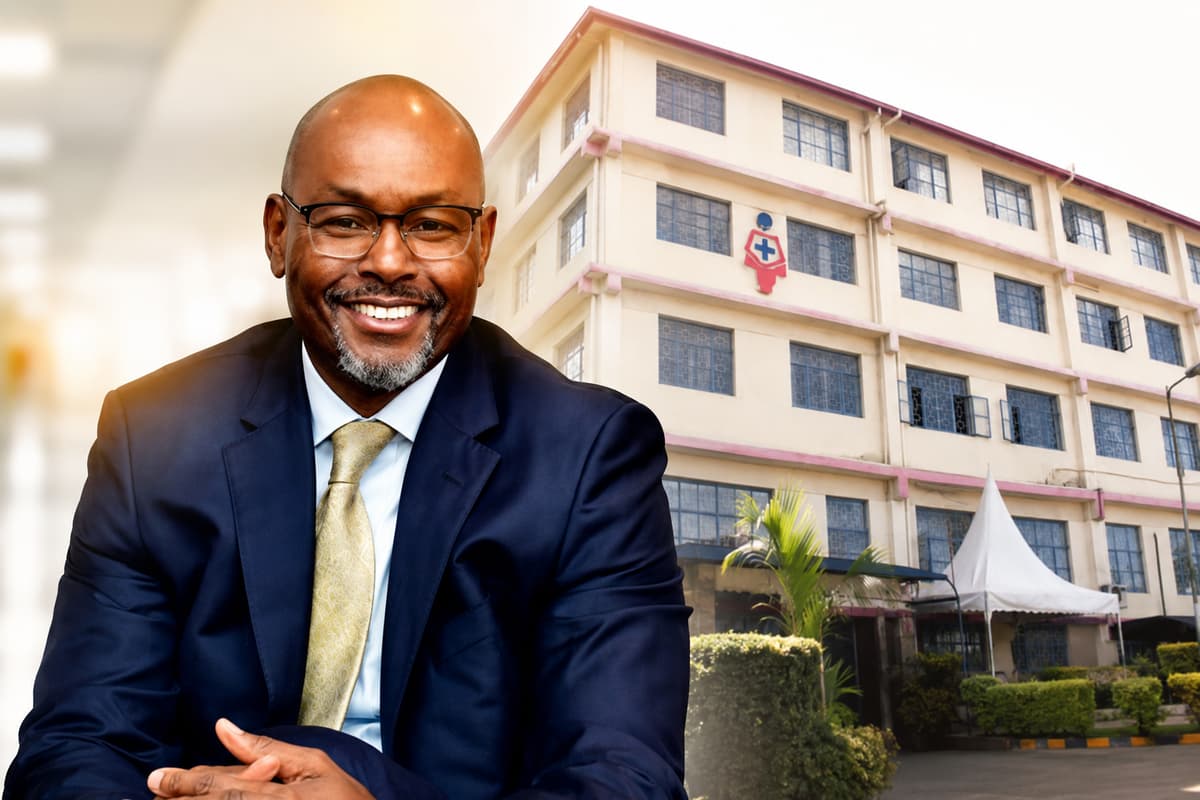
A man claiming to be the long-lost son of Dr. Sam Thenya, the founder of Nairobi Women’s Hospital, has allegedly emerged with a single demand: that the prominent medic undergo a DNA test to establish whether they are biologically related.
According to claims circulating online and amplified on Tuesday by blogger Edgar Obare, the unidentified man allegedly arrived unannounced at Dr. Thenya’s office seeking to meet him but was turned away. He later reportedly wrote to the doctor requesting that he consent to a DNA test, claiming he has spent the last 30 years searching for his biological father.
The allegations have quickly spread across Kenyan social media, triggering widespread speculation. However, none of the claims have been independently verified, and no DNA test has been conducted to establish the man’s assertions.
The controversy has also revived public discussion about Dr. Thenya, a figure who has long attracted both admiration and criticism throughout his career.
Dr. Samuel Maina Thenya, who was born in 1968 in Nyakihai, Murang’a County, trained as a gynaecologist before founding Nairobi Women’s Hospital. He has frequently recounted that the idea for the hospital was inspired by his encounter with a survivor of gang rape who could not afford medical treatment. After paying her hospital bill, he established the Gender Violence Recovery Centre (GVRC), which provides free treatment and support to survivors of gender-based violence.
An alumnus of Alliance High School and the University of Nairobi, Dr. Thenya acquired Hurlingham Hospital through a leveraged buyout in 2000 before transforming it into Nairobi Women’s Hospital, a facility that grew into one of Kenya’s largest private healthcare networks.
He later sold a significant stake in the hospital to the Dubai-based private equity firm Abraaj Group, reportedly earning millions of dollars from the transaction. In 2023, he regained majority control after buying back the shares from Abraaj’s successor in a deal reportedly valued at more than Sh700 million.
Despite that success, Dr. Thenya’s career has repeatedly been overshadowed by controversy.
Leaked internal WhatsApp communications from 2017 and 2018 suggested that hospital management aggressively pressured doctors and nurses to increase admissions and revenue. Staff were allegedly instructed to replace discharged patients quickly, delay discharges and meet daily admission targets, prompting criticism that commercial interests were being prioritised over patient welfare.
Those concerns later found their way into court.
In one of the most high-profile cases, Emmah Muthoni Njeri was admitted to Nairobi Women’s Hospital in March 2018 and was medically cleared for discharge two months later. However, she remained confined at the facility for months because of an unpaid medical bill that had grown to more than Sh4 million. The High Court ruled that her continued detention violated her constitutional rights to liberty and dignity and awarded her Sh3 million in damages.
Other documented cases involved the hospital withholding the bodies of deceased patients until outstanding bills had been settled, while another patient was reportedly detained for 11 months over unpaid medical expenses.
The hospital’s billing practices also attracted international attention after Oxfam International criticised the facility in its Sick Development report, describing the detention of patients over unpaid bills as a human rights concern. The report also examined the hospital’s links to investment funding channelled through the Abraaj Group, whose founder, Arif Naqvi, later faced fraud charges in the United States.
Dr. Thenya has consistently defended the hospital’s operations, maintaining that it is a private, for-profit institution. He has also said policies were revised following the court decisions and has previously attributed governance shortcomings to the period when private equity investors exercised significant influence over the hospital.
Now, however, attention has shifted from the hospital’s corporate history to Dr. Thenya’s personal life.
The unidentified man claims he was born during the period when Dr. Thenya was establishing his medical career and has spent three decades searching for his biological father. According to the circulating account, after being unable to meet Dr. Thenya in person, he appealed in writing for what he described as a straightforward scientific determination through DNA testing.
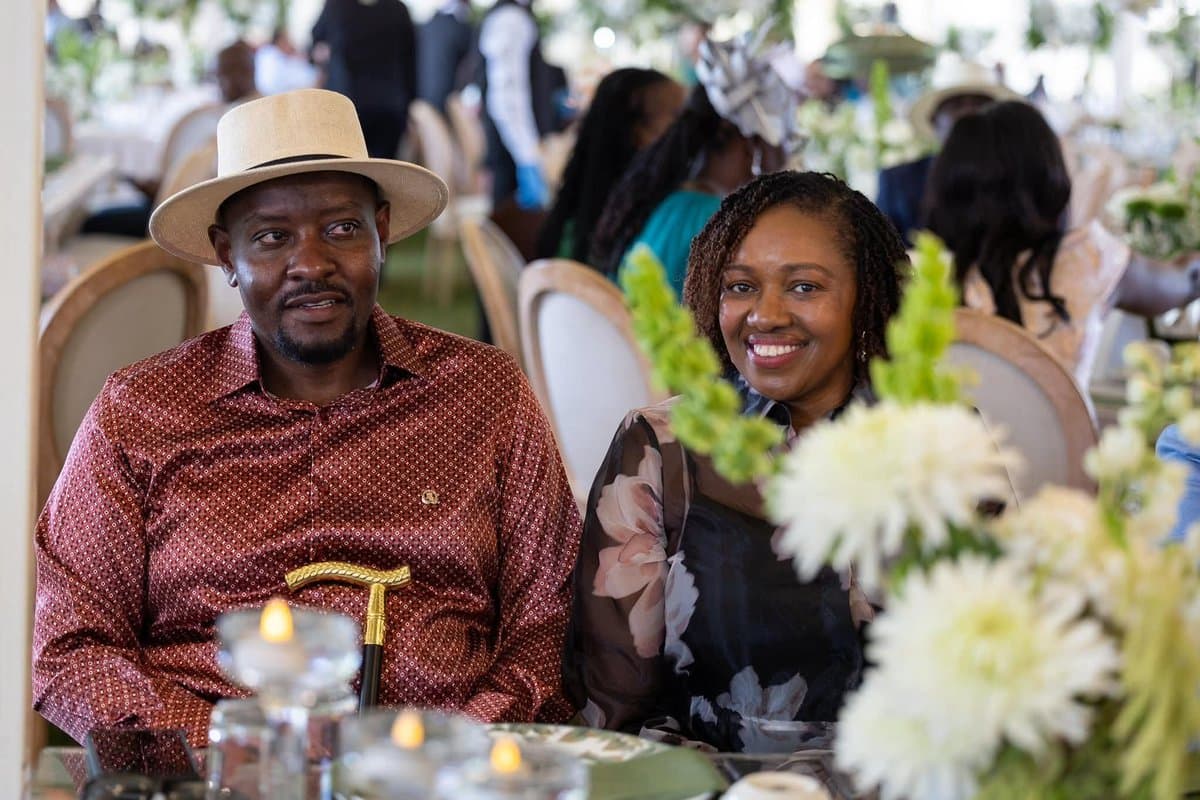
Dr. Thenya is publicly known to be married to Dorothy Thenya and to have two daughters. There has been no previous public record indicating that he has a son.
The allegations have emerged through the same social media channels associated with Edgar Obare, who was previously ordered by a Nairobi court in 2025 to remove earlier posts concerning Dr. Thenya after they were found to be defamatory.
Whether the letter is genuine, whether the claimant is indeed related to Dr. Thenya and whether the doctor will agree to undergo DNA testing remain unanswered questions.
Neither Dr. Thenya nor Nairobi Women’s Hospital had publicly responded to the allegations at the time of publication.
For now, the claims remain unproven. If a DNA test is eventually conducted, it could either substantiate the man’s account or bring the speculation to an end. Until then, what has become one of the country’s most talked-about personal controversies remains precisely that: an allegation awaiting evidence.



Comments