
News
Somalia Deputy PM Held at JKIA, Deported Over Questionable Acquisition of Kenyan Passport
Fraudulently obtaining a Kenyan passport is a serious criminal offence carrying severe penalties.

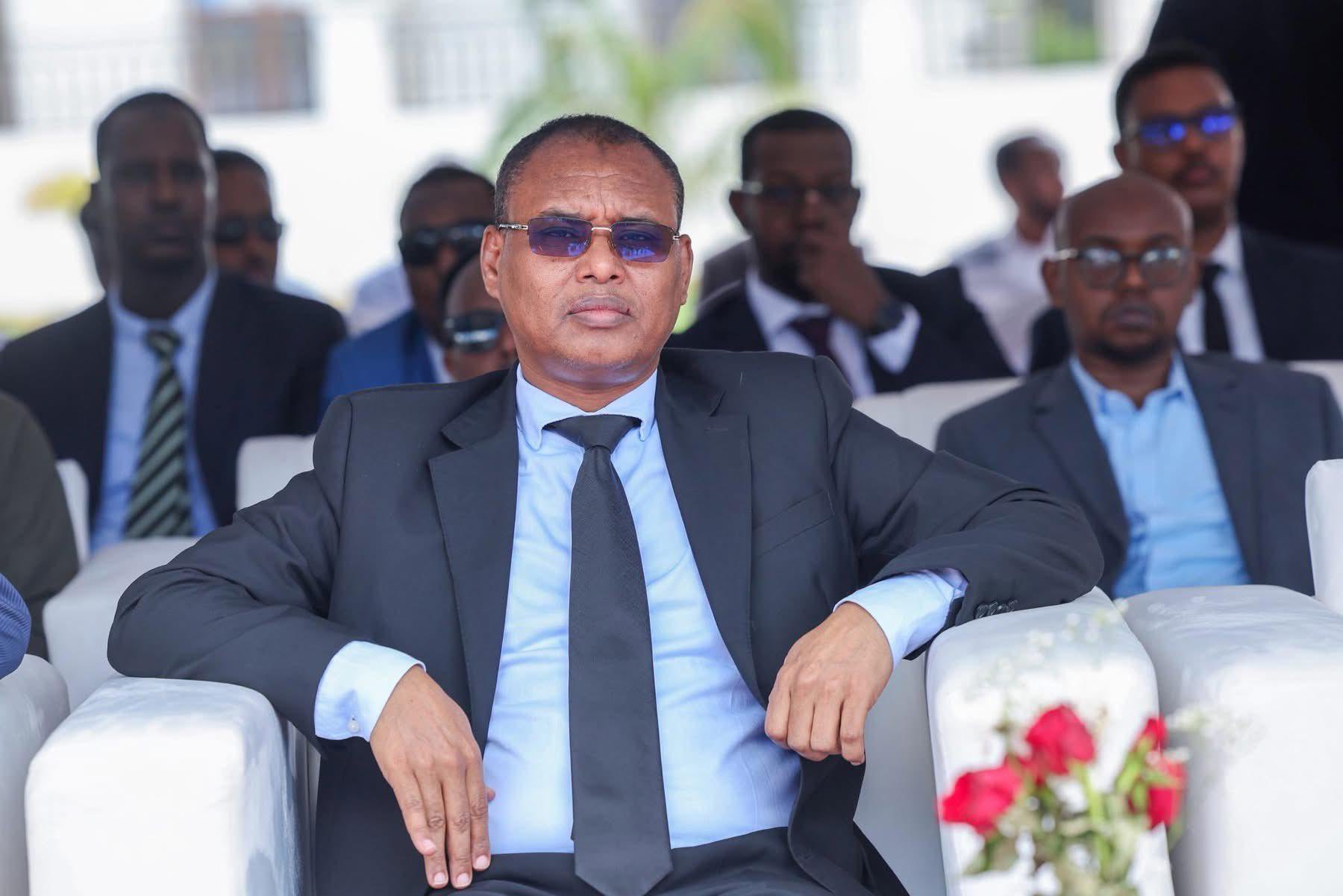
What began as a routine immigration clearance at Nairobi’s Jomo Kenyatta International Airport quickly spiralled into a diplomatic embarrassment after Somalia’s Second Deputy Prime Minister, Jibril Abdirashid Haji, was detained overnight and deported following allegations that he possessed a Kenyan passport whose acquisition was deemed suspicious by Kenyan authorities.
The dramatic incident unfolded on the afternoon of June 24 when Haji arrived at JKIA’s Terminal 2 aboard a Saacid Airlines flight from Mogadishu. Immigration records indicate that he presented a valid Somali diplomatic passport together with a valid Kenyan visa for routine clearance.
During the verification process, however, immigration officials reportedly established that the senior Somali official was also in possession of a Kenyan passport believed to have been fraudulently acquired.
According to a police occurrence report, Haji admitted possessing the Kenyan travel document but declined repeated requests by immigration officers to surrender it for examination, insisting that he would only produce it before a court of law.
His refusal immediately escalated the matter.
Authorities escorted him to the VIP Lounge at Terminal 2, where he remained under detention for several hours as senior immigration and security officials deliberated on the next course of action. Rather than admitting him into the country, Kenyan authorities cancelled his entry and arranged his immediate removal.
He was subsequently placed aboard Daallo Airlines Flight D3301 and departed Nairobi at approximately 6:45 a.m. on June 25, ending an extraordinary overnight standoff at Kenya’s busiest international airport.
The incident occurred only days after President William Ruto hosted Somali President Hassan Sheikh Mohamud in Nairobi for bilateral discussions aimed at strengthening cooperation on trade, security and regional stability.
The deportation of one of Mogadishu’s most senior government officials has therefore introduced an unexpected layer of diplomatic sensitivity into relations between the neighbouring countries, which have in recent years been tested by disagreements over maritime boundaries, security operations against Al-Shabaab and political tensions surrounding Somalia’s Jubaland region.
The alleged existence of a Kenyan passport in the possession of a serving Somali deputy prime minister has also revived difficult questions about the integrity of Kenya’s citizenship and passport issuance systems.
Kenyan law reserves passports exclusively for Kenyan citizens.
Although the Constitution recognises dual citizenship, acquiring Kenyan nationality through birth, registration or naturalisation is governed by strict legal procedures. Any passport obtained through false declarations, fraudulent documentation or corrupt facilitation constitutes a serious criminal offence that can attract lengthy prison terms and substantial fines.

Authorities have not disclosed the passport number, how or when it was allegedly issued, whether it had previously been used for international travel or whether criminal investigations have been launched to identify those who may have facilitated its acquisition.
The episode sparked immediate political reaction in Kenya.
Senior Counsel Ahmednasir Abdullahi described the incident as deeply embarrassing, accusing Somalia’s leadership of presiding over a government plagued by impunity.
“Very disgraceful. How can the Deputy PM of a country get himself a forged passport of a sovereign neighbouring state? President Hassan Sheikh Mohamud is running a mafia government,” the outspoken lawyer wrote on X.
His remarks quickly gained traction online, with supporters arguing that the incident exposed governance failures within Somalia’s political establishment.
Others, however, questioned how a senior foreign official could allegedly obtain a Kenyan passport in the first place without the involvement of corrupt insiders within Kenya’s own immigration system.
That question may ultimately prove the more uncomfortable one for Nairobi.
Kenya has spent years battling sophisticated networks accused of illegally procuring national identity cards and passports for foreign nationals through bribery, forged records and manipulation of civil registration databases.
Security agencies have repeatedly uncovered syndicates operating within immigration offices, while parliamentary investigations have warned that weaknesses in the system present significant national security risks.
Previous crackdowns have exposed immigration officials accused of colluding with brokers to issue Kenyan documents to non-citizens, raising persistent concerns that corruption continues to undermine the credibility of one of the country’s most important security institutions.
Haji is no ordinary traveller. Before becoming Somalia’s Second Deputy Prime Minister, he served in several senior government positions, including Minister of Defence and Minister of Commerce and Industry.
He also recently held responsibilities as interim leader overseeing South West State during a politically sensitive transition, making his detention by Kenyan authorities all the more extraordinary.
Neither the Kenyan government nor Somalia’s federal administration had issued a comprehensive official statement on the incident by the time of publication.
The Directorate of Immigration Services has also remained silent on whether investigations are underway to establish how the Kenyan passport was allegedly obtained and whether officials within the department may have been involved.
The deportation itself was carried out without public confrontation, but the political implications are likely to reverberate beyond the airport terminal where the incident began.
For Somalia, the allegations risk fuelling criticism of governance and accountability within President Hassan Sheikh Mohamud’s administration.
For Kenya, they reopen longstanding concerns about the vulnerability of its identity management systems to corruption, organised criminal networks and abuse by influential individuals.
Whether the matter evolves into a criminal investigation, a diplomatic dispute or both remains to be seen.
What is already beyond dispute is that the overnight detention and deportation of one of Somalia’s highest-ranking government officials has thrust renewed attention onto the integrity of Kenya’s immigration controls and raised uncomfortable questions about who may have enabled the alleged acquisition of a Kenyan passport in the first place.
Kenya Insights allows guest blogging, if you want to be published on Kenya’s most authoritative and accurate blog, have an expose, news TIPS, story angles, human interest stories, drop us an email on [email protected] or via Telegram


Nyali MP Moha Jicho Pevu Caught Up In Alleged Sh44 Million KPA Debt Scam

Somalia Deputy PM Held at JKIA, Deported Over Questionable Acquisition of Kenyan Passport

The White-Coat Heist: How MP Shah Hospital Ran a Decade-Long Double-Extraction Racket While Hiding Behind Charity Status

The Patriarch, His Children, and a Buried Sh3.9 Billion Fraud: The Story of Titus Muya That Kenya Was Never Meant to Read

The Founder’s Ransom: How Titus Muya Had to Be Paid Sh231 Million to Let Go of Family Bank and Why That Bill Is Now Yours

Kenya’s gambling industry pushes back against a licensing bill

Kenya Airways Sinks Into Deeper Turbulence As American Supplier Sues In New York Court Over Sh129 Million Unpaid Debts

Kenyan player wins a Ksh3.2 million jackpot

IEBC Sets August 10 Date For 2027 General Election

Furious Ruto Lashes Out at Gideon Moi Over Repeated ‘Blackmail, Extortionist’ Headlines on The Standard and KTN

Businessman Philip Waithaka Kinuthia’s Minor Son Allegedly Drove Drunk, Killed Two Peponi Students in Ngong Road Horror Crash as Claims of Cover-Up Intensify

Inside NCBA’s Decline: How a Banking Giant Lost Its Strategic Edge

South Sudan: Adut Salva Kiir’s Shadow Treasury Exposed

Cement, Cash and Courts: How the Hashu Dynasty Crushed the Ramji Brothers for Fourteen Years and Why the Walls Are Now Closing In

Standard Chartered Ghosts Haunt Joshua Oigara At Stanbic As Whistleblower Spills Beans

Inside The Urban Planning Cartel That Owns Nairobi

THE VULTURE AND THE SCHEME How Nairobi West Hospital Became the Most Dangerous Institution in Kenya’s SHA Ecosystem and Why the Books Must Be Audited Now

The President’s Daughter and The Missing Witness: How Adut Salva Kiir’s Shadow Treasury Silenced Its Most Dangerous Critic

How Adil Popat Saved His Empire On The Eve Of Imperial Bank Collapse and Why Kenya’s Mainstream Media Buried The Story

Why John Ngumi Is Running From the EACC and Why the Sh415 Million Payday May Be the Least of His Worries
-
 News2 weeks ago
Businessman Philip Waithaka Kinuthia’s Minor Son Allegedly Drove Drunk, Killed Two Peponi Students in Ngong Road Horror Crash as Claims of Cover-Up Intensify
-
 Investigations1 week ago
THE VULTURE AND THE SCHEME How Nairobi West Hospital Became the Most Dangerous Institution in Kenya’s SHA Ecosystem and Why the Books Must Be Audited Now
-
 Business2 weeks ago
How Adil Popat Saved His Empire On The Eve Of Imperial Bank Collapse and Why Kenya’s Mainstream Media Buried The Story
-

 Business4 days ago
BURRIED TWICE: The Victoria Bank CEO Yogesh Pattni Files
-

 Business1 week ago
Inside the Billion-Shilling Betrayal: How Senior Treasury Officials Plundered a UN Poverty Fund and Built a Real Estate Empire on the Backs of Kenya’s Rural Poor
-

 Business1 week ago
The Listing That Doesn’t Lie: What the Market Isn’t Saying About Family Bank’s NSE Debut
-

 Business1 week ago
The Banker Who Walked Away: How Yogesh Pattni Survived a Financial Crime Scandal That Shook Kenya
-

 News6 days ago
My Life Is In Danger: Investor Drops Bombshell Expose On Thomas Ogutu CEO VeGrid Ltd And Fugitive Nairobi CEC Charles Kerich – DCI Inaction And Corruption Network Exposed