
Business
The Deal That Broke Telkom: How John Ngumi Pocketed Sh415 Million and Landed in Investigators’ Crosshairs
Ngumi was the single largest individual beneficiary of a transaction that left its subject Telkom Kenya unable to pay its tower bills, unable to retain its subscribers, and unable to find a strategic investor willing to rescue it.

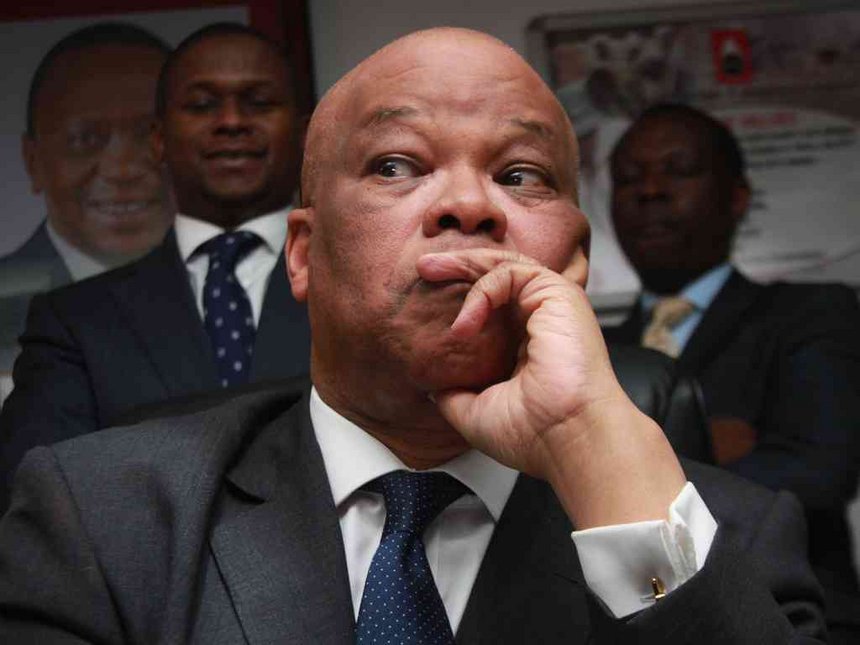
Telkom Kenya is dying. Not quietly, not gracefully, but in the loud, humiliating fashion of an institution bled by institutional failure, political manipulation, and a sequence of ownership disasters that have, one by one, stripped it of subscribers, infrastructure, capital, and hope.
By December 2025, its mobile subscriber base had collapsed to approximately 744,500 down from 1.34 million just two years earlier, a contraction of nearly half that left it last among Kenya’s operators, overtaken even by Equitel and Jamii Telecommunications, niche players that nobody was tracking as competitive threats. Its network quality score of 55 percent in the Communications Authority’s 2023/24 drive tests was not merely a poor grade. It was 25 percentage points below the mandatory regulatory threshold, while Safaricom hit 86 percent and Airtel cleared the bar at exactly 80.
Employees, many of them stuck in the same roles for a decade, have described themselves to their union as ‘spectators in their own careers.’ The company that once anchored Kenya’s digital connectivity ambitions operating undersea cables, data centres, and government security infrastructure has been reduced to a rump operation fighting for relevance in a market that has moved on without it.
Into this wreckage, step back to August 2022. The National Treasury, in the closing days of the Kenyatta administration, wired Sh6.09 billion to a Mauritius SPV called Jamhuri Holdings Limited. The official justification was national security. The practical result was that a private equity firm called Helios Investment Partners collected its exit cheque, four days before a general election, without parliamentary approval, without full Communications Authority sign-off, and in circumstances that the Ethics and Anti-Corruption Commission would later characterise as potential economic crimes warranting prosecution of nine individuals.
One of those nine was John Ngumi.
He had collected Sh415 million $3.07 million from the seller’s Mauritius vehicle for advising the seller on how to extract itself from the deal. He was simultaneously a strategic adviser to Helios for Kenya and Africa, a director of the Communications Authority of Kenya whose approval the deal allegedly needed and never properly obtained, a recently departed chairman of Kenya Pipeline Company, the incoming chairman of Safaricom Telkom’s dominant competitor and the man whose relationships inside the Kenyatta government machinery were worth, by Helios’s apparent calculation, more than what Jamhuri Holdings itself netted from the transaction.
Four years later, with Telkom on its knees, Helios in a London arbitration fighting to recover what Kenya’s new administration rescinded, and EACC still sniffing around an investigative file that two DPP declinations have not formally closed, John Ngumi filed a petition at the High Court on June 11, 2026. He wants the investigation terminated. Permanently. By court order. He wants a permanent injunction. He wants damages. He wants judicial immunity from the consequences of a deal he brokered, collected from, and walked away from while the institution at the centre of that deal slowly disintegrates.
Ngumi was the single largest individual beneficiary of a transaction that left its subject Telkom Kenya unable to pay its tower bills, unable to retain its subscribers, and unable to find a strategic investor willing to rescue it.
THE TRANSACTION: A TIMELINE OF MANUFACTURED URGENCY
The sequencing of the Telkom buyback has never been adequately interrogated as a timeline of political orchestration rather than genuine national security management. Helios communicated its intention to exit Telkom Kenya as early as July 2021, invoking a ‘put option’ embedded in the original shareholder agreement. That is not urgency. That is a contractual mechanism that had been anticipated since Helios entered the shareholding. The government had, by any reasonable measure, over a year to plan, budget, seek parliamentary approval, obtain all necessary regulatory clearances, and execute an orderly transaction.
Instead, the National Security Council approved the proposal on April 1, 2022. On the same day April 1, 2022 John Ngumi signed his advisory agreement with Jamhuri Holdings. This is not a coincidence that has been explained. Nobody has publicly accounted for how Ngumi knew, with enough advance notice to execute a formal advisory agreement on the same morning, that the NSC was convening to approve the deal.
His prior role as Helios strategic adviser for Kenya and Africa is the obvious connecting tissue, but it is also precisely the connection that sharpens the conflict-of-interest concern: a man advising the seller who had been advising the seller’s interests in Kenya before the exit process formally began.
The Treasury then invoked Article 223 of the Constitution the emergency expenditure provision to disburse Sh6.09 billion on August 5, 2022, without prior parliamentary approval.
The deal had been in negotiation for over a year. EACC’s own findings, published in its third-quarter 2023 gazette notice, were explicit: ‘the acquisition did not meet the threshold as provided in Regulations 40(3) and 4(a) of the Public Finance Management (National Government) Regulations 2015 since the transaction was not unforeseen and unavoidable.’ This is the heart of what EACC found. The emergency provision was invoked for a deal that was not an emergency. Parliament was later notified, but notification is not approval, and approval was what the regulations required.
The Communications Authority finding is equally damning. EACC’s November 2023 report stated that the Communications Authority ‘did not grant approval for the acquisition of 60 per cent of Telkom Limited by the Government of Kenya in the transaction under inquiry since part of the conditions given by the Authority were not met.’
The same Communications Authority on whose inaugural board Ngumi had sat. The same regulator whose frameworks he had helped construct. The same institution within which he had cultivated relationships over decades of investment banking work in the telecommunications sector.
THE FEE THAT DEFIES EXPLANATION
John Ngumi appeared before the joint sitting of the National Assembly’s Finance and National Planning Committee and the Communication, Innovation and Information Committee on April 19, 2023. What followed was a parliamentary grilling that, for sheer audacity of response, has few parallels in the documented record of Kenyan corporate accountability hearings.
Ngumi confirmed he had received $3.07 million Sh415 million at the then-current exchange rate of Sh135.20 over the five-month period between his April 1 signing and September 2022. He acknowledged it made him the single largest individual beneficiary of the Sh6.09 billion transaction, exceeding what Jamhuri Holdings itself received and more than seven times what the lawyers Anjarwalla and Company Advocates were paid (Sh54 million). His explanation for this asymmetry was not technical. It was not contractual. It was personal. ‘I was paid the money because I was the best in the business,’ he told the committee. ‘They valued the advice I gave them and I am proud to say I convinced them to sell their 60 per cent shareholding to the government at $1 million.’ He added that he could have charged $10 million, implying the Sh415 million should be viewed as a discount.
Finance Committee chair Molo MP Kimani Kuria said he could not find a plausible explanation to justify the payment. Critically, Ngumi’s identity as a beneficiary had only come to light because Helios Chief Finance Officer Paul Cunningham had disclosed it to the committee Ngumi had not been forthcoming about his involvement. He appeared, as the MPs observed, late in the documented process. His name was not in the initial transaction records that were submitted to Parliament. He emerged as a figure in the deal only when Helios’s own representatives mentioned what they had paid him.
The tax payment that confirmed the problem. Facing sustained parliamentary pressure, Ngumi announced he would voluntarily pay 30 percent tax equivalent to Sh111.9 million on his advisory fee, framing it as good faith compliance. ‘I made a commitment to Parliament that I would pay within one week and that is what I have done,’ he told Business Daily.
But the political optics were already toxic.
Paying tax under parliamentary scrutiny is not the same as having earned income that warranted no scrutiny. The payment itself implicitly acknowledged that the money had been received in circumstances that required justification, not just revenue declarations.
HOW THE DEAL BROKE THE COMPANY
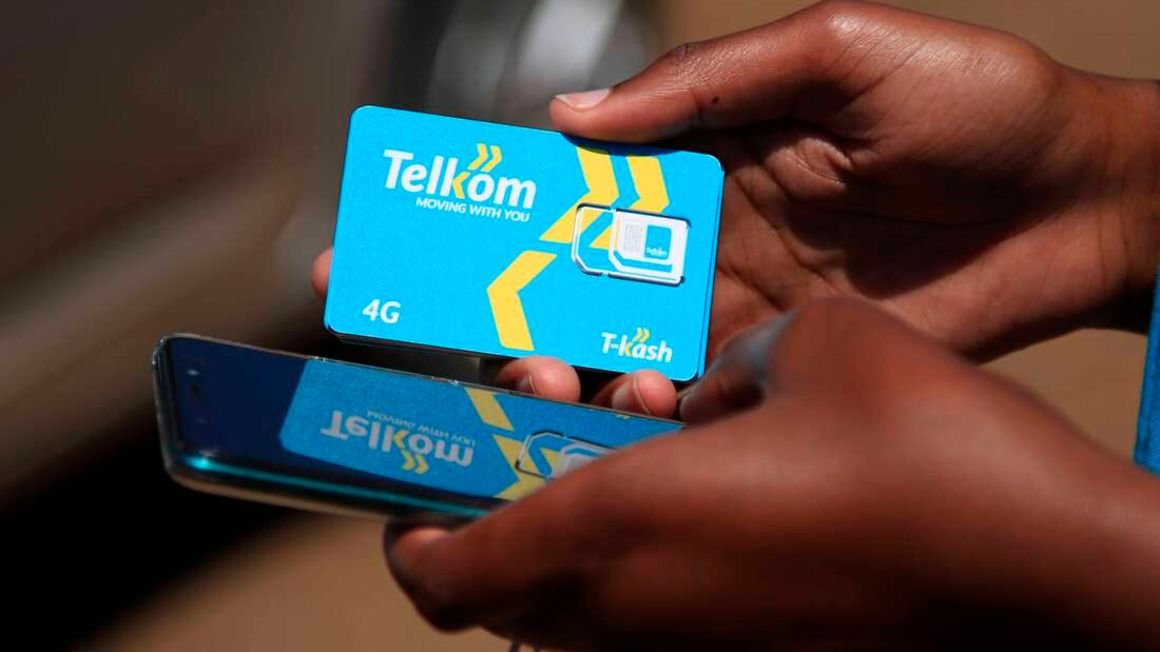
Telkom subscriber holds sim card kit.
The most devastating indictment of the Telkom transaction is not what happened to the people who brokered it. It is what happened to the company at the centre of it.
When the Ruto administration took office in October 2022 and almost immediately rescinded the Kenyatta government’s nationalisation, citing ‘governance challenges,’ it did not merely undo a transaction. It created an ownership vacuum at a moment when Telkom Kenya needed urgent capital investment and strategic direction. The company was already in debt. The tower sale-and-leaseback arrangement with American Tower Corporation, executed in 2018, had swapped long-term infrastructure security for short-term liquidity a deal that would return to haunt it with devastating force.
In February 2023, American Tower Corporation began switching off Telkom towers over unpaid leasing fees. By August 2023, ATC had disconnected 896 sites over a debt that had grown to Sh4 billion, later ballooning to Sh7.1 billion by October 2023. The ICT Cabinet Secretary Eliud Owalo was blunt before Parliament: ‘We are in a situation where Telkom is unable to pay.’
The network collapse that followed was catastrophic. Telkom’s quality-of-service score fell to 55 percent against a mandatory 80 percent threshold. Customers fled in their hundreds of thousands to Safaricom and Airtel. The company that had once boasted 3.4 million subscribers was reduced to under 750,000 by late 2025.
American Tower disconnected 896 Telkom sites. The debt hit Sh7.1 billion. The coverage collapsed. 800,000 subscribers left within three months. This is the inheritance of the deal John Ngumi brokered.
The government’s response selecting UAE-based Infrastructure Corporation of Africa as the new majority shareholder in October 2023 solved nothing in practice.
Nearly three years after that announcement, the ICA transition remains in an indeterminate state. Employees’ union COWU-K has publicly declared there is ‘no lifeline’ for Telkom Kenya. Workers are demoralized. Promotions, job reclassifications, and skills development have stalled. By December 2025, Telkom had fallen to last place in Kenya’s mobile market, a rump operator fighting for relevance in a sector it helped pioneer.
Meanwhile, Jamhuri Holdings the Mauritius vehicle that collected Sh6.09 billion in August 2022 is now suing Kenya before the London Court of International Arbitration.
The government’s revoking of the nationalisation and the pivot to ICA apparently breached the original transaction agreement, which specified that disputes be resolved under LCIA rules.
The National Treasury has contracted G&A Advocates for Sh358 million to defend Kenya’s position in those proceedings a further bill to taxpayers, on top of the original Sh6.09 billion, arising directly from a transaction that Ngumi facilitated and from which he extracted the largest individual fee of any participant.
THE PROSECUTION RECOMMENDATION AND WHAT IT DID NOT END
EACC’s third-quarter 2023 gazette report recommended that the DPP charge nine individuals with counts including conspiracy to commit economic crime, abuse of office, and wilful failure to comply with the law.
The list included former Treasury Cabinet Secretary Ukur Yatani, Controller of Budget Margaret Nyakang’o, Telkom CEO Mugo Kibati, and the board chair, chief operating officer, chief strategy officer, and chief finance officer of Telkom Kenya. John Ngumi, as transaction adviser, was also on the list.
The DPP, in two separate communications on April 7, 2025 and confirmed on July 4, 2025 declined to prosecute. Prosecutor Joseph Riungu’s letter of July 4, 2025 reaffirmed the first direction, finding insufficient evidence to sustain the proposed charges.
The ODPP concluded that the Cabinet Secretary had constitutional authority to invoke Article 223, that the Controller of Budget had ultimately sanctioned withdrawals, and that Parliament was later notified. On Ngumi specifically, the ODPP noted that he had acted under a separate advisory arrangement, declared taxes on his fees, and was not a party to the government’s share purchase agreement.
Here is what the DPP said.
Here is what it did not say. It did not say the transaction was clean. It did not say Ngumi’s advisory arrangement was conflict-free. It did not say the Communications Authority approval question was resolved. It did not say there was no basis for civil recovery proceedings.
And critically, in a point that the Business Daily’s June 16, 2026 reconstruction of the saga noted as significant: it said ‘insufficient evidence to sustain proposed charges’ not that no wrong was committed, but that the evidentiary threshold for prosecution had not been met at that moment, with that file, as it then stood.
EACC disagreed with the first direction and sought reconsideration, prompting the DPP to review the file a second time. The commission’s own assessment remained that there were questions worth pursuing. That is why the file remained open. That is why Ngumi filed his June 11, 2026 petition. A permanently closed DPP file still leaves EACC’s civil enforcement powers alive. The commission can pursue civil asset recovery.
It can seek unexplained wealth orders against assets bought using the Mauritius-routed advisory proceeds. It can make mutual legal assistance requests to Mauritius where Jamhuri Holdings was registered and through which the $3.07 million payment was presumably routed to reconstruct the full transaction trail. It can, if new material surfaces, refer the matter back to a future DPP with an enhanced file.
THE INSTITUTIONAL WEB: A MAP OF EVERY DOOR THAT MATTERS
The reason the conflict-of-interest concern in this transaction is not a technicality but a structural integrity question is what Ngumi’s career map reveals about how Kenya’s strategic decision-making is colonised by a small class of well-connected intermediaries.
Ngumi served as an inaugural director of the Communications Commission of Kenya now the Communications Authority the regulator that oversees the very telecommunications sector at the centre of this transaction and whose approval was required for the acquisition.
He was the non-executive chairman of Safaricom, Telkom’s principal competitor and the company that stood to benefit commercially from any weakening of Telkom’s market position. He had been chairman of Kenya Pipeline Company and of ICDC, which oversaw KPA, KPC, and Kenya Railways the entire logistics backbone of the state infrastructure portfolio.
He had chaired Konza Technopolis Development Authority the government’s technology city ambition, which depended on reliable national connectivity infrastructure of the type Telkom manages. He had been a Kenya Airways non-executive director. He had been Helios’s strategic adviser for Kenya and Africa before pivoting to become the Helios exit adviser through Jamhuri Holdings.
The question that Parliament struggled to articulate but kept returning to is this: what was Ngumi selling for $3.07 million? Not financial modelling the transaction had a put option mechanism that required no novel valuation work. Not legal structuring that was Anjarwalla’s mandate, for Sh54 million.
Not commercial negotiation the price was $1 in nominal equity terms, with the real payment being the reimbursement of Helios’s shareholder loans to Telkom. What remained, after stripping away the work that professionals with standard mandates were already performing, was access. Access to the NSC deliberations. Access to Treasury decision-makers. Access to the Communications Authority. Access to the political principals who could execute a Sh6 billion transaction in 26 minutes on a Friday, in August, four days before a general election, over the objections of the Controller of Budget.
That access was built entirely on publicly funded institutional positions accumulated over decades. The Sh415 million was the private rent charged for public access. That is the structural problem that two DPP declinations do not resolve and that an open EACC file preserves the right to examine.
THE PETITION: JUDICIAL IMMUNITY DRESSED AS HUMAN RIGHTS
On June 11, 2026, Ngumi’s lawyers filed a petition in the High Court’s Human Rights Division. The petition seeks declarations that EACC’s continued investigative process is unconstitutional, unlawful, and procedurally unfair. It seeks an order compelling EACC to terminate all investigations, inquiries, watchlists, alerts, and enforcement actions.
It seeks a permanent injunction barring the commission from ever reopening the matter or undertaking any future investigations, summons, surveillance activities, or enforcement measures related to the Telkom deal. It seeks damages general, aggravated, and exemplary for reputational damage and emotional distress.
The court declined to certify the petition as urgent. It directed that it proceed through the ordinary hearing process. This is significant. Urgency would have produced interim orders immediately; the ordinary process gives EACC time and standing to respond substantively. It means the petition will be tested on its merits rather than rushed through on the applicant’s preferred timeline.
The legal argument Ngumi is advancing that the DPP’s closure direction conclusively terminated all investigative authority is a novel and contestable proposition. Kenya’s anti-graft architecture does not work this way. The EACC Act and the Proceeds of Crime and Anti-Money Laundering Act create parallel enforcement tracks. Civil asset recovery proceedings are not dependent on prior criminal prosecution. The DPP and EACC have distinct mandates under the Constitution. A direction to EACC from the DPP is not a court order. And as the DPP’s own letters make clear, the directions were addressed to EACC’s inquiry file — not to the commission’s broader civil enforcement and asset-tracing powers.
The reputational damage argument deserves particular scrutiny. Ngumi’s petition frames continued investigation as a constitutional violation of his dignity and privacy. But the reputational damage to Ngumi did not originate with EACC’s investigation. It originated with the Sh415 million fee, the parliamentary revelation that he was the largest individual beneficiary of a compromised public transaction, the post-hoc tax payment that confirmed the fee had been received without voluntary compliance, and the two board resignations from Safaricom and Kenya Airways that followed the investigation’s intensification. The investigation is the consequence of the reputational problem, not its cause. Seeking to extinguish the investigation to protect a reputation that the underlying conduct already damaged is not a constitutional argument. It is a business calculation.
The reputational damage to Ngumi did not originate with the EACC investigation. It originated with a Sh415 million fee from a seller’s Mauritius vehicle in a Sh6 billion public transaction conducted without parliamentary approval.
THE NAIROBI PROPERTIES AND THE COASTAL TRAIL
The Daily Nation’s May 2023 reporting, sourced to materials within the EACC investigation, contained a detail that subsequent coverage has consistently underweighted: multi-million shilling assets in Nairobi and a beach property on the Coast were identified among acquisitions linked to the advisory proceeds. This is an asset-tracing lead, not a proven allegation. No civil recovery order has been sought or granted. No court has made findings on these properties. But the lead represents precisely the category of inquiry that EACC’s civil enforcement powers are designed to pursue and precisely the category that a permanent judicial closure of the file would prevent from ever being concluded.
The Mauritius routing of the $3.07 million payment is the architecture that makes full tracing difficult. Jamhuri Holdings was a Mauritius-registered vehicle. Payments from a Mauritius entity to a Kenyan recipient pass through offshore banking infrastructure. Reconstructing the full chain from Treasury disbursement to Jamhuri Holdings to Ngumi’s accounts in whatever form requires a mutual legal assistance request to Mauritius, cooperation between Kenya’s FIU and its Mauritius counterpart, and time.
Every year that the investigation is delayed is a year in which those financial trails grow colder. Every year that Ngumi maintains the procedural pressure is a year in which the asset reconstruction becomes less traceable. The petition is, among its other functions, a time-buying exercise whose ultimate purpose is to outlast the investigators’ institutional patience.
THE PATTERN: EUROBOND TO TELKOM
The Telkom advisory fee is not John Ngumi’s first encounter with investigative interest in his fee structures on major sovereign transactions.
In 2014, when Kenya executed its $2 billion debut Eurobond the largest debut sovereign bond issue by an African country to that date Ngumi was the lead arranger for Standard Bank Plc and the public spokesperson for the consortium of arranging banks.
The bond subsequently attracted controversy when opposition figures alleged that proceeds had been misappropriated in transit before reaching Kenya. EACC, in the course of investigating those allegations, identified Ngumi as a person of interest in the inquiry because, as the Standard newspaper reported, ‘many crucial emails during the arranging of the bond were under his name’ and investigators needed to understand how the bond was priced and whether the arrangement fees were justified.
He was not charged in relation to the Eurobond. He survived that investigation. But the pattern was established even then: a major government transaction in which a well-connected intermediary earned substantial fees; regulatory questions about the process and the pricing; an investigation that produced no prosecution; and a resumption of normal business. The Telkom fee is the pattern on its fourth or fifth iteration larger in absolute terms, more politically exposed in its timing, and more difficult to explain away given the simultaneous conflicts of interest that surrounded it.
WHAT TELKOM’S RUINS SAY ABOUT THE DEALMAKER
There is a version of John Ngumi’s career narrative in which he is a pioneer: the Oxford-educated Kenyan who returned from London, co-founded the country’s first indigenous investment bank in Loita Capital Partners, survived its collapse and near-personal bankruptcy in the late 1990s, rebuilt his career from scratch, and went on to advise on transactions worth hundreds of billions of shillings.
That narrative has genuine elements.
The Loita story mortgaging his house three times to pay departing staff, spending three years ‘desperately trying to keep my financial head above water’ is a real account of adversity and recovery.
But Loita Capital Partners collapsed.
ARM Cement, on whose board Ngumi sat as non-executive director from 2016, went into receivership in August 2018 with approximately $284 million in debt, was subsequently liquidated after asset sales proved unable to cover creditor claims, and remains one of the largest listed company failures in East African corporate history.
The board governance failures that contributed to ARM’s collapse have never received the forensic examination they deserved. And now Telkom Kenya, the company at the centre of Ngumi’s most lucrative advisory fee, is a rump operator with 744,500 subscribers, a network quality score 25 points below the regulatory threshold, a demoralized workforce, an unresolved ownership structure, an ongoing London arbitration, and no credible path to recovery in sight.
Three companies. Three governance failures. One dealmaker at or near the centre of each. The pattern is not proof of personal wrongdoing in each case. Companies fail for many reasons. But it is a pattern of institutional proximity to failure that the market’s due-diligence process has thus far treated too gently.
THE COST TO KENYANS
The full fiscal tally of the Telkom transaction, when assembled honestly, is extraordinary. The initial buyback: Sh6.09 billion in public funds disbursed without parliamentary approval. John Ngumi’s advisory fee from the seller’s vehicle: Sh415 million.
The legal fees for the London arbitration defence: Sh358 million contracted to G&A Advocates, with exposure to further costs depending on proceedings.
The potential liability in the arbitration itself, which involves a claim by Jamhuri Holdings arising from the revocation of the nationalisation: not yet quantified publicly, but described by the High Court as involving ‘potentially substantial financial exposure.’ The ongoing cost of a state-owned telecommunications company now ranked last in Kenya’s mobile market, requiring either a bailout or a write-off. And the uncounted cost of the ownership vacuum that left Telkom without strategic investment for four years while its competitors consolidated and its network decayed.
John Ngumi’s Sh415 million is not separable from this tally.
He was the architect of an exit that produced a transaction the incoming government immediately characterised as flawed, that triggered London arbitration, that left the acquired company without governance clarity for years, and that is now the subject of a constitutional petition designed to prevent further examination of how the fee was earned, routed, and deployed. The receipt is Sh415 million. The bill to the public is multiples of that.
THE COURT, THE FILE, AND THE MAN RUNNING
The High Court has yet to give directions on the merits of Ngumi’s June 11, 2026 petition. The court’s refusal to certify it as urgent is a small but significant early signal: this matter will proceed at the judiciary’s pace, not the petitioner’s. EACC will have the opportunity to argue that its investigative mandate survives the DPP’s closure directions, that civil enforcement powers are constitutionally distinct from criminal prosecution, and that a permanent injunction against an anti-corruption body’s civil enforcement functions would set a precedent with grave implications for Kenya’s accountability architecture.
Whatever the court ultimately decides, the petition itself has already accomplished its primary unintended consequence: it has revived every question that three years of legal manoeuvring had caused to fade from public attention. The $3.07 million fee. The April 1 simultaneity of the NSC approval and the advisory agreement.
The Communications Authority approval that was not obtained. The Article 223 invocation for a non-emergency. The Mauritius routing of the proceeds. The Nairobi assets and coastal property identified by investigators. The two board resignations that followed the investigation’s intensification. And the London arbitration that is now costing taxpayers an additional Sh358 million in legal fees just to defend against the consequences of the deal Ngumi facilitated.
A man confident in the legitimacy of his Sh415 million fee does not file a petition demanding that the inquiry be judicially extinguished. He files a petition demanding that the inquiry be concluded because a concluded inquiry that finds nothing is an exoneration. A permanently enjoined inquiry is not an exoneration. It is a suppression. The distinction is what separates accountability from impunity, and it is what the High Court will now, whether it intends to or not, be forced to adjudicate.
Telkom Kenya did not break itself. It was broken by a succession of investors, advisers, and government actors who extracted value from it rather than investing in it, who treated Kenya’s national telecommunications infrastructure as a vehicle for transaction fees and political exits rather than as a strategic asset requiring patient stewardship.
John Ngumi was the most generously compensated of all those actors in the final Helios exit chapter. He collected his Sh415 million. He resigned his board seats. He filed his court petitions. And he left the company, its employees, its subscribers, and the Kenyan taxpayer to live with the consequences.
That is the deal. That is the man. That is the record. The lights are still on at the High Court. They are the only ones Ngumi has not yet found a way to switch off.
Kenya Insights allows guest blogging, if you want to be published on Kenya’s most authoritative and accurate blog, have an expose, news TIPS, story angles, human interest stories, drop us an email on [email protected] or via Telegram









The Deal That Broke Telkom: How John Ngumi Pocketed Sh415 Million and Landed in Investigators’ Crosshairs

The Man Who Cannot Be Neutral: Peter Karimi’s Conflict of Interest Cloud Darkens As Betting Firms Fight For Their Licences

Rot From Within: How KCB Became Kenya’s Biggest Battleground for Insider Fraud

FBI Foils Drone Attack Targeting White House

Messi, Ronaldo Set To Play In World Cup For 6th Time

How Joho Brokered Deal to Free 7 Kenyan Seafarers Jailed in Tanzania for 20 Years Over Human Trafficking

Calls Mount for Probe Into Garissa Woman Rep Edo Udgoon Siyad Over Alleged Role in Controversial Land Transactions Linked to Nzoia Sugar Disputes

Embarrassing State House Gaffe as Hussein Mohamed Names Wrong Japanese Prime Minister, Then Quietly Deletes Statement

A Packet of Milk, A Public Strip Search and 26 Years Thrown Away: The Ugly Face of Lipton Teas’ Kenyan Operations Exposed

The Listing That Doesn’t Lie: What the Market Isn’t Saying About Family Bank’s NSE Debut

Inside NCBA’s Decline: How a Banking Giant Lost Its Strategic Edge

Businessman Philip Waithaka Kinuthia’s Minor Son Allegedly Drove Drunk, Killed Two Peponi Students in Ngong Road Horror Crash as Claims of Cover-Up Intensify

Cement, Cash and Courts: How the Hashu Dynasty Crushed the Ramji Brothers for Fourteen Years and Why the Walls Are Now Closing In

Standard Chartered Ghosts Haunt Joshua Oigara At Stanbic As Whistleblower Spills Beans

Inside The Urban Planning Cartel That Owns Nairobi

South Sudan: Adut Salva Kiir’s Shadow Treasury Exposed

Why Ruto’s Favourite Candidate Adan Mohammed Could Be Locked Out of the KRA Top Job

Why John Ngumi Is Running From the EACC and Why the Sh415 Million Payday May Be the Least of His Worries

The President’s Daughter and The Missing Witness: How Adut Salva Kiir’s Shadow Treasury Silenced Its Most Dangerous Critic

How Adil Popat Saved His Empire On The Eve Of Imperial Bank Collapse and Why Kenya’s Mainstream Media Buried The Story
-
 Business7 days ago
Inside NCBA’s Decline: How a Banking Giant Lost Its Strategic Edge
-
 News2 days ago
Businessman Philip Waithaka Kinuthia’s Minor Son Allegedly Drove Drunk, Killed Two Peponi Students in Ngong Road Horror Crash as Claims of Cover-Up Intensify
-
 Investigations2 weeks ago
Cement, Cash and Courts: How the Hashu Dynasty Crushed the Ramji Brothers for Fourteen Years and Why the Walls Are Now Closing In
-
 Business6 days ago
Standard Chartered Ghosts Haunt Joshua Oigara At Stanbic As Whistleblower Spills Beans
-
 Investigations2 weeks ago
Inside The Urban Planning Cartel That Owns Nairobi
-
 Africa5 days ago
South Sudan: Adut Salva Kiir’s Shadow Treasury Exposed
-
 Business5 days ago
Why John Ngumi Is Running From the EACC and Why the Sh415 Million Payday May Be the Least of His Worries
-
 Africa6 days ago
The President’s Daughter and The Missing Witness: How Adut Salva Kiir’s Shadow Treasury Silenced Its Most Dangerous Critic