
Business
How A Convicted Zimbabwean Fraudster Quietly Bought His Way Into Kenya’s Sh375 Billion JKIA Mega-Deal

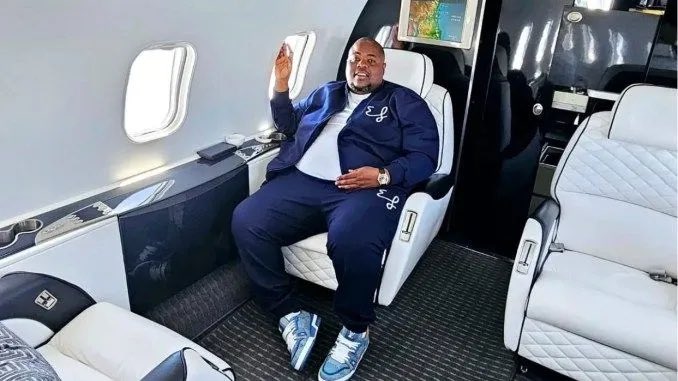
Nairobi — While Kenyans were still digesting the announcement that China Communications Construction Company (CCCC) had walked away with the Sh375.4 billion ($2.9 billion) tender to rebuild Jomo Kenyatta International Airport, a quieter and far more troubling detail was buried in the fine print of the deal: a convicted Zimbabwean fraudster, fresh from a stint in Chikurubi Maximum Security Prison, has been slotted in as a joint venture partner on one of the largest infrastructure contracts in this country’s history.
His name is Wicknell Munodaani Chivayo. To his fan base on social media he is “Sir Wicknell,” a self-anointed philanthropist who showers musicians, footballers and soldiers with Mercedes-Benzes and bundles of cash.
To investigators in Harare, Pretoria and now, increasingly, Nairobi, he is something else entirely: the face of a tendering machine that has turned proximity to presidents into hard currency, leaving a trail of stalled projects, inflated invoices and unanswered questions stretching from Gwanda to Gairezi, from Johannesburg to JKIA’s tarmac.
A TENDER BORN FROM RUINS
The story of how Chivayo landed in this deal cannot be told without first understanding what it replaced. JKIA is buckling under its own success or failure, depending on how one looks at it. Designed for eight million passengers a year, the airport now processes approximately 8.8 million travellers, producing the congestion, delays and indignities that have become a grim rite of passage for anyone flying through Nairobi.
The first serious attempt at a fix collapsed spectacularly. India’s Adani Group had been lined up for a USD1.85 billion investment package that would have granted the conglomerate a 30-year operational concession in exchange for modernising the airport.
That deal died in 2024 after fierce resistance from Kenyan labour unions over terms they considered hostile to the national interest, compounded by a corruption probe into Adani in the United States.
Out of that wreckage emerged a new, state-funded model. Kenya would seed a National Infrastructure Fund using proceeds from the privatisation of the Kenya Pipeline Company, and use that, plus local and Chinese bank financing, to fund the new build directly.
The contract, now valued at KSh 375.4 billion (US$2.9 billion), was awarded to China Communications Construction Company, with execution handled through its subsidiary China Road and Bridge Corporation (CRBC) the firm behind the Standard Gauge Railway, the Nairobi Expressway and the Talanta Stadium. The project is expected to transform JKIA into a hub capable of handling significantly higher passenger traffic over the coming decades, with a new terminal designed for 15 million annual passengers and a runway expansion that will more than quadruple aircraft movement capacity.
Officially, that is the entire story: a competitive tender, won by a Chinese state contractor, financed through a sovereign infrastructure fund. Nowhere in the government’s public messaging does the name Chivayo appear.
ENTER “SIR WICKNELL”
And yet, according to reporting by ZimLive, citing two people with direct knowledge of the arrangement, CCCC brought in its subsidiary CRBC and IMC Construction Kenya wholly owned by Chivayo as joint venture partners on the project.
The precise structure of that arrangement whether Chivayo’s firm holds equity, a subcontracting slice, or some other form of participation has not been disclosed by either CCCC or the Kenyan government. What is beyond dispute is that a 45-year-old businessman whose principal track record lies in Zimbabwean energy tenders, ICT deals and a stint as an alleged election-materials middleman, has somehow secured a foothold in a project that Kenyan taxpayers are bankrolling to the tune of Sh168 billion ($1.3 billion) through the National Infrastructure Fund.
How does a man with no demonstrated history in airport construction end up as a named partner on Africa’s most consequential aviation project of the decade? The honest answer is that nobody outside the deal’s architects knows for certain. But the pattern of Chivayo’s career offers a depressingly familiar template, and it begins not with engineering credentials, but with a prison sentence.
THE CONVICT IN THE BOARDROOM
In 2004, Chivayo was convicted of theft by false pretences in a foreign currency scam and sentenced to three years at Chikurubi Maximum Security Prison, Zimbabwe’s most notorious penitentiary. He served roughly a year to eighteen months before release. Court records from the period describe a straightforward con: Chivayo took money for a transaction and never delivered.
That conviction did not end his career. If anything, it appears to have been the opening chapter of a playbook he has refined ever since secure government-linked contracts, collect advance payments, and let delivery become an afterthought.
His company Intratrek Zimbabwe was awarded a US$200 million tender for the Gwanda Solar Project in 2015, but no meaningful progress has been made on the project despite an advance payment of US$5 million from the Zimbabwe Power Company. That is roughly Sh646 million of public money advanced for a solar plant that, a decade later, remains largely a hole in the ground. Chivayo faced repeated rounds of criminal prosecution over that advance payment and was only acquitted in 2024 nine years after the money disappeared into his accounts.
In 2011, he was arrested on eight counts of fraud and money laundering and had five vehicles confiscated by the state. He was acquitted on all counts. The acquittals have become part of his defenders’ case that he is a persecuted entrepreneur. His critics see something else: a man whose closeness to power consistently outpaces the ability of Zimbabwe’s justice system to hold him to account.
THE Sh17 BILLION ELECTION SCANDAL KENYANS SHOULD KNOW ABOUT
If there is one scandal that should worry Kenyans most given that Kenya heads into a general election in 2027 it is the one involving Zimbabwe’s electoral commission.
In 2024, leaked WhatsApp audio recordings surfaced in which a voice attributed to Chivayo discussed how proceeds from a US$100 million contract for the supply of election materials to the Zimbabwe Electoral Commission ahead of the 2023 elections were being distributed.
The recordings were leaked by Moses Mpofu and Mike Chimombe, men who claimed to have been Chivayo’s partners in the deal and said they had been cut out of their share.
The mechanics of the scheme, as reconstructed by South African investigators and reporters, are staggering. South Africa’s Financial Intelligence Centre found that Zimbabwe’s Ministry of Finance paid over R1.1 billion (approximately US$61 million) to the Johannesburg printing firm Ren-Form CC for election materials, of which roughly R800 million was subsequently transferred to companies owned by Chivayo, including Intratrek Holdings and Dolintel Trading Enterprise. In rand terms, that is over Sh17 billion routed to a single businessman’s companies for what was ostensibly a government stationery and ballot-paper contract.
The inflation involved would be comic if it were not paid for with public money. A central server valued at roughly R90,000 was billed at R23 million. Non-flushing toilets were invoiced at R68,700 each — nearly seven times retail cost. Biometric voter registration kits initially quoted at US$5,000 ballooned to US$16,000 by the time the invoice reached Zimbabwe’s treasury. That is a markup structure that should set alarm bells ringing in any procurement office on the continent including, Kenyan voters might reasonably ask, any office handling election technology ahead of 2027.
South Africa’s FIC also flagged R36.5 million in payments from Chivayo’s Standard Bank account between January 2023 and September 2024 that appeared to be payments towards car purchases a detail that dovetails neatly with his very public habit of gifting luxury vehicles to musicians, football administrators and security services back home.
Chivayo’s response to all of this has been consistent: deny, deflect, apologise for the “impression” created rather than the conduct itself. He apologised to President Mnangagwa, the former CIO director-general, the cabinet secretary and the ZEC chairperson but notably did not deny that payments were made, only expressed regret for creating the impression that state institutions were complicit.
Zimbabwe’s own Anti-Corruption Commission announced in December 2025 that it found no evidence directly linking Chivayo to the ZEC transaction even as South Africa’s Hawks kept their parallel money-laundering investigation open.
For Kenyans now watching this man take a seat at the table on a Sh375 billion airport contract, the relevant question is not whether he was ever convicted in the ZEC matter. It is whether a country preparing for a contested 2027 election should be comfortable with a figure carrying this baggage operating inside its borders with this level of access to the presidency particularly given his documented history with election-related contracts and the opposition’s pointed references to election technology procurement.
THE MNANGAGWA PLAYBOOK, EXPORTED TO NAIROBI
Chivayo’s rise in Zimbabwe was built on one foundation above all others: a relationship with President Emmerson Mnangagwa so close that, in leaked audio, Chivayo reportedly boasted the president calls him “my son” a claim that forced Mnangagwa’s spokesperson into the awkward position of publicly condemning “name-dropping” by his own ally.
He is known for his close public association with President Mnangagwa and ZANU-PF, and his social media has long served as a running exhibition of handshakes, state banquets and motorcade photographs.
What is happening in Kenya now looks like the same playbook, transplanted.
Chivayo visited Kenya’s State House in January 2026, meeting President Ruto and Deputy President Kithure Kindiki at Sagana State Lodge, and was photographed with Ruto and Tanzanian President Samia Suluhu Hassan at State House in Nairobi in 2025.
On June 1, 2026 the day after Ruto led Madaraka Day celebrations Chivayo appeared again at the newly built Wajir State Lodge, where he described Ruto as “one of Africa’s most accomplished and visionary leaders” and revealed he was in talks with the president over an unspecified multimillion-dollar investment project.
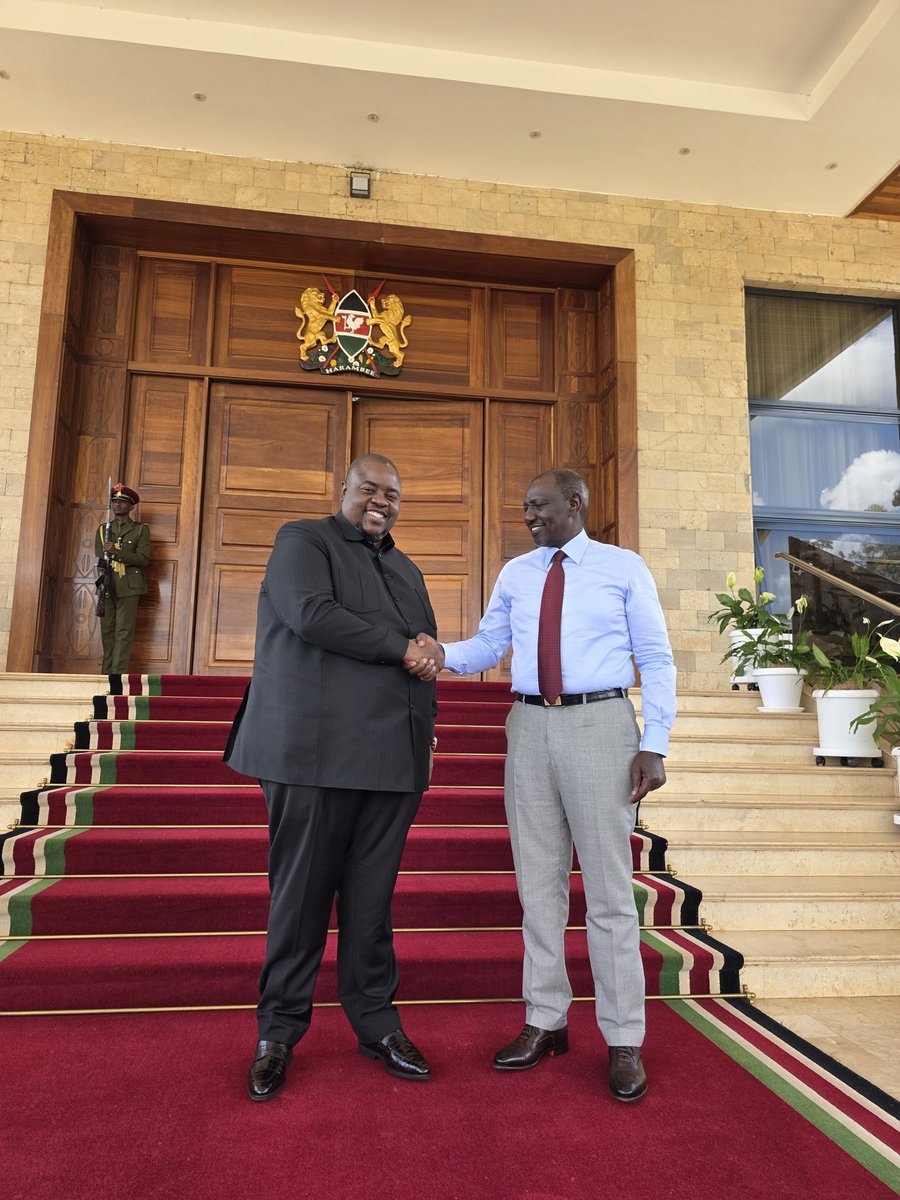
Wicknell with President Ruto at State House, Nairobi.
The Kenyan dimension escalated dramatically in February 2026, when Chivayo was granted a Kenyan passport, a decision made public by activist and presidential aspirant Boniface Mwangi, who published a list of foreign nationals who had received Kenyan citizenship. Former Cabinet Secretary Justin Muturi, reacting to Chivayo’s January State House visit, asked pointedly: “Whenever he comes to Kenya, he passes through Eldoret. What is the President doing with him?” Muturi went further still, displaying photographs he claimed showed Chivayo inside the president’s office and in meetings with regional leaders, and arguing that the businessman’s political connections shield him from accountability.
A Harare-based human rights defender, speaking on condition of anonymity, described the relationship bluntly: “Nothing for the people but just another looting spree sanitised by presidential immunity.” Muturi has accused Ruto of associating with foreign individuals linked to disputed elections across Africa, and believes Kenyans must question who gains access to State House as the country edges closer to the 2027 General Election.
It is worth pausing on the optics here. This is a man who, by his own account in earlier interviews, describes his main business as “government tenders secured with foreign partners in the areas of renewable energy, engineering, procurement, construction and power projects” a CV with no airport construction experience whatsoever, and a private jet that gives him VIP access to JKIA’s own tarmac.
THE LIFESTYLE: JETS, GULFSTREAMS AND A HELICOPTER FLEET WHILE QUESTIONS GO UNANSWERED
Even as the FIC’s R800 million findings circulated and South African Hawks investigators kept their files open, Chivayo’s public displays of wealth have only accelerated a pattern critics describe as deliberate, designed to project invincibility and outpace scrutiny with spectacle.
In mid-2025, Chivayo unveiled a US$79 million Gulfstream G700 private jet roughly Sh10.2 billion at current exchange rates, and among the most expensive private aircraft in the world.
Less than a year later, in January 2026, he was at it again: Chivayo splashed out about US$34 million roughly Sh4.4 billion on a long-range Gulfstream G550, a jet powered by twin Rolls-Royce engines with an intercontinental range of approximately 12,500 kilometres, capable of flying non-stop from Harare to London, Paris, Milan or Singapore.
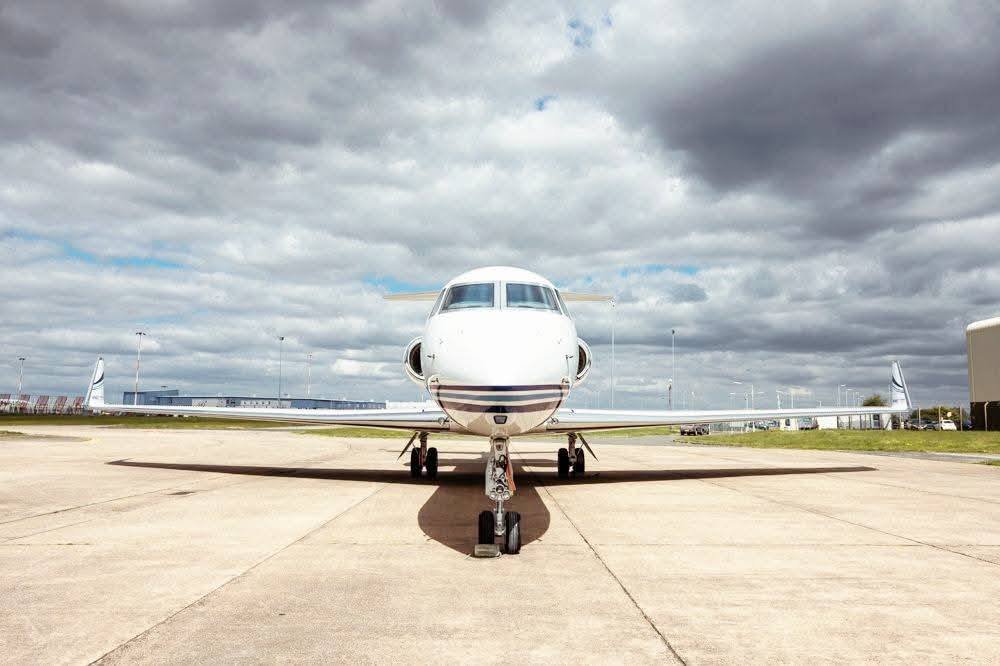
Wicknell Chivayo’s Gulfstream G550, a US$79million ultra long range private jet
He took delivery of that aircraft in early June 2026 even as he remained embroiled in high-profile legal disputes in Zimbabwe and South Africa, including a bitter divorce battle with his estranged wife Sonja Madzikanda.
Before the G550 arrived, he had been flying around the region in a Bombardier Challenger 300, and he separately acquired an AW139 helicopter.
His Facebook announcement of the G550 purchase was vintage Chivayo: a mixture of English and Shona, heavy on religious gratitude, and capped with the declaration that he was living the “life of the rich and famous,” adding for emphasis that he was “the boss” and did not deal in lies.
The giving has been just as theatrical as the spending. In 2025 alone, Chivayo gave a luxury vehicle to broadcaster Reuben Barwe, a Range Rover Autobiography and US$150,000 in cash to musician Jah Prayzah, vehicles worth R7.2 million to Zimbabwe Football Association president Nqobile Magwizi across two occasions, R10.4 million and a bus to Highlanders FC ahead of the 2026 season, and twenty luxury vehicles plus US$2 million to Zimbabwe’s defence forces, police and prisons service in December 2025.
That last gift is particularly striking: a man convicted of fraud and once imprisoned by the state is now bankrolling the very security services that enforce that state’s authority.
Converted to Kenyan shillings, the scale becomes even starker. The Gulfstream G700 alone Sh10.2 billion could fund several rural hospital upgrades. The combined value of the two jets, the helicopter and the gifting sprees documented above runs comfortably into the tens of billions of shillings, accumulated by a man whose flagship project at home, the Gwanda solar plant, remains unbuilt eleven years after the first cheque was cashed.
THE CHINESE PARTNER: HARDLY A CLEAN PAIR OF HANDS
If Chivayo’s presence in the JKIA deal raises one set of red flags, his Chinese partner raises another and Kenya has direct, recent, painful experience of it.
The World Bank debarred CRBC, CCCC’s predecessor entity, in 2009 for fraudulent activity related to collusive bidding on World Bank-funded road projects in the Philippines. CCCC has long argued that this debarment is irrelevant to non-World-Bank-funded projects, a defence it deployed when Kenyan civil society challenged its eligibility for the Sh40 billion Kipevu Oil Terminal tender at the Port of Mombasa back in 2019.
More damaging still is what happened on Kenyan soil far more recently.
In August 2024, Kenya’s Tax Appeals Tribunal upheld a Kenya Revenue Authority assessment ordering CCCC to pay over Sh1.047 billion for running a “missing trader” tax evasion scheme a scheme in which CCCC claimed inflated input VAT for purchases that had not been incurred, using fictitious invoices from shell companies with no known physical addresses.
Investigators found that some of the “directors” of these shell firms had left Kenya years before the invoices were issued, and that one of the implicated companies had already been struck off the companies registry.
The scale of CCCC’s offshore manoeuvring in Kenya goes well beyond that single VAT case. A Kenya Revenue Authority investigation, reported by ICIJ, found that CCCC paid more than $205 million to a Mauritius-based entity called Afrigo Development and related companies in what tax authorities described as “sham or circuitous transactions” and “fictional” imports companies that had no physical presence in Mauritius beyond a mailing address, and which were paid for vaguely defined “royalties” and “studies” on tunnels and concrete.
C4ADS has separately documented that the KRA recovered Sh1.05 billion (US$8 million) in evaded taxes from CCCC in August 2024 following its audit of the company’s tax evasion scheme.
This, then, is the consortium now entrusted with Sh375 billion of Kenyan infrastructure spending: a Chinese state contractor with a documented World Bank fraud debarment and a freshly-litigated billion-shilling tax evasion judgment against it in Kenya, joined at the hip to a Zimbabwean businessman trailing an unresolved Sh17 billion election-funds scandal and a fraud conviction of his own.
Individually, either partner would warrant the closest scrutiny from Kenya’s procurement watchdogs. Together, in an opaque joint venture whose terms have not been published, they represent something close to a due-diligence nightmare.
WHAT KENYANS DESERVE TO KNOW
None of this proves wrongdoing in the specific case of the JKIA contract. The terms of IMC Construction Kenya’s participation have not been published. The tender evaluation that led to CCCC’s selection and the question of whether Chivayo’s involvement was disclosed during that process, as procurement law would require has not been made public either.
But the pattern is the pattern. A businessman with a fraud conviction builds proximity to a head of state through gifts, flattery and constant visibility. That proximity is monetised through government-linked contracts.
Delivery on those contracts becomes optional. Public funds move through shell companies and inflated invoices. And the wealth generated is recycled into private jets, helicopters and high-profile philanthropy that launders reputation as effectively as any shell company launders money.
Kenyan taxpayers are putting up Sh168 billion of their own money for this airport. They are entitled to know exactly what role if any a twice-prosecuted Zimbabwean businessman with an unresolved Sh17 billion election scandal hanging over him is playing in spending it, what he brings to the table beyond access to State House, and why, with elections eighteen months away, his name keeps appearing on the visitor list at Nairobi’s seat of power.
The runway construction starts next month. The questions cannot wait that long.
Kenya Insights allows guest blogging, if you want to be published on Kenya’s most authoritative and accurate blog, have an expose, news TIPS, story angles, human interest stories, drop us an email on [email protected] or via Telegram


The Listing That Doesn’t Lie: What the Market Isn’t Saying About Family Bank’s NSE Debut

8 Dead After US Air Force B-52 Bomber Crashes Shortly After Takeoff In California

Sh11 Billion Zakhem Debt Bombshell Rocks Kenya Pipeline Three Months After IPO, As Questions Mount Over What Investors Were Told

How A Convicted Zimbabwean Fraudster Quietly Bought His Way Into Kenya’s Sh375 Billion JKIA Mega-Deal

How an Egyptian-Headquartered AI Medical Platform Harvested the Sensitive Health Data of Over 60,000 Kenyans — Leaving Thousands Exposed to a Mega Privacy Catastrophe in Foreign Hands

Inside the Cover-Up: How Diageo and EABL Allegedly Buried a Sexual Harassment Scandal at the Kisumu Brewery and Are Now Racing to Sell the Evidence Out of Kenya’s Reach

Lopokoiyit The Fraudster? Why A Past Scandal At Safaricom Has Come To Haunt Absa Executive Sitoyo

FACTBOX – Key Provisions In Iran-US Draft Memorandum Of Understanding According To Iranian Media

FACTBOX – What Sanctions Could Be Lifted Under New US-Iran Peace Deal?

Politician Charged in Court for Defrauding Couple Sh1 Million in Botched Deputy President’s Office Tender Deal

Inside NCBA’s Decline: How a Banking Giant Lost Its Strategic Edge

Cement, Cash and Courts: How the Hashu Dynasty Crushed the Ramji Brothers for Fourteen Years and Why the Walls Are Now Closing In

Standard Chartered Ghosts Haunt Joshua Oigara At Stanbic As Whistleblower Spills Beans

Inside The Urban Planning Cartel That Owns Nairobi

Businessman Philip Waithaka Kinuthia’s Minor Son Allegedly Drove Drunk, Killed Two Peponi Students in Ngong Road Horror Crash as Claims of Cover-Up Intensify

South Sudan: Adut Salva Kiir’s Shadow Treasury Exposed

Why Ruto’s Favourite Candidate Adan Mohammed Could Be Locked Out of the KRA Top Job

Why John Ngumi Is Running From the EACC and Why the Sh415 Million Payday May Be the Least of His Worries

Betika Faces DCI Probe, Directors Arrest and License Revocation Over Massive 29.5 Million Safaricom Customers’ Data Breach

The President’s Daughter and The Missing Witness: How Adut Salva Kiir’s Shadow Treasury Silenced Its Most Dangerous Critic
-
 Business6 days ago
Inside NCBA’s Decline: How a Banking Giant Lost Its Strategic Edge
-
 Investigations2 weeks ago
Cement, Cash and Courts: How the Hashu Dynasty Crushed the Ramji Brothers for Fourteen Years and Why the Walls Are Now Closing In
-
 Business5 days ago
Standard Chartered Ghosts Haunt Joshua Oigara At Stanbic As Whistleblower Spills Beans
-
 Investigations1 week ago
Inside The Urban Planning Cartel That Owns Nairobi
-
 News21 hours ago
Businessman Philip Waithaka Kinuthia’s Minor Son Allegedly Drove Drunk, Killed Two Peponi Students in Ngong Road Horror Crash as Claims of Cover-Up Intensify
-
 Africa4 days ago
South Sudan: Adut Salva Kiir’s Shadow Treasury Exposed
-
 Business4 days ago
Why John Ngumi Is Running From the EACC and Why the Sh415 Million Payday May Be the Least of His Worries
-
 Africa5 days ago
The President’s Daughter and The Missing Witness: How Adut Salva Kiir’s Shadow Treasury Silenced Its Most Dangerous Critic