
Business
The Chairman’s Conflicts: How Adil Khawaja’s Boardroom Empire Compromised Safaricom’s Governance
As Safaricom’s board chair fields questions over a data surveillance scandal that has drawn international condemnation, his parallel career as managing partner of the law firm representing the Adani Group and as President Ruto’s self-described ‘Mr Fix It’ raises a governance question Kenya’s capital markets regulators have so far declined to ask: whose interests does Adil Khawaja actually serve when he sits at the head of Safaricom’s table?

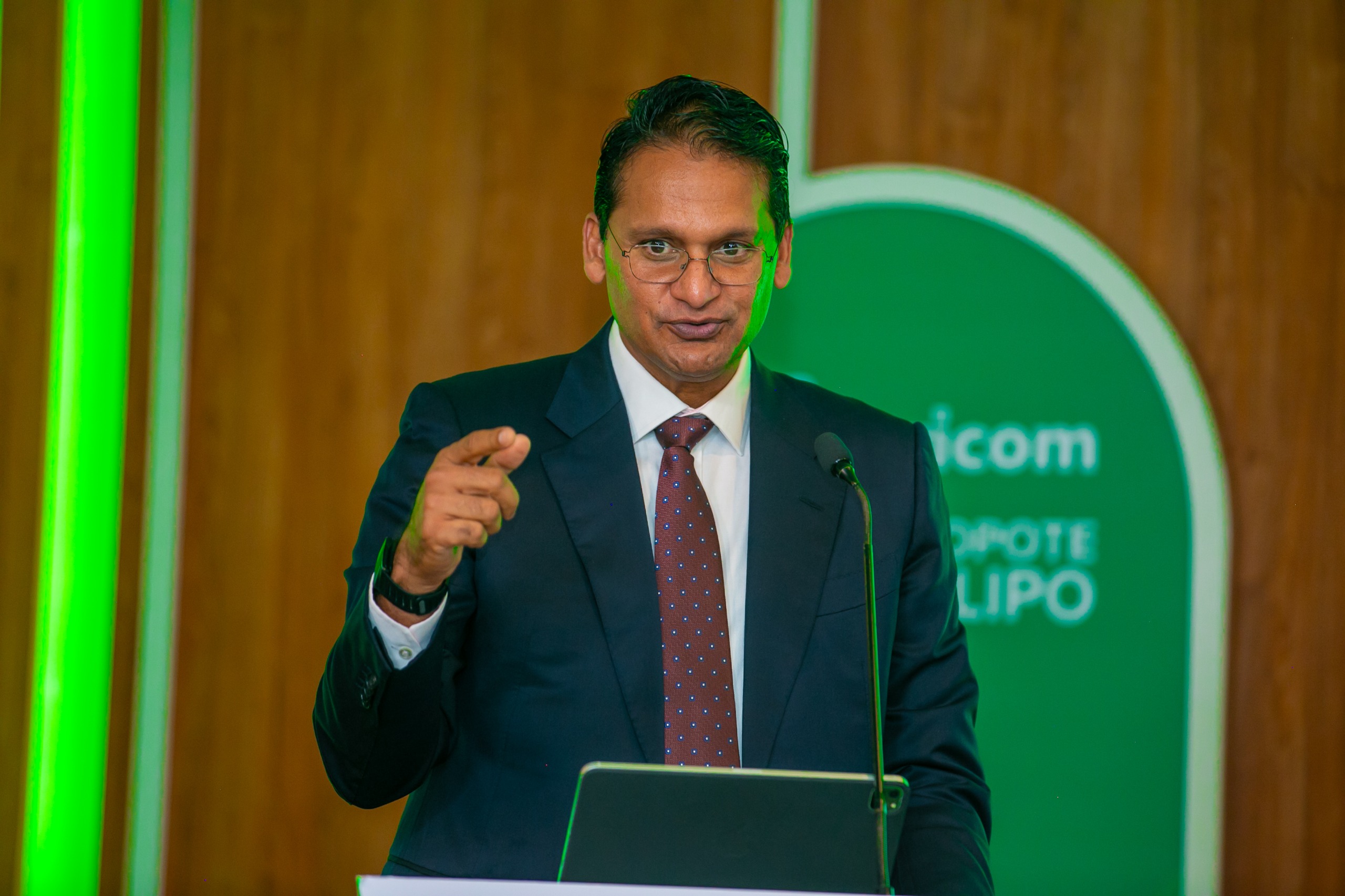
When Adil Arshed Khawaja was elected chairman of Safaricom PLC’s board in early 2023, barely a hundred days after President William Ruto’s inauguration and only weeks after his own appointment as a non-executive director, the framing offered to the Kenyan public was one of merit.
Khawaja, the managing partner of Dentons Hamilton Harrison and Mathews, one of Kenya’s oldest and most prestigious law firms, had chaired KCB Bank Kenya, sat on the boards of Kenya Power and the Kenya Wildlife Service, and built a reputation as a safe pair of hands.
‘Any President will not give a stranger the chairmanship of Safaricom,’ Khawaja told the Daily Nation in September 2024, in one of the more candid admissions a sitting chairman of Kenya’s most valuable listed company has ever offered to a journalist. ‘I have the knowledge and experience chairing many big companies.’
What Khawaja did not say, but what the same interview inadvertently confirmed in granular detail, is that his appointment placed at the head of Safaricom’s boardroom table a man whose primary professional identity managing partner of a law firm representing the controversial Adani Group in litigation over the attempted takeover of Jomo Kenyatta International Airport sat in direct, structural tension with his fiduciary duties to Safaricom’s shareholders.
Two years on, with Safaricom now engulfed in a data surveillance scandal that international rights organisations say may have facilitated enforced disappearances, with customer trust eroding visibly enough that ordinary Kenyans are publicly asking on social media whether the company serves citizens or the state, and with a foreign shareholder poised to take majority control of the company partly because its existing governance has proven so opaque, the question of who Adil Khawaja has really been working for at Safaricom deserves a far more rigorous answer than the one he gave eighteen months ago.
The question of who Adil Khawaja has really been working for at Safaricom deserves a far more rigorous answer than the one he gave eighteen months ago.
THE MAN WHO CALLS HIMSELF ‘MR FIX IT’
Khawaja’s own words remain the single most damaging piece of evidence in this story, because they were not extracted under pressure.
They were offered voluntarily, in a phone interview, by a sitting chairman of a Nairobi Securities Exchange-listed company explaining his own utility to the head of state. Asked about his role accompanying President Ruto on foreign trips a habit so consistent that Khawaja has appeared on the President’s travelling delegation more often than most Cabinet Secretaries Khawaja did not deny being described as the President’s ‘Mr Fix It.’ Instead he explained the function approvingly.
‘When you see the President going on a trip, he is going to talk to investors to invest in our country. He must have people that can help to provide the necessary advice,’ he said. He went further, describing Ruto as ‘my close friend of more than 30 years,’ adding, with a lawyer’s precision, ‘our friendship goes way back between our families. But I am not the President’s personal lawyer.’
That last sentence is the crux of the matter. Khawaja is correct that he is not, formally, the President’s personal lawyer. He does not need to be.
He is the managing partner of the law firm that employs the President’s son, that represents the Adani Group in litigation over Kenya’s most contested infrastructure transaction in a generation, and that simultaneously advises Konvergenz Network Solutions, a company sitting inside a Safaricom-led consortium that Khawaja, as Safaricom’s chairman, has publicly defended.
The lines between ‘friend of the President,’ ‘managing partner of the President’s son’s employer,’ ‘lawyer for the company seeking the President’s airport,’ and ‘chairman of the listed company whose balance sheet is entangled with all three’ are not blurry because journalists have blurred them. They are blurry because Khawaja occupies all four positions at once.
THE ADANI WEB: JKIA, KETRACO, AND DENTONS HHM
The starting point for understanding Khawaja’s conflicts is the Adani Group’s attempted thirty-year, two-billion-dollar lease of Jomo Kenyatta International Airport a transaction so opaque and single-sourced that it triggered court petitions from the Kenya Human Rights Commission and the Law Society of Kenya, and a parliamentary committee hearing at which Treasury Cabinet Secretary John Mbadi was forced to articulate twenty-two conditions the government would impose on Adani before any deal could proceed.
Adani Airports Holdings Limited, the Adani Group subsidiary at the centre of the JKIA bid, retained Dentons Hamilton Harrison and Mathews Khawaja’s firm to defend it in the High Court case brought by KHRC and LSK. Khawaja did not deny this. He embraced it. ‘Adani is one of the biggest companies in the world,’ he told the Nation.
‘They are already running the Port in Tanzania and they want to expand across the East African region,’ a remark that reads less like a conflicted executive distancing himself from a controversial client and more like a business development pitch for future Adani-Dentons engagements.
Adani’s ambitions in Kenya were never confined to JKIA. The conglomerate was separately linked to a Sh95 billion contract with the Kenya Electricity Transmission Company, Ketraco, for high-voltage transmission infrastructure a deal that places Adani inside the same energy procurement ecosystem this publication has separately investigated in connection with Ketraco’s CEO recruitment irregularities.
The pattern that emerges is one in which a single Indian conglomerate, represented in Kenya by the law firm of Safaricom’s sitting chairman, was simultaneously pursuing the country’s largest airport concession, a nine-figure power transmission contract, and through an Abu Dhabi-linked holding structure a 59.55 percent stake in the consortium that won an $800 million government healthcare technology contract in which Safaricom itself holds a 22.56 percent stake.
THE SHIF CONFLICT: SAFARICOM IN BUSINESS WITH ADANI’S PARTNER
This is where the conflict stops being theoretical and becomes structural. The Integrated Healthcare Technology System, the digital backbone of President Ruto’s Social Health Insurance Fund programme, was awarded to a consortium in which Safaricom holds 22.56 percent, Konvergenz Network Solutions holds 17.89 percent, and Apeiro Limited holds 59.55 percent. Apeiro is a subsidiary of Sirius International Holding, an Abu Dhabi-based investment firm that is itself a subsidiary of International Holding Limited a corporate structure layered specifically, this publication’s sources in the corporate governance space note, to obscure beneficial ownership.
Sirius, critically, operates a joint venture with the Adani Group called Sirius Digitech Limited, which in mid-2024 acquired an Indian cloud computing firm, Coredge.io, in a deal both partners described as building a ‘sovereign AI and cloud platform.’
In other words, Safaricom the company Khawaja chairs entered an $800 million government contract as a minority partner alongside a firm, Apeiro, whose ultimate parent is in active joint-venture business with the Adani Group, the same Adani Group that Khawaja’s law firm represents in litigation against the Kenyan state over JKIA and that is separately pursuing the Ketraco transmission contract. Meanwhile, the third consortium member, Konvergenz, is represented in the SHIF deal by Dentons HHM Khawaja’s firm. Khawaja’s explanation, offered to the Nation, was that ‘we gave some preliminary advice to Konvergenz’ and that the SHIF programme predated his appointment as Safaricom chairman, having been initiated under former President Uhuru Kenyatta.
Both statements may be true. Neither resolves the conflict.
A chairman whose own law firm has an active client relationship with one party to a consortium his company has entered as a shareholder, where that consortium’s largest partner sits in a corporate web connected to a conglomerate his firm represents in litigation against the state, is not a chairman who can credibly claim to be exercising independent oversight on behalf of Safaricom’s minority shareholders.
A chairman whose own law firm has an active client relationship with a party to a consortium his company has entered as a shareholder is not exercising independent oversight on behalf of Safaricom’s minority shareholders.
NICK RUTO AND THE FAMILY BUSINESS OF GOVERNANCE
Layered onto this web is the employment of Nick Ruto, the President’s son and a qualified lawyer, at Dentons HHM the same firm, under Khawaja’s management, that represents Adani in the JKIA case. Khawaja’s defence of this arrangement, when pressed by the Nation, was procedural: ‘I didn’t even know that he had applied. We receive thousands of applications each year and he was one of the applicants, he went through the process and was selected.’ He further noted that the firm has previously employed other high-profile individuals.
Procedurally, this may well be accurate. Substantively, it is beside the point. The issue is not whether Nick Ruto’s hiring followed Dentons HHM’s standard recruitment process.
The issue is that the managing partner of the firm that employs the President’s son is simultaneously the chairman of the country’s most strategically important listed company, the President’s self-described travelling fixer, and a personal friend of three decades’ standing and that this entire arrangement sits atop a company, Safaricom, that handles the call records, location data, M-Pesa transaction histories, and digital lives of nearly fifty million Kenyans, data that the company has been accused of sharing with state security agencies implicated in abductions and killings.
When the chairman overseeing that company’s data governance has this many threads connecting him to the very state apparatus whose access to that data is the subject of international human rights concern, ‘I didn’t even know he had applied’ is not an answer to the governance question. It is a deflection from it.
RHINO CHARGE WHILE CUSTOMERS BURN
The texture of Khawaja’s priorities has not gone unnoticed by ordinary Safaricom customers, whose complaints about disappearing data bundles, dropped calls, malfunctioning 5G routers, and customer care channels that loop callers in circles without resolution have intensified publicly on social media even as the company’s PR machinery continues to promote its Ethiopian expansion, its M-Pesa revenue growth, and its sustainability credentials.
Kenyans on social media have pointedly noted that Khawaja’s public appearances alongside President Ruto extend beyond state investment trips into recreational territory, including the Rhino Charge, an off-road motorsport fundraiser for conservation in which Khawaja a longtime figure in Kenya’s wildlife conservation circles through his roles with the Rhino Ark Charitable Trust and the Kenya Wildlife Service has been a visible presence.
The juxtaposition is not merely rhetorical.
A chairman who has the time and inclination to accompany the head of state on overseas investment delegations and recreational motorsport events, while the company he chairs faces a deteriorating customer trust environment, an active data privacy scandal under High Court petition, and a looming change-of-control transaction that will determine the company’s leadership for a generation, is a chairman whose attention has visibly migrated away from the operational and governance failures piling up at Safaricom House.
THE PATTERN REPEATS: KCB AND KENYA POWER
This is not the first time Khawaja’s board career has intersected with institutions under public scrutiny.
He served eight years as a director of KCB Group between 2012 and 2020, the final four as chairman of KCB Bank Kenya a period that fell within the same banking sector this publication has separately documented for its pattern of fraud exposure across East Africa.
He also sat on the board of Kenya Power, departing in July 2020 as part of a broader reorganisation of the utility’s non-executive directors, a reorganisation that itself followed years of governance controversy at Kenya Power over procurement and tariff-setting irregularities.
The pattern across Khawaja’s board career is consistent: appointment to chair or direct large, strategically important, state-adjacent institutions, followed by periods of governance controversy during his tenure, followed by his continued public framing as a uniquely qualified boardroom operator notwithstanding those controversies.
WHAT THE VODACOM DEAL MEANS FOR KHAWAJA
The irony of Khawaja’s position is that the very Vodacom transaction this publication has previously examined under which Vodafone Kenya Limited will gain the power to nominate Safaricom’s next chief executive once Vodacom’s stake rises to 55 percent explicitly preserves a Kenyan chairmanship.
The shareholder agreement filed with the US Securities and Exchange Commission states that VKL will ‘endeavour, insofar as possible’ to ensure the chairman is of Kenyan nationality, and the Kenyan government’s own December 2025 conditions go further, mandating that the chairman ‘shall at all times be’ a Kenyan citizen.
On the surface, this should protect Khawaja’s position even as the CEO’s office potentially returns to foreign-nominated hands.
But this protection cuts in an uncomfortable direction for Khawaja personally. If the chairmanship is the one senior position at Safaricom that remains insulated from Vodacom’s incoming oversight, then the chairman becomes, by default, the single most important check on whatever new CEO Vodafone Kenya nominates at precisely the moment when Safaricom’s data governance practices are under the heaviest international scrutiny in the company’s history, with Access Now and a coalition of global civil society organisations having written directly to Vodacom demanding an investigation into whether Safaricom facilitated human rights abuses through its data-sharing practices.
A chairman whose own professional and personal entanglements run as deep into the current administration’s commercial and family networks as Khawaja’s do is not obviously the independent check that moment requires.
If Vodacom’s new management is serious about resetting Safaricom’s governance culture as this publication has argued it must be the chairmanship cannot simply be treated as the safe, untouchable seat in the boardroom. It may, in fact, be the seat that most urgently needs fresh eyes.
THE QUESTION KHAWAJA AND NDEGWA CANNOT KEEP AVOIDING
Kenyans on social media have begun to ask, in increasingly pointed terms, why the loudest complaints about Safaricom on data privacy, on service quality, on customer care, on corporate arrogance have all intensified during the same period of leadership.
It is a fair question, and it deserves a fair answer, not from this publication, but from Khawaja and Ndegwa themselves, in public, under the same parliamentary scrutiny that Ndegwa has previously faced over the Vodacom transaction.
Specifically: how many data requests from security agencies has Safaricom received since the 2024 protests, how many carried court orders, how many were rejected, and who inside the company holds the authority to approve access to subscriber data? What internal safeguards exist when the agencies requesting that data are themselves the subject of credible allegations of enforced disappearance?
And, returning to the conflicts documented in this article, has Khawaja, as chairman, ever recused himself from any board discussion touching on Safaricom’s relationships with the Government of Kenya, given his firm’s representation of Adani, his firm’s employment of the President’s son, and his own description of his role as the President’s fixer?
If the answer to that last question is no, then the chairman of Kenya’s most powerful company has spent the most consequential two years of its modern history sitting at the head of the table with an undisclosed, unmanaged, and apparently unaddressed conflict of interest on virtually every matter where Safaricom’s commercial interests and the Kenyan state’s political interests intersect which, for a company that handles state surveillance requests, runs government health technology contracts, and is the subject of a change-of-control transaction requiring government approval, is to say: almost everything.
Safaricom’s customers built this company.
Its 65 percent market share, its M-Pesa dominance, its position as the most profitable company in East Africa all of it rests on the trust of nearly fifty million ordinary Kenyans who use its network every day for transactions that define their economic lives. That trust is not Adil Khawaja’s personal asset to leverage on behalf of a law firm’s client list, a presidential travel itinerary, or a family friendship of thirty years’ standing.
The silence from Safaricom’s boardroom on these questions, just as the silence on Ndegwa’s contract status, on the June 2024 internet outage, and on the surveillance allegations, is not discretion. It is an accumulating pattern of a board that has stopped treating accountability to the Kenyan public as a condition of its legitimacy.
Kenya Insights allows guest blogging, if you want to be published on Kenya’s most authoritative and accurate blog, have an expose, news TIPS, story angles, human interest stories, drop us an email on [email protected] or via Telegram







Politician Charged in Court for Defrauding Couple Sh1 Million in Botched Deputy President’s Office Tender Deal

After Ndegwa’s Controversial Reign, Vodacom Will Likely Name a Mzungu CEO Next To Clear The Mess Left

The Chairman’s Conflicts: How Adil Khawaja’s Boardroom Empire Compromised Safaricom’s Governance

Businessman Philip Waithaka Kinuthia’s Minor Son Allegedly Drove Drunk, Killed Two Peponi Students in Ngong Road Horror Crash as Claims of Cover-Up Intensify

Painted Into a Corner: Inside Crown Paints’ Sh791 Million Tanzania Gamble, the Shutdown of a Kenyan Factory, and a Sh244 Million Payday for the Boardroom

Shiquo wa Hii Styles Alleges Powerful Somali Cartel Used State Officials to Cripple Her Multi-Million Shoe Empire

Absa Bank Kenya Faces Mounting Internal Fraud Storm as Parliament Demands Answers Over Sh3 Million Vanishing From Customer Accounts

Secret Footage Reveals 500kg Zimbabwean Gold Smuggling Pipeline Into Kenya Linked to ‘Spiritual Son’ Networks

mTicket CEO Brian Okinyi Exposed In Court For Attempted Sh500K Fraud

How Mary Wambui’s Bid To Delete Her Past Collided With A Fresh Sh400 Million Conflict-Of-Interest Finding

Inside NCBA’s Decline: How a Banking Giant Lost Its Strategic Edge

Cement, Cash and Courts: How the Hashu Dynasty Crushed the Ramji Brothers for Fourteen Years and Why the Walls Are Now Closing In

Standard Chartered Ghosts Haunt Joshua Oigara At Stanbic As Whistleblower Spills Beans

Inside The Urban Planning Cartel That Owns Nairobi

South Sudan: Adut Salva Kiir’s Shadow Treasury Exposed

Why Ruto’s Favourite Candidate Adan Mohammed Could Be Locked Out of the KRA Top Job

Betika Faces DCI Probe, Directors Arrest and License Revocation Over Massive 29.5 Million Safaricom Customers’ Data Breach

Why John Ngumi Is Running From the EACC and Why the Sh415 Million Payday May Be the Least of His Worries

The President’s Daughter and The Missing Witness: How Adut Salva Kiir’s Shadow Treasury Silenced Its Most Dangerous Critic

LifeCare on the Brink: SHA Fraud, Stolen Wages, and the Rotten Empire Jayesh Saini Built
-
 Business5 days ago
Inside NCBA’s Decline: How a Banking Giant Lost Its Strategic Edge
-
 Investigations2 weeks ago
Cement, Cash and Courts: How the Hashu Dynasty Crushed the Ramji Brothers for Fourteen Years and Why the Walls Are Now Closing In
-
 Business4 days ago
Standard Chartered Ghosts Haunt Joshua Oigara At Stanbic As Whistleblower Spills Beans
-
 Investigations1 week ago
Inside The Urban Planning Cartel That Owns Nairobi
-
 Africa3 days ago
South Sudan: Adut Salva Kiir’s Shadow Treasury Exposed
-
 Business3 days ago
Why John Ngumi Is Running From the EACC and Why the Sh415 Million Payday May Be the Least of His Worries
-
 Africa4 days ago
The President’s Daughter and The Missing Witness: How Adut Salva Kiir’s Shadow Treasury Silenced Its Most Dangerous Critic
-
 Business3 days ago
How Adil Popat Saved His Empire On The Eve Of Imperial Bank Collapse and Why Kenya’s Mainstream Media Buried The Story