
Business
Why John Ngumi Is Running From the EACC and Why the Sh415 Million Payday May Be the Least of His Worries
For a man who once told Parliament he could have charged ten million US dollars for five months of advisory work, the image of John Ngumi seeking constitutional sanctuary from accountability investigators tells its own story.

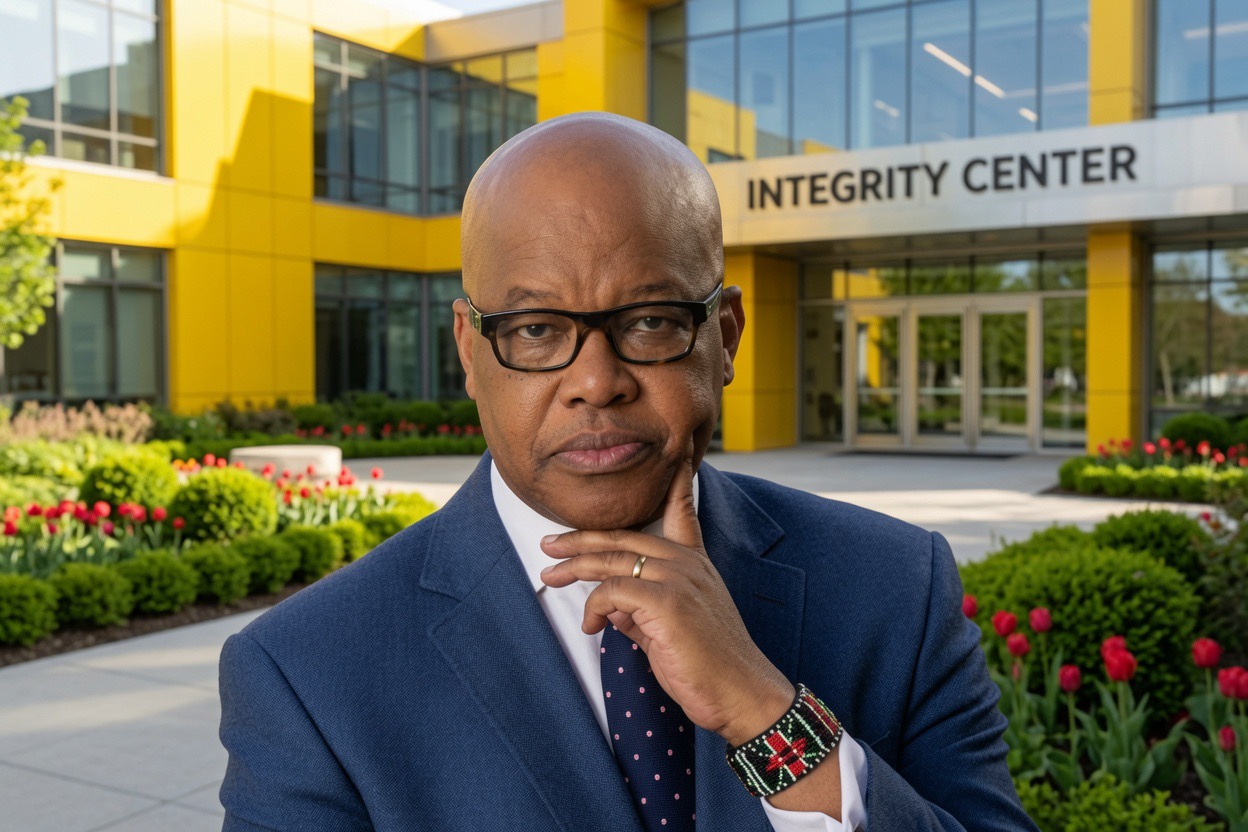
THE MAN WHO WANTS THE LIGHTS OFF
On the morning of June 11, 2026, a court filing quietly landed at the High Court’s Human Rights Division in Nairobi that told you everything you needed to know about the current psychological state of one of Kenya’s most celebrated investment bankers.
John Ngumi Oxford-educated, 35-year career banker, parastatal chairman, presidential confidant, and self-described ‘best in the business’ has petitioned the High Court to declare the Ethics and Anti-Corruption Commission’s ongoing investigation into his role in the Telkom Kenya buyback unconstitutional, unlawful, and oppressive.
He wants every inquiry terminated.
Every watchlist lifted. A permanent injunction barring EACC from ever reopening the file. And, for good measure, damages for the emotional distress and reputational injury he says the continued probe has inflicted upon him.
For a man who once told Parliament he could have charged ten million US dollars for five months of advisory work, the image of John Ngumi seeking constitutional sanctuary from accountability investigators tells its own story.
Innocent men do not race to court demanding that scrutiny be permanently enjoined. Innocent men testify. They open their books. They welcome the audit trail. They do not spend three years exhausting every procedural avenue available under Kenya’s legal architecture to ensure the investigators never get the chance to look too closely.
This is the story behind the story the one that mainstream coverage, constrained by advertiser relationships, political proximity, and the natural laziness of reporters who accept official denials as closure, has barely grazed.
It is the story of what Ngumi’s file actually contains, why the DPP’s earlier pass was not the exoneration it was marketed as, what EACC can still do even without a criminal prosecution, what Ngumi has spent three years trying to prevent investigators from discovering, and why the full picture of this man’s career at the intersection of public power and private capital should alarm every Kenyan who has ever wondered how the country’s strategic assets keep changing hands through layered offshore vehicles with suspiciously well-remunerated intermediaries.
“I was paid the money because I was the best in the business.” — John Ngumi, to Parliament, April 19, 2023
THE TRANSACTION THAT STARTED IT ALL
The facts of the Telkom Kenya buyback are no longer seriously in dispute. In August 2022 specifically on August 5, four days before the general election that would usher out the Kenyatta administration the National Treasury wired Sh6.09 billion to Jamhuri Holdings Limited, a Mauritius-registered special purpose vehicle that served as the investment vehicle for UK-based private equity firm Helios Investment Partners, in exchange for Helios’s 60 percent stake in Telkom Kenya.
The transaction made Telkom Kenya fully state-owned for the first time since privatisation, in a reversal that had significant national security justifications Telkom controls critical government data infrastructure including data centres, carrier services, landing stations, undersea cables, and meet-me rooms where telecommunications companies connect to each other.
There was, however, a problem. Several problems.
The National Treasury had disbursed Sh6.09 billion without parliamentary approval, in apparent violation of Public Finance Management Regulations that require legislative sanction for such expenditures outside certified emergency conditions.
The Controller of Budget, Margaret Nyakang’o, had explicitly refused to authorise the release of funds, telling Parliament she was overruled.
The Communications Authority of Kenya, the sector regulator, had not granted final approval for the acquisition because conditions it had set had not been met by Telkom Kenya. No formal Attorney-General opinion was on file. The entire transaction had been executed with an urgency that looked, to any trained eye, less like an unavoidable national security intervention and more like a deal that had to close before a new administration took over and asked questions.
Into this environment, on April 1, 2022 the very same date, it later emerged, that the National Security Council approved the acquisition John Ngumi signed an advisory agreement with Jamhuri Holdings Limited. He was retained by the seller. Not by the government. Not by the buyer. By Helios, through its Mauritius vehicle, to advise on its exit.
By the time the transaction concluded in September 2022, Ngumi had received $3.07 million approximately Sh415 million at prevailing exchange rates, making him the single largest individual beneficiary in the entire transaction, surpassing the amount Jamhuri Holdings itself received and dwarfing the Sh54 million paid to the transaction lawyers.
THE NAIROBI PROPERTIES AND THE COASTAL RETREAT
What EACC investigators found when they began tracing the movement of Ngumi’s $3.07 million is what keeps the file alive and what Ngumi most urgently needs shut down.
According to reporting by the Daily Nation citing materials in the EACC investigation, multi-million shilling assets in Nairobi and a beach property on the Coast were among the acquisitions made using the advisory proceeds.
This is the part of the story that never made it into the parliamentary hearings, where the committee’s questioning was largely restricted to the value-for-money question and the post-facto tax payment.
Kenya’s EACC has broad civil asset recovery powers under the Ethics and Anti-Corruption Commission Act and the Proceeds of Crime and Anti-Money Laundering Act. A DPP declination on criminal prosecution does not extinguish these powers. The commission can still pursue civil recovery proceedings against assets it believes represent unexplained wealth or proceeds of suspected corrupt conduct. It can issue asset preservation orders.
It can conduct mutual legal assistance requests to Mauritius where Jamhuri Holdings was domiciled and where the initial payment is likely to have been routed to trace the full chain of transactions from the Treasury disbursement to Ngumi’s accounts. This is precisely what Ngumi’s petition describes as the ‘indefinite and unconcluded investigative process’ that he finds so intolerable.
The Mauritius routing is particularly significant. Jamhuri Holdings was structured as an offshore SPV a legal architecture that provides layers of opacity between the underlying investors and the actual financial flows. Payments to Ngumi from such a vehicle would have passed through offshore accounts before landing in Kenya.
Tracing that route requires international cooperation that takes time, political will, and an open investigative file.
If Ngumi succeeds in getting the High Court to close the file permanently, that international cooperation track dies with it. That is the practical consequence his petition is designed to achieve.
A DPP declination does not extinguish EACC’s civil recovery powers, its asset-tracing mandate, or its ability to make mutual legal assistance requests to Mauritius.
THE CONFLICT OF INTEREST ARCHITECTURE NO ONE HAS FULLY MAPPED
The central integrity question in the Telkom deal is not simply about the size of Ngumi’s fee. It is about the extraordinary concentration of relevant positions he held simultaneously and the questions about whose interests were actually being served when he collected that $3.07 million.
Ngumi was, at various points in the period surrounding the transaction, the non-executive chairman of Safaricom Kenya’s dominant telecommunications operator and Telkom’s direct competitor in the broadband and enterprise data market; a non-executive director at the Communications Authority of Kenya, the very regulatory body whose approval was required for the acquisition and which EACC found did not give final sign-off because conditions precedent remained unmet; the chairman of Kenya Pipeline Company, a strategic state infrastructure asset; and the chairman of the Industrial and Commercial Development Corporation (ICDC), the state holding vehicle overseeing Kenya Ports Authority, KPC, and Kenya Railways.
His Eagle Africa Capital Partners was retained by the seller of a strategic national asset, advising on an exit from a company that directly interfaced with government security infrastructure.
The inaugural directorship at the Communications Authority of Kenya then the Communications Commission of Kenya is the detail that has never received the scrutiny it deserves. Ngumi sat on the regulator’s founding board.
He helped shape the regulatory frameworks that govern Kenya’s telecommunications market. He built relationships inside the institution that has survived across multiple administrations.
When the Telkom deal required Communications Authority approval, and when that approval was apparently navigated around or left incomplete, the question of what role Ngumi’s institutional knowledge and relationships may have played in that navigation is precisely the kind of question that an open EACC file preserves the ability to ask. A permanently enjoined investigation cannot ask it.
There is also the Safaricom dimension. Ngumi was appointed Safaricom’s board chairman on August 1, 2022 the same month the Treasury wired Sh6.09 billion to his client, Helios, to buy a 60 percent stake in Safaricom’s direct competitor.
He resigned from Safaricom’s board on December 22, 2022, barely five months into the role, in circumstances that insiders described as politically driven by the incoming Ruto administration’s desire to clean house.
He had also previously served as Helios’s strategic adviser for Kenya and Africa a role that, when combined with his simultaneous advisory mandate to Jamhuri Holdings in the Telkom exit, creates a layered web of competing interests that no major Kenyan institution has been willing to systematically untangle.
THE COMPANY THAT FAILED AND THE PATTERN THAT PERSISTED
Before Ngumi became the dealmaker whose name appeared on trillion-shilling transactions, there was an earlier version of the story that his official biography tends to treat as a footnote. Loita Capital Partners, which he co-founded in 1994 as Kenya’s first indigenous investment bank, collapsed into bankruptcy by 1997. Ngumi has spoken openly about the personal financial devastation that followed mortgaging his house three times, borrowing heavily to pay staff, spending three years ‘desperately trying to keep my financial head above water.’ By his own account, he did not fully recover until well into the 2000s.
The Loita bankruptcy matters not because it is evidence of wrongdoing businesses fail, particularly pioneering ones in frontier markets but because of what it reveals about the pattern of recovery.
Ngumi’s rehabilitation from insolvency to the highest levels of parastatal governance and deal-making was entirely dependent on his proximity to political power, specifically to President Uhuru Kenyatta.
It was Kenyatta who appointed him chair of Kenya Pipeline Company in 2015.
Kenyatta who put him at the head of ICDC. Kenyatta who endorsed his placement on the Communications Authority board. Kenyatta whose political context enabled the Safaricom chairmanship, however briefly. And it was during Kenyatta’s final months in office that the Telkom deal was executed and Ngumi emerged from it Sh415 million richer.
This is not coincidence. It is a documented pattern of political dependency dressed up as meritocratic achievement. Ngumi’s insistence before Parliament that he was ‘the best in the business’ and that Helios ‘valued the advice’ he gave is technically not falsifiable advisory fees in private transactions are ultimately a matter of agreement between consenting parties. But the question is not whether Helios agreed to pay him.
The question is why Helios agreed to pay him more than the entire seller’s take from the transaction, more than the lawyers, more than any other single party. The answer that most investigators keep arriving at is not that Ngumi provided advice that no one else in Kenya could have provided.
It is that Ngumi provided access that no one else could have access to the National Security Council deliberations, access to the Communications Authority, access to the Treasury, access to the political machinery that could execute a Sh6 billion transaction in 26 minutes on a Friday in the dying days of an administration.
The question is not whether Helios agreed to pay him. The question is why more than the lawyers, more than the entire seller’s take.
THE EUROBOND GHOST THAT REFUSES TO FADE
The Telkom file is not the first time EACC has had reason to be interested in John Ngumi. In 2014, when Kenya executed its debut $2 billion Eurobond subsequently enlarged to Sh275 billion through a tap sale Ngumi was a central figure as joint lead arranger for Standard Bank Plc alongside Barclays, JP Morgan, and Qatar National Bank.
He was also the spokesperson for the consortium of arranging banks.
The bond became a political flashpoint when then-opposition figures alleged that proceeds had been misappropriated before reaching Kenya, an allegation that was never conclusively resolved in open proceedings.
Many crucial emails during the bond arrangement were under Ngumi’s name, a fact that the Standard newspaper documented when EACC was seeking to understand how Eurobonds are priced and whether the arrangement fees were commercially justified. Ngumi was made a person of interest in that inquiry too. He survived it. But the pattern a major sovereign transaction, a well-connected intermediary, fees that attract regulatory scrutiny, investigations that produce inconclusive outcomes was being established even then.

EACC Headquarters, Integrity Center.
THE ARM CEMENT DIMENSION
Ngumi’s directorship at ARM Cement, to which he was appointed as non-executive director in 2016, adds another layer to the overall picture.
ARM Cement went into receivership in August 2018 with a debt burden of approximately $284 million and was subsequently liquidated a collapse that wiped out shareholders and left creditors deeply exposed.
The company’s implosion remains one of the most significant corporate governance failures in East Africa’s listed company history. The board, of which Ngumi was a member, has never been subjected to the kind of forensic governance examination that the scale of the collapse would ordinarily demand. It is another file that, like the Eurobond, and like the Telkom investigation, appears to have been quietly managed down rather than systematically examined.
THE DPP DECLINATION AND WHAT IT DID NOT MEAN
When the Director of Public Prosecutions declined to institute criminal charges following EACC’s prosecution recommendation in late 2023, Ngumi and his legal team immediately framed it as an exoneration. This characterisation is legally illiterate and factually misleading. A DPP declination means one thing: the DPP, at that moment, with the evidence available to it, concluded that the threshold for a criminal prosecution had not been met or that a conviction was insufficiently probable.
It does not mean the conduct was lawful. It does not mean the money was legitimately earned. It does not mean there was no corruption. It means the DPP made a prosecutorial judgment call one that can be revisited if new evidence emerges, and one that has no bearing whatsoever on EACC’s parallel civil and administrative enforcement powers.
EACC retains, regardless of the DPP position, the ability to pursue civil asset recovery under the Proceeds of Crime and Anti-Money Laundering Act. It can apply to court for a civil forfeiture order without any prior criminal conviction. It can continue to trace the origins, routing, and deployment of funds received by Ngumi through the Mauritius vehicle.
It can debarment-recommend Ngumi from participation in public procurement processes. It can make mutual legal assistance requests to the Government of Mauritius and other relevant jurisdictions.
It can, if new material emerges communications, undisclosed agreements, additional beneficiaries refer the matter back to the DPP with a supplemented file. Every one of these powers is extinguished if the High Court accedes to Ngumi’s petition and permanently closes the file. That is why the petition is significant not just as a legal manoeuvre but as a statement of intent: Ngumi knows the file is not dead, and he is terrified of what a determined investigator with full access to his Mauritius-routed transaction records could still unearth.
THE REVOLVING DOOR AND THE ACCOUNTABILITY VACUUM
What makes the Ngumi case systemic rather than merely individual is the pattern it exemplifies. Post-liberalisation Kenya has produced a class of operators who have turned the boundary between public governance and private dealmaking into a personal revenue stream. The architecture is consistent: acquire regulatory and institutional knowledge through publicly appointed roles; deploy that knowledge to inform advisory mandates for private clients seeking to do business with, sell assets to, or extract concessions from the same state institutions; collect fees that bear no rational relationship to the market price of the specific technical advice provided but a very rational relationship to the market price of insider access; and, when scrutiny comes, invoke procedural arguments, political victimhood narratives, and constitutional rights litigation to run out the clock.
Ngumi’s own career maps this architecture with unusual precision. Communications Authority director knowledge of the regulatory framework governing telecommunications licensing and approvals. Kenya Pipeline Company chairman control over procurement and contract decisions at a strategic energy infrastructure entity.
ICDC chairman oversight of the state’s largest logistics and infrastructure holdings. Konza Technopolis chairman exposure to Kenya’s technology infrastructure development plans and the commercial opportunities they generate. Safaricom board chairman access to the competitive intelligence, network architecture intelligence, and government relationship structures of East Africa’s dominant telecommunications company. Eagle Africa Capital Partners the private vehicle through which all of this accumulated institutional knowledge is monetised.
The money that flows into Eagle Africa Capital Partners from clients who need government doors opened, regulatory approvals navigated, or strategic intelligence provided is, in this architecture, not really advisory income. It is the rent charged for access to a network built entirely on publicly funded institutional positions. The Sh415 million Telkom fee is the most visible and documented example of this rent-extraction. It is almost certainly not the only one.
WHY HE IS REALLY RUNNING
Ngumi’s petition lists reputational damage and emotional distress as the injuries he has suffered from the continued investigation. The reputational damage argument is particularly instructive. His reputation in Kenya’s investment banking community the reputation that generates future mandates, board appointments, and advisory fees depends on the perception that he is above legal reproach.
An open EACC file, even without charges, signals to international institutional investors, development finance institutions, and foreign private equity that doing business with Ngumi carries regulatory risk. It dries up the pipeline. It makes future Jamhuri Holdings-type mandates less available. The petition is, at its core, not a human rights action. It is a business protection measure dressed in constitutional clothing.
But the deeper fear is what an unconstrained investigation might find in the communications trail. Ngumi was retained by Helios on April 1, 2022 the same day the National Security Council approved the acquisition.
This timing has never been adequately explained.
Did Ngumi know in advance that the NSC was meeting that day? Did he have any role in structuring the security justification that was used to move the transaction through without parliamentary approval? What do the internal Eagle Africa communications say about the nature of the advice he was providing? What do the WhatsApp threads, the emails, the phone records say about his interactions with Treasury officials, NSC members, and Communications Authority personnel during the critical weeks when a transaction requiring multiple regulatory approvals was being executed with none of them fully in place?
An EACC with access to Ngumi’s private communications, Eagle Africa’s internal records, and the full Jamhuri Holdings transaction file obtained through a Mauritius mutual legal assistance request could potentially reconstruct, with significant precision, what happened in those five months.
That reconstruction might show exactly what Ngumi provided for his $3.07 million, and it might show that what he provided was not high-level financial advice but high-level political facilitation. That is the file he wants permanently sealed.
THE PETITION AS CONFESSION
Lawyers for accused persons routinely file motions to suppress evidence, challenge jurisdiction, and seek procedural relief. That is the adversarial system working as designed. But there is a category of legal manoeuvre that, by its very nature, functions as an admission of vulnerability rather than an assertion of innocence. Ngumi’s petition belongs to that category.
A man genuinely confident that the investigation would clear him would not demand its permanent termination. He would demand its conclusion. He would submit to questioning, produce his records, demonstrate that his advisory work was legitimate, and allow the commission to close the file through findings rather than through a court injunction.
He has not done this.
Three years after the first anticipatory bail application in 2023, the EACC has not received the full cooperation that its investigators required. The petition is the next escalation in a long-running strategy of procedural obstruction.
That strategy has been partially effective. Each legal intervention has bought time. Each court order has created uncertainty about what investigators are permitted to do. The three-year delay has allowed the political context to shift the incoming Ruto administration that initially appeared willing to prosecute Kenyatta-era deals has progressively made its accommodation with the former president’s network, reducing the political appetite for prosecutions that would embarrass Kenya’s political establishment. Time is Ngumi’s most valuable ally. The petition is an attempt to convert time into permanence.
A man genuinely confident that the investigation would clear him would not demand its permanent termination. He would demand its conclusion.
THE VERDICT OF THE RECORD
John Ngumi is 68 years old. He has spent more than three decades at the apex of Kenyan finance and governance. He has arranged bonds worth hundreds of billions of shillings, chaired some of the country’s most powerful institutions, and built a personal brand that has opened doors no credential alone could have opened.
By the standards of Kenya’s elite, he has had a remarkable career.
But remarkable careers in proximity to state power in Kenya leave traces that do not disappear when the political wind shifts, and the trace that the Telkom transaction has left is one that Ngumi cannot talk his way out of in any forum where hard questions are permitted.
The record shows: an advisory agreement signed the same day as the NSC approval of the transaction he was advising on; a fee of $3.07 million from the seller’s Mauritius vehicle for five months of work that Parliament found unquantifiable; a payment that made him the largest individual beneficiary of a Sh6.09 billion public expenditure conducted without parliamentary approval, without Communications Authority final approval, and without an Attorney-General opinion on file; a post-hoc tax payment of Sh111.9 million made only after parliamentary scrutiny made the optics toxic; two rapid board resignations from Safaricom and Kenya Airways following the investigation’s intensification; an anticipatory bail application in 2023 framed around the threat that investigators would ‘jeopardise his reputation as one of Kenya’s most celebrated bankers’; and now, in June 2026, a petition demanding that EACC be permanently and judicially prevented from ever examining this matter again.
That is not the record of a man at peace with the verdict of scrutiny. It is the record of a man who understood, from the moment the first parliamentary question was asked, that the closer investigators looked, the more uncomfortable the answers would become.
The Sh415 million payday is the headline figure. But the real story is the machinery that produced it the access, the institutional positions, the regulatory knowledge, the political proximity, and the offshore routing that converted five months of advisory work into a fee that dwarfs what most Kenyans earn in a lifetime.
EACC’s persistence, even after the DPP’s earlier pass, is not prosecutorial harassment. It is the institutional manifestation of an unanswered question: what, precisely, did John Ngumi do for $3.07 million, and for whom was he really doing it? Until that question is answered in an open forum where evasion is not a strategic option, the investigation serves a purpose that goes beyond John Ngumi. It signals to the next generation of well-connected intermediaries who stand at the intersection of public governance and private capital that the receipt does not automatically expire.
On June 11, 2026, John Ngumi filed a petition asking the High Court to make the receipt disappear. The court has yet to give directions. Whatever it decides, the filing itself is the clearest public statement Ngumi has made in three years of legal manoeuvring: the questions terrify him, and he will exhaust every instrument available to ensure they are never fully answered.
Kenya Insights allows guest blogging, if you want to be published on Kenya’s most authoritative and accurate blog, have an expose, news TIPS, story angles, human interest stories, drop us an email on [email protected] or via Telegram










Wajir North MP Ibrahim Abdi Dissatisfied With2026/27 Budget, Claims It Totally Excludes North Eastern Region

The Eldoret Tax Fortress: How David Langat Turned an Industrial Park Dream Into Kenya’s Most Sophisticated Domestic Tax Haven

Why John Ngumi Is Running From the EACC and Why the Sh415 Million Payday May Be the Least of His Worries

Shiquo Hii Style Store Was Not Raided, Anti-Counterfeit Authority Confirms; Says Influencer Used Empty Shelves for Content as She Relocates

Treasury CS Mbadi Unveils Sh4.8 Trillion Budget Estimates

Fraud, Misrepresentation and A Decade Of Evasion: How Indo Africa Finance Pocketed Sh150 Million Youth Funds and Fought To Keep Every Cent

Kenya Picks Chinese Firm For Sh375 Billion JKIA Upgrade Project After Adani Fallout

The President’s Daughter and The Missing Witness: How Adut Salva Kiir’s Shadow Treasury Silenced Its Most Dangerous Critic

Kisii Under Siege: Governor Arati’s Wife Accused of Hijacking IFMIS and Running a Parallel Government

Al-Shabaab Issues Statement Defending Omar Artan, Accuses U.S. of Discrimination After Referee’s Deportation

Cement, Cash and Courts: How the Hashu Dynasty Crushed the Ramji Brothers for Fourteen Years and Why the Walls Are Now Closing In

Inside The Urban Planning Cartel That Owns Nairobi

Why Ruto’s Favourite Candidate Adan Mohammed Could Be Locked Out of the KRA Top Job

Standard Chartered Ghosts Haunt Joshua Oigara At Stanbic As Whistleblower Spills Beans

Inside NCBA’s Decline: How a Banking Giant Lost Its Strategic Edge

LifeCare on the Brink: SHA Fraud, Stolen Wages, and the Rotten Empire Jayesh Saini Built

Betika Faces DCI Probe, Directors Arrest and License Revocation Over Massive 29.5 Million Safaricom Customers’ Data Breach

Este Medical Kenya Fights American’s Explosive Complaints

Fresh Move Launched to Remove Kenya Railways MD Mainga From Office After Awarding Sh817 Million Consultancy Contract

The Rot Inside Absa: How Bank Insiders Are Looting Nairobi’s Customers
-
 Investigations1 week ago
Cement, Cash and Courts: How the Hashu Dynasty Crushed the Ramji Brothers for Fourteen Years and Why the Walls Are Now Closing In
-
 Investigations6 days ago
Inside The Urban Planning Cartel That Owns Nairobi
-
 Business1 day ago
Standard Chartered Ghosts Haunt Joshua Oigara At Stanbic As Whistleblower Spills Beans
-
 Business2 days ago
Inside NCBA’s Decline: How a Banking Giant Lost Its Strategic Edge
-
 Investigations2 weeks ago
Betika Faces DCI Probe, Directors Arrest and License Revocation Over Massive 29.5 Million Safaricom Customers’ Data Breach
-
 Investigations1 week ago
Fresh Move Launched to Remove Kenya Railways MD Mainga From Office After Awarding Sh817 Million Consultancy Contract
-

 Business1 week ago
TRUST BETRAYED: How Senior DTB Bank Insiders Allegedly Looted Sh149 Million From a Customer’s Account Over Five Years
-
 News2 weeks ago
How Uhuru’s Deal With Obama In 2015 Paved Way For America’s Ebola Plan In Kenya