
Opinion
On Uthamaki’s Bogeyman Politics: Time to Call the Demonization of President Ruto What It Is
Kikuyu voters have for many election cycles been mobilized to elect “one of our own” while simultaneously voting against Raila Odinga. There is little reason for them to wake up early and vote for you now.

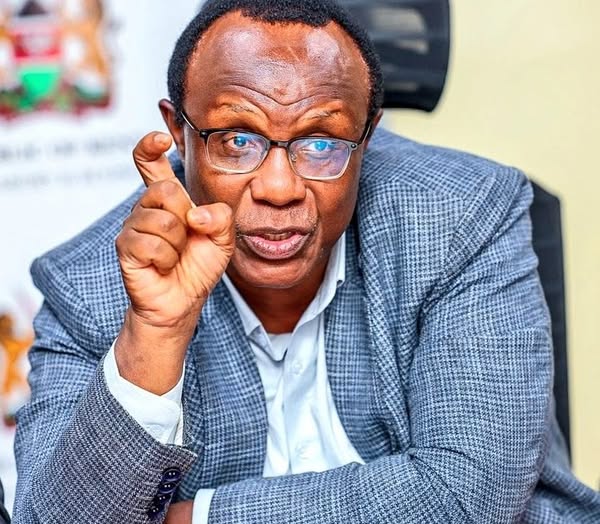
By David Ndii
In the days leading to President William Ruto’s swearing-in, some supporters reportedly sent apologies to the President-elect explaining that they would not attend the Garden Party at State House. Instead, after leaving Kasarani, they would “turn right” to address what they described as a long-standing matter.
That “long-standing matter” was historical land injustices in Kiambu. Their immediate target was said to be the vast Kenyatta family estates between Kasarani and Gatundu, though not exclusively those holdings.
As I wrote in my earlier op-ed, Of Land and the Luo Bogeyman, during my childhood one could walk from Limuru to Gatundu without stepping on land owned by a peasant farmer.
The Kikuyu class divide between Uthamaki and Mungiki remains arguably Kenya’s most potent political problem. As explained in the op-ed, it contributed to the fallout between Jaramogi Oginga Odinga and Jomo Kenyatta and to Daniel arap Moi’s rise to the vice presidency in what I have previously described as the Kikuyu-Kalenjin “power-for-land” pact.
Kikuyu class conflict has long been suppressed through the political tactic of manufacturing a siege mentality by inventing external enemies or political bogeymen. Jaramogi became the first victim of this politics. When it appeared that Jomo Kenyatta’s health was failing and Tom Mboya seemed poised to ascend to power, Mboya was assassinated and the bogeyman narrative expanded to target the entire Luo community through the 1969 oathing ceremonies.
Jomo survived the 1969 heart attack, but by the mid-1970s the question was not whether succession would happen, but when.
Those of us who, as we say in Gikuyu, have “eaten a bit more salt” can relate the demonization of William Ruto to the succession politics that unfolded during the Kenyatta era between the “Change the Constitution” campaign and the Njonjo inquiry. Those unfamiliar with that history can revisit it in Karimi and Ochieng’s book, The Kenyatta Succession.
Moi began his presidency by attempting to appease Uthamaki. I recall him frequently speaking Kikuyu and, on one occasion, delivering an entire prayer in the language. “Fuata Nyayo” was intended as an olive branch. But Uthamaki would have none of it.
The bogeyman campaign quickly began. How, people asked, could the country be led by a herdsman? Kikuyu masses were reassured that Moi was merely a passing cloud and that normal service would soon resume.
The hostility peaked during the 1983 Rungiri church service where Kiambu tycoon Samuel Githegi, in the presence of Charles Njonjo, declared: iguthua ndongoria itikinyagira nyeki — a flock led by a lame sheep does not find pasture.
Many Kenyans, particularly younger generations and those unfamiliar with history, believe the violence that accompanied the return of multiparty politics in 1992 was unprecedented. In reality, the violence mirrored the political turmoil that preceded the 1963 elections.
Yet Moi, the supposed bogeyman, the “passing cloud,” and the “limping sheep,” retired on his own terms.
Eventually, Uthamaki returned to power. Ironically, it was the political calculations of the so-called bogeyman alliance that made it possible: Moi’s Uhuru project and Raila Odinga’s “Kibaki Tosha” declaration. Moi appeared to believe that safeguarding his post-retirement interests required returning power to Uthamaki. Raila, meanwhile, realized that a divided opposition would ultimately hand victory to Uhuru Kenyatta.
Almost overnight, Raila became a Kikuyu hero. But the alliance was short-lived.
Mwai Kibaki was elected under a new political dispensation that promised to end tribalism and deliver a new constitution within 100 days. Uthamaki, however, had different ideas, which John Michuki famously rationalized through the metaphor of “handling liver” to describe the slippery nature of power.
Kibaki’s capture by Uthamaki ideology cost him the disputed 2007 re-election and pushed the country to the brink of civil war. Had the NARC Memorandum of Understanding been honoured, Kibaki would likely have secured a second term with ease.
Instead, Uthamaki embarked on what was described as gucokia rui mukaro — returning the river to its original course. Michuki began speaking Kikuyu in official meetings. Jomo Kenyatta’s portrait replaced Moi’s on the currency. The NARC dream collapsed, and the country has continued paying the price ever since.
I briefly advised Uhuru Kenyatta when he was opposition leader. The stint was short-lived because I lacked the deferential temperament expected of palace courtiers. One piece of advice I gave him was to rise above ethnic political mobilization.
Our last conversation was a brief phone call after I watched him on television being symbolically enthroned as muthamaki by Michuki and others. Had he resisted that path, he might have avoided ending up at the International Criminal Court. Then again, he might never have become president, considering that ICC sympathy significantly boosted his political fortunes.
The Uhuru-Ruto alliance was born out of an existential threat. They understood that if they did not stand together, they would fall separately. But once the ICC threat subsided, Uthamaki reverted to its default settings. “Hustler” and “Tanga Tanga” politics followed.
Uhuru’s legacy, in my view, will forever be tainted by the Building Bridges Initiative, the 2022 Bomas coup allegations, and continued attempts to undermine his successor. Why? Two reasons stand out.
The first is money.
Take the 11,000-acre Ruiru landholding. Northlands City alone occupies about 5,000 acres. At a conservative estimate of Sh50 million per acre, that translates to roughly Sh250 billion in land value, much of it surrounded by longstanding questions regarding acquisition records.
The second is dynastic hubris.
The 2010 Constitution outlawed individual portraits on Kenyan currency. When new currency designs were reportedly presented to Kibaki, with Uhuru serving as Finance Minister, Kibaki allegedly reacted angrily. A compromise was eventually reached, replacing the portrait with the Kenyatta International Convention Centre while still prominently featuring Jomo Kenyatta’s statue.
I am also told he reacted similarly to the proposed Bomas of Kenya Convention Centre project during a meeting in Paris, allegedly because it would overshadow the KICC.
To my friend Hassan Omar, you owe no apology for speaking your truth.
To my Kalenjin brothers and sisters, remain calm. This too shall pass. Moi overcame it, and William Ruto will as well.
To the opposition, Kikuyu voters have for many election cycles been mobilized to elect “one of our own” while simultaneously voting against Raila Odinga. There is little reason for them to wake up early and vote for you now. Uhuru Kenyatta and Rigathi Gachagua do not possess a unified Kikuyu vote to deliver. They are pursuing personal political interests.
To Uhuru Kenyatta, Rigathi Gachagua, Uthamaki ideologues, and ethnic chauvinists more broadly, normal service is not resuming. The bogeyman politics has run its course.
And to my fellow sons and daughters of Gikuyu and Mumbi, I leave you with three questions: What has Uthamaki done for us? How exactly has President Ruto wronged us? Kihooto kiha?
Writer is the chairperson of the Presidential Council of Economic Advisers.
Originally published on X, May 27, 2026
Kenya Insights allows guest blogging, if you want to be published on Kenya’s most authoritative and accurate blog, have an expose, news TIPS, story angles, human interest stories, drop us an email on [email protected] or via Telegram










On Uthamaki’s Bogeyman Politics: Time to Call the Demonization of President Ruto What It Is

Mt Kenya UDA MPs Give Hassan Omar 48 Hours to Quit

Kenya In Talks With US, Duale Breaks Silence On Alleged Ebola Quarantine Plan

Trump To Set Up Quarantine Facility In Kenya For Americans Exposed to Ebola

Crawford Capital: The Corrupt, US-Sanctioned, UK-Registered Digital Firm That Milked South Sudan Dry

The Invisible Hand: Al Jazeera Further Exposes How Safaricom Became The Regime’s Most Powerful Spy

ODM Abandons Linda Ground Rallies

Why Mary Wambui’s Move To Delete Sh2.2 Billion Tax Evasion Articles Is Morally Untenable — And A Closer Look Into The Controversial Withdrawal

US Hits Iranian Missile Sites Despite Ceasefire

‘Puzzle Over Mysterious Chinese Woman ‘Chimu Electric’ With Questionable Documents Bagging Multibillion On State Tenders

How Did a Sh468K KRA Salary Allegedly Turn Into Sh30 Billion? Questions Deepen Over Commissioner George Obel and Ciala Resort Owner’s Wealth

Why Ruto’s Favourite Candidate Adan Mohammed Could Be Locked Out of the KRA Top Job

Green Gold, Rotten Roots: How Kenya’s Biggest Avocado Firms Hijacked a Sh5.8 Billion Harvest Ban

Safaricom’s Sh1.4 Billion Reckoning: How Kenya’s Most Profitable Company Stole a Man’s Idea and Got Caught

The Rot Inside Absa: How Bank Insiders Are Looting Nairobi’s Customers

The $24 Million Heist at the End of the World

Denial Under Duress: The Untold Collapse Threatening David Lagat’s DL Group’s Empire

THE INSURER THAT TOOK YOUR PREMIUM AND FORGOT YOUR NAME: How ICEA Lion Left a Client Begging for Sh7.8 Million Across Four Months

The President’s Helicopter: How Ruto’s Aviation Empire Lands a Historic Airbus Milestone While His Government Writes the Tax Code

Bush Air Safaris Founder John Ndiritu Risks Losing Property Over Disputed Loan Claim
-
 News1 week ago
Why Ruto’s Favourite Candidate Adan Mohammed Could Be Locked Out of the KRA Top Job
-
 Business2 weeks ago
The Rot Inside Absa: How Bank Insiders Are Looting Nairobi’s Customers
-

 Business1 week ago
Court Confirms Safaricom Customers Data Was Sold To Betting Companies In Seven-Year Cover-Up
-
 News3 days ago
DENTIST IN DISGUISE: How Este Medical Kenya’s Co-Founder Allegedly Prescribed Medicines Outside Her Scope, Lied to Police, and Weaponised the Law Against a Foreign Patient
-

 Investigations1 day ago
LifeCare on the Brink: SHA Fraud, Stolen Wages, and the Rotten Empire Jayesh Saini Built
-
 Business1 week ago
Blocked: How Mombasa Tycoon Ashok Doshi Has Stopped Imperial Bank Depositors From Getting Their Money
-

 Business1 week ago
Paybill 585555: How Airtel Kenya’s Interoperability Gateway Became A Criminal Pipeline Draining Millions From Unsuspecting M-Pesa Users
-
 Investigations2 days ago
LSK On The Spot For Renewing Rogue Lawyer Dennis Onyango’s Licence Despite Mounting Evidence He Held Foreign Investors’ Millions Hostage