
Investigations
LifeCare on the Brink: SHA Fraud, Stolen Wages, and the Rotten Empire Jayesh Saini Built
Workers robbed of their own deductions, locum staff trapped on illegal shifts, drug shortages left patients stranded — and on May 25, the dam broke. A forensic investigation into how Africare’s LifeCare Hospital became Kenya’s most dangerous workplace in healthcare.

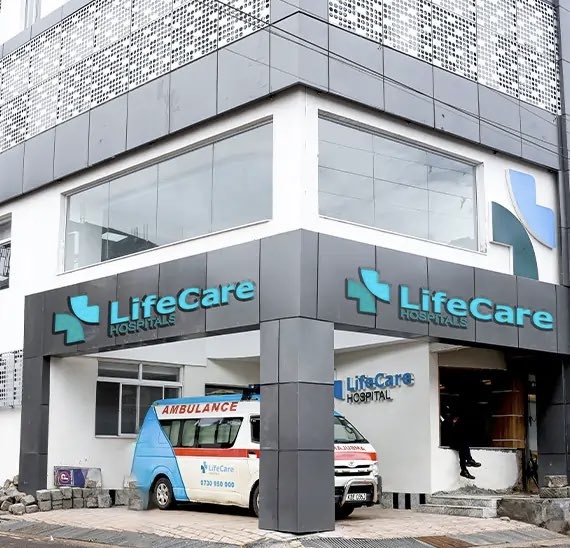
On the morning of Monday, May 25, 2026, dozens of doctors, nurses, clinical officers, and support staff walked out of LifeCare Hospital’s gleaming Eldoret premises and lined the road outside, their hospital ID badges still clipped to their uniforms. They were not on strike in the traditional sense. They were doing something rarer and, in the context of a private hospital that has spent years cultivating a polished public image, far more dangerous: they were telling the truth.
The workers who gathered outside LifeCare Eldoret that morning alleged, with documented payslips in hand, that contributions deducted from their salaries for the Social Health Authority, the National Social Security Fund, and the Higher Education Loans Board had been withheld from the relevant state bodies for months. Healthcare professionals employed at a private hospital billing patients at full private rates had been left unable to access their own medical cover because, despite the deductions appearing faithfully on their payslips, the money was never forwarded. When they fell sick, management’s reported instruction was to seek treatment at the Moi Teaching and Referral Hospital.
Dr. Amele Ndoli, the workers’ welfare chairperson, stood outside the facility that morning and articulated what many had been too frightened to say indoors. “We are working at such a prestigious hospital, yet we cannot afford quality healthcare ourselves due to the non-remittance of our SHA deductions,” he said. The threat that followed was delivered with the precision of someone who had watched internal complaints disappear without trace for months: “This sit-in is just a warning shot. If our grievances are not addressed within the next 48 hours, we are going to issue a formal strike notice in strict tandem with the Labour Relations Act. We will not be silenced.”
Inside the hospital boardroom, Eldoret Human Resource Manager Joshua Rop met journalists and offered the response that institutions in denial almost always reach for: no formal written complaints had been received. The workers, in other words, had not used the right channels. What Rop did not explain, and what multiple current and former employees have now told this publication in detail, is that the right channels at LifeCare Eldoret do not exist in any meaningful sense. They lead to show-cause letters and dismissal notices, not resolution.
Healthcare workers employed at a private hospital billing patients at full private rates were told to seek treatment at a public referral hospital.
The Director and the Culture He Created
The figure at the centre of the Eldoret collapse is Dr. Mayank Puri, the facility’s Senior Director and the person whose arrival staff consistently identify as the turning point at which the hospital began its managed decline. Puri’s professional profile is impressive on paper. He serves as Director of Hospital Operations for LifeCare Hospitals, bringing over twelve years of experience as a healthcare profit and loss leader with a stated focus on team building, cost optimisation, and revenue growth. As recently as February 2026, he was publicly addressing participants at the 7th Eldoret Marathon, speaking as Senior Director of LifeCare Hospitals Eldoret and articulating the hospital’s mission to safeguard athlete health.
That public profile is, by all accounts from those who work beneath it, a fiction. Former employees and current staff who spoke to Kenya Insights under strict conditions of anonymity describe a workplace transformed by Puri’s arrival from a functioning hospital environment into one defined by suppressed grievance and low-grade terror. Any employee who raises a concern, questions a management decision, or advocates for better working conditions faces a show-cause letter or summary dismissal. The message, delivered repeatedly through both action and silence, is that dissent will not be tolerated.
One former employee, who left after months of attempting to raise legitimate clinical concerns through internal structures, described the atmosphere with clinical precision: “Since he arrived, staff complaints are ignored, and anyone who tries to raise concerns risks being fired or issued with a show-cause letter. Employees are now living and working in fear because management no longer tolerates criticism or honest feedback from workers on the ground. He is not approachable at all. Most employees describe him as someone more focused on chest-thumping and maintaining a public image rather than solving the serious operational problems affecting the hospital internally.”
The clinical consequences of this governance posture are not theoretical. A hospital where frontline workers cannot report drug shortages, equipment failures, or patient safety concerns without risking their livelihoods is a hospital operating with its own warning systems disabled. The patients who pass through LifeCare Eldoret’s doors are receiving care from a workforce that has been structurally silenced. The resignation of experienced staff — doctors, nurses, and clinicians who carry institutional knowledge accumulated over years — has accelerated since Puri’s installation, leaving behind a depleted and demoralised team.
Locum Workers: Contracts Written to Be Broken
Among the most concrete and verifiable allegations against Puri’s management is the treatment of locum staff. Workers hired under contracts stipulating nine-hour shifts are being compelled to work twelve-hour shifts. The additional three hours per shift are not voluntary, not compensated at an agreed rate, and not supported by any variation clause that the workers were asked to agree to. They are simply extracted.
This is not a scheduling dispute. Locum workers in Kenya’s healthcare sector are among the most economically precarious members of the workforce, typically without the employment protections available to permanent staff and therefore among the least able to resist unlawful demands from management. Forcing locums to work beyond contracted hours without proper compensation constitutes a breach of the Employment Act, which requires that any variation in working conditions be agreed between the parties and that overtime be properly compensated.
Multiple sources describe a deliberate and visible inequality in how permanent staff and locum workers are treated at the facility, with different standards applied to scheduling, discipline, and basic consideration. That two-tier system has generated resentment and fragmented what should be a unified clinical team. In a hospital already haemorrhaging experienced staff to resignation, the erosion of team cohesion among those who remain is a direct threat to patient care.
Locum workers hired on nine-hour contracts are being compelled to work twelve-hour shifts — uncompensated, uncontracted, and apparently unchecked.
The SHA Theft Hidden in Plain Sight
The statutory deduction scandal is both the most damaging and the most verifiable dimension of the allegations against LifeCare Eldoret’s management. Permanent staff members report that deductions for SHA contributions, NSSF, and HELB appear each month on their payslips as normal line items. When those workers check their records with the relevant state bodies, the corresponding remittances are absent. The deductions were taken. The money was not forwarded.
Under Kenyan law, statutory deductions are trust monies the moment they are withheld from an employee’s salary. They do not become the employer’s funds at any point. SHA contributions, calculated at 2.75 percent of gross salary with a minimum of Ksh 300 monthly, are due by the ninth of the following month. NSSF contributions from February 2025 operate under a revised two-tier structure, with both employee and employer contributions due by the same deadline. HELB remittances must reach the board by the fifteenth of the following month. Employers who deduct but fail to remit face fines of up to Ksh 2 million, imprisonment of up to three years, or both.
The practical consequences for workers at LifeCare are compounding in real time. HELB borrowers face the risk of appearing as loan defaulters. SHA accounts show no active contributions despite years of deductions appearing on payslips. Pension records are incomplete. And the culture of fear that Puri’s management has cultivated means most workers have been suffering these losses in silence, calculating that the risk of speaking out exceeds the injury already done to them.
There is a particular cruelty to this situation that bears stating plainly. These are healthcare workers, people who have dedicated their professional lives to caring for the sick, being denied access to the healthcare system they work within because the institution they serve has pocketed the contributions that should have activated that cover. When they fall ill, they are told to go to Moi Teaching and Referral Hospital. The hospital that employs them and bills their patients at private rates will not cover them.

Life Care Hospital employees in Eldoret, Uasin Gishu County, demonstrate at the entrance of the hospital on May 25, 2026, over non-remittances of their statutory deductions, alleged use of abusive language by a director, intimidations, among other grievances.
Chatan and the Ground Floor of Fear
Puri is not operating alone. Beneath the Senior Director operates a support manager identified by multiple sources as Chatan, described as the head of support staff at LifeCare Eldoret. The description of Chatan’s management style is consistent across every account received by this publication. Rather than organising and motivating the support workers under his authority, he conducts himself through public confrontation, berating housekeepers, porters, and cleaners in hospital corridors in front of patients and colleagues. The effect is not discipline but humiliation. The result is not a high-performing support function but a demoralised workforce going through the motions while bracing for the next public dressing-down.
This matters beyond the dignity of individual workers. A hospital that cannot maintain the morale and dignity of its housekeeping and support staff cannot maintain the standards of cleanliness, hygiene, and patient environment that clinical quality depends upon. The relationship between ward cleanliness, infection control, and patient outcomes is well established in healthcare governance. The conditions described at LifeCare Eldoret, where the person responsible for support staff management treats those workers as targets of aggression, are a patient safety issue as much as an employment one.
Drug Shortages: Billing for What Is Not There
For a 75-bed multispecialty facility that publicly positions itself as the pinnacle of healthcare excellence in the Eldoret region, equipped to handle everything from routine health assessments to the most intricate medical procedures, the recurring drug shortages described by staff are not a minor administrative gap. They are a fundamental breach of the hospital’s obligations to its patients, and they are happening while the institution continues billing those same patients at full private hospital rates.
Frontline staff absorb patient anger daily over gaps that are entirely management-created. Patients presenting prescriptions are told to purchase drugs from external pharmacies. The gap between what LifeCare Eldoret charges and what it delivers has become a daily feature of clinical life inside the facility. The workers who described this situation to Kenya Insights did so with the exhaustion of people who have raised these concerns internally and been met with either silence or a show-cause letter.
Patients are being directed to external pharmacies for drugs the hospital is simultaneously billing for on insurance claims.
The SHA Fraud That Came Before: LifeCare Bungoma
The Eldoret crisis does not exist in isolation. It is the continuation of a documented pattern of financial misconduct that the Africare Group has not been held to account for.
On August 7, 2025, Health Cabinet Secretary Aden Duale announced the immediate suspension of 40 hospitals from the SHA scheme, following a sweeping forensic audit and review of suspicious claims flagged by SHA’s digital health system. The crackdown was the largest single enforcement action against healthcare fraud in Kenya’s recent history, bringing the total number of suspended facilities to 75 in under a month. The audit exposed a range of abuses: fake admissions, doctored medical records, patients billed for services they never received, outpatient visits fraudulently upgraded to inpatient admissions, duplicate claims for the same patient submitted across multiple facilities, and outright ghost patients.
LifeCare Hospitals Bungoma was among those formally suspended, gazetted under Kenya Gazette No. 168 of August 7, 2025, in line with the SHA’s Transparency Policy. Bungoma alone accounted for four suspensions in the August crackdown, with LifeCare appearing alongside The Webuye Hospital, Maxicare Sunrise Hospital, and Nairobi Hospital. The CS was explicit: during the period of suspension, the facilities would not receive any SHA payments, reimbursements, or benefits, and surcharge recovery proceedings had been launched to claw back public funds already fraudulently claimed. “Any healthcare provider whose information is used to defraud SHA shall be held personally liable,” Duale warned.
The allegations now emerging from Eldoret regarding SHA contributions deducted from workers but never remitted give the Bungoma suspension a different and darker context. If LifeCare Bungoma was billing SHA for ghost patients and inflated services on one side of the ledger while pocketing employee SHA contributions on the other, the institution’s relationship with the national health insurance system was not merely opportunistic but comprehensively parasitic. The financial misconduct at Bungoma, it now appears, was not an isolated branch failure. It was a group-wide posture.
A Proprietor With a History
Understanding the LifeCare crisis requires understanding the man whose name sits behind every facility in the Africare network. Jayesh Saini has built a sprawling private healthcare empire in Kenya, one that encompasses LifeCare Hospitals across five major counties, Bliss Healthcare — Kenya’s largest outpatient network with over 65 centres in 37 counties — Dinlas Pharma EPZ, Medicross, Fertility Point Kenya, and a stake in Nairobi West Hospital, the institution his father, Dr. Umesh Saini, established in the 1980s.
Saini’s public positioning is that of a transformational healthcare entrepreneur, a man who saw the gap between what Kenya’s underserved communities needed and what existed, and built the infrastructure to fill it. He has been the subject of flattering profiles in multiple international business publications and has been repeatedly honoured for his contribution to accessible healthcare in East Africa.
What those profiles do not address is the consistency with which his name has appeared at the centre of healthcare financing scandals stretching back over a decade. In 2012, parliamentary investigators named Saini as the driving figure behind Clinix Healthcare, a company that received at least Ksh 91.3 million from the National Hospital Insurance Fund’s civil servants’ medical cover scheme for facilities that investigators found to be non-existent or non-operational. The majority shareholder of Clinix was Pharma Investment Holdings, incorporated in the British Virgin Islands, the secretive offshore jurisdiction that Kenyan investigative committees have tracked in connection with several major financial scandals. Investigators noted that Saini also controlled Gesto Pharmaceuticals, which had separately been accused of supplying substandard drugs to the Kenya Medical Supplies Agency.
The Clinix scandal did not result in a criminal conviction. It resulted in a parliamentary report and public hearings, after which Saini’s businesses continued their expansion. Clinix was later folded into the broader Bliss Healthcare network. The NHIF replaced by SHA in 2023. And Jayesh Saini’s network of hospitals was registered to receive reimbursements under the new scheme.
The question that SHA, the DCI, and the Ministry of Labour must now confront is not whether the Africare Group has a pattern of exploiting public health financing and its own workers. That pattern is documented. The question is whether anyone in authority has the will to act on it.
The HR Apparatus: Where It Started and Where It Leads
The employment abuses at LifeCare do not begin with Mayank Puri and Chatan in Eldoret. They run deeper into the Africare structure, into the human resource machinery that governs how workers are recruited, employed, and discarded across the network.
Varinder Singh, who served as Chief Human Resources Officer at Africare Global and was the most senior HR figure overseeing personnel across both LifeCare and Bliss Healthcare, previously faced explosive allegations of sexual harassment, including from female job seekers who encountered him in the course of applying for positions within the Africare umbrella. Singh was publicly celebrated by Africare as the architect of the group’s inclusive and high-performing culture, described as having nearly two decades of HR experience and as a champion of transparency and trust as the foundation of the Africare workplace. The allegations that had circulated about his conduct toward female job seekers described a very different encounter: women applying for positions at LifeCare or Bliss Healthcare facilities reported advances from Singh that went well beyond professional boundaries, with the power imbalance inherent in the application process making those advances particularly coercive.
Those allegations did not result in any documented public accountability. Singh remained in his role. The institutional culture he embodied remained intact.
Current employees are now raising strikingly similar complaints about leadership within Africare’s human resource function, alleging that female staff continue to face sexual advances from HR leadership, with employment opportunities, salary increments, and career placement used as leverage. That the same institutional culture appears to have persisted across different individuals holding HR authority at the same group of hospitals points not to isolated misconduct but to a structural failure of governance within Africare’s Kenya operations. The group’s HR department is, on this account, not the last line of protection for workers against abuse. It is the instrument through which abuse is administered.
Under the Sexual Offences Act of Kenya, a person in a position of authority who persistently makes sexual advances that they know are unwelcome may be found guilty of sexual harassment. Where employment decisions are conditioned on the acceptance of those advances, the conduct constitutes a recognised form of workplace sexual coercion under Kenyan law. The affected women are entitled to file complaints with the National Gender and Equality Commission and to pursue action through the DPP under the Sexual Offences Act.
The Meru Thread: Wages Withheld, Nurses Abandoned
The Eldoret strike is not LifeCare’s only active employment crisis. Reports from Meru, where another LifeCare branch operates, describe a pattern in which nurses who have resigned after serving proper notice periods under the Employment Act of 2007 have been denied their final dues. The nurses raising these allegations describe their resignation letters being received and acknowledged, their notice periods being served, and yet upon exit, the hospital refusing to process their final pay. Management is said to have cited paperwork irregularities or internal policy requirements not referenced in their employment contracts as justification.
Under the Employment Act, an employer is legally obligated to pay outstanding wages, accrued leave allowances, and any contractual terminal benefits upon an employee’s lawful separation from service. The law does not permit an employer to withhold these payments as leverage or on pretextual grounds. Healthcare workers, often young professionals carrying student loan obligations and family responsibilities, are particularly vulnerable to this kind of financial pressure. For them, a single month’s unpaid salary is not an inconvenience. It is a crisis.
Mediheal’s Shadow: Eldoret’s Warning from Recent History
LifeCare Hospitals is not the first private healthcare network in Kenya to present a polished public face while the interior decays. The collapse of Mediheal Group of Hospitals, which reached its most acute phase in 2024 and 2025, offers a template that LifeCare’s management and ownership should study with attention.
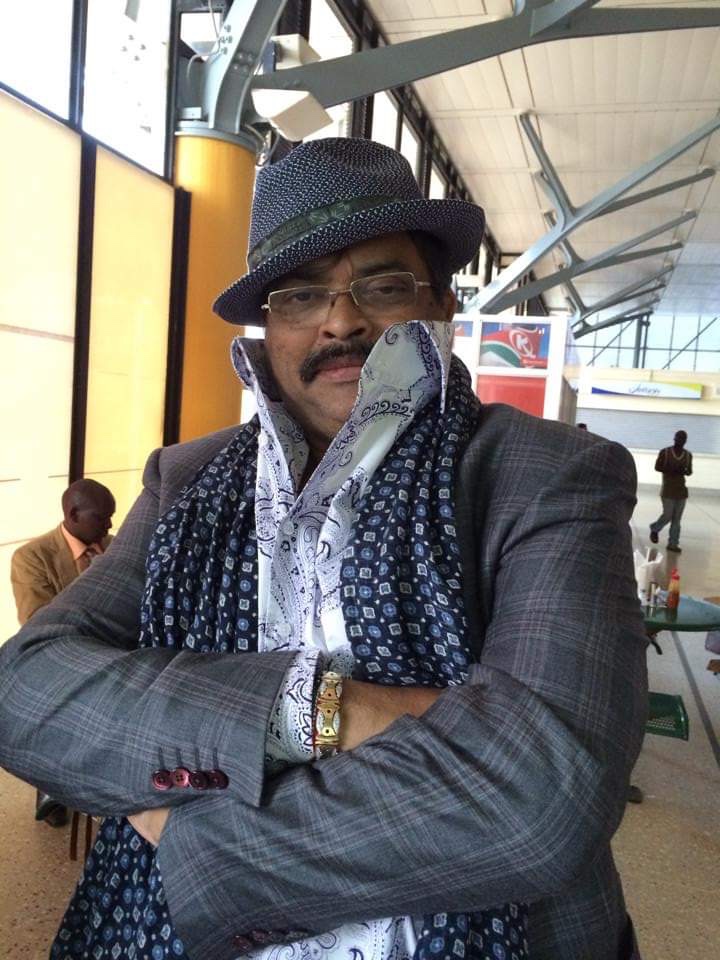 Swarup Mishra.
Mediheal, founded by Dr. Swarup Mishra and operating ten facilities across Kenya including a major presence in Eldoret, was for years celebrated as a model of private healthcare expansion. Its Eldoret Fertility and Transplant Centre was particularly prominent, handling the majority of Kenya’s kidney transplants. Then, in April 2025, a joint investigation by Deutsche Welle, ZDF, and Der Spiegel exposed a coordinated international organ trafficking network routed through the Eldoret facility, with vulnerable Kenyan donors lured by promises of large payouts and then underpaid, left without adequate post-operative care, and suffering chronic health complications that robbed them of their livelihoods. Health CS Aden Duale immediately suspended all transplant services at Mediheal and launched a parliamentary inquiry.
While the parliamentary committee ultimately cleared Mediheal of the most serious trafficking allegations in April 2026, the scandal had already destroyed the group financially. By late 2024, auctioneers had seized property at Mediheal’s Nakuru facility to recover Ksh 40 million in unpaid doctor salaries. The Nakuru branch closed. The pattern replicated what investigators had documented at a hospital that had been growing unsustainably, billing aggressively, and managing its workers as a cost to be minimised rather than a clinical team to be invested in.
The similarities to the situation now emerging at LifeCare are not incidental. Drug shortages that force patients to external pharmacies while the hospital bills comprehensively through SHA. Statutory deductions collected from workers and not remitted. Experienced clinical staff driven out by management practices that punish dissent. The warning signs at Mediheal were visible before the collapse. They are visible now at LifeCare.
Mediheal collapsed after years of aggressive billing, deteriorating conditions, and unpaid workers. The warning signs at LifeCare are identical.
What the Law Demands
The legal exposure facing the Africare Group and its management is extensive and, if regulators act, potentially ruinous.
The non-remittance of SHA contributions is prosecutable under the Social Health Insurance Act, 2023. The non-remittance of NSSF contributions is prosecutable under the NSSF Act, with employers facing fines and imprisonment. HELB non-remittance carries penalties under the Higher Education Loans Board Act. The Employment Act provides a clear framework under which workers who have been denied terminal dues or subjected to unlawful variation of their contracts may seek remedies before the Employment and Labour Relations Court. And the Sexual Offences Act, alongside the Employment Act’s provisions on workplace harassment, provides a framework under which the women who have been subjected to quid pro quo advances within the Africare HR structure may pursue criminal and civil remedies.
The SHA has independent verification tools. A cross-network audit of Africare’s remittance records against payslip evidence would establish within weeks whether the deductions visible on workers’ payslips have been forwarded to the relevant bodies. The KRA similarly has access to payroll records. The Ministry of Labour can launch inspections. The question is not capability. It is will.
The Accountability Deficit
Jayesh Saini has built an empire on a narrative of accessible, affordable, values-driven healthcare. His companies conduct around 100 free medical camps across Kenya each year and fund community welfare through the LifeCare Foundation. His public statements consistently position the Africare Group as a mission-driven actor in Kenya’s health sector, not merely a commercial enterprise. The gap between that narrative and the documented reality of the group’s operations — the SHA fraud at Bungoma, the deducted but unremitted contributions at Eldoret, the locum contract violations, the culture of fear installed by management, the sexual harassment allegations within the HR structure, the withheld terminal dues in Meru — is not a minor inconsistency. It is a fundamental fraud against the workers who built the empire and the patients who fund it.
Saini has not publicly responded to the allegations raised against his network. Mayank Puri has not responded to requests for comment. The Africare Group corporate offices have not responded to outreach from this publication or, prior to this, from InsideKE. That silence is its own statement.
The workers who stood outside LifeCare Eldoret on the morning of May 25, 2026, were not asking for the impossible. They were asking for their own money. They were asking for contributions deducted from their salaries to be forwarded to the bodies those contributions are legally assigned to, so that they could access the healthcare system they spend their professional lives maintaining. They were asking for their employer to obey the law.
The SHA owes the public a full account of its audit findings across the entire Africare network, not only the Bungoma branch that has already been gazetted. The Ministry of Labour owes the workers at LifeCare an independent inspection of payroll practices across all facilities. The Kenya Medical Practitioners and Dentists Council, alongside the Nursing Council of Kenya, owes healthcare workers at LifeCare a credible investigation into the clinical governance failures that have driven experienced staff from the network. And the DPP owes the women who have raised sexual harassment complaints within the Africare HR structure a review of whether the conduct described meets the threshold for prosecution under the Sexual Offences Act.
The workers of LifeCare Hospitals have waited long enough. They are owed their money, their dignity, and their safety. The institutions that exist to protect them must now demonstrate that those obligations mean something.
Kenya Insights allows guest blogging, if you want to be published on Kenya’s most authoritative and accurate blog, have an expose, news TIPS, story angles, human interest stories, drop us an email on [email protected] or via Telegram


‘Puzzle Over Mysterious Chinese Woman ‘Chimu Electric’ With Questionable Documents Bagging Multibillion On State Tenders

LifeCare on the Brink: SHA Fraud, Stolen Wages, and the Rotten Empire Jayesh Saini Built

Senegal’s Parliament Speaker Quits Two Days After Prime Minister Is Sacked

Inside FAFSA Fraud: How Kenyan Cybercriminals Siphoned Millions from America’s Sh12 Billion Student Loan System

LSK On The Spot For Renewing Rogue Lawyer Dennis Onyango’s Licence Despite Mounting Evidence He Held Foreign Investors’ Millions Hostage

Your Medical Records Were Wide Open: How Three Digital Lenders Hacked the Heart of Kenya’s Health System and the DHA Chief Who Looked Away

DENTIST IN DISGUISE: How Este Medical Kenya’s Co-Founder Allegedly Prescribed Medicines Outside Her Scope, Lied to Police, and Weaponised the Law Against a Foreign Patient

Nigerians Arrested in Thailand Over AI Dating Scam

Senegal President Sacks PM Sonko, Dissolves Government After Months of Friction

Court Sets Date For Ruling In Gachagua Impeachment Petitions

How Did a Sh468K KRA Salary Allegedly Turn Into Sh30 Billion? Questions Deepen Over Commissioner George Obel and Ciala Resort Owner’s Wealth

Why Ruto’s Favourite Candidate Adan Mohammed Could Be Locked Out of the KRA Top Job

Green Gold, Rotten Roots: How Kenya’s Biggest Avocado Firms Hijacked a Sh5.8 Billion Harvest Ban

Safaricom’s Sh1.4 Billion Reckoning: How Kenya’s Most Profitable Company Stole a Man’s Idea and Got Caught

The $24 Million Heist at the End of the World

The Rot Inside Absa: How Bank Insiders Are Looting Nairobi’s Customers

Denial Under Duress: The Untold Collapse Threatening David Lagat’s DL Group’s Empire

THE INSURER THAT TOOK YOUR PREMIUM AND FORGOT YOUR NAME: How ICEA Lion Left a Client Begging for Sh7.8 Million Across Four Months

The President’s Helicopter: How Ruto’s Aviation Empire Lands a Historic Airbus Milestone While His Government Writes the Tax Code

Bush Air Safaris Founder John Ndiritu Risks Losing Property Over Disputed Loan Claim
-
 News1 week ago
Why Ruto’s Favourite Candidate Adan Mohammed Could Be Locked Out of the KRA Top Job
-
 Business2 weeks ago
The Rot Inside Absa: How Bank Insiders Are Looting Nairobi’s Customers
-
 Business2 weeks ago
The President’s Helicopter: How Ruto’s Aviation Empire Lands a Historic Airbus Milestone While His Government Writes the Tax Code
-

 Business1 week ago
Court Confirms Safaricom Customers Data Was Sold To Betting Companies In Seven-Year Cover-Up
-

 Arts & Culture2 weeks ago
“TikTok Who? YouTube Sorry. A Kenyan-Built Platform Just Dropped—and 20 African Ministers Showed Up To Launch It.”
-

 Business7 days ago
Blocked: How Mombasa Tycoon Ashok Doshi Has Stopped Imperial Bank Depositors From Getting Their Money
-

 Business1 week ago
Paybill 585555: How Airtel Kenya’s Interoperability Gateway Became A Criminal Pipeline Draining Millions From Unsuspecting M-Pesa Users
-

 News5 days ago
Jackson Kihara Accuses His Uncle Rigathi Gachagua of Framing Him in Robbery with Violence Case To Surrender Father’s Property