
News
Jackson Kihara Accuses His Uncle Rigathi Gachagua of Framing Him in Robbery with Violence Case To Surrender Father’s Property
Jackson Kihara Gachagua, serving 20 years at Manyani Maximum Prison for robbery with violence, tells the High Court that his uncle, the former Deputy President, engineered the criminal case to prise away documents concealed on his dying father’s instructions

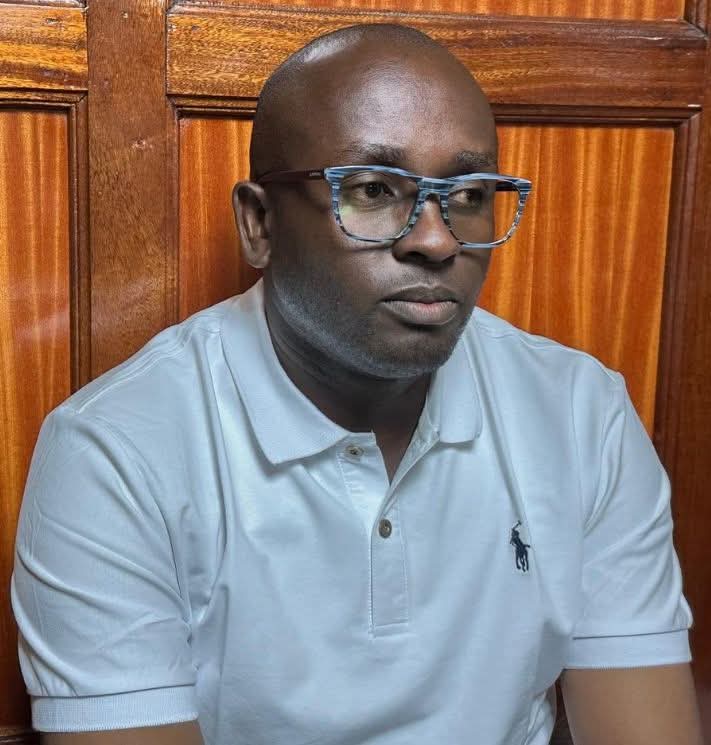
NAIROBI, May 21, 2026 — The figure who appeared at Milimani Law Courts on Wednesday looked weathered and confined, escorted in by prison officers from Manyani Maximum Security Prison four hundred and fifty kilometres to the south. Jackson Kihara Gachagua, son of the late Nyeri Governor Nderitu Gachagua and nephew to former Deputy President Rigathi Gachagua, has been in custody for the better part of a decade, serving a twenty-year sentence for robbery with violence. But if the walls of Manyani have pressed upon him, they have apparently failed to suppress what he now says is the truth about how he came to be there.
Standing before Justice Alexander Muteti, Kihara levelled an accusation that cuts through the family feud that has consumed the Gachagua name into a criminal justice allegation of the gravest kind. He told the court that his uncle, the man who served as Kenya’s second in command until his dramatic parliamentary impeachment in October 2024, orchestrated the robbery with violence case against him as a mechanism of coercion, a means of forcing him to reveal the whereabouts of sensitive documents belonging to his late father’s estate.
“Had I disclosed to my uncle where the documents are, I could not be here today,” Kihara told Justice Muteti, the words carrying the weight of years spent in one of Kenya’s harshest correctional facilities.
The allegation, explosive in its specificity, connects a criminal conviction handed down in a Nyeri magistrate’s court in 2016 to the broader family inheritance war that has since erupted into public view. Before his death in February 2017 at the Royal Marsden Hospital in London, where he was being treated for pancreatic cancer, Nderitu Gachagua — then Nyeri County’s inaugural governor — entrusted his son with crucial property documents, among them title deeds and a vehicle logbook. According to Kihara, his father gave those documents to him for safekeeping, and when Rigathi Gachagua came demanding them during Nderitu’s final days in hospital, Kihara refused to hand them over. It was that refusal, he now alleges, that marked him for prosecution.
The original charge arose from an incident on December 30, 2013, at the Wariruta area of Nyeri County, where Kihara was accused of robbing a man named Alphaxad Mahindu Kiringu of a Toyota Sienta station wagon valued at Kshs.760,000, reportedly while armed with knives and in the company of another person. The Senior Resident Magistrate’s Court in Nyeri convicted him in September 2016, and in May 2019 the High Court at Nyeri upheld that conviction, though court records show that during the appeal process questions were raised about whether the prosecution had adequately proved key elements of the offence, including the presence of weapons and the use of actual violence. His sentence was nonetheless confirmed, and a subsequent appeal to the Court of Appeal was dismissed, cementing the twenty-year term.
It is that series of legal defeats that has brought Kihara before Justice Muteti now, this time not merely attacking the sentence but challenging the entire architecture of the case against him, arguing that what he has in hand is fresh material that would expose the prosecution as having been engineered from outside the courtroom.
He told the court he had lived for years under a cloud of fear and intimidation, unable to speak openly about the circumstances of his conviction. His silence, he said, only broke after October 11, 2024, the same day Rigathi Gachagua was removed from the Deputy Presidency, when he says he received assurances of protection from the government. Officers from the Directorate of Criminal Investigations and the National Intelligence Service visited him at Manyani, he told the court, and he gave them the full account. A year on, he said, nothing had come of those assurances.
Kihara’s application also takes on the lawyers who represented him over the course of his failed appeals. He told the court he wished to conduct his own defence going forward, saying that successive advocates had been compromised and abandoned him without explanation. He has also been in communication with the Law Society of Kenya president, he said, providing details of a prominent lawyer he retained who was later neutralised, claiming he held documentary evidence of that interference.
On the question of sentence, Kihara argued that the twenty years imposed was disproportionate when measured against penalties handed down in cases involving even more serious offences. He pointed to murder convictions that had attracted lighter terms, and submitted that the trial court failed to credit him for the four years he spent in remand before sentencing, an omission he characterised as a constitutional violation. He presented rehabilitation records to the court, noting that he had trained as a teacher during his incarceration and was seeking the court’s consideration of those efforts in any review of his sentence.
Justice Muteti was measured in his response. He told Kihara that the High Court could not revisit matters of fact already settled by the Court of Appeal unless sufficient grounds for a retrial were established. “I cannot revisit issues of fact that have been dealt with by the Court of Appeal unless the issues relate to a retrial,” the judge stated. He advised Kihara to work closely with his family’s lawyer and consider escalating the outstanding issues to the Supreme Court, indicating that several of the grounds raised fell outside the jurisdictional reach of the High Court.
The court directed Manyani Maximum Prison authorities to facilitate the retrieval of documents Kihara says are central to his case, granting him a security escort to pass them to his family. A ruling on whether the fresh application will proceed to a full hearing is expected on June 17, 2026.
The courtroom drama arrives at a moment when the Gachagua name is already steeped in inheritance controversy. In March 2026, five of the late Nderitu Gachagua’s immediate family members — his first wife Margaret Nyokabi, Susan Kirigo, Mercy Wanjira, Jason Kariuki, and Ken Gachagua — wrote to President William Ruto through the Attorney General seeking an independent investigation into what they described as a scheme to disinherit them from the estate through intimidation, manipulation, and fraudulent dealings. The letter alleged that a close relative had interfered with the succession process, causing the irregular transfer of assets and financial loss to the rightful beneficiaries. The family said they had exhausted private options before going public.
Rigathi Gachagua rejected those claims with characteristic assertiveness, insisting the succession had been handled lawfully and brought to a close in 2018. He questioned the timing of the renewed grievances and told those dissatisfied with the process to take their complaints to court. To settle the matter publicly, the executors of Nderitu’s estate — Rigathi Gachagua, advocate Mwai Mathenge, and Njoroge Regeru — published the full will in local newspapers in April 2026. The document listed twenty-three beneficiaries drawn from across the family, with the immediate family receiving sixty-two percent of the net estate after debts were cleared. Prime properties including Queensgate Serviced Apartments, sold for Kshs.590 million, and Vipingo Estate, which fetched Kshs.250 million, were among the assets liquidated. Rigathi Gachagua himself received shares in Mweiga Homes under the will’s terms.
Whether Jackson Kihara’s allegations will receive a formal judicial hearing remains to be decided. What is clear is that his claims represent the most direct criminalisation of the inheritance dispute yet, transforming what has been a succession row into an allegation that the apparatus of criminal prosecution was weaponised against a man whose only offence, he says, was loyalty to a dying father’s last instructions.
Rigathi Gachagua had not responded to the allegations by the time of going to press.
Kenya Insights allows guest blogging, if you want to be published on Kenya’s most authoritative and accurate blog, have an expose, news TIPS, story angles, human interest stories, drop us an email on [email protected] or via Telegram


Questions Over Missing Sh1.3 Billion in Mombasa Water Company

Jackson Kihara Accuses His Uncle Rigathi Gachagua of Framing Him in Robbery with Violence Case To Surrender Father’s Property

Court Finds Shooble Energy Director Guilty Of Defrauding Kenyan Investors Sh23.5 Million

Blocked: How Mombasa Tycoon Ashok Doshi Has Stopped Imperial Bank Depositors From Getting Their Money

SEX SCANDAL ROCKS KISUMU POLYTECHNIC: Top Officials Linked as Secretary Accuses New Council Chairman of Naivasha Advances

Why Ruto’s Favourite Candidate Adan Mohammed Could Be Locked Out of the KRA Top Job

DCI Arrests Woman in Sh55.7 Million Gold Fraud Targeting American Citizen in Nairobi

Court Confirms Safaricom Customers Data Was Sold To Betting Companies In Seven-Year Cover-Up

Paybill 585555: How Airtel Kenya’s Interoperability Gateway Became A Criminal Pipeline Draining Millions From Unsuspecting M-Pesa Users

The Man Who Starved Kenya’s Voice

How Did a Sh468K KRA Salary Allegedly Turn Into Sh30 Billion? Questions Deepen Over Commissioner George Obel and Ciala Resort Owner’s Wealth

Nairobi Freezes Binance Accounts in Sweeping Anti-Fraud Crackdown as Global Scandal Record Haunts World’s Largest Crypto Exchange

The Man Behind the Badge: How Prof. Erastus Kanga Turned Kenya’s Premier Wildlife Agency into a Theatre of Corruption, Fear and Impunity
Why Ruto’s Favourite Candidate Adan Mohammed Could Be Locked Out of the KRA Top Job

Green Gold, Rotten Roots: How Kenya’s Biggest Avocado Firms Hijacked a Sh5.8 Billion Harvest Ban

Why the April 21 Flopped Protests Expose Kenya’s Rudderless Opposition

64-Year-Old KIM Faces Shutdown As Regulator Declares Its Certificates Worthless, Orders Employers To Shun Graduates

KETRACO CEO Advert Marred By Controversies As Fears Grow That Kipkemoi Kibias Is A Predetermined Candidate

KNH ON THE BRINK: How Corruption, Revenue Plunder and State Neglect Are Destroying Kenya’s Flagship Hospital
THE FIXER IN THE FILE ROOM: How Parliamentary Health Committee Clerk Adan Gindicha Cleared Mediheal Hospital of Organ Harvesting Claims Despite Mounting Evidence
-
 News3 days ago
Why Ruto’s Favourite Candidate Adan Mohammed Could Be Locked Out of the KRA Top Job
-

 Business2 weeks ago
Safaricom’s Sh1.4 Billion Reckoning: How Kenya’s Most Profitable Company Stole a Man’s Idea and Got Caught
-
 Investigations2 weeks ago
Denial Under Duress: The Untold Collapse Threatening David Lagat’s DL Group’s Empire
-

 Business1 week ago
The Rot Inside Absa: How Bank Insiders Are Looting Nairobi’s Customers
-

 Business2 weeks ago
THE INSURER THAT TOOK YOUR PREMIUM AND FORGOT YOUR NAME: How ICEA Lion Left a Client Begging for Sh7.8 Million Across Four Months
-

 Business2 weeks ago
Bush Air Safaris Founder John Ndiritu Risks Losing Property Over Disputed Loan Claim
-

 Business1 week ago
The President’s Helicopter: How Ruto’s Aviation Empire Lands a Historic Airbus Milestone While His Government Writes the Tax Code
-

 Africa2 weeks ago
Stung By West Africa Rejections, France Courts Rest Of Continent at Kenya Summit