
Business
G-to-G Deal Fails To Cushion Kenyans As Country Stares At Adulterated Fuel After Hiked Prices
The government-to-government deal was sold to Kenyans as the definitive answer to fuel supply volatility.

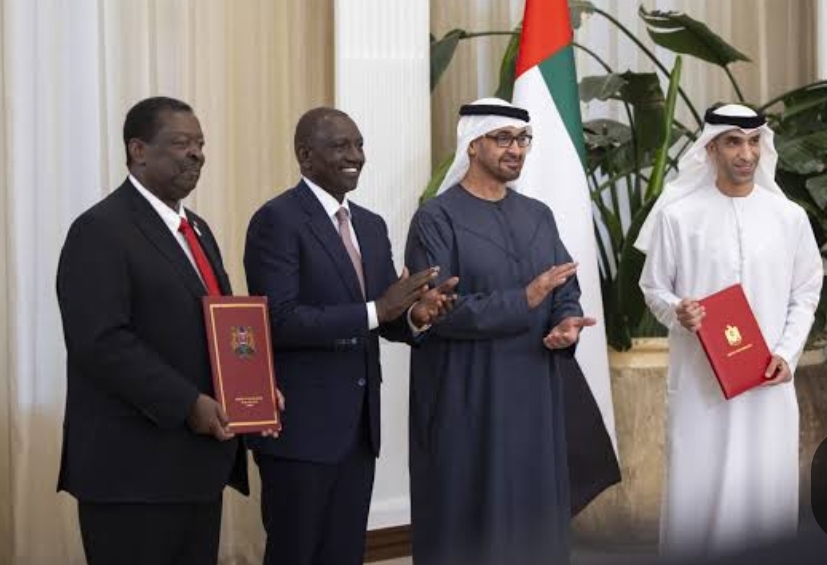
The government-to-government arrangement that President William Ruto’s administration had elevated as the centrepiece of Kenya’s energy security architecture has cracked under the weight of a Middle East war, delivering the sharpest fuel price shock in more than two decades and leaving the country simultaneously staring down an imminent subsidy collapse and a resurgent menace that the petroleum sector spent years and billions of shillings trying to kill: the deliberate adulteration of diesel with cheap kerosene.
Diesel in Nairobi now retails at Sh206.84 per litre, a record in the commodity’s price history in Kenya, after the Energy and Petroleum Regulatory Authority announced an increase of Sh40.30 per litre for the April 15 to May 14, 2026 pricing cycle.
It is the largest single-month jump for any petroleum product in at least 21 years of price records, surpassing the previous record of Sh25.00 set in September 2022 by sixty-one percent. Super petrol rose to Sh206.97 per litre. Kerosene was held flat at Sh152.78.
The government moved quickly to blunt the political damage.
President Ruto issued a directive that slashed VAT on petroleum from thirteen percent to eight percent, and EPRA revised the prices downward the following day, bringing super petrol in Nairobi to Sh197.60 per litre and diesel to Sh196.63.
It was a rare same-day reversal for a regulator not known for spontaneous concessions. But beneath the political theatre of hasty relief, the deeper structural crisis was left entirely unaddressed.
The Subsidy Tightrope
A fund that cushions Kenyans against costly fuel is set to come under pressure in the coming months, as suppliers warned that the cost of diesel and petrol will go even higher for consignments covering the May through August period. State officials reckon the fund holds less than Sh9 billion and is unlikely to last more than two months.
Without the Sh6.5 billion subsidy and the VAT reduction, diesel would have hit Sh233 per litre in Nairobi, an increase of nearly Sh70 from the previous cycle.
A total subsidy of Sh6.87 billion was applied for this cycle, with the biggest allocation of Sh5.74 billion directed at diesel, Sh702 million at petrol, and Sh423.9 million at kerosene.
The Petroleum Development Levy Fund, which finances this stabilisation mechanism, has a documented history of haemorrhaging money through politically convenient diversions.
In the financial year to June 2025, the government collected Sh26.37 billion from the petroleum development levy, but only Sh13.68 billion was used on fuel stabilisation.
The Auditor-General has repeatedly flagged the problem.
A recent audit of the Petroleum Development Fund for the year ended June 2025 questioned the absence of structured mechanisms to guide budgeting and financing of petroleum price stabilisation, even as the State continued to deploy significant public resources to cushion consumers.
The IMF has demanded a comprehensive audit of the scheme since its inception in 2021. That audit has never been published.
The levy was always a fragile instrument.
The State collected Sh26.37 billion from the petroleum development levy at the rate of Sh5.40 per litre of fuel in the year to June 2025, translating to an average monthly collection of Sh2.1 billion.
Against a single-cycle subsidy bill of Sh6.87 billion, the arithmetic is unforgiving.
The G-to-G Illusion Unravels
The government-to-government deal was sold to Kenyans as the definitive answer to fuel supply volatility.
The G-to-G structure was designed as a short-term fix: by securing 180-day supplier credit, Kenya eliminated the monthly scramble for half a billion dollars in spot-market foreign exchange.
Treasury CS John Mbadi told Parliament as recently as three weeks ago that Kenya should not be overly concerned, expressing confidence that the G-to-G arrangement had cushioned Kenyans against severe fuel shocks.
That confidence is no longer supported by the facts on the ground.
Aramco Trading Fujairah has written to Kenya stating that its sourcing of petroleum products from alternative locations has come at higher costs, which it intends to pass on.
The Saudi firm did not indicate which countries it has sourced petroleum from since the closure of the Strait of Hormuz, a narrow waterway through which up to one-fifth of global fuel supplies passes.
Some clauses in the deal provide for Saudi Arabia and the UAE to push up the cost of petroleum sold to Kenya in the event of Material Adverse Change, a contractual mechanism covering war, route closures, and extreme rises in sourcing costs.
The Middle East conflict has allowed the two Gulf states to initiate price increases to cushion themselves from higher costs and elevated freight and premium charges.
In its formal communication to Nairobi, Aramco stated that the Iran war had forced it to secure cargo from alternative locations to meet its contractual obligations, and that sourcing from these locations would extend delivery timelines and, combined with the elevated price environment, would directly and materially affect the price at which it sources its cargo.
The warning is blunt: the price cap that the G-to-G deal was supposed to guarantee is functionally dead for future consignments.
ADNOC, which supplies petrol under the arrangement, earlier invoked the force majeure clause in its supply contract following damage to a refinery that produces Kenya’s fuel, indicating its inability to produce fuel for its clients.
That crisis forced the government into emergency procurement. One Petroleum, a subsidiary of Mombasa billionaire Mohammed Jaffer’s Mbaraki Bulk Terminal, was among just two local firms cleared by the Ministry of Energy to import sixty tonnes of petrol each outside the existing G-to-G deal, at three times the government rate.
The DCI is now investigating whether shipments were deliberately procured to exploit the shortage, with preliminary investigations suggesting a consignment may have been overpriced by more than Sh4 billion, with a second anticipated shipment potentially pushing taxpayer losses to nearly Sh8 billion.
The Adulteration Comeback
While the subsidy story plays out in the finance pages and the One Petroleum scandal occupies the courts, a quieter and more insidious threat is reasserting itself in the supply chain: the adulteration of diesel with subsidised kerosene, a practice that brought Kenya’s fuel sector to its knees before 2018 and that the government spent eight years and over Sh50 billion in levy collections attempting to eradicate.
Oil marketers warned that the new price gap of Sh54 between diesel and kerosene could motivate rogue dealers to pump up diesel volumes using kerosene to boost their profits.
One executive at a major oil marketing company told Kenya Insights that the regulatory framework had once again created the ideal conditions for adulteration to thrive.
Small independent dealers, who are the majority outside the major cities, may now have the motivation to adulterate fuel due to the huge price difference. From their view, the government was blind to this reality when setting the prices.
The Sh18 per litre anti-adulteration levy introduced through the Finance Act of 2018 was supposed to permanently close this gap by raising the price of kerosene to near-parity with diesel, destroying the economic incentive for blending.
For years, it worked. Official data shows that collections from the anti-adulteration levy have dipped year on year since their introduction from a high of Sh7.83 billion in 2018 to Sh1 billion in 2023 and Sh847 million in 2024.
The declining collections were presented as evidence of success: less kerosene being bought meant less adulteration.
But that logic collapsed the moment the government chose to hold kerosene at Sh152.78 while diesel surged past Sh200.
The Sh18 anti-adulteration levy that once nearly eliminated the price gap between the two products is now arithmetically irrelevant.
Even factoring in the levy, a rogue dealer adulterating a litre of diesel with kerosene still stands to pocket a margin that industry players describe as irresistible to undercapitalised independent dealers operating outside the scrutiny of EPRA’s enforcement apparatus.
Adulteration refers to the use of kerosene to inflate the volumes of other fuel, mainly diesel, due to their closeness in properties.
Adulterated fuel triggers premature or uneven ignition, disrupting combustion and leading to engine seizures, while also releasing higher amounts of hydrocarbons that pollute the environment.
The damage falls most heavily on truck owners, matatu operators, smallholder farmers running diesel-powered water pumps, and small businesses running generators. These are precisely the constituencies that the kerosene subsidy was ostensibly designed to protect.
The Structural Contradiction
The government has thus engineered a situation in which it is spending Sh5.74 billion per cycle subsidising diesel at the pump while simultaneously creating the price conditions under which that same diesel will be corrupted before it reaches the pump.
The right hand does not know what the left hand is doing, or does not care.
The landed cost of kerosene surged 105.15 percent between February and March 2026, rising from US$639.48 per cubic metre to US$1,311.93, while diesel jumped 68.72 percent from US$636.45 to US$1,073.82 per cubic metre.
The disproportionate subsidy required to hold kerosene at Sh152.78 while its landed cost had more than doubled is the direct product of a political decision to protect low-income households. It is a defensible social objective.
What is not defensible is the failure to simultaneously account for what happens to the diesel-kerosene price differential when that subsidy is applied in isolation.
With dwindling fiscal space and IMF-mandated austerity measures, the government’s ability to continue cushioning consumers is under extreme pressure.
The Petroleum Development Levy Fund cannot sustain Sh6.87 billion monthly subsidies indefinitely from collections of Sh2.1 billion a month.
The fund will run dry.
When it does, the subsidy will collapse, kerosene prices will rise, the adulteration incentive may partially self-correct on price grounds, but the interim damage to engines, food supply chains, and public transport will already have been done.
Global analysts have warned that oil and gas prices will not go down any time soon, even if the Middle East war ends, citing pressure on fuel supplies and tight global markets.
Strains on public finances across countries are set to intensify further as the war damages economic activity and boosts demand for interventions to cushion the effects of high energy prices on households and companies.
President Ruto told Kenyans on Wednesday that the government would use all viable measures to mitigate price spikes in the coming months.
An Epra source said it would be difficult to sustain a similar subsidy of Sh6.5 billion for months if the Middle East crisis is prolonged.
That is, in the language of regulatory euphemism, an admission that it cannot be done.
The G-to-G deal was never a structural fix.
It was a financing mechanism that shifted the timing of dollar exposure without eliminating the underlying vulnerability of a country that imports one hundred percent of its refined petroleum from a region now at war.
The deal bought time. Time has run out.
What comes next, if the subsidy fund collapses before the war ends, is diesel at Sh250 or higher, unsubsidised kerosene at prices that complete the destruction of whatever low-income cooking fuel safety net survived the past two years of attrition, and a downstream fuel supply chain running on adulterated product that EPRA has never had the enforcement capacity to police at scale.
That is not a scenario anyone in the government appears prepared to address publicly.
The price board at the petrol station in Eldoret was updated on April 15. By May 14, when EPRA meets again, the numbers on that board may look almost nostalgic.
Kenya Insights allows guest blogging, if you want to be published on Kenya’s most authoritative and accurate blog, have an expose, news TIPS, story angles, human interest stories, drop us an email on [email protected] or via Telegram


Yet Another Blow for Bia Tosha as Court Rejects Bid to Halt Diageo–Asahi Transaction

US to Slash Number of African Embassies Processing Visas from 50 to 20, Kenya Remains a Key Hub

Trump Picks Veteran Crisis Diplomat Henry Wooster as New U.S. Ambassador to Kenya

Former Catholic Priest Arrested Over Alleged Treasonous Social Media Posts

Hundreds Protest Against Planned US Ebola Quarantine Facility in Kenya

President Ruto Defends Laikipia Ebola Quarantine Centre, Tells Critics to ‘Relax’

“Raila Died Walking, He Didn’t Collapse,” Maurice Ogeta Breaks Silence On His Boss’ Final Moments

Bolt Denies Viral Exit Claims, Says Kenya Operations Remain Fully Active

Secret Trident Meetings, Claims of Millions Exchanged: Fresh Questions Raised Over PCF Boss Mohammed Sahal’s Role in Insurance Battle

The Kamukunji Cash Pit: Ghost School, Phantom Audit Trails and NG-CDF Manager Who Refuses to Leave

Why Ruto’s Favourite Candidate Adan Mohammed Could Be Locked Out of the KRA Top Job

Este Medical Kenya Fights American’s Explosive Complaints

Safaricom’s Sh1.4 Billion Reckoning: How Kenya’s Most Profitable Company Stole a Man’s Idea and Got Caught

LifeCare on the Brink: SHA Fraud, Stolen Wages, and the Rotten Empire Jayesh Saini Built

The Rot Inside Absa: How Bank Insiders Are Looting Nairobi’s Customers

The $24 Million Heist at the End of the World

Denial Under Duress: The Untold Collapse Threatening David Lagat’s DL Group’s Empire

THE INSURER THAT TOOK YOUR PREMIUM AND FORGOT YOUR NAME: How ICEA Lion Left a Client Begging for Sh7.8 Million Across Four Months

Court Confirms Safaricom Customers Data Was Sold To Betting Companies In Seven-Year Cover-Up

Eight Students Arrested In Kenya After Suspected Deadly School Arson Attack
-
 News1 week ago
Este Medical Kenya Fights American’s Explosive Complaints
-
 Investigations1 week ago
LifeCare on the Brink: SHA Fraud, Stolen Wages, and the Rotten Empire Jayesh Saini Built
-
 News4 days ago
Eight Students Arrested In Kenya After Suspected Deadly School Arson Attack
-
 Americas1 week ago
Inside FAFSA Fraud: How Kenyan Cybercriminals Siphoned Millions from America’s Sh12 Billion Student Loan System
-

 Investigations1 week ago
LSK On The Spot For Renewing Rogue Lawyer Dennis Onyango’s Licence Despite Mounting Evidence He Held Foreign Investors’ Millions Hostage
-

 Investigations2 days ago
Betika Faces DCI Probe, Directors Arrest and License Revocation Over Massive 29.5 Million Safaricom Customers’ Data Breach
-

 Investigations3 days ago
29.5 Million Safaricom Customers’ Data Breach Lands Odibets Boss Andrew Aligula In Police Custody, Firm Now Operating On A Thin Line Of Court Order
-
 News3 days ago
How Uhuru’s Deal With Obama In 2015 Paved Way For America’s Ebola Plan In Kenya