
News
What Latest Ukraine Talks Reveal About Putin’s State Of Mind
For starters, that he’s not ready to sign a peace deal. At least, not right now

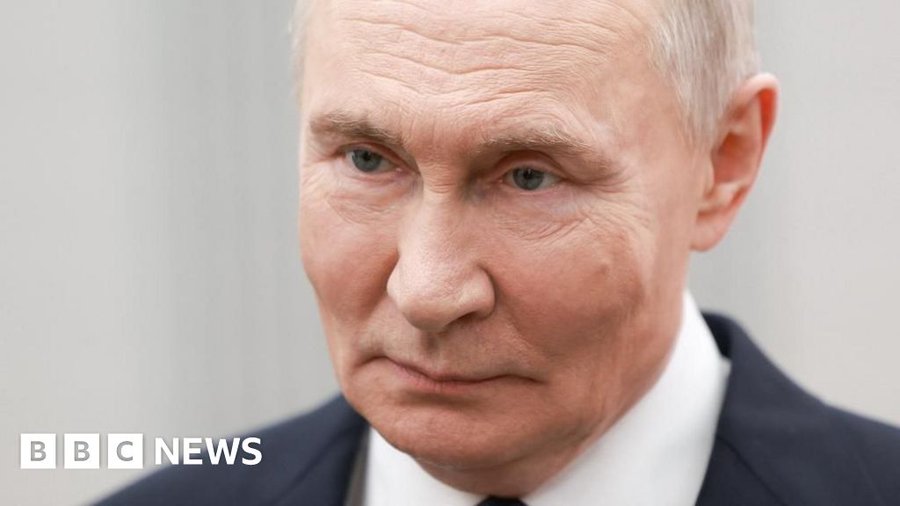
What does the latest round of diplomacy on Ukraine tell us about Russian President Vladimir Putin’s mood and intentions?
For starters, that he’s not ready to sign a peace deal. At least, not right now.
And certainly not the deal (or deals) on the table.
“No compromise version has yet been found,” commented Kremlin foreign policy aide Yuri Ushakov after five hours of talks in Moscow involving Putin, US envoy Steve Witkoff, and Donald Trump’s adviser and son-in-law Jared Kushner.
No compromise is no real surprise, considering the Kremlin leader’s uncompromising comments in recent days.
In various statements he has condemned the Ukrainian leadership as a “thieving junta”, accused European leaders of trying to sabotage peace efforts, and insisted that Russia holds the initiative on the battlefield.
On a couple of recent occasions Russian TV showed Putin in military fatigues, studying maps of the front line and trumpeting military gains, many of which Ukraine and international observers have denied.
After nearly four years of Russia’s full-scale invasion of Ukraine, despite the heavy losses Russia has suffered on the battlefield and the damage to the Russian economy, President Putin seems convinced that he is winning this war and that now is not the moment to stop.
At least, that is what he would like the West to believe: that nothing can stop him now from achieving his goals.
I’ve said before that, in many ways, Vladimir Putin reminds me of a car with no brakes, no steering wheel and no reverse gear; a vehicle careering full speed down the motorway.
Nearly four years after the full-scale invasion of Ukraine there is still no sign of the “Putinmobile” turning off, turning back, or coming to a halt.
He certainly wants his opponents to think that nothing or no one can force him to change direction: neither European leaders, nor the Trump administration, nor President Zelensky.
But cars need fuel (a constant supply).
And, to fight a war, countries need money (a constant supply).
For now, despite international sanctions, Russia’s government is still able to finance the “special military operation” – its war on Ukraine. But economic pressures are building: revenues from oil and gas have been falling, the budget deficit growing.
Even Putin admits there are problems, referring to “imbalances” in the economy.
“In several sectors, production output not only failed to increase this year but actually decreased,” Putin said this week. “Are we satisfied with such trends? No.”
The big unknown: at what point, if at all, will economic concerns start to influence the Kremlin’s calculations on the battlefield?
(BBC)
Kenya Insights allows guest blogging, if you want to be published on Kenya’s most authoritative and accurate blog, have an expose, news TIPS, story angles, human interest stories, drop us an email on [email protected] or via Telegram


Fraud, Misrepresentation and A Decade Of Evasion: How Indo Africa Finance Pocketed Sh150 Million Youth Funds and Fought To Keep Every Cent

Kenya Picks Chinese Firm For Sh375 Billion JKIA Upgrade Project After Adani Fallout

The President’s Daughter and The Missing Witness: How Adut Salva Kiir’s Shadow Treasury Silenced Its Most Dangerous Critic

Kisii Under Siege: Governor Arati’s Wife Accused of Hijacking IFMIS and Running a Parallel Government

Al-Shabaab Issues Statement Defending Omar Artan, Accuses U.S. of Discrimination After Referee’s Deportation

Netanyahu To Run For Re-Election, His Party Says, After Trump Raises Doubts

US Cracks Down on Birth Tourism Schemes

Microsoft Limits Employee Use Of Anthropic’s Claude Fable 5 Over Data Retention Concerns, The Verge Reports

Standard Chartered Ghosts Haunt Joshua Oigara At Stanbic As Whistleblower Spills Beans

Caleb Amisi Says Linda Mwananchi Has Lost Direction, Announces Plans To Form A New Movement

Cement, Cash and Courts: How the Hashu Dynasty Crushed the Ramji Brothers for Fourteen Years and Why the Walls Are Now Closing In

Inside The Urban Planning Cartel That Owns Nairobi

Why Ruto’s Favourite Candidate Adan Mohammed Could Be Locked Out of the KRA Top Job

LifeCare on the Brink: SHA Fraud, Stolen Wages, and the Rotten Empire Jayesh Saini Built

Betika Faces DCI Probe, Directors Arrest and License Revocation Over Massive 29.5 Million Safaricom Customers’ Data Breach

Este Medical Kenya Fights American’s Explosive Complaints

The Rot Inside Absa: How Bank Insiders Are Looting Nairobi’s Customers

Fresh Move Launched to Remove Kenya Railways MD Mainga From Office After Awarding Sh817 Million Consultancy Contract

Inside FAFSA Fraud: How Kenyan Cybercriminals Siphoned Millions from America’s Sh12 Billion Student Loan System

Court Confirms Safaricom Customers Data Was Sold To Betting Companies In Seven-Year Cover-Up
-
 Investigations6 days ago
Cement, Cash and Courts: How the Hashu Dynasty Crushed the Ramji Brothers for Fourteen Years and Why the Walls Are Now Closing In
-
 Investigations5 days ago
Inside The Urban Planning Cartel That Owns Nairobi
-
 Investigations1 week ago
Betika Faces DCI Probe, Directors Arrest and License Revocation Over Massive 29.5 Million Safaricom Customers’ Data Breach
-
 Investigations6 days ago
Fresh Move Launched to Remove Kenya Railways MD Mainga From Office After Awarding Sh817 Million Consultancy Contract
-

 News2 weeks ago
Eight Students Arrested In Kenya After Suspected Deadly School Arson Attack
-
 News2 weeks ago
How Uhuru’s Deal With Obama In 2015 Paved Way For America’s Ebola Plan In Kenya
-

 Business1 week ago
TRUST BETRAYED: How Senior DTB Bank Insiders Allegedly Looted Sh149 Million From a Customer’s Account Over Five Years
-

 Investigations5 days ago
Why Drivers Cheered Bolt’s Reported Exit: Inside the Slow Financial Strangulation of Thousands of Kenyan Drivers and Riders in Kenya