
Investigations
THE PHANTOM COVER: PART II Three Anonymous Directors. A Cheaper Bid Ignored. Sh13.3 Million in Unexplained Overpayment. And the Certificate That Proves FKF Knew Exactly What It Was Doing
The Companies Registry certificate for Riskwell Insurance Brokers Limited is now in the public domain. It names the company’s three director-shareholders. It records a nominal share capital of just Ksh 100,000. It confirms incorporation on 25 June 2025. It does not explain how, six weeks later, this company was holding Sh42.4 million of Football Kenya Federation money for a tournament insurance transaction that a licensed, established competitor had offered to do for Sh13.3 million less.

The Companies Registry certificate for Riskwell Insurance Brokers Limited was retrieved under the Companies Act, 2015. It is not a rumour. It is not a whistleblower’s inference.
It is a government-verified document bearing the seal of the Business Registration Service, searched and confirmed as of 21 April 2026. Company number PVT-A71VDDYY. Registration date: 25 June 2025. Nominal share capital: Ksh 100,000, representing one thousand ordinary shares at Ksh 100 each. Registered office: The Oval Office, Waiyaki Way, Westlands, Nairobi. Status: active. Directors: three.
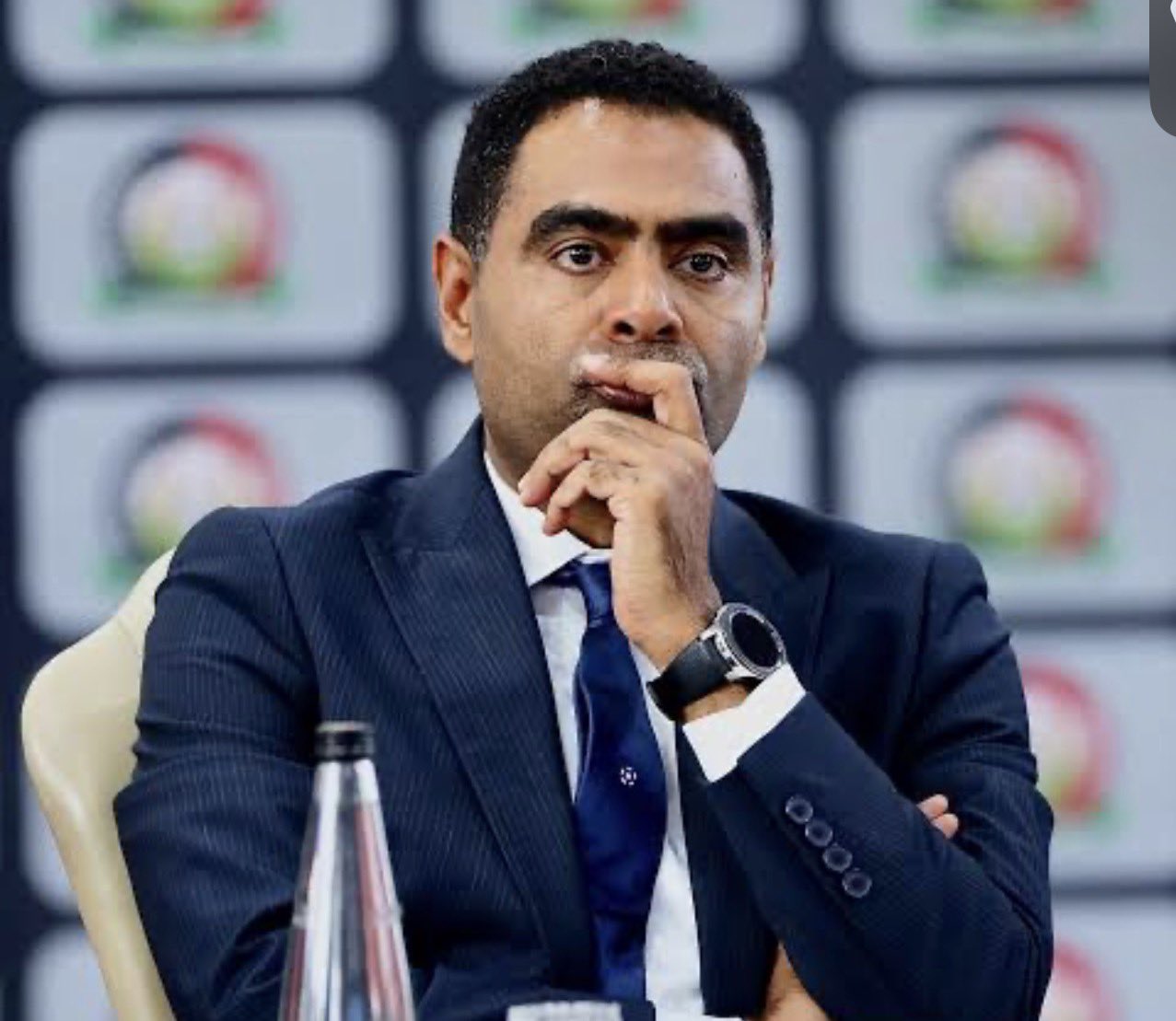
This is the entity that Football Kenya Federation, under President Hussein Mohamed, used to broker tournament insurance for the 2024 African Nations Championship, a continental event hosted in Kenya before tens of thousands of spectators, with international players, officials and media present from across Africa.
On 4 August 2025, the same day CHAN 2024 opened with Kenya hosting the Democratic Republic of Congo at Kasarani, Riskwell received USD 328,735, approximately Ksh 42.4 million, wired into its account at First Community Bank Limited.
This was money paid for insurance brokerage services on behalf of a quasi-public institution using funds that flow through taxpayer-supported structures. The Insurance Regulatory Authority’s register of licensed insurance brokers does not contain the name Riskwell Insurance Brokers Limited.
The Association of Insurance Brokers of Kenya does not list it as a member.
By every standard that the Insurance Act Cap 487 imposes on intermediaries who wish to legally conduct insurance business in Kenya, Riskwell was not qualified to receive this money or to perform this function.
That is the scandal as previously reported. What the Companies Registry certificate has now added is a set of names.
An established, licensed competitor submitted a lower bid of Ksh 29.1 million. FKF chose to pay Ksh 13.3 million more, to a company formed six weeks earlier, with no licence, no track record, and a share capital of one hundred thousand shillings.
THE THREE MEN BEHIND RISKWELL
The certificate names three director-shareholders. Mohamud Yarrow Ibrahim holds 300 ordinary shares. Abdullahi Mohamud Sheikh, the majority shareholder, holds 400 shares.
Nyairo Tom Nyairo holds the remaining 300. All three are Kenyan nationals. All three share a postal address at or near GPO Nairobi. All three are, in the context of Kenya’s professional insurance industry, effectively anonymous.
A comprehensive review of public records, industry directories, the IRA’s licensing database, court records and online professional profiles has produced no evidence that any of the three men holds a recognised insurance industry qualification, has ever been employed in a licensed insurance brokerage, or has any professional track record consistent with the underwriting or broking of continental-scale event civil liability insurance.
For context on why this matters: the IRA’s broker licensing framework under Sections 150 to 156 of the Insurance Act Cap 487 requires that any applicant for an insurance broker licence demonstrate, among other things, a minimum paid-up share capital of Ksh 1 million, a bank guarantee of Ksh 3 million in favour of the IRA, a professional indemnity policy with a minimum cover of Ksh 10 million, and at least one principal officer holding the Diploma in Insurance or a higher qualification with relevant experience.
Riskwell, incorporated with Ksh 100,000 in nominal capital and run by directors with no discernible insurance industry footprint, could not have satisfied these requirements. The IRA register confirms it did not.
The question that arises is not merely how Riskwell was selected, but whether anyone in FKF’s procurement process bothered to verify that the company was legally permitted to operate at all before Ksh 42.4 million was wired to its account.
RISKWELL INSURANCE BROKERS LIMITED: DIRECTORS AND SHAREHOLDERS
Source: Business Registration Service, Companies Registry, 21 April 2026 | Company No. PVT-A71VDDYY
|
NAME |
ADDRESS |
NATIONALITY |
SHARES |
|
Mohamud Yarrow Ibrahim |
P.O Box 15913 – 00100, GPO Nairobi |
Kenyan |
300 Ordinary |
|
Abdullahi Mohamud Sheikh |
P.O Box 17905 – 00100, GPO Nairobi |
Kenyan |
400 Ordinary (majority) |
|
Nyairo Tom Nyairo |
P.O Box 70223 – 00400, Tom Mboya St, Nairobi |
Kenyan |
300 Ordinary |
THE BID THAT WAS IGNORED
The most explosive dimension of the document trail is not simply that Riskwell was selected. It is how Riskwell was selected.
According to the procurement documentation underlying this investigation, at least one established, licensed insurance service provider submitted a competing bid for the CHAN 2024 tournament insurance contract.
That bid came in at Ksh 29.1 million.
FKF awarded the contract instead to Riskwell, at Ksh 42.4 million, a premium of Ksh 13.3 million, with no public explanation for why a cheaper, qualified, licensed competitor was passed over in favour of a company incorporated weeks before the tender was processed and absent from every regulatory register that should have governed such a procurement.
In public procurement orthodoxy, the rejection of a lower bid in favour of a higher one is not inherently improper.
There are legitimate grounds, including technical capacity, experience, financial standing and the breadth of the proposed cover.
But the legitimacy of those grounds depends entirely on the quality of the evaluation process, and the evaluation process depends on the independence and competence of the officials who conducted it.
The documentation before the Ethics and Anti-Corruption Commission, which now holds the full evidentiary file, must establish what evaluation criteria were applied, who approved the final decision, who verified Riskwell’s IRA standing before shortlisting, and whether the officials who made the decision had any undisclosed relationship with any of the three directors named in the certificate.
THE COMPETING BIDS: A COMPARISON
|
BIDDER |
BID AMOUNT |
IRA LICENCE |
OUTCOME |
|
Established insurer (identity withheld) |
Ksh 29.1 million |
YES |
REJECTED |
|
Riskwell Insurance Brokers Ltd (incorporated 25 June 2025) |
Ksh 42.4 million (+Ksh 13.3M) |
NO |
AWARDED |
THE RED FLAGS: A FORENSIC INVENTORY
RED FLAG 1: A Brand New Company — Riskwell Insurance Brokers Limited was incorporated on 25 June 2025.
The wire transfer of Ksh 42.4 million arrived on 4 August 2025. That is forty days. No established insurer capable of underwriting a CAF-mandated USD 30 million civil liability policy operates out of a company registered six weeks earlier with a nominal share capital of Ksh 100,000.
The share capital alone, one hundred thousand shillings divided among three shareholders, is a fraction of the Ksh 1 million minimum required merely to apply for an IRA broker licence, let alone to provide financial security on a multi-billion shilling continental tournament risk.
RED FLAG 2: The Higher Bid Wins — An established, licensed insurer submitted a competing offer at Ksh 29.1 million. Riskwell’s offer was Ksh 13.3 million higher. FKF chose the more expensive, younger, unlicensed entity. The Ksh 13.3 million gap is not a rounding error. It is a transfer, from public-adjacent funds, to a company that had no regulatory standing to receive it.
RED FLAG 3: The Numbers Defy Commercial Logic — CAF’s mandatory civil liability insurance requirement for CHAN host nations is USD 30 million, approximately Ksh 3.9 billion. A broker’s fee for placing a Ksh 3.9 billion policy is typically a regulated percentage of the premium, not the face value.
The premium that an underwriter charges for a thirty-million dollar event liability policy covering a one-month tournament would represent a small fraction of that face value.
Ksh 42.4 million in brokerage fees, on a policy whose underlying premium would likely be a fraction of that amount, raises immediate questions about the commercial mechanics of the transaction. Either the brokerage commission was grotesquely inflated, or the Ksh 42.4 million was not purely brokerage commission at all.
RED FLAG 4: No Licence, No Indemnity, No Standing — The Insurance Act Cap 487 is unambiguous. Insurance intermediary business in Kenya may only be conducted by entities licensed by the Insurance Regulatory Authority.
Operating without a licence is a criminal offence under the Act. Every premium or fee collected by an unlicensed intermediary is collected in violation of Kenyan law.
The IRA’s published register for 2025, as at 4 March 2025, does not list Riskwell Insurance Brokers Limited.
If the company was not licensed in March and received the fee in August, either it obtained a licence between those dates without public record, or it transacted insurance business illegally. Neither scenario is acceptable in the context of FKF’s procurement obligations.
RED FLAG 5: Anonymous Directors, Anonymous Money — The three men who own and direct Riskwell, Mohamud Yarrow Ibrahim, Abdullahi Mohamud Sheikh and Nyairo Tom Nyairo, have no verifiable public profile in the insurance industry.
The question of how they came to the attention of FKF procurement officials, and whether any of them has personal, professional or political connections to anyone within the FKF leadership or the CHAN Local Organising Committee, remains entirely unresolved and urgently demands investigation.
RED FLAG 6: Did Any Valid Policy Exist? — The most consequential question is the one that has still not been answered: did Riskwell ever place a valid insurance policy on behalf of FKF with a licensed underwriter? If it did, what underwriter, what policy number, what coverage dates, and what claims procedure applied? If it did not, then CHAN 2024 was staged before tens of thousands of people, with national teams and international officials present, without any valid insurance cover.
That is not merely a procurement violation. It is a potential criminal exposure for everyone who approved and processed the transaction.
The three director-shareholders of Riskwell have no verifiable public profile in Kenya’s insurance industry. How they came to the attention of FKF procurement officials is a question the EACC, DCI and ODPP must now compel an answer to.
THE FKF FRAUD TEMPLATE: CHAN 2018 AS A MIRROR
The current allegations do not emerge from a clean institutional slate. They follow a documented pattern of procurement fraud under the FKF banner. In January 2026, the Ethics and Anti-Corruption Commission filed court papers seeking to recover Ksh 330 million allegedly lost through an irregular stadium security contract for the 2018 African Nations Championship in Kenya.
That case names former FKF president Nick Mwendwa, former Principal Secretary for Sports Amb Peter Kirimi Kaberia, and senior officials at the Ministry of Sports, among others.
The EACC’s court filings from that matter describe a procurement process in which no tender documents were prepared, no purchase requisition approved, no bid security obtained, no tender evaluation committee constituted, and no performance bond required. Investigators described the arrangement as a grand procurement fraud in which public funds were released without adherence to mandatory procurement safeguards.
The structural resemblance to the Riskwell matter is not superficial. In 2018, a continental football tournament became the occasion for a procurement exercise that bypassed every safeguard.
In 2025, a continental football tournament became the occasion for a Ksh 42.4 million wire transfer to an entity with no licence, no established track record and a Ksh 100,000 share capital, while a lower-priced licensed alternative was set aside. CHAN, it appears, has a recurring problem with procurement.
The critical difference between the two cases is timing. The 2018 case took years to surface, and the EACC only reached the courts in January 2026. The 2025 matter is already before the EACC, with the underlying documentation in the commission’s hands, within months of the event.
That compression of the accountability timeline is itself a result of the organised whistleblower network that brought this material forward, and it creates an opportunity for intervention before institutional cover-up can consolidate.
HUSSEIN MOHAMED: THE OBLIGATION TO ACCOUNT
Hussein Mohamed is not merely the president of FKF. For the purposes of CHAN 2024, he was the federation’s principal officer, the individual who carried ultimate governance responsibility for every major procurement decision made in the tournament’s name.
He was simultaneously vice president of the Local Organising Committee, a multi-agency structure that included government oversight and was explicitly tasked with ensuring accountability for tournament expenditure.
The Companies Registry certificate for Riskwell bears a registration date forty days before the fee was wired. The IRA register does not contain Riskwell’s name. An established competitor offered to do the same job for Ksh 13.3 million less.
These are not abstract governance failures.
They are failures with Hussein Mohamed’s name attached to them by virtue of the office he holds.
In the months since CHAN ended, Hussein has been publicly visible in framing the tournament as a success. He praised the security forces. He met FIFA President Gianni Infantino.
He announced a decade-long Ksh 1.12 billion sponsorship deal with SportPesa. He apologised for the 8-0 defeat by Senegal in November 2025 and promised reform. What he has not done is address the insurance procurement. He has not named the underwriter who issued the policy. He has not produced the policy schedule.
He has not explained why a licensed competitor’s lower bid was rejected. He has not disclosed the relationship, if any, between Riskwell’s directors and anyone in his administration.
That silence, in the face of documented evidence now formally before the EACC, is not a neutral act. It is a choice. And it is a choice that grows more costly with each passing day that AFCON 2027 preparations continue under the cloud it creates.
WHAT THE REGULATORY ARCHITECTURE DEMANDS
The Insurance Act Cap 487 is explicit. Any person who conducts insurance business in Kenya without a valid licence from the IRA commits an offence and is liable to a fine and imprisonment.
Any institution that knowingly routes insurance transactions through an unlicensed intermediary is complicit in that illegality.
Section 156 of the Act governs the obligations of persons who retain or engage insurance brokers, and those obligations include the duty to verify that the broker is duly licensed before any contract is entered into or any fee is paid.
If FKF’s procurement officials failed to verify Riskwell’s IRA status before processing the Ksh 42.4 million wire, they violated that obligation. If they did verify, and proceeded anyway, the violation is more serious still.
The EACC operates under a mandate to investigate and prevent corruption in both the public and private sectors. FKF’s quasi-public status, consistently affirmed by Kenyan courts, brings it within that mandate.
The Directorate of Criminal Investigations has independent power to investigate financial crimes irrespective of the EACC’s involvement.
The Office of the Director of Public Prosecutions must assess whether the evidence before it warrants criminal charges, not merely civil recovery. FIFA’s Governance and Compliance Committee, which lifted FKF’s Forward funding freeze in December 2025 and placed the federation under monthly reporting obligations, would find the Riskwell matter directly relevant to its ongoing monitoring of FKF governance.
The question is not whether the architecture for accountability exists. It does. The question is whether those entrusted with it will use it.
THE AFCON 2027 CONSEQUENCE
Kenya co-hosts the 2027 Africa Cup of Nations in June and July 2027. As of April 2026, none of Kenya’s proposed competition venues meets CAF’s Category 4 requirements.
The contractor at Kasarani has reduced its workforce over a debt exceeding Ksh 3.7 billion. The Nyayo contractor has abandoned the site over a debt exceeding Ksh 2.6 billion.
The Ksh 3.9 billion hosting rights fee owed to CAF was not in the 2025/26 budget. The Talanta Sports City Stadium, the flagship sixty-thousand seat venue, remains incomplete at 88 percent as of April 2026 and has missed two announced completion deadlines.
The total funding shortfall for AFCON stadium projects stands at Ksh 14.47 billion. CAF has formally stated, in its own inspection report, that Kenya’s infrastructure programme is in a mixed phase and has not met the required standards.
Into this already precarious landscape drops a Ksh 42.4 million insurance scandal involving the very FKF president who serves as vice president of the AFCON LOC. Hussein Mohamed is not a peripheral figure in Kenya’s hosting apparatus.
He is central to it.
A federation president under formal investigation, or even under credible documented allegation that has been formally filed with the EACC, cannot credibly lead a hosting bid that requires institutional trust at the highest level from CAF, FIFA, broadcast partners and international commercial sponsors. Kenya has been stripped of AFCON hosting rights twice before. The country cannot afford a third forfeiture.
That is precisely why the question of Hussein Mohamed’s continued tenure at FKF is not a matter of football politics. It is a matter of national strategic interest.
Kenya Insights has again sought formal comment from FKF, from Hussein Mohamed’s office, from the EACC, from the DCI, and from the IRA on the specific evidence presented in this report. No substantive response had been received at time of publication. This investigation continues.
Kenya Insights allows guest blogging, if you want to be published on Kenya’s most authoritative and accurate blog, have an expose, news TIPS, story angles, human interest stories, drop us an email on [email protected] or via Telegram


How KCB and Airtel Turned Kenya’s Unbanked Into a Data Goldmine Behind a ‘Financial Inclusion’ Deal

The Chivayo Network: How a Convicted Fraudster Won Access to Presidents, Passports and Billion-Dollar Deals Across Africa

BURRIED TWICE: The Victoria Bank CEO Yogesh Pattni Files

Court Stops Transfer Of EABL Shares To Asahi By Diageo In A Fresh Snag

Death Before Justice: Stephen Ngei, Victim of Sh180 Million Laptop Tender Scam Linked to Allan Chesang, Killed in Highway Crash

Court Brands Sh1.1 Billion Fee Demand by Lawyer Victor Swanya “Excessive and Exorbitant,” Exposes How City Hall Lets Public Money Bleed Through Legal Bills

Trump Unveils New Air Force One

MR. NO SHOW: Finance Bill 2026 Exposes Ndindi Nyoro’s Political Conmanship

Billionaire Eric Muli Rebukes Musalia Mudavadi Over Nairobi Capital Relocation Debate

Lawyer Cliff Ombeta Warns Against Taking Insurance Cover With Old Mutual: “Talk to Me Before You Do, Their Imara Cover Is a Fraud”

Businessman Philip Waithaka Kinuthia’s Minor Son Allegedly Drove Drunk, Killed Two Peponi Students in Ngong Road Horror Crash as Claims of Cover-Up Intensify

Inside NCBA’s Decline: How a Banking Giant Lost Its Strategic Edge

Cement, Cash and Courts: How the Hashu Dynasty Crushed the Ramji Brothers for Fourteen Years and Why the Walls Are Now Closing In

Standard Chartered Ghosts Haunt Joshua Oigara At Stanbic As Whistleblower Spills Beans

South Sudan: Adut Salva Kiir’s Shadow Treasury Exposed

Inside The Urban Planning Cartel That Owns Nairobi

THE VULTURE AND THE SCHEME How Nairobi West Hospital Became the Most Dangerous Institution in Kenya’s SHA Ecosystem and Why the Books Must Be Audited Now

How Adil Popat Saved His Empire On The Eve Of Imperial Bank Collapse and Why Kenya’s Mainstream Media Buried The Story

Why John Ngumi Is Running From the EACC and Why the Sh415 Million Payday May Be the Least of His Worries

The President’s Daughter and The Missing Witness: How Adut Salva Kiir’s Shadow Treasury Silenced Its Most Dangerous Critic
-
 News1 week ago
Businessman Philip Waithaka Kinuthia’s Minor Son Allegedly Drove Drunk, Killed Two Peponi Students in Ngong Road Horror Crash as Claims of Cover-Up Intensify
-
 Business2 weeks ago
Inside NCBA’s Decline: How a Banking Giant Lost Its Strategic Edge
-
 Business2 weeks ago
Standard Chartered Ghosts Haunt Joshua Oigara At Stanbic As Whistleblower Spills Beans
-
 Africa1 week ago
South Sudan: Adut Salva Kiir’s Shadow Treasury Exposed
-
 Investigations3 days ago
THE VULTURE AND THE SCHEME How Nairobi West Hospital Became the Most Dangerous Institution in Kenya’s SHA Ecosystem and Why the Books Must Be Audited Now
-
 Business1 week ago
How Adil Popat Saved His Empire On The Eve Of Imperial Bank Collapse and Why Kenya’s Mainstream Media Buried The Story
-
 Business1 week ago
Why John Ngumi Is Running From the EACC and Why the Sh415 Million Payday May Be the Least of His Worries
-
 Africa2 weeks ago
The President’s Daughter and The Missing Witness: How Adut Salva Kiir’s Shadow Treasury Silenced Its Most Dangerous Critic