
Investigations
The Minister of Illusion: How Energy PS Alex Wachira Has Perfected the Art of the Fake Launch, Leaving Darkness Where Fanfare Once Blazed

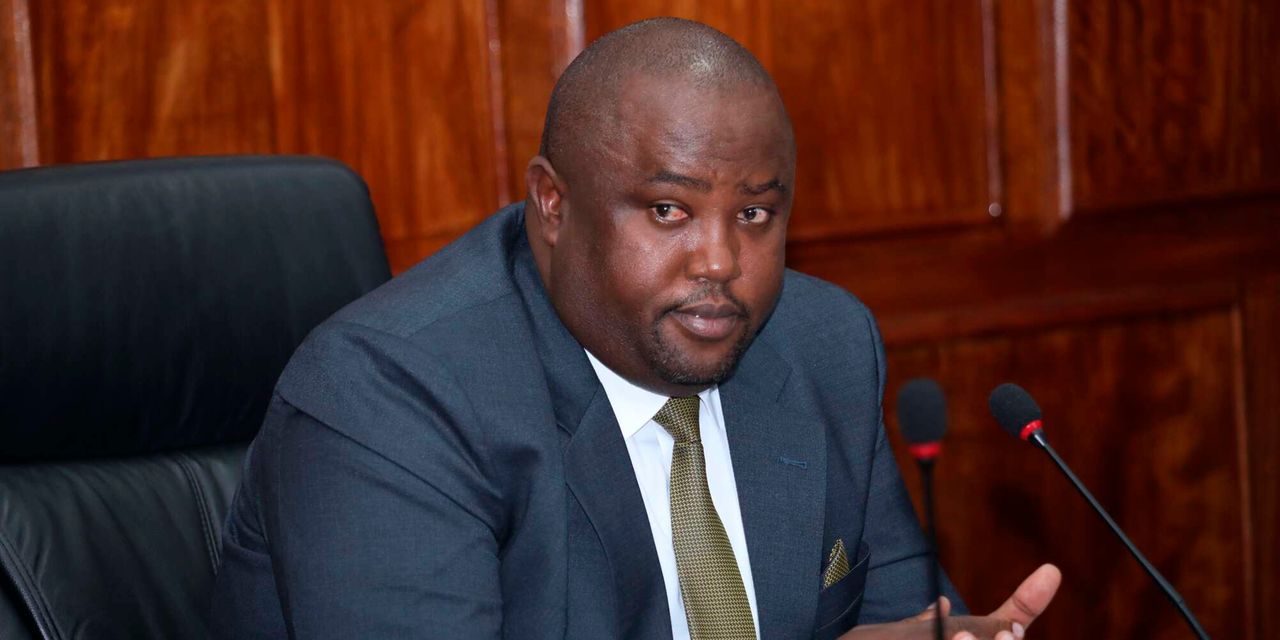
The script is always the same. Days before a presidential motorcade rolls into a remote constituency, flatbed lorries bearing Kenya Power and REREC insignia arrive with ostentatious theatre. Transformers are offloaded. Technicians in high-visibility jackets mill about with clipboards. Extension ladders lean against poles that have stood dead for years.
Then the President speaks, the ribbon is cut, the cameras flash, and the helicopters lift off. Within hours, the trucks are gone.
The poles remain dead. The darkness returns. And the people are left holding a promise that was never meant to be kept.
This is the operating model, according to a growing chorus of lawmakers who confronted Energy Principal Secretary Alex Wachira before the National Assembly Public Accounts Committee on April 15, 2026. What emerged was not merely a story of administrative failure or contractor indiscipline.
What emerged was a picture of deliberate political theatre, stage-managed at the highest levels of the energy bureaucracy, designed to manufacture the appearance of development for a president running an early 2027 re-election campaign.
Wachira, an investment banker by formation and a political operator by practice, has since December 2022 been the face of the Kenya Kwanza administration’s most visible development promise: universal electricity access.
He has stood at dozens of launches across the country, from the Kilifi Coast to the Turkana plains, declaring communities connected, projects commissioned, and futures illuminated. The auditors, the community residents, and now the MPs who support the very government he serves have a different account.
THE CHOREOGRAPHY OF DECEPTION
Lugari MP Nabii Nabwera, a UDA legislator who has staked his political future on the Ruto administration’s delivery record, did not mince his words when he addressed the PS across the committee table.
He accused Wachira of personally orchestrating a pattern in which Kenya Power and REREC equipment is deployed to constituencies ahead of presidential visits, only to vanish the moment the official delegation departs.
“You even came to my constituency and launched a ghost project, my brother, and because it has never taken off, what is going on? The MPs feel that you are directly jeopardising their chances of re-election.”
Nabii Nabwera, Lugari MP, to PS Alex Wachira, PAC, April 15, 2026
Mary Emase, the Teso South MP, raised the specific crisis engulfing western Kenya, identifying Busia, Vihiga, and Siaya counties as blackspots where projects have been launched with great ceremony but zero subsequent implementation.
She put to Wachira the allegation that a single contractor had been awarded the bulk of implementation work across multiple regions, becoming so overwhelmed by the scale of commitments that none of the sites were receiving adequate attention.
Wachira’s response was the standard bureaucratic pivot: he had taken note of the concerns.
Turkana Central MP Joseph Namuar delivered perhaps the most withering testimony of the session. A UDA MP representing one of Kenya’s most energy-deprived regions, he told the committee flatly that nothing had been done in Turkana over the entire four-year lifespan of the Ruto government.
Not one connection. Not one functioning substation. Only the assurances, the launches, and the wait.
Funyula MP Wilberforce Oundo pressed the same wound with surgical precision, reminding Wachira that the President had visited Nambale constituency in 2024 for an electrification project launch marked by the full apparatus of a state visit. The fanfare had been considerable. The project had never moved.
THE AUDITOR’S RED LEDGER
The parliamentary outrage did not arrive in a vacuum. It is the political face of a paper trail that the Auditor General has been building for years, a trail of stalled projects, unreconciled billions, and procurement processes that bypass every guardrail of public accountability.
Auditor General Nancy Gathungu’s 2022/2023 report on REREC exposed the systemic rot beneath the launch culture. She found that rural electrification projects across five regions, which were supposed to have commenced implementation in 2013 and were to be delivered at a cost of Sh5.8 billion, remained critically behind schedule at the time of audit.
Only 65 percent of the scope of work had been executed despite 105 of the total 111 months of the project timeline having elapsed. Projects worth Sh1.52 billion out of the total budget had not started at all.
The financing agreements were set to lapse in December 2024. The management of REREC could not explain to the auditors how they intended to fast-track delivery within the residual time.
The Auditor General’s findings on the Kenya Electricity Expansion Project were equally damning. Contracts for the three lots under the project had been signed in June 2020, with works expected to complete by June 2022. By the time the audit was conducted, over 26 percent of contracted works remained unexecuted despite the contract period having lapsed.
The project was supposed to close in December 2023.
In the island communities of Mageta, Takawiri, and Ngodhe in Lake Victoria, auditors found projects where the contradictions between the ministry’s launch rhetoric and the ground reality were most stark. At Takawiri, a project being implemented at a cost of Sh3.7 million had no workers on site at the time of audit.
Civil works were undone. Solar panels were unfixed. Windows were broken. The floor was cracked. At Mageta, auditors found that civil works had not been done, lighting fixtures had not been connected, and the paint on ceiling board was peeling off.
“Delay in project implementation has affected the project’s planned activities and therefore impacting negatively on service delivery to the public.”
Auditor General Nancy Gathungu, 2022/23 REREC Audit Report
In July 2025, the National Assembly’s Public Investment Committee on Commercial Affairs and Energy summoned REREC CEO Rose Mkalama to account for Sh8.59 billion in unreconciled variances in the corporation’s books of accounts.
The sitting was called off in disarray after REREC tabled documents that had not been shared with the Auditor General’s office, making it impossible to proceed.
When the committee resumed hours later, the auditors declared they could not continue due to missing documents. Committee Chair David Pkosing’s rebuke was unsparing.
The same audit cycle flagged Sh571 million paid to three firms for land survey services for projects that could not be specified.
There was no evidence of budgeting for the services, no inclusion in the annual procurement plan, no competitive procurement, no local service orders, no contract agreements, and no reports from the firms showing what surveying work had actually been done. The expenditure, in the Auditor General’s clinical formulation, could not be confirmed as regular.
THE JIKO THAT WAS NOT THERE
The ghost project syndrome is not confined to high-voltage infrastructure. A parliamentary committee is now demanding procurement documents for 5,500 energy-saving jikos purchased by the Ministry of Energy at a cost of Sh18.9 million, after the Auditor General raised serious questions about whether a single Ksh 3,436 jiko can be accounted for in the hands of a genuine low-income beneficiary.
The audit of the Petroleum Development Levy Fund for the 2023/24 financial year found that 2,000 of the jikos were distributed through six county women MPs for Nyeri, Laikipia, Nakuru, Uasin Gishu, Bomet, and Kitui counties, with no documented justification for how the MPs were selected or what criteria they would use to identify beneficiaries.
Of the 3,500 jikos purchased in the year under review, physical verification could confirm distribution to only 660 beneficiaries. The remaining 2,840 jikos, acquired at a cost of Sh9.8 million, were unaccounted for.
The audit noted that no prerequisite studies had been conducted on indoor air quality, no surveys had been carried out to identify target households, signed distribution lists had not been provided, no records showed the jikos had been received at the fund before distribution, beneficiary records lacked names and contact information, and the jikos were not branded for identification.
When Wachira appeared before the National Assembly Special Funds Accounts Committee this week, he told lawmakers that all Auditor General queries had been resolved. The Auditor General herself appeared before the same committee and said that was not the case.
FUNDS EXHAUSTED, PROJECTS FROZEN
The money problem that underlies the launch theatre is one that Wachira himself has now been forced to acknowledge in public.
In testimony before MPs on April 15, he disclosed that funds allocated for the 2025/2026 financial year had been exhausted by December 2025, forcing the ministry to seek emergency financing under Article 223 to clear pending bills.
The ministry burned through an entire year’s allocation in the first half of the financial year, leaving contractors unpaid and projects frozen for the remaining months.
Wachira attributed the delays to funding constraints and procurement challenges, particularly in donor-funded projects where contractors carry responsibility for both materials and execution.
He said that most contractors had by then been paid and expected faster implementation going forward.
The MPs sitting across from him had heard this particular assurance before, across multiple budget cycles and multiple committee appearances, in constituencies that remain without power years after their official launches.
The northern Kenya crisis adds a further dimension to the accountability question.
By August 2025, a parliamentary committee had to convene an emergency roundtable to unlock Sh600 million for REREC and Kenya Power to restore electricity to the 56 mini-grids supplying Turkana and the North Eastern counties. Most of the generators had stalled due to lack of lithium batteries and insufficient fuel storage.
The two parastatals had been mired in a stand-off over a Sh30 billion unpaid debt, with Kenya Power arguing the burden made it impossible to operate and maintain the off-grid infrastructure. Wachira’s position during that crisis was to propose that since Kenya Power owed the government Sh70 billion, the Treasury could simply offset the amounts. The Treasury disagreed. The lights remained off.
A BANKER AMONG BULBS
Alex Wachira is not an engineer.
He is not an energy technician.
He is an investment banker, trained in bond markets and capital mobilisation, who served at Faida Investment Bank, Dyer and Blair, and Genghis Capital before President Ruto appointed him PS in December 2022.
His supporters credit him with mobilising substantial development finance from partners including the Agence Francaise de Developpement, the European Investment Bank, JICA, and the World Bank. His own website proclaims that under his tenure Kenya’s electricity connectivity rate has reached 76 percent.
The picture that emerges from parliamentary testimonies and audit reports is more complicated. The financing mobilised by Wachira has, in significant part, flowed into a broken implementation machinery. Contractors are awarded large contracts across multiple constituencies and then disappear.
Procurement is conducted without adequate budgetary allocation. Surveys are not done before projects are launched. Distribution lists are not maintained.
The audit queries pile up. The launches multiply. And the PS continues to appear at each ribbon-cutting, assuring whoever is listening that this project, unlike the last one, is the real thing.
Even within his own ministry’s political coalition, the patience has snapped. Mathioya MP Edwin Mugo put on record at the April 15 sitting the precise mechanism by which the charade operates: public participation is organised, social media pages are updated with camera-ready images, contractors are procured, the launch happens, the contractor vanishes, and the MP is left to face constituents who want to know what happened to the lights.
The question Mugo asked was how procurement could be done before the funds to pay for it were even available. It was a question the PS did not adequately answer.
THE POLITICAL FALLOUT
What makes the current confrontation particularly combustible is that the accusers are not from the opposition. Nabwera, Emase, Namuar, and Mugo are all government-side legislators.
They are UDA MPs or allied representatives who have tied their 2027 re-election campaigns to the delivery record of a government they helped install.
They are not criticising Wachira from a position of ideological hostility.
They are doing it because their constituents are enraged, because they have been made to look complicit in a fraud they did not originate, and because they fear the political consequences if the government’s most high-profile development programme is exposed as a systematic campaign of staged illusions before the next election.
The warning Nabwera delivered to Wachira in the committee room was as much a political ultimatum as an accountability complaint.
He told the PS that his actions were jeopardising the re-election prospects of the very government they both serve.
For Wachira, who has cultivated a close relationship with the presidency and whose personal thanksgiving event in Kieni in 2023 was graced by both President Ruto and former Deputy President Rigathi Gachagua, the implosion of that political cover would be consequential.
Wachira’s response to the barrage was consistent with his pattern before parliamentary committees: measured acknowledgement, statistical defences, and promises of corrective action.
He cited the increase in electricity connections from 8.8 million in 2022 to 10.1 million in 2026.
He said that contractors on the red line had been given Rapid Results Initiatives to meet and warned that those who failed to comply would have their contracts cancelled. He did not address the specific allegation that the launches themselves, the choreography of trucks and technicians and speeches, were themselves the fraud.
THE STANDARD OF PROOF
The PAC and the Auditor General together provide a documentary record that is difficult to rebut with connectivity statistics. Audit queries worth billions of shillings remain uncleared.
Specific projects in identifiable constituencies with identifiable launch dates remain unexecuted years after the ribbon was cut.
Procurement records for equipment worth tens of millions of shillings cannot be produced. An entire year’s ministerial budget was consumed by December of the year it was allocated, and the ministry required emergency financing to operate for the remaining months.
Against this record, the claim that 1.3 million additional Kenyans have been connected to the grid since 2022 does not resolve the central question: how many of those connections were announced in presidential launches that created the impression of immediate delivery, when the actual implementation came months or years later, or in some cases not at all? How many launches were real, and how many were trucks that left with the helicopters?
These are not questions that can be answered by a PS citing aggregate connectivity figures before a parliamentary committee.
They require a project-by-project audit matching announced launch dates against verified connection records, a procurement review examining whether contractor awards are competitive and adequately funded before they are made, and an independent assessment of why REREC’s books contain Sh8.59 billion in unreconciled variances that its own management could not explain in committee.
Until those questions are answered, the darkness that Alex Wachira has left in Lugari, in Funyula, in Turkana, in Teso South, and in the island communities of Lake Victoria will speak louder than the statistics on his website.
The trucks can leave whenever the helicopters do. The poles remain. The wires hang dead. And the people know the difference between a launch and a light.
Kenya Insights allows guest blogging, if you want to be published on Kenya’s most authoritative and accurate blog, have an expose, news TIPS, story angles, human interest stories, drop us an email on [email protected] or via Telegram


Karua Detained at Entebbe as Uganda Blocks Besigye Lawyer From Entering Country

How KCB and Airtel Turned Kenya’s Unbanked Into a Data Goldmine Behind a ‘Financial Inclusion’ Deal

The Chivayo Network: How a Convicted Fraudster Won Access to Presidents, Passports and Billion-Dollar Deals Across Africa

BURRIED TWICE: The Victoria Bank CEO Yogesh Pattni Files

Court Stops Transfer Of EABL Shares To Asahi By Diageo In A Fresh Snag

Death Before Justice: Stephen Ngei, Victim of Sh180 Million Laptop Tender Scam Linked to Allan Chesang, Killed in Highway Crash

Court Brands Sh1.1 Billion Fee Demand by Lawyer Victor Swanya “Excessive and Exorbitant,” Exposes How City Hall Lets Public Money Bleed Through Legal Bills

Trump Unveils New Air Force One

MR. NO SHOW: Finance Bill 2026 Exposes Ndindi Nyoro’s Political Conmanship

Billionaire Eric Muli Rebukes Musalia Mudavadi Over Nairobi Capital Relocation Debate

Businessman Philip Waithaka Kinuthia’s Minor Son Allegedly Drove Drunk, Killed Two Peponi Students in Ngong Road Horror Crash as Claims of Cover-Up Intensify

Inside NCBA’s Decline: How a Banking Giant Lost Its Strategic Edge

Cement, Cash and Courts: How the Hashu Dynasty Crushed the Ramji Brothers for Fourteen Years and Why the Walls Are Now Closing In

Standard Chartered Ghosts Haunt Joshua Oigara At Stanbic As Whistleblower Spills Beans

South Sudan: Adut Salva Kiir’s Shadow Treasury Exposed

Inside The Urban Planning Cartel That Owns Nairobi

THE VULTURE AND THE SCHEME How Nairobi West Hospital Became the Most Dangerous Institution in Kenya’s SHA Ecosystem and Why the Books Must Be Audited Now

How Adil Popat Saved His Empire On The Eve Of Imperial Bank Collapse and Why Kenya’s Mainstream Media Buried The Story

The President’s Daughter and The Missing Witness: How Adut Salva Kiir’s Shadow Treasury Silenced Its Most Dangerous Critic

Why John Ngumi Is Running From the EACC and Why the Sh415 Million Payday May Be the Least of His Worries
-
 News1 week ago
Businessman Philip Waithaka Kinuthia’s Minor Son Allegedly Drove Drunk, Killed Two Peponi Students in Ngong Road Horror Crash as Claims of Cover-Up Intensify
-
 Business2 weeks ago
Inside NCBA’s Decline: How a Banking Giant Lost Its Strategic Edge
-
 Business2 weeks ago
Standard Chartered Ghosts Haunt Joshua Oigara At Stanbic As Whistleblower Spills Beans
-
 Africa2 weeks ago
South Sudan: Adut Salva Kiir’s Shadow Treasury Exposed
-
 Investigations4 days ago
THE VULTURE AND THE SCHEME How Nairobi West Hospital Became the Most Dangerous Institution in Kenya’s SHA Ecosystem and Why the Books Must Be Audited Now
-
 Business2 weeks ago
How Adil Popat Saved His Empire On The Eve Of Imperial Bank Collapse and Why Kenya’s Mainstream Media Buried The Story
-
 Africa2 weeks ago
The President’s Daughter and The Missing Witness: How Adut Salva Kiir’s Shadow Treasury Silenced Its Most Dangerous Critic
-
 Business2 weeks ago
Why John Ngumi Is Running From the EACC and Why the Sh415 Million Payday May Be the Least of His Worries