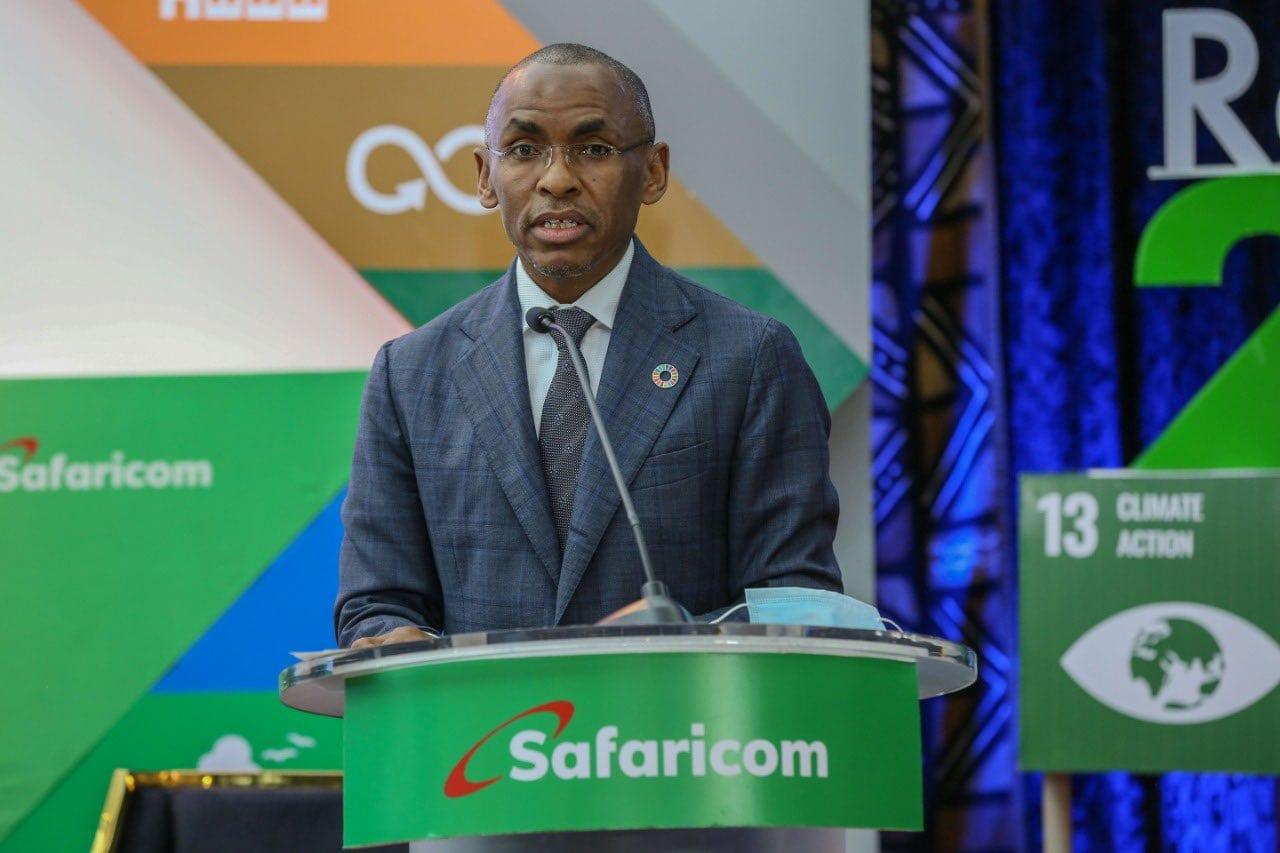
Nairobi’s High Court spent three months protecting a transaction that Safaricom itself made little effort to challenge.
On June 26, 2026, the Court of Appeal lifted conservatory orders that had frozen the government’s planned sale of a 15 percent stake in Safaricom Plc to Vodacom Group. The decision cleared the way for Vodacom to assume majority control of Kenya’s largest telecommunications company, operator of M-Pesa, a key technology partner for e-Citizen, and custodian of the financial and communications data of millions of Kenyans.
The headline figures are well known. The National Treasury is selling its 15 percent stake for approximately KSh204.3 billion, about US$1.6 billion. At the same time, Vodacom is acquiring Vodafone International Holdings’ remaining 12.5 percent interest in Vodafone Kenya Limited, the holding company through which Safaricom shares are controlled.
When both transactions are completed, Vodacom’s effective ownership of Safaricom will rise from about 40 percent to approximately 55 percent, while the government’s stake falls to 20 percent. Public investors will continue holding the remaining shares through the Nairobi Securities Exchange. Treasury will also receive an upfront KSh40.2 billion dividend top-up, structured as an advance against future dividends from its remaining shareholding.
Most reporting has treated the transaction primarily as a fiscal and investment story. Yet beneath the financial headlines lies a far more consequential question: who ultimately controls Safaricom’s leadership, and how quietly that authority has shifted beyond Kenya’s borders.
The SEC Filing Safaricom Never Publicly Explained
On May 22, 2026, Vodafone Group, Vodacom’s parent company, filed a revised shareholder agreement with the United States Securities and Exchange Commission.
The filing was required under Vodafone’s international listing obligations, not Kenya’s disclosure regime. Buried within the agreement was one provision that fundamentally changes Safaricom’s future governance.
Once Vodafone Kenya Limited controls more than half of Safaricom’s issued shares, the board will appoint the chief executive from nominees proposed by Vodafone Kenya Limited.
That ownership threshold is reached once the current transaction closes.
The practical implication is straightforward. Safaricom’s board retains the formal power to appoint a chief executive, but the shortlist originates with Vodafone Kenya Limited, a company now wholly controlled by Vodacom.
That arrangement differs markedly from the understanding presented during parliamentary consideration of the transaction.
Members of Parliament approved the deal after being assured that important safeguards would preserve Kenyan influence over the company’s leadership, particularly the position of board chairman. The SEC filing shows that while the chairman is expected to remain Kenyan, Vodafone Kenya Limited is required only to notify and consult the Government of Kenya before appointments of the chairman or chief executive, where reasonably possible. The government is not granted approval or veto powers.
Consultation is not consent.
Notification is not control.
Peter Ndegwa and the Unanswered Succession Question
The ownership changes intersect with another issue Safaricom has spent more than a year declining to explain clearly.
Peter Ndegwa became Safaricom’s first Kenyan chief executive in April 2020, ending two decades of expatriate leadership. Under his tenure, the company expanded into Ethiopia, surpassed KSh400 billion in annual revenue, recorded the highest profit in its history and recovered strongly from earlier share price declines.
Operationally, his record is difficult to dismiss.
Governance, however, presents a different picture.
For months, shareholders received no formal confirmation about the status of Ndegwa’s contract after its anticipated expiry. Unlike previous leadership transitions under Michael Joseph and Bob Collymore, Safaricom offered no clear public communication on whether the chief executive had been reappointed, granted an extension or was preparing to leave office.
The Consumers Federation of Kenya described the uncertainty as speculation and guesswork, an unusual situation for one of Africa’s most valuable listed companies.
The absence of clarity became more significant once the SEC filing emerged.
While shareholders waited for answers about the future of the sitting chief executive, the mechanism for selecting his eventual successor was being rewritten in a shareholder agreement filed with regulators in the United States.
That sequence raises legitimate governance questions which Safaricom has never publicly addressed.
The Surveillance Controversy
The leadership questions cannot be separated from the wider scrutiny Safaricom has faced over allegations concerning state surveillance and access to customer data.
Beginning with investigations published in 2024, followed by reports from human rights organisations and later an Al Jazeera documentary, the company faced allegations that its systems facilitated extensive government surveillance.
Safaricom has consistently denied those allegations.
Peter Ndegwa publicly rejected claims that customer data was being shared unlawfully, arguing such conduct would destroy customer trust. The company’s lawyers similarly dismissed the allegations as false and misleading.
However, Safaricom also pursued aggressive legal and commercial action against some of the reporting, including threatening litigation against Nation Media Group, filing complaints with the Media Council of Kenya and suspending significant advertising expenditure with the media house.
Those actions attracted criticism from press freedom organisations, including Reporters Without Borders.
Regardless of where the truth ultimately lies, the controversy forms part of the broader governance record against which the company’s current ownership transition must now be judged.
The Court Battle
The legal challenge to the transaction was brought through three constitutional petitions that were later consolidated.
The petitioners argued that the sale involved disposal of public assets without sufficient public participation, transparency or constitutional safeguards.
In March 2026, a three-judge High Court bench agreed there were substantial constitutional issues requiring determination and temporarily stopped the transaction.
Safaricom, Vodacom and the Attorney-General opposed those conservatory orders, arguing the dispute was primarily commercial and warning that continued delays would undermine investor confidence.
The Court of Appeal later lifted the conservatory orders, allowing the transaction to proceed while making clear it had not ruled on the legality or constitutionality of the sale itself.
Those questions remain before the courts.
The Bottom Line
Once the transaction closes, Safaricom will not simply acquire a new majority shareholder.
Its strategic direction will increasingly align with Vodacom’s broader corporate structure. Financial reporting, procurement, compliance and risk management will operate within the framework of a group headquartered outside Kenya. Most significantly, future chief executive appointments will begin with nominees proposed by Vodafone Kenya Limited under a shareholder agreement disclosed through foreign regulatory filings.
Whether that represents prudent corporate governance or an erosion of Kenyan control remains a matter of public debate.
What is no longer in dispute is that the centre of influence over Safaricom’s future leadership will change once the transaction is completed.
The conservatory orders have been lifted.
The constitutional petitions remain alive.
So does the larger question at the heart of this dispute: who ultimately controls one of Kenya’s most strategically important companies, and who will decide who runs it in the years ahead?





Comments