
News
Revealed: NHIF Officials Stole Sh21B

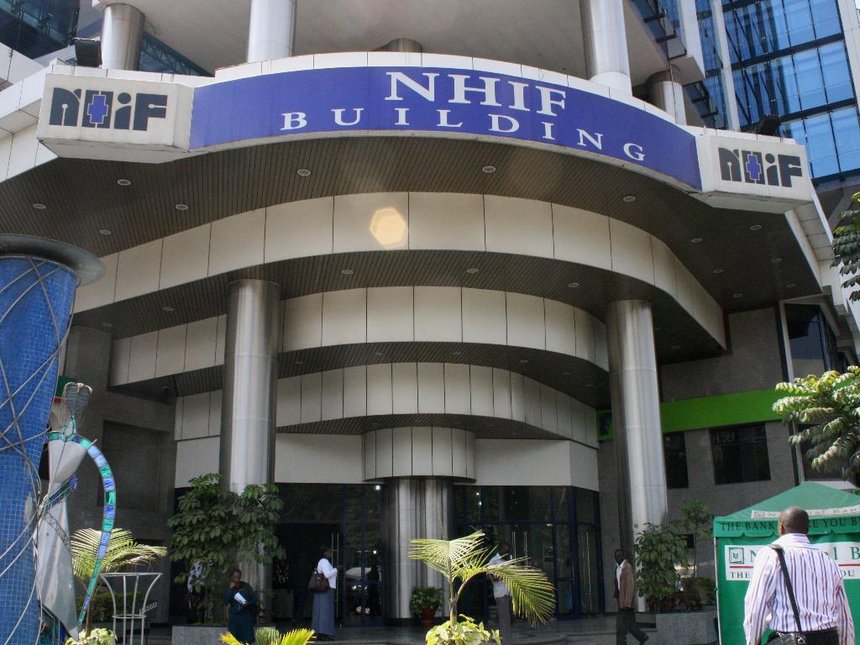
A parliamentary committee has unearthed a scandal in which corrupt National Health Insurance Fund (NHIF) officials stole a whopping Sh21 billion in just 12 months by purporting to settle non-existent debts.
To steal the funds, the officials opened a “creative account” during the financial year ending June 2022, opened liability accounts from which the billions were deposited, purportedly to settle the “debts.”
The billions which were channeled to the accounts were drawn from civil servants’ schemes (Sh2.9 billion), Eduafya Scheme (Sh4.1 billion), county schemes (Sh525.3 million), parastatals (Sh780.7 million), retirees schemes (Sh 191 million) and Linda Mama (Sh2.3 billion), according to the Public Petitions committee of the National Assembly.
No money to pay
“The mandarins opened liability accounts knowing very well that they had no money to pay and went on to spend money held on behalf of other state agencies to pay without informing the members,” said committee member, Ernest Kagesi.
“This is hot. Sh21 billion was stolen just by paying non-existing liabilities. We will get to the bottom of it,” Kagesi who chaired the meeting said.
The petition by Bernard Muchere, a Fraud Risk Management consultant states that NHIF was deprived of the money through fictitious ineligible Incurred But Not Reported (IBNR) claims created in the financial year ending June 30, 2022.
He argues that since there is no evidence of a sinking fund bank account wherein the retained earnings were supposed to be deposited, it follows that the retained earnings were only book entries.
“It therefore means that IBNR claims reserves were created from book entries and that no liquid money was set aside,” Muchere said.
Fictitious claims
He says that offsetting of fictitious unbudgeted IBNR claims of approximately Sh21 billion with the members’ scheme contributions created a huge shortfall of NHIF funds causing serious financial difficulties that were experienced in the latter part of 2022 and up to date to the extent it drastically scaled down the patient benefits and failed to cover adequately comprehensive benefits, thus, putting most Kenyans in a serious health quagmire.
According to the petitioner, an Incurred but not Reported (IBNR) is a type of reserve account used in the insurance industry as a provision for claims and/or events that have transpired but have not yet been reported to an insurance company.
“IBNR is used by insurance companies, particularly along the eastern Gulf Coast of the United States where Hurricanes and other natural disasters are common. After a storm hits, an actuary estimates potential damage to infrastructure and the claims that may be anticipated. Based on this analysis, money is then set aside in a reserve to pay for claims,” the petitioner explains.
“This is the reason why during the period NHIF members were being told that their cards were invalid, simply because the money had been siphoned and the coffers were empty,” Muchere said.
Asked by Kuria East MP Maisori Marwa why he did not report the matter to the investigative agencies like the DCI or the Ethics and Anti-Corruption Commission (EACC) considering its magnitude, Muchere said he opted the parliament way owing to the past experiences over such scandals.
The petitioner avers that upon undertaking a fraud examination on financial statements in respect of the NHIF for the year
Kenya Insights allows guest blogging, if you want to be published on Kenya’s most authoritative and accurate blog, have an expose, news TIPS, story angles, human interest stories, drop us an email on [email protected] or via Telegram


THE GHOST AT ELYSEE PLAZA: How Ghanaian Businessman Erick Agbeko Built a Two-Decade Empire of Land Fraud in Kenya

Njuca Consolidated, Three Firms Faces Auction of 65 Properties Over Crippled Cash Flow

Why Absa Bank Is On The Spot For Enabling Sh150 Million Alleged Insider Fraud In Vetlab Club

Somalia’s Disputed President Allegedly Siphons Up to $6 Million Monthly from Kenyan Miraa Trade, Sharing the Spoils with Nairobi’s Shadow Cartels

Ahmed Adan Hefow: Governor Otuoma’s Trusted Right-Hand Man at the Centre of Busia’s Deepening Finance Scandal

Karua Detained at Entebbe as Uganda Blocks Besigye Lawyer From Entering Country

How KCB and Airtel Turned Kenya’s Unbanked Into a Data Goldmine Behind a ‘Financial Inclusion’ Deal

The Chivayo Network: How a Convicted Fraudster Won Access to Presidents, Passports and Billion-Dollar Deals Across Africa

BURRIED TWICE: The Victoria Bank CEO Yogesh Pattni Files

Court Stops Transfer Of EABL Shares To Asahi By Diageo In A Fresh Snag

Businessman Philip Waithaka Kinuthia’s Minor Son Allegedly Drove Drunk, Killed Two Peponi Students in Ngong Road Horror Crash as Claims of Cover-Up Intensify

Inside NCBA’s Decline: How a Banking Giant Lost Its Strategic Edge

Cement, Cash and Courts: How the Hashu Dynasty Crushed the Ramji Brothers for Fourteen Years and Why the Walls Are Now Closing In

South Sudan: Adut Salva Kiir’s Shadow Treasury Exposed

Standard Chartered Ghosts Haunt Joshua Oigara At Stanbic As Whistleblower Spills Beans

Inside The Urban Planning Cartel That Owns Nairobi

THE VULTURE AND THE SCHEME How Nairobi West Hospital Became the Most Dangerous Institution in Kenya’s SHA Ecosystem and Why the Books Must Be Audited Now

The President’s Daughter and The Missing Witness: How Adut Salva Kiir’s Shadow Treasury Silenced Its Most Dangerous Critic

How Adil Popat Saved His Empire On The Eve Of Imperial Bank Collapse and Why Kenya’s Mainstream Media Buried The Story

Why John Ngumi Is Running From the EACC and Why the Sh415 Million Payday May Be the Least of His Worries
-
 News1 week ago
Businessman Philip Waithaka Kinuthia’s Minor Son Allegedly Drove Drunk, Killed Two Peponi Students in Ngong Road Horror Crash as Claims of Cover-Up Intensify
-
 Business2 weeks ago
Inside NCBA’s Decline: How a Banking Giant Lost Its Strategic Edge
-
 Africa2 weeks ago
South Sudan: Adut Salva Kiir’s Shadow Treasury Exposed
-
 Business2 weeks ago
Standard Chartered Ghosts Haunt Joshua Oigara At Stanbic As Whistleblower Spills Beans
-
 Investigations4 days ago
THE VULTURE AND THE SCHEME How Nairobi West Hospital Became the Most Dangerous Institution in Kenya’s SHA Ecosystem and Why the Books Must Be Audited Now
-
 Africa2 weeks ago
The President’s Daughter and The Missing Witness: How Adut Salva Kiir’s Shadow Treasury Silenced Its Most Dangerous Critic
-
 Business2 weeks ago
How Adil Popat Saved His Empire On The Eve Of Imperial Bank Collapse and Why Kenya’s Mainstream Media Buried The Story
-
 Business2 weeks ago
Why John Ngumi Is Running From the EACC and Why the Sh415 Million Payday May Be the Least of His Worries