
Business
Lawyer Ahmednasir Claims Ruling Against Joho’s Family in Port License Was Compromised as Experts Warn of High Grain Prices As Jaffer Retains Monopoly
Industry analyst Fauz Khalid, warned that the Supreme Court’s decision would have serious economic consequences for Kenyan consumers.

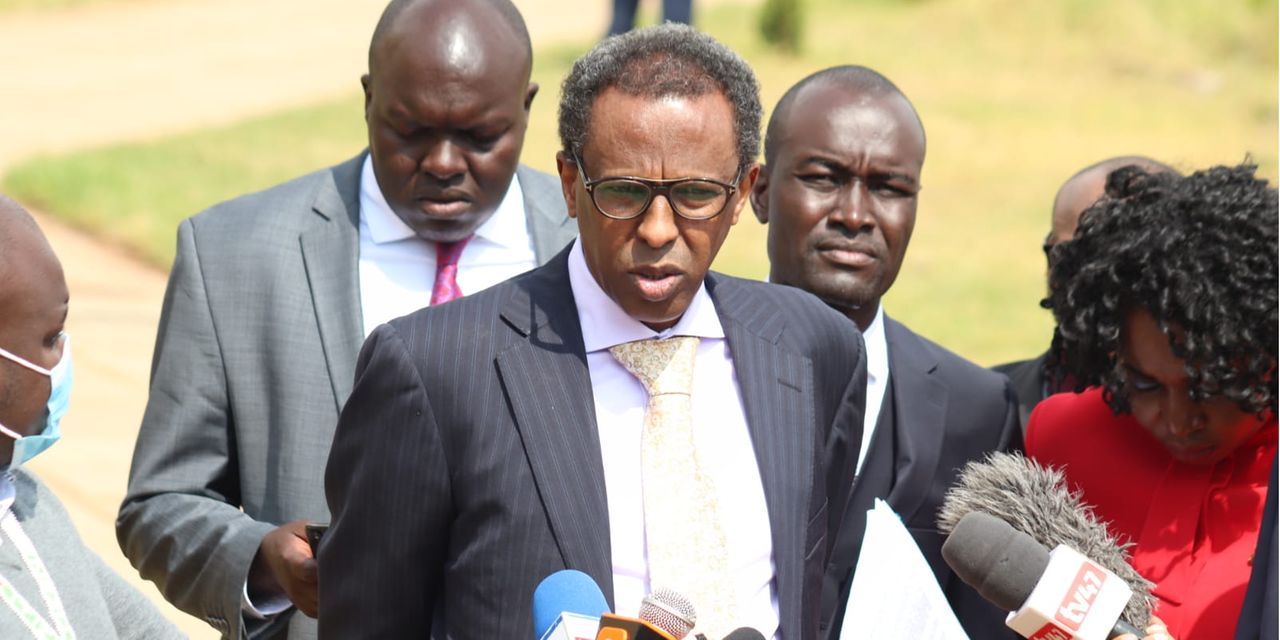
Senior Counsel Ahmednasir Abdullahi alleges judicial corruption in Supreme Court decision nullifying Sh5.8 billion grain facility deal, while industry experts warn of sustained high grain prices due to entrenched monopoly
NAIROBI, Kenya — Prominent lawyer Ahmednasir Abdullahi has ignited a firestorm with allegations of judicial corruption following the Supreme Court’s decision to nullify a Sh5.8 billion grain handling facility deal awarded to a company linked to Mining Cabinet Secretary Hassan Joho’s family.
In a series of incendiary social media posts, the Senior Counsel claimed the ruling was compromised, implicating a senior lawyer in private practice as the architect of the Joho family’s legal defeat.
“Oh POOR JOHOs…not a chance in hell! A lawyer in private practice in the class of ’90 (my classmate) did them…I have all the evidence…everything!!! Kila kitu!!! This is beyond JurisPESA. You can’t win against OLIGARCHS. Not before the Supreme Court of Kenya,” Abdullahi declared on X (formerly Twitter).
The Supreme Court’s five-judge bench, led by Deputy Chief Justice Philomena Mwilu, struck down the Kenya Ports Authority’s (KPA) award of the license to Portside Freight Terminals Limited, citing unconstitutional use of the Specially Permitted Procurement Procedure (SPPP).
The court ruled that KPA failed to justify bypassing competitive tendering, emphasizing that “constitutional principles must override urgency or strategic value” in government contracts.
The case, filed by activist Senator Okiya Omtatah, argued the deal unfairly favored the Joho-linked firm, excluding other qualified competitors.
Monopoly at the Heart of the Dispute
The legal battle underscores a decades-long rivalry between the Joho family and Mohamed Jaffer, whose company, Bulkstream Ltd (formerly Grain Bulk Handlers Limited), has dominated Kenya’s grain handling for 30 years.
Abubakar Ali Joho, the CS’s brother and operator of Portside Freight Terminal, accused Jaffer of waging a smear campaign to protect his monopoly.
“He’s the monopoly—I am not,” Abu Joho testified in a related defamation case.
Industry analyst Fauz Khalid warned the ruling would perpetuate high food prices: “The grain storage monopoly is why Kenyans pay more. Prices will remain inflated as long as one player controls the chain.”
Khalid further alleged judicial interference, referencing “JurisPESA” — a nod to monetary influence in court decisions — and tied Jaffer’s dominance to similar monopolies in LPG distribution.
KPA’s Controversial Role
Critics highlight KPA’s inconsistent stance: while over 20 oil companies hold wayleave agreements for port facilities, only grain and gas sectors — where Jaffer holds monopolies — face restrictive licensing. “The Johos seek fair competition, not preferential treatment,” an insider noted.
Notably, KPA’s lawyers were absent for most of the case, appearing only on the final day to support Jaffer’s position, fueling claims of institutional bias.
The ruling preserves Jaffer’s stranglehold on grain handling, raising concerns about food security and market competition.
Experts argue that while the court upheld procurement laws, the decision may inadvertently shield monopolistic practices harming consumers.
The fallout extends beyond grain: the judgment could set a precedent affecting other port-based businesses, particularly those challenging entrenched interests.
The Joho family faces multiple battles, including Abu Joho’s defamation suit against Matilda Kinzani for alleged drug-trafficking smears, and disputes over Hassan Joho’s cabinet appointment.
The Supreme Court’s decision, though legally sound, exposes Kenya’s struggle to balance constitutional governance with economic competition.
As allegations of judicial corruption swirl, consumers face the immediate cost — sustained high grain prices — while the broader fight against oligarchic control of critical sectors remains unresolved.
Kenya Insights allows guest blogging, if you want to be published on Kenya’s most authoritative and accurate blog, have an expose, news TIPS, story angles, human interest stories, drop us an email on [email protected] or via Telegram


How KCB and Airtel Turned Kenya’s Unbanked Into a Data Goldmine Behind a ‘Financial Inclusion’ Deal

The Chivayo Network: How a Convicted Fraudster Won Access to Presidents, Passports and Billion-Dollar Deals Across Africa

BURRIED TWICE: The Victoria Bank CEO Yogesh Pattni Files

Court Stops Transfer Of EABL Shares To Asahi By Diageo In A Fresh Snag

Death Before Justice: Stephen Ngei, Victim of Sh180 Million Laptop Tender Scam Linked to Allan Chesang, Killed in Highway Crash

Court Brands Sh1.1 Billion Fee Demand by Lawyer Victor Swanya “Excessive and Exorbitant,” Exposes How City Hall Lets Public Money Bleed Through Legal Bills

Trump Unveils New Air Force One

MR. NO SHOW: Finance Bill 2026 Exposes Ndindi Nyoro’s Political Conmanship

Billionaire Eric Muli Rebukes Musalia Mudavadi Over Nairobi Capital Relocation Debate

Lawyer Cliff Ombeta Warns Against Taking Insurance Cover With Old Mutual: “Talk to Me Before You Do, Their Imara Cover Is a Fraud”

Businessman Philip Waithaka Kinuthia’s Minor Son Allegedly Drove Drunk, Killed Two Peponi Students in Ngong Road Horror Crash as Claims of Cover-Up Intensify

Inside NCBA’s Decline: How a Banking Giant Lost Its Strategic Edge

Cement, Cash and Courts: How the Hashu Dynasty Crushed the Ramji Brothers for Fourteen Years and Why the Walls Are Now Closing In

Standard Chartered Ghosts Haunt Joshua Oigara At Stanbic As Whistleblower Spills Beans

South Sudan: Adut Salva Kiir’s Shadow Treasury Exposed

Inside The Urban Planning Cartel That Owns Nairobi

THE VULTURE AND THE SCHEME How Nairobi West Hospital Became the Most Dangerous Institution in Kenya’s SHA Ecosystem and Why the Books Must Be Audited Now

How Adil Popat Saved His Empire On The Eve Of Imperial Bank Collapse and Why Kenya’s Mainstream Media Buried The Story

Why John Ngumi Is Running From the EACC and Why the Sh415 Million Payday May Be the Least of His Worries

The President’s Daughter and The Missing Witness: How Adut Salva Kiir’s Shadow Treasury Silenced Its Most Dangerous Critic
-
 News1 week ago
Businessman Philip Waithaka Kinuthia’s Minor Son Allegedly Drove Drunk, Killed Two Peponi Students in Ngong Road Horror Crash as Claims of Cover-Up Intensify
-
 Business2 weeks ago
Inside NCBA’s Decline: How a Banking Giant Lost Its Strategic Edge
-
 Business2 weeks ago
Standard Chartered Ghosts Haunt Joshua Oigara At Stanbic As Whistleblower Spills Beans
-
 Africa1 week ago
South Sudan: Adut Salva Kiir’s Shadow Treasury Exposed
-
 Investigations3 days ago
THE VULTURE AND THE SCHEME How Nairobi West Hospital Became the Most Dangerous Institution in Kenya’s SHA Ecosystem and Why the Books Must Be Audited Now
-
 Business1 week ago
How Adil Popat Saved His Empire On The Eve Of Imperial Bank Collapse and Why Kenya’s Mainstream Media Buried The Story
-
 Business1 week ago
Why John Ngumi Is Running From the EACC and Why the Sh415 Million Payday May Be the Least of His Worries
-
 Africa2 weeks ago
The President’s Daughter and The Missing Witness: How Adut Salva Kiir’s Shadow Treasury Silenced Its Most Dangerous Critic